

More news on this day
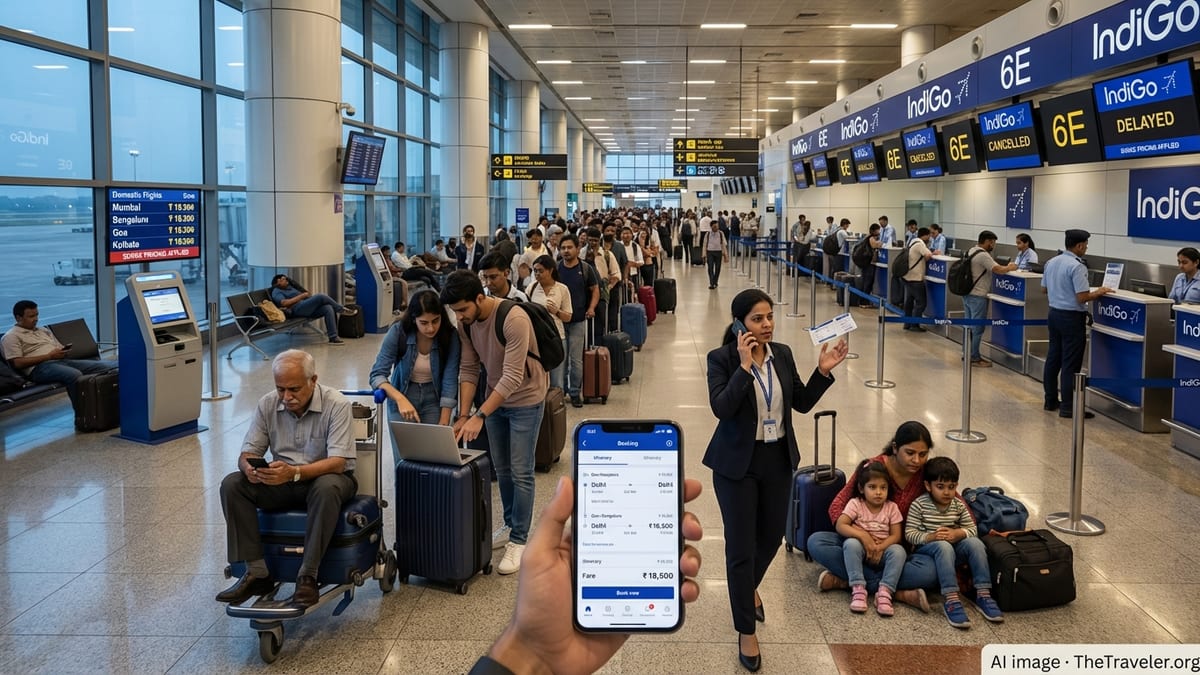
India’s largest airline, IndiGo, is facing mounting regulatory heat after a wave of mass flight cancellations triggered a sharp spike in domestic airfares late in 2025, prompting the country’s competition watchdog to order a formal investigation into alleged surge pricing and abuse of market dominance.
The probe, announced on February 4, 2026, adds to separate scrutiny from aviation authorities and the central government, which have already imposed temporary fare caps, operational curbs and financial penalties in response to what has become one of the most disruptive aviation crises in recent years.
More News
- Caribbean Travel to U.S. Upended by New Visa Freezes and Expanded Bans
- Mexico Restores E-Visas for Brazilians, Paving the Way for Borderless Tourism
- Philippine Airlines Joins Regional Carriers Powering Southeast Asia’s Tourism Boom
Regulators Open Competition Probe Into IndiGo’s Pricing
On February 4, the Competition Commission of India (CCI) ordered an investigation into IndiGo’s conduct during the December 2025 disruption, acting on a complaint that the carrier cancelled hundreds of flights and then sold remaining seats at sharply higher fares. The case has been registered under provisions dealing with abuse of dominant position, reflecting IndiGo’s outsized share of the domestic market, estimated at around two thirds of all Indian air traffic.
The complainant, a passenger identified as Saurabh Rawal, alleged that IndiGo’s bulk cancellations created an artificial scarcity of seats on busy routes, after which the airline allegedly charged “much higher” prices for remaining inventory. He cited his own itinerary, a Delhi–Goa–Bengaluru return trip booked for December 5, 2025 at about Rs 7,173, which was cancelled just hours before departure. When he tried to rebook, he said the only feasible alternative was another IndiGo flight two days later for close to Rs 17,000, underscoring the dramatic fare escalation on the same routes.
In its prima facie order, the CCI observed that more than 2,500 flights were cancelled and over 1,800 delayed within a short span in early December, affecting more than 300,000 passengers and substantially withdrawing capacity from the market. In such a context, the Commission noted, IndiGo’s dominant position and the limited availability of rival options could have left many consumers effectively “locked in” to higher prices.
The watchdog has directed its investigative arm, the Director General, to conduct a detailed inquiry within 90 days. The probe will examine IndiGo’s internal decision making on cancellations, capacity management, pricing algorithms and communication with passengers, before the Commission decides whether to proceed to hearings or close the matter.
How a Crew-Rostering Crisis Escalated Into a Nationwide Meltdown
The competition probe is the latest chapter in a crisis that began as an operational challenge and quickly mutated into a national aviation issue. Disruptions started in late November 2025 as IndiGo struggled to reconfigure pilot and cabin crew schedules to comply with India’s new Flight Duty Time Limitation norms, designed to address fatigue by tightening rest requirements and curbing night flying.
What might have been a manageable adjustment spiralled into chaos when IndiGo’s planning tools and staffing buffers proved inadequate. By early December, the airline was cancelling 170 to 200 flights a day. On some days, more than 300 services were grounded, while many others operated with significant delays. In November alone, its cancellations ran into the thousands, with widespread knock-on effects at India’s busiest hubs including Delhi, Mumbai, Bengaluru and Kolkata.
The Ministry of Civil Aviation, led by Minister Kinjarapu Rammohan Naidu, convened urgent meetings with IndiGo’s top leadership as queues built up at check-in counters and call centres struggled to cope. The Directorate General of Civil Aviation (DGCA) launched a detailed review of the airline’s operations, focusing on how its crew planning and network scheduling had failed to anticipate the impact of the new duty-time rules.
While IndiGo attributed the disruptions to a combination of regulatory changes, weather factors, air traffic congestion and “technical glitches,” investigators later highlighted over-optimisation of schedules, inadequate preparedness for the new norms and weaknesses in planning software and management oversight as the core drivers of the meltdown.
Surge Fares and Emergency Government Caps on Ticket Prices
As cancellations multiplied, the sharp reduction in available seats collided with strong year-end travel demand, pushing fares to striking levels on some trunk routes. On certain days in early December, last-minute one-way fares between major metros reportedly tripled or even quadrupled compared with typical levels, with some non-stop Delhi–Mumbai seats displayed at over Rs 60,000 and multi-stop or mixed-cabin options running even higher.
The optics of stranded passengers staring at sky-high replacement fares quickly attracted political and public outrage. The Ministry of Civil Aviation said it had taken “serious note” of unusually high prices being charged by certain airlines amid the disruption, voicing concern that distressed travellers might be facing opportunistic pricing at a time when they had few practical alternatives.
On December 6, the government invoked its regulatory powers to impose temporary nationwide caps on economy-class fares for all domestic flights, segmented by distance. Tickets were capped at Rs 7,500 for routes up to 500 kilometres, Rs 12,000 for 500 to 1,000 kilometres, Rs 15,000 for 1,000 to 1,500 kilometres, and Rs 18,000 for longer sectors. The ceilings applied across all booking channels, including airline websites, mobile apps and online travel agencies, and were intended to stay in force until the situation stabilised.
Officials framed the move as essential to ensuring “fair and reasonable” prices and preventing exploitation of vulnerable passengers, such as senior citizens, students and patients, who depended on timely travel. Airlines were also instructed to keep tickets available across fare buckets and to consider adding capacity on routes showing abnormal demand spikes, even as IndiGo itself was forced to pare back its schedules.
DGCA Sanctions, Capacity Cuts and Operational Exemptions
As the immediate chaos unfolded, the DGCA moved beyond monitoring to punitive and corrective measures. Its investigation into IndiGo’s performance between December 3 and 5 found widespread non-compliance with civil aviation requirements, including failures in implementing duty-time norms, shortcomings in operational control and lapses in accountable management structures.
The regulator ultimately levied a penalty of Rs 22.20 crore on the airline, a combination of one-time fines for specific violations and daily penalties over an extended period of continued non-compliance stretching into February 2026. The scale of the sanction underscored the seriousness with which authorities viewed the meltdown and the systemic vulnerabilities it revealed in the carrier’s operations.
In parallel, the DGCA initially ordered a 5 percent reduction in IndiGo’s approved flight schedule, a move later doubled to 10 percent at the direction of the central government. The capacity cut is intended both as a disciplinary signal and as a safety valve to ensure that the airline’s remaining operations are sustainable under existing crew and fleet constraints, thereby reducing the risk of further mass cancellations.
Recognising the risk of prolonged disruption, the regulator also granted IndiGo a one-time temporary exemption from some Flight Duty Time Limitation requirements until February 2026. This balancing measure aims to give the airline room to rebuild rosters and stabilise its network, subject to a detailed roadmap submitted to the DGCA explaining how it will address crew shortages, scheduling gaps and oversight deficiencies.
IndiGo’s Response: Refunds, Audits and a Battle Over Jurisdiction
Under intense regulatory and public pressure, IndiGo has attempted to signal contrition and corrective action. The carrier has launched what it describes as a large-scale refund and compensation programme, targeting customers whose flights were cancelled within 24 hours of departure or who were stranded for extended periods. It has pledged a compensation outlay that could exceed Rs 500 crore and says most refunds from the December episode have already been processed, with outstanding cases being prioritised.
The government, however, has set explicit timelines and guardrails. The civil aviation ministry ordered that refunds for all cancelled or disrupted flights be completed within a fixed deadline and warned airlines against levying rescheduling charges on affected passengers. IndiGo has been told to set up dedicated support and refund facilitation cells, tasked with proactively contacting impacted travellers, arranging alternatives and delivering delayed baggage to passengers’ residences within 48 hours.
IndiGo’s posture before the CCI has been notably more defensive. In its response to the competition watchdog, the airline did not submit the full operational and pricing data requested for the December period. Instead, it questioned the CCI’s jurisdiction, arguing that civil aviation is already governed by a specialised regulatory framework and that pricing and capacity decisions should fall largely under the DGCA and the Ministry of Civil Aviation.
The Commission has rejected the idea that sector-specific oversight displaces its own mandate, insisting that alleged abuse of dominance and unfair pricing fall squarely within competition law. While it has emphasised that its observations are preliminary, the decision to proceed with a formal investigation reflects the view that the December cancellations and resulting fare patterns raise genuine competition concerns distinct from safety or licensing issues.
What the Investigation Means for India’s Aviation Market
The IndiGo case is emerging as a test of how India’s regulators balance consumer protection, market competition and the commercial realities of a fast-growing but fragile aviation sector. Domestic air travel in India has more than doubled over the past decade, but most carriers remain financially stretched, and the sudden collapse or grounding of individual airlines in recent years has repeatedly skewed capacity and pricing dynamics.
By stepping in with temporary fare caps, the government signalled it is prepared to override pure market pricing in extraordinary circumstances, particularly when network dominance and large-scale cancellations leave passengers with few options. At the same time, regulators must avoid distorting incentives to invest in capacity or manage revenue efficiently, especially on routes that operate with thin margins outside peak periods.
The CCI’s probe may set important precedents on what constitutes “unfair pricing” in airline markets that rely on dynamic revenue management. Surge-like price movements are a common feature of aviation, but the Commission will focus on whether IndiGo’s actions crossed the line from market response to capacity shocks into active creation of scarcity or exploitation of locked-in demand in ways that competition law prohibits.
For passengers, the episode has already sparked broader debate about the need for stronger passenger-rights frameworks, clearer rules on rebooking and refunds during disruptions, and more transparent disclosures on how airlines set fares in constrained markets. It has also underscored the systemic risk of overreliance on a single dominant carrier, especially during periods of regulatory change or operational stress.
What Travellers Should Know Now
IndiGo’s operations have largely stabilised in recent weeks, with the airline operating more than 2,000 flights a day and reporting significant progress in clearing refund backlogs. Airports that were scenes of chaos in early December are operating closer to normal, though pockets of disruption may still occur as the carrier continues to adjust rosters and schedules under the DGCA’s reduced-capacity framework.
For travellers considering booking with IndiGo, the key changes lie in fare behaviour and regulatory oversight. Temporary government caps on domestic economy-class fares remain in force, limiting headline ticket prices on most routes even during demand spikes. However, these caps exclude taxes and some airport levies, and they do not apply to business-class or regional connectivity scheme flights, so final prices may still vary.
Passengers affected by past disruptions should monitor communication channels for updates on refunds and compensation. IndiGo has pledged to contact customers who were severely impacted to discuss redress, and the government has indicated that non-compliance with refund or baggage-delivery instructions will invite further action. Keeping booking records, receipts and screenshots of fare quotes can be helpful if disputes arise.
Looking ahead, the outcome of the CCI investigation could influence how airlines across India handle cancellations, rebookings and fare-setting during crises. If the Commission ultimately finds that IndiGo abused its dominant position, it could impose financial penalties and behavioural remedies, potentially including guidelines on pricing conduct during major operational disruptions.
FAQ
Q1. Why is IndiGo under investigation right now?
IndiGo is under investigation because the Competition Commission of India believes there is a prima facie case that the airline may have abused its dominant market position by cancelling large numbers of flights in December 2025 and then selling remaining seats at significantly higher fares, potentially amounting to unfair pricing and restriction of services.
Q2. Who is conducting the probe into IndiGo’s flight cancellations and surge pricing?
The primary investigation into alleged surge pricing and abuse of dominance is being carried out by the Competition Commission of India through its Director General. Separately, the Directorate General of Civil Aviation and the Ministry of Civil Aviation are examining IndiGo’s operational failures and compliance with aviation regulations.
Q3. What exactly triggered the mass cancellations in late 2025?
The disruptions were largely triggered by IndiGo’s difficulty in adapting its crew rosters to new Flight Duty Time Limitation rules aimed at reducing pilot fatigue. Investigations have suggested that over-optimised schedules, insufficient staffing buffers and weaknesses in planning systems caused a breakdown that led to thousands of cancellations and delays.
Q4. How did the Indian government respond to the surge in airfares?
In response to soaring ticket prices during the crisis, the government temporarily capped economy-class fares on domestic routes at specified ceilings based on distance. These caps apply across all booking channels and are intended to remain in place until market conditions stabilise and prices return to more reasonable levels.
Q5. Has IndiGo been penalised financially for the disruptions?
Yes. Following a detailed inquiry, the DGCA imposed a penalty of Rs 22.20 crore on IndiGo, covering specific violations of civil aviation requirements and continued non-compliance over several weeks. The competition case could result in additional penalties if the CCI eventually determines that the airline violated competition law.
Q6. Are IndiGo’s flights operating normally now?
IndiGo’s operations have largely stabilised compared with the peak of the crisis, and the airline is again operating more than 2,000 flights a day. However, its approved schedule has been cut by about 10 percent on regulatory orders, and some adjustments and minor disruptions may continue as it rebuilds crew rosters and network resilience.
Q7. What rights do passengers have if their IndiGo flight is cancelled?
Under current guidelines, passengers whose flights are cancelled are entitled to either a full refund or an alternative booking subject to availability. During the recent crisis, the government instructed IndiGo and other airlines to complete refunds within strict timelines, waive rescheduling fees for affected passengers and proactively assist with rebooking and baggage delivery.
Q8. Could this investigation change how airlines set fares in India?
Depending on the outcome, the CCI’s case against IndiGo could lead to clearer boundaries on what is considered fair pricing during periods of disruption, especially for dominant carriers. While dynamic pricing will remain a core feature of airline revenue management, regulators may set expectations around transparency, data sharing and behaviour during capacity shocks.
Q9. Does IndiGo accept the CCI’s authority in this matter?
IndiGo has questioned the CCI’s jurisdiction, arguing that aviation is already regulated by specialised laws and agencies. The Commission, however, has asserted that alleged abuse of dominance and unfair prices fall squarely within competition law. The investigation will proceed on that basis, and jurisdictional arguments are likely to be addressed during the legal process.
Q10. What should travellers do if they face high fares or disruptions in the coming months?
Travellers should compare fares across airlines, check whether government caps are being reflected in displayed prices and retain records of bookings and fare quotes. In case of cancellations or unusually high charges during disruptions, passengers can first seek redress from the airline and, if needed, escalate complaints to aviation authorities or consumer forums, citing official advisories and directives issued during the IndiGo episode as a reference point.