

More news on this day
As Ahmedabad prepares to host the centenary edition of the Commonwealth Games in 2030, India is intensifying a nationwide conversation on accessible tourism, aiming to align fast‑growing visitor numbers with disability‑inclusive infrastructure and services.
Get the latest news straight to your inbox!
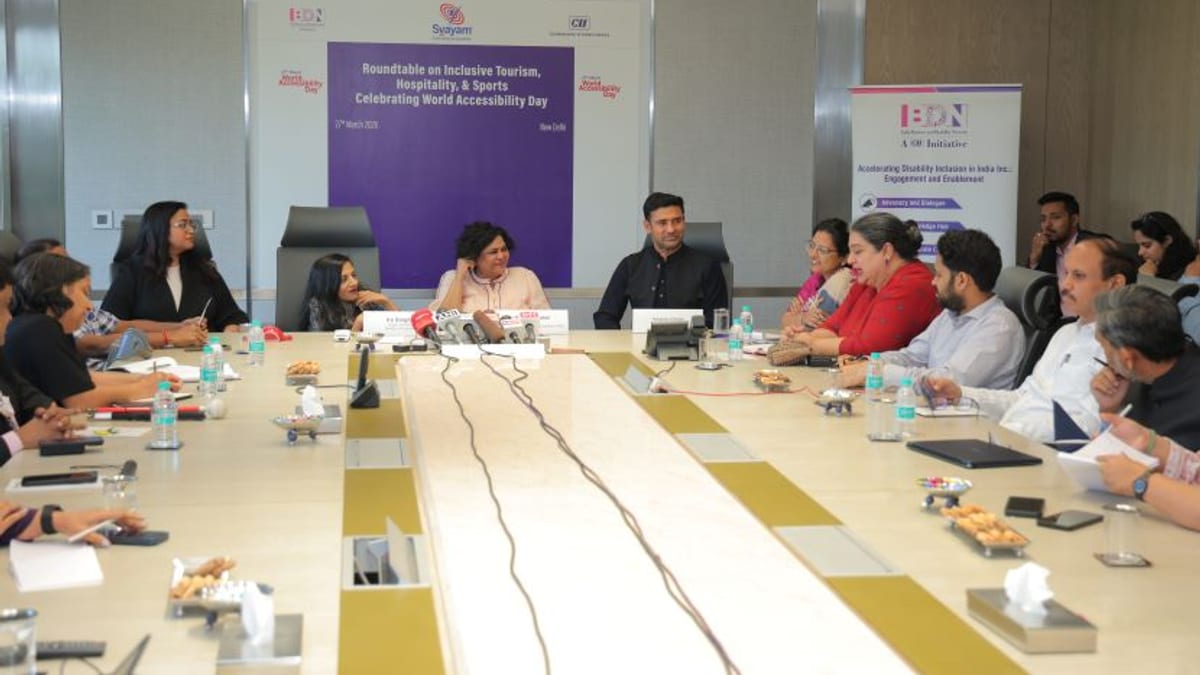
Image by Travel and Tour World – Tourism, Airline, Destination, MICE, Gobal Travel Market, Hotel news that you will find only over here.
2030 Commonwealth Games Puts Accessibility in the Spotlight
The confirmation of Ahmedabad as host city for the 2030 Commonwealth Games has shifted attention from pure venue construction to how inclusive the wider visitor experience will be for athletes, spectators and tourists with disabilities. Publicly available information on the Sardar Vallabhbhai Patel Sports Enclave highlights extensive new sports infrastructure, positioning the city to stage major international events and increasing scrutiny of how people with reduced mobility, sensory disabilities and age‑related needs will move through the urban environment.
National media coverage notes that the 2030 Games are expected to drive significant upgrades to transport, housing and urban services in and around Ahmedabad. This pipeline of investment is being discussed in parallel with India’s obligations under the Rights of Persons with Disabilities Act and harmonised guidelines on universal accessibility, creating an opportunity to embed inclusive design into everything from stadium seating and wayfinding to hotel stock and last‑mile connectivity.
Observers point out that the Commonwealth Games arrive at a time when India is climbing global tourism rankings and looking to convert higher visitor flows into longer stays and higher per‑capita spending. That combination, analysts suggest, makes accessibility not only a legal and social imperative but also a competitiveness issue for a host city seeking to welcome a diverse international audience in 2030.
Policy Frameworks Converge on Inclusive Travel
India’s accessible tourism dialogue before 2030 is being shaped by a web of national policies and missions that predate the Games decision. The Accessible India Campaign, or Sugamya Bharat, launched under the Ministry of Social Justice and Empowerment, remains the flagship drive to improve physical, transport and digital access, supported by a mobile app that allows users to report barriers in public spaces and services.
Parallel efforts in the tourism portfolio have emphasised quality infrastructure, safety and sustainability. Schemes such as Swadesh Darshan and destination‑specific upgrades are increasingly being assessed against accessibility norms, according to recent government reports and sector analyses. Hospitality publications note that the harmonised guidelines for universal accessibility are gradually filtering into hotel design, convention centres and public transport nodes that serve tourists.
Recent tourism policy documents and budget statements reference inclusive tourism as a cross‑cutting objective, linking it to employment generation and regional development. Analysts argue that this creates a more coherent framework in which the 2030 Commonwealth Games can act as a deadline for aligning standards, enforcement and capacity building across multiple ministries and state governments.
States Pilot Accessible Tourism Models
While national laws set the baseline, several Indian states have emerged as test beds for accessible tourism projects ahead of 2030. Commentaries on Madhya Pradesh’s tourism strategy, for example, describe efforts to position heritage and religious circuits as more accessible to seniors and people with disabilities, linking infrastructure upgrades with digital tools that provide clearer information on facilities.
Other states, including Rajasthan and coastal destinations, are weaving accessibility into broader tourism policies that prioritise safety, diversified products and year‑round visitation. New policy blueprints discuss 24‑hour assistance, better transport information and more inclusive event venues, elements that could be scaled or adapted as India prepares for an influx of Commonwealth visitors in 2030.
Industry observers see these state‑level experiments as important reference points for Gujarat, which is ramping up its own tourism and sports infrastructure in and around Ahmedabad. Lessons from heritage towns, pilgrimage hubs and coastal resorts are likely to inform how the Games host city manages accessible accommodation clusters, cultural programming and pre‑ and post‑event tours.
Tourism Industry Faces Accessibility Test
Within the private sector, hospitality and travel companies are being encouraged to treat accessibility as a core part of product design rather than a compliance exercise. Trade publications in 2026 highlight a growing recognition that barrier‑free hotels, inclusive tour itineraries and accessible digital booking tools can tap into an underserved market of domestic and international travellers with disabilities, as well as an ageing population.
Analysts note that major hotel chains and destination management companies are beginning to audit properties for step‑free access, adapted rooms and staff training, but coverage suggests implementation remains uneven beyond top‑tier urban centres. With the 2030 Commonwealth Games on the horizon, pressure is building on operators in and around Ahmedabad to accelerate retrofits and ensure new builds conform to universal design standards.
Travel advocates point out that accessibility extends beyond bricks and mortar to information and service culture. Clear communication about facilities, multi‑lingual signage, accessible websites and staff sensitisation are all flagged as areas where the industry will be judged by visiting teams, media and fans when the Games begin.
Countdown to 2030 Drives New Partnerships
As the 2030 deadline approaches, the accessible tourism conversation in India is increasingly framed around collaboration between government agencies, city planners, disability advocates and the tourism value chain. Reports on recent conferences and sector summits describe panels dedicated to inclusive travel, with discussions ranging from assistive technology in transport systems to the design of fan zones and cultural festivals.
Observers expect the formal Games planning process to trigger more detailed accessibility audits of competition and training venues, transport corridors, accommodation zones and public spaces in Ahmedabad. The results are likely to influence procurement, design tweaks and staff training programmes over the next several years, setting practical benchmarks that could later be applied to other Indian cities.
Analysts also underline the legacy dimension. If accessibility improvements made for the Commonwealth Games are sustained and extended after 2030, Ahmedabad could become a national showcase for inclusive urban tourism. That prospect is helping to keep accessibility high on the agenda as India charts its broader tourism growth strategy in the run‑up to the centenary Games.