

For many travelers, South Asia is a dream destination that can also feel a little intimidating. If you are planning your very first trip to the region, the choice often narrows to two heavyweights: India and Sri Lanka. Both offer vivid culture, superb food, layered history, and memorable landscapes, yet they deliver very different experiences in terms of intensity, logistics, and how easy it is to find your feet. This guide compares India and Sri Lanka through a first-time visitor’s lens so you can decide which one will feel more manageable for your style, pace, and comfort level.
Overall Ease: Intensity vs Gentler Introduction
India is vast, crowded in many regions, and endlessly stimulating. That is exactly what many travelers love about it, but it also means that a first-time trip can feel overwhelming. Cities like Delhi, Mumbai, Kolkata, and Chennai are dense, noisy, and full of sensory input: honking traffic, complex street layouts, persistent touts, and visible inequalities. Distances between major sights are large, and planning often involves domestic flights or long train journeys. For some first-time visitors, this can be exhilarating. For others, it can be exhausting.
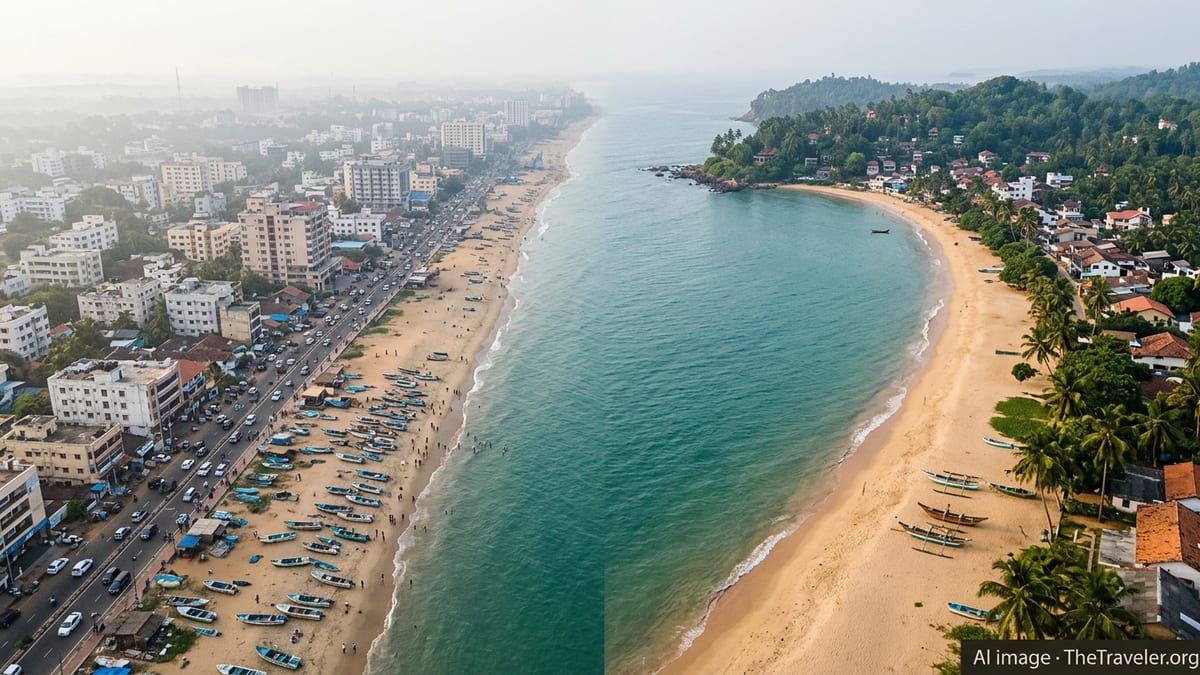
Sri Lanka, by contrast, is compact and logistically simpler. You can travel from the beaches near Colombo to the hill country tea estates or ancient cities within a day, and most classic routes fit easily into a one or two week itinerary without long overnight transport. The atmosphere in many Sri Lankan towns and resort areas is noticeably calmer than in India’s big cities, with smaller scale traffic and fewer people overall. That makes it easier for a first-timer to adjust to South Asian rhythms without feeling constantly on the back foot.
For a traveler who wants the iconic “big South Asia” experience and does not mind a steep learning curve, India offers unmatched variety and depth. For someone who prefers a softer landing, fewer moving parts, and a more relaxed everyday pace, Sri Lanka typically feels like the easier first trip.
Entry Requirements, Visas and Practical Formalities
Before you ever board a plane, the first hurdle is paperwork. Both India and Sri Lanka rely on online systems for short-stay tourist entry, and the procedures are relatively straightforward for most nationalities, including travelers from North America and Western Europe. That said, India’s e-visa system tends to be more prescriptive in terms of document uploads, photo sizes, and form fields, while Sri Lanka’s Electronic Travel Authorization, or ETA, is generally viewed as simpler.
In India, tourist e-visas are widely available but subject to specific categories and duration limits that can change over time. Applicants usually need to upload a passport-style photo and a scan of the passport’s data page, fill out a detailed form, and wait for electronic approval. Processing is often quick, but the application can feel fussy, and policies periodically tighten or change. Travelers need to pay close attention to the latest rules, eligible ports of entry, and the validity dates attached to their specific visa type.
Sri Lanka has moved back to an ETA system after experimenting with other platforms. Short-stay visitors typically fill out a relatively short online form, pay a fee, and receive confirmation by email to present on arrival. The government has periodically announced visa-free or fee-waiver schemes for certain countries, including India and several Western markets, although the exact list and duration can shift with policy changes. The important point for first-time visitors is that the Sri Lankan process is usually quicker to complete and less prone to application errors than India’s e-visa form.
On other formalities, both countries require at least six months of passport validity and may ask for proof of onward travel. Customs rules are broadly standard, but travelers carrying medications should pack prescriptions and original packaging. From a first-timer’s perspective, neither country presents extreme bureaucratic difficulty, yet Sri Lanka has a small edge for ease and speed of entry.
Arrival Experience, Transport and Getting Around
How your trip begins often shapes your entire perception of a destination. In India, most international travelers arrive in major hubs like Delhi, Mumbai, Bengaluru, or Chennai. These airports are modern and generally efficient, but once you step outside, you encounter intense traffic, strong heat in many seasons, and a dense urban environment. Prepaid taxis or app-based ride services operate in all large cities, yet first-timers sometimes feel unsure negotiating fares, understanding traffic norms, or handling touts near transport hubs.
India’s internal transport network is extensive and offers countless options: domestic flights, regular and high-speed trains on busy routes, long-distance buses, auto-rickshaws, city metros, and ride-hailing cars. This variety gives experienced travelers huge flexibility but can confuse a newcomer deciding which class of train to book, how far in advance to reserve seats, or how to read local bus schedules. With research and a bit of patience, many first-time visitors manage well, but there is a learning curve.
Sri Lanka offers fewer transport types but a more digestible scale. Most travelers land in or near Colombo, then move along a relatively well-trodden loop: coastal resorts south of the capital, the hill country around Ella and Kandy, and the cultural sites in the north-central region. Intercity trains on scenic routes are popular and inexpensive, and many visitors hire a private driver for multi-day trips, which dramatically simplifies logistics. Even public buses, though sometimes crowded, usually serve clear routes between major tourist hubs.
For day-to-day movement, Sri Lankan towns commonly use three-wheelers similar to Indian auto-rickshaws, and ride-hailing apps operate in larger urban centers. Distances are shorter, travel times are often manageable in daylight, and it is entirely possible to see key highlights in one compact itinerary without navigating dozens of stations or airports. In practical terms, Sri Lanka is typically easier for first-time visitors in terms of arrival and getting from place to place, while India rewards more planning and tolerance for complexity.
Cultural Immersion, Language and “Culture Shock”
Both India and Sri Lanka are culturally rich and strongly religious societies, but the intensity and variety of cultural experiences differ. India contains a vast mosaic of languages, religions, and regional customs. Moving from North India to the South, or from a cosmopolitan city to a rural town, can feel like shifting countries entirely. This richness is a major attraction, yet it also increases the likelihood of culture shock. Noise, crowds, visible poverty, and differences in personal space can feel confronting at first, particularly in large northern cities and pilgrimage centers.
English, however, is widely used in India. Urban residents in major tourist areas often speak at least some English, and key signage in airports, train stations, and central districts is commonly bilingual. That means first-timers can usually ask for help, read timetables, and understand basic instructions. The challenge lies less in language barriers and more in interpreting how things work: queuing norms, bargaining styles, and when to politely say no to persistent vendors or unsolicited “guides.”
Sri Lanka offers a gentler form of cultural immersion. The main languages are Sinhala and Tamil, but English is widely understood in tourist regions, hotels, restaurants, and transport hubs. The overall tempo of daily life in many coastal and hill-country towns is slower than in India’s megacities, and the scale of interaction feels more intimate. Street life is still vibrant, especially in markets and festival times, but first-time visitors often describe Sri Lanka as more relaxed and approachable.
Religious sites in both countries require modest dress and respectful behavior, yet navigation around them may feel simpler in Sri Lanka because the sites tend to be less crowded outside the busiest holidays. Visitors can linger in temples or stupas with a sense of calm that is sometimes hard to find in India’s most famous shrines. For someone worried about culture shock, Sri Lanka usually offers an easier first immersion, while India delivers a more intense and varied, but potentially challenging, introduction.
Safety, Health and Comfort Levels
Safety is a central concern for first-time visitors, especially solo travelers and those unaccustomed to busy developing-world environments. Both India and Sri Lanka attract large numbers of international tourists and, for the vast majority, trips are completed without serious incidents. Still, each country has its own profile of risks and nuisances that newcomers should understand.
In India, petty scams and overcharging near major tourist sites are relatively common. Travelers may encounter aggressive touts, misleading pricing for taxis or tours, or pressure to buy goods at inflated rates. Violent crime against foreign tourists is less common but not absent, and incidents receive considerable media coverage. Women travelers in particular often plan more cautiously around nightlife, transport after dark, and dress standards. Health-wise, air pollution in several large Indian cities can be problematic for sensitive travelers, and tap water is unsafe for drinking in most places, making food and water hygiene a daily consideration.
Sri Lanka, in recent years, has been recovering from a period of political and economic instability that included fuel shortages and protests. Those acute disruptions have eased, and tourism numbers have rebounded, signaling renewed confidence among visitors. Everyday petty crime and scams exist here as well, particularly in busy resort areas and cities, but on a smaller scale. Many travelers report feeling safe walking around popular tourist districts by day, and comfortable using licensed three-wheelers or taxis after dark when using basic precautions.
From a health perspective, Sri Lanka presents similar tropical considerations such as mosquito-borne diseases in certain regions, heat, and the need to be careful with drinking water and street food. However, the absence of extremely large, heavily polluted cities makes air quality less of an issue than in parts of India. Medical care in both countries varies by region; major cities have reputable hospitals and clinics, while rural areas can be more limited. Overall, neither destination should be considered unsafe for informed travelers, but Sri Lanka tends to feel less daunting to a first-timer concerned about comfort and manageable levels of hassle.
Costs, Accommodation and Ease of Day-to-Day Travel
On cost, both India and Sri Lanka are generally affordable compared with Western Europe or North America, but the structure of spending can look different. India, thanks to its sheer scale, offers options at every price point. Budget travelers can find very low-cost guesthouses, street food, and sleeper trains, while luxury travelers can book high-end heritage hotels, private drivers, and business-class flights between major cities. Because there is such a range, first-timers sometimes struggle to gauge what constitutes fair value, especially in markets, taxis without meters, and informal tours.
Sri Lanka’s smaller size and concentrated tourist routes mean that price variation is somewhat narrower, especially in popular beach and hill-country destinations. Mid-range guesthouses and boutique hotels are widely available, and many include breakfast. Rickshaw and taxi costs can be negotiated, but routes and approximate fares often become easy to understand once you have asked a few questions locally. Food prices in local eateries are typically modest, and coastal towns are known for fresh seafood at reasonable prices.
Accommodation choice is critical to how “easy” a destination feels. In India, the gap between budget and mid-range can be large in terms of reliability, cleanliness, and sound insulation. First-timers often find it worthwhile to aim above the absolute lowest price point to ensure a quieter, more predictable base, at least for the first few nights. Booking platforms now cover even smaller cities, but the quality of photos and descriptions can vary significantly.
In Sri Lanka, many small hotels and guesthouses are family-run, with a strong emphasis on hospitality and home-cooked meals. The overall level of comfort in mid-range properties is often high for the price, and settings are frequently scenic: tea hills, jungle edges, or quiet beaches. This combination of manageable daily costs and relatively consistent mid-level comfort contributes to Sri Lanka’s reputation as an easier first step into the region, even if ultra-budget travelers might find India marginally cheaper in absolute terms.
Itinerary Planning, Seasonality and Crowd Levels
Planning a trip to India can feel like designing several vacations in one. The country’s size, diversity of climates, and concentration of world-famous sites mean that most first-time visitors can only sample a slice. Popular starter routes might focus on the so-called Golden Triangle of Delhi, Agra, and Jaipur, perhaps combined with Varanasi or a southern region like Kerala. Each move often requires a substantial journey, and aligning trains or flights with hotel bookings and sightseeing can be complex.
Seasonality adds another layer of planning. Different regions have different peak times based on heat, monsoon rains, and festivals. The best period for North India’s classic sights might differ from optimal months for the Himalayas or coastal areas. First-timers who travel in the main tourist months may also face heavy crowds at major monuments and popular beaches, which can intensify the sense of chaos.
Sri Lanka, while not immune to seasonal changes, is easier to manage on a single first-time itinerary. Many travelers follow a loop that stitches together cultural heritage sites, the hill country, and one or two beach areas. Distances between these zones are short enough that it is realistic to see several in ten to fourteen days without feeling rushed. Crowds at major sites can still be significant in peak season, yet they rarely reach the density of visitors seen at India’s most iconic monuments.
Because Sri Lanka’s tourism infrastructure has been steadily rebuilt and expanded, there is now a robust supply of accommodation and tour services along popular routes. For a first-time visitor, this means fewer decisions and a clearer sense of what a “standard” itinerary might look like. India offers more complex, customizable routes that reward time and research, while Sri Lanka provides a cleaner, more digestible framework that many first-timers find comforting.
The Takeaway
Choosing between India and Sri Lanka for a first trip to South Asia is ultimately about matching your temperament to each destination’s character. India is intense, layered, and endlessly varied. It can challenge your assumptions, stretch your comfort zone, and deliver some of the most memorable travel experiences anywhere. It also asks more of you in return: greater patience, more planning, a higher tolerance for crowds and noise, and an ability to navigate complex logistics and occasional frustrations.
Sri Lanka, by comparison, is a smaller, more manageable canvas. It offers a blend of beaches, wildlife, history, and hill scenery within compact distances, with an entry process and day-to-day logistics that many travelers find easier on a first visit. While it may not feel as overwhelmingly “epic” as India, it provides a gentle, rewarding introduction to the region’s cultures and landscapes without demanding quite as much resilience.
If you have limited time, prefer a calmer atmosphere, or feel apprehensive about dealing with intense crowds and complicated internal travel, Sri Lanka is likely to be the easier and more comfortable starting point. If you are energized by high-intensity environments, drawn to big cities and powerful contrasts, and willing to invest more effort into planning and on-the-ground problem solving, India can be an extraordinary first trip that sets a very high bar for future travel.
There is no single right answer, only the right fit for you. Many travelers who start in Sri Lanka later graduate to longer, deeper journeys across India. Others dive into India first and then seek out Sri Lanka as a softer second chapter. Whichever path you choose, approaching your trip with realistic expectations, flexible plans, and a willingness to adapt will go a long way toward turning your first visit to South Asia into the beginning of a lasting connection.
FAQ
Q1. Which country is generally easier for a first-time visitor, India or Sri Lanka?
Sri Lanka is generally easier for first-time visitors because of its smaller size, simpler transport, and less intense crowds, while India is more complex and demanding but also more varied.
Q2. Is it difficult to get a tourist visa for India compared with Sri Lanka?
Both countries use online systems, but India’s e-visa usually involves more detailed forms and document uploads, whereas Sri Lanka’s ETA process tends to be shorter and more straightforward.
Q3. How many days should a first-timer plan for India vs Sri Lanka?
For Sri Lanka, 10 to 14 days can cover several key regions comfortably. In India, two weeks typically allows you to see only one focused region, with longer trips needed to experience more variety.
Q4. Which destination is better for a solo female traveler?
Both are possible for informed solo female travelers, but many find Sri Lanka more relaxed, with slightly fewer hassles. India can also be rewarding, but it usually requires more caution and planning.
Q5. Where will I experience less culture shock on my first South Asia trip?
Most travelers report less culture shock in Sri Lanka, thanks to its calmer pace and smaller cities. India delivers stronger contrasts and more intensity, which some love and others find overwhelming.
Q6. Is one country significantly cheaper than the other for tourists?
India can be cheaper at the extreme budget end because of its vast range of options. Sri Lanka is still affordable but tends to have more consistent mid-range pricing rather than ultra-low costs.
Q7. Which country is better for wildlife and nature on a short trip?
Both offer good wildlife and scenery. Sri Lanka’s compact size makes it easier to combine safaris, beaches, and hill country in one short itinerary, which many first-timers appreciate.
Q8. How big a concern are health issues like food safety and water quality?
In both countries, tap water is generally unsafe to drink and some travelers experience stomach upsets. Choosing reputable eateries, avoiding untreated water, and carrying basic medication reduce risks.
Q9. Will language barriers be a major problem in either country?
In tourist areas of both India and Sri Lanka, basic English is widely understood, and key signage is often in English, so language barriers are manageable for most first-time visitors.
Q10. If I want to visit both India and Sri Lanka, which should I do first?
Many travelers choose Sri Lanka first for an easier introduction to the region, then tackle India on a later, longer trip. However, confident travelers sometimes start with India and then unwind in Sri Lanka.