

For many travelers planning a long-haul escape to Asia, the decision quickly narrows to two heavyweights: India and Thailand. Both promise vibrant cities, palm-fringed beaches, deep spiritual traditions and famously good food at relatively low prices. Yet the on-the-ground experience in each country can feel very different. Choosing between them often comes down to your comfort level, budget, and what kind of journey you want: slow and intense, or smooth and easygoing. This guide breaks down costs, culture, food and travel logistics to help you decide which destination fits your style right now.
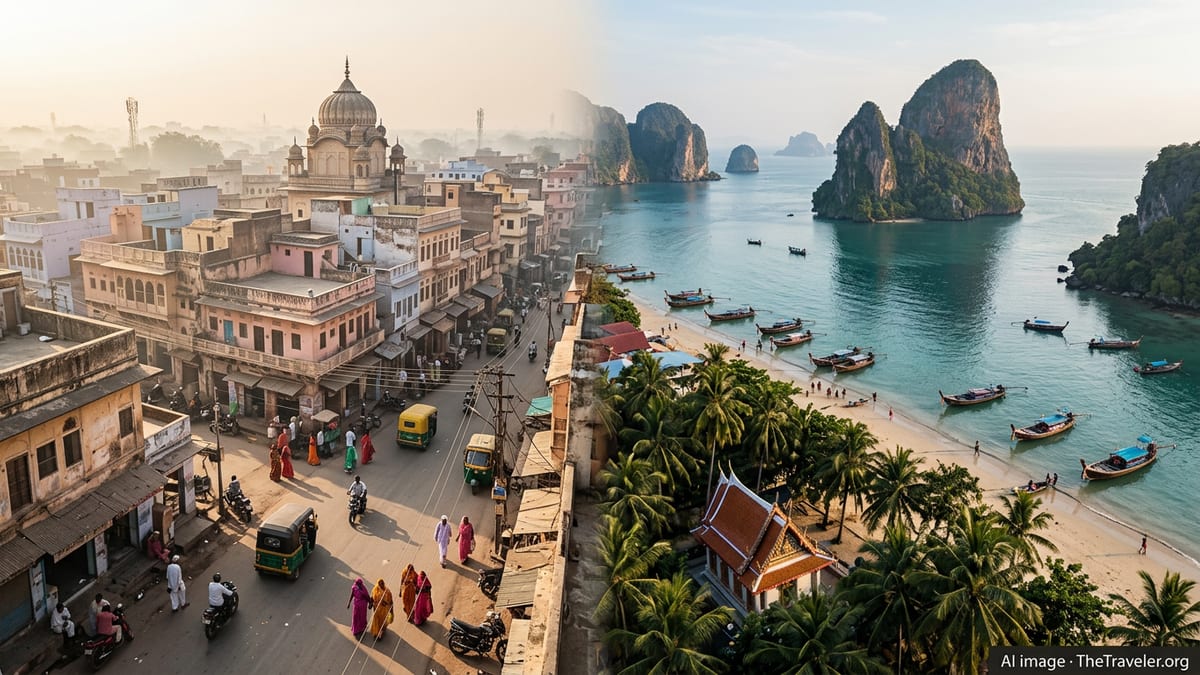
Overall Vibe: How India and Thailand Feel on the Ground
Travelers often describe India as overwhelming in the best and worst ways at once. Cities like Delhi and Mumbai hit you with noise, traffic, color and crowds within minutes of arrival. Sacred cows wander through markets, incense burns outside temples, and you might pass a modern shopping mall and a centuries-old shrine on the same block. The intensity can be exhausting, but it also leads to some of the most vivid and memorable moments you will have anywhere.
Thailand, by contrast, usually feels gentler and more orderly, especially for first-time visitors to Asia. Bangkok is busy and urban, but public transport is relatively efficient and tourist areas are clearly set up for visitors. Outside the capital, beach towns and islands slow the pace dramatically. There is still plenty of chaos in local markets or at night-time food streets, yet the country’s tourism infrastructure often cushions visitors from the sharpest edges.
That contrast shapes the broader travel experience. India tends to demand more patience and resilience, especially with noise, pollution, bureaucratic quirks, and widely varying standards in transport and accommodation. Thailand usually delivers a smoother, easier trip, particularly for less experienced travelers or those short on time.
In short, India often appeals to those seeking depth, rawness and culture shock, while Thailand is ideal for relaxed holidays, soft adventure and simple, beach-and-food-focused escapes.
Costs and Budget: What You Will Really Spend
Both India and Thailand are affordable by global standards, but day-to-day spending patterns differ. In India, basic costs for food, local transport and budget rooms can be extremely low, especially away from major business centers. You can still find simple guesthouses and homestays in many regions at prices that undercut most of Southeast Asia. Long-distance trains are one of the cheapest ways to cover vast distances, though comfort levels depend heavily on which class you book. Domestic flights between major cities are widely available and remain reasonably priced if booked in advance.
Thailand is no longer the ultra-cheap destination it once was, yet it remains excellent value compared with Western Europe or North America. Beach destinations and popular islands have seen prices rise, particularly for midrange hotels and imported drinks, but you can still keep daily costs moderate by eating at local markets, using public buses or trains, and staying in guesthouses a few streets back from the sand. Local buses, minivans and budget airlines connect major hubs with high frequency, which helps keep transport costs predictable.
On a very tight budget, India can often work out cheaper overall, especially for slow overland travel and if you are comfortable with simpler accommodation and basic eateries. Thailand generally costs more per day in popular tourist spots, but the gap can narrow when you factor in internal flights or the cost of time lost to logistical delays. Thailand’s strong tourism infrastructure and competitive low-cost airlines sometimes mean you can see more in less time without dramatically increasing your spending.
For most independent travelers, a realistic expectation is that India will allow the lowest rock-bottom daily spend, while Thailand offers better value for midrange comfort. High-end stays, private tours and premium beach resorts can be expensive in both countries and can quickly move your trip into a more international price bracket.
Visas, Entry Rules and Travel Practicalities
Visa and entry conditions change regularly, and both India and Thailand have updated systems in recent years to balance tourism promotion with tighter controls. Many travelers can apply for electronic visas or use visa-exempt schemes, especially for shorter holidays, but the details depend on your nationality and length of stay. India continues to expand its e-visa system for tourists, which allows many visitors to apply and be approved online before travel, reducing the need to visit a consulate. Processing times are often quick when documentation is complete, although applicants should still allow for potential delays and always check the latest official guidance before booking non-refundable travel.
Thailand has moved toward a fully digital entry process. A Thailand Digital Arrival Card must typically be completed online before arrival, replacing older paper forms. Authorities have also strengthened proof-of-funds checks and are gradually tightening rules around long stays using repeated visa exemptions or tourist visas. The broad goal is to encourage tourists who can show they can support themselves comfortably while discouraging those working illegally or overstaying. For mainstream tourists coming for a standard holiday of a few weeks, these changes mostly translate into extra paperwork and the need to carry more documentation, rather than a barrier to visiting.
On the ground, Thailand generally offers more straightforward arrival experiences at its main international airports, with clear traveler signage and large volumes of English-speaking staff in tourist-heavy terminals. Major Indian airports have modernized rapidly and increasingly resemble their global counterparts, yet queues for immigration and security can still be unpredictable. For both destinations, the safest approach is to build extra time into connecting flights and to have all documents printed or saved offline, including hotel details, onward tickets and proof of funds where required.
In both countries, travel insurance is strongly recommended, not only for medical emergencies but also for trip disruptions and last-minute changes to regulations. Public information campaigns and local travel advisories emphasize the importance of monitoring official announcements, especially around changes to visa waivers, stay limits, and digital entry requirements.
Culture, Religion and Social Norms
Cultural experiences in India and Thailand can feel very different, even though both are home to rich religious traditions and layered histories. India is famously diverse: dozens of major languages are spoken, and religion is a powerful force in daily life, with Hinduism, Islam, Sikhism, Christianity, Buddhism, Jainism and others all prominently represented. You might move from a Sufi shrine in one city to a Sikh gurdwara the next day and a Hindu temple festival the day after. Each region tends to have its own style of dress, festivals, classical music, theater and crafts.
Thailand is more culturally unified around its majority Buddhist identity and the monarchy, though there are significant regional variations between the north, central plains, Isan region and the south. Ornate Buddhist temples, saffron-robed monks on their morning alms rounds, and ritual offerings at spirit houses are all part of the everyday landscape. Respect for elders, for the monarchy and for religious spaces is deeply ingrained, and concepts such as "saving face" and avoiding open conflict shape many social interactions.
These differences play out in expectations of visitors. In both countries, modest dress is essential when visiting religious sites, meaning covered shoulders and knees as a minimum. In India, more conservative norms often extend beyond temples, especially in smaller cities and rural areas; many women travelers feel more comfortable in loose local clothing such as kurtas or long tunics. In Thailand, beachwear is accepted at resorts and islands but should be covered when leaving the immediate beach area, and public displays of affection are usually kept low-key.
Etiquette also differs. In Thailand, it is important not to touch people on the head, not to point your feet at religious images or people, and to avoid disrespectful comments about the monarchy. In India, social norms can be more varied from state to state, but basic politeness, removing shoes before entering homes and some shops, and sensitivity about topics such as religion and local politics go a long way. In both destinations, learning a few phrases in the local language and showing curiosity about customs will often be rewarded with warmth and hospitality.
Food, Drink and Dietary Considerations
Food is a major reason travelers fall in love with both India and Thailand. Yet they offer quite different culinary experiences. India’s vast geography produces a staggering range of regional cuisines, from the rich gravies and breads of the north to the coconut- and rice-based dishes of the south and the seafood-heavy menus of the coastal states. Spices are at the heart of Indian cooking, and even everyday vegetarian dishes can be remarkably complex in flavor. Street food scenes in cities like Delhi, Kolkata or Mumbai are intense, delicious and, for newcomers, sometimes intimidating because of crowds and hygiene concerns.
Thailand’s food culture is equally celebrated but tends to place more emphasis on balance between sweet, sour, salty and spicy flavors. Classic noodle dishes, fragrant curries, grilled meats, papaya salad and an abundance of tropical fruits are easy to find from street stalls to midrange restaurants. Street food is deeply embedded in urban life, and many locals eat out for multiple meals a day. Hygiene standards at busy, long-running stalls are often good, though as always, it pays to choose vendors with high turnover and to watch how food is stored and prepared.
For vegetarians and vegans, India often feels easier, especially in areas with strong vegetarian traditions. Many restaurants mark vegetarian items clearly, and plant-based dishes are central rather than an afterthought. Thailand can be more challenging for strict vegetarians, as fish sauce, shrimp paste and meat-based stocks are common in many dishes even when meat is not visible. However, vegetarian and vegan restaurants are increasingly common in major Thai cities and resort areas, and staff in tourist-oriented venues are more familiar with requests to omit animal products.
Alcohol is widely available in Thailand’s tourist zones, from beach bars to rooftop venues, although taxes can make imported drinks expensive. In India, availability and regulations around alcohol vary significantly by state, with some states imposing tight restrictions or higher taxes. In both countries, tap water is generally not considered safe to drink, so bottled or filtered water is the norm. Sensible precautions, such as handwashing, avoiding ice of uncertain origin and easing into spicy street food rather than over-committing on day one, can reduce the risk of stomach upsets.
Transport, Safety and Ease of Getting Around
India’s size makes internal transport a central part of the travel experience. The railway system is extensive and, for many visitors, a highlight in itself. Long-distance trains range from basic sleeper classes to air-conditioned compartments with bedding included, and booking can usually be done online once you understand the system. Buses fill in gaps where trains do not reach, and rides can range from leisurely daytime services to overnight journeys on busy corridors. Domestic aviation has expanded in recent years, and competition among carriers has brought down prices on key routes.
Thailand, while geographically smaller, is exceptionally well linked for travelers. Budget airlines connect Bangkok with major tourist hubs such as Chiang Mai, Phuket and Krabi, often with multiple daily departures. Long-distance buses and trains are widely used and generally more predictable in timing than many visitors expect. Within cities, options such as the BTS Skytrain and MRT in Bangkok, songthaews in provincial towns and ride-hailing apps in many urban areas make short journeys straightforward.
In terms of safety, both India and Thailand welcome millions of visitors a year without incident, yet practical precautions are essential. Petty theft and scams targeted at tourists occur in both destinations, particularly around transport hubs, nightlife areas and major attractions. Common-sense measures such as using hotel safes, avoiding flaunting valuables and agreeing fares in advance where meters are absent can reduce risks. Women travelers in India may need to be more cautious, especially when moving around at night or in crowded public transport, while Thailand’s established beach and nightlife scenes bring their own set of concerns, such as drink safety and occasional disputes over bar or tuk-tuk bills.
Road safety is a shared weak point. Traffic in major Indian cities and on intercity highways can be chaotic, with a mix of vehicles, animals and pedestrians sharing space. Thailand, meanwhile, has high accident rates for motorbikes and scooters, particularly in resort zones where inexperienced visitors rent bikes. Wearing helmets, avoiding driving late at night, and not riding if you are unfamiliar with local road conditions are all key precautions. In both countries, sticking with reputable transport providers and avoiding overcrowded or visibly unsafe vehicles is wise.
Travel Styles: Who Each Destination Suits Best
Because their strengths are so different, India and Thailand naturally attract different kinds of trips. India is often treated as a destination for immersive, slower travel: months-long backpacking routes, journeys focused on spiritual retreats, or in-depth regional explorations of places like Rajasthan, Kerala or the Himalayan foothills. The sensory richness and variations between states mean that even a multi-week itinerary barely scratches the surface. This depth appeals particularly to travelers who enjoy complex cultures, history, and the feeling of being pushed far outside their comfort zone.
Thailand tends to shine for shorter vacations, first-time trips to Asia and beach-centered breaks. Many itineraries combine a few days in Bangkok with time in the north for temples and nature, plus an island stay at the end. The country is also popular with remote workers and long-stay visitors who want dependable infrastructure, good internet and a large international community without the costs of Western capitals. For families, Thailand’s reputation for friendliness, straightforward transport and child-friendly resorts is a major draw.
That does not mean India is unsuitable for first timers or families, or that Thailand lacks depth. Both have well-established tourist circuits and chances to get off the beaten track. However, India rewards more preparation and flexibility; even seasoned travelers are sometimes surprised by the gap between plan and reality, especially if weather, festivals or strikes disrupt schedules. Thailand usually delivers a more predictable experience, so it is often the better choice if you have limited time off work, are anxious about logistics, or simply want a holiday that feels like a holiday rather than an expedition.
Ultimately, your travel style and tolerance for chaos, crowds and unpredictability will guide the choice. If you are drawn to intense color, varied religions and a sense of constant surprise, India could be your ideal challenge. If you want warm seas, easy transport and the option to raise or lower your comfort level quickly, Thailand may be the better fit.
The Takeaway
Choosing between India and Thailand is less about which country is "better" and more about what you want from this particular trip. India usually offers the greater cultural and emotional intensity, more dramatic regional contrasts and often lower baseline costs, at the price of more logistical friction and a steeper learning curve. Thailand provides a softer landing: warm hospitality, streamlined transport systems, highly developed tourism services and some of the most accessible beaches and street food scenes in Asia.
If this is your first long-haul trip or you are planning a short break with limited time to troubleshoot, Thailand may suit you best. If you have a bit more time, a higher appetite for unpredictability and a desire for a trip that might change the way you see the world, India may be worth the extra effort. Many travelers ultimately visit both, sometimes starting in Thailand to acclimatize to the region’s climate and customs before tackling the full-on experience of India.
Whichever you choose, careful planning around visas, insurance, health precautions and realistic daily budgets will go a long way. Stay flexible, travel respectfully, and you are likely to find that both countries offer far more than any single visit can contain, making a return trip almost inevitable.
FAQ
Q1. Which is cheaper overall for travelers, India or Thailand?
India often works out cheaper at the very low-budget end, especially if you use trains and simple guesthouses, while Thailand can be slightly more expensive per day but offers strong value in the midrange.
Q2. Is Thailand easier for first-time visitors than India?
Yes, for most people Thailand feels easier thanks to streamlined entry processes, clear tourist infrastructure and straightforward internal connections between major destinations.
Q3. Which country is better for vegetarian and vegan travelers?
India is generally more comfortable for strict vegetarians and vegans because many regions have long-standing vegetarian food traditions and clearly labeled plant-based dishes.
Q4. How do safety levels compare between India and Thailand?
Both countries are broadly safe for tourists who take normal precautions, though women in India may need to be extra cautious in some settings and Thailand has notable road and motorbike accident risks.
Q5. Do I need to book transport in advance in both countries?
In India it is wise to book popular long-distance trains and flights ahead, while in Thailand you can often be more spontaneous, although domestic flights and night trains still benefit from advance booking.
Q6. Which destination is better for a short, two-week holiday?
Thailand usually suits a two-week break better because you can combine city, countryside and beaches with less time lost to long overland journeys.
Q7. Is internet connectivity good in India and Thailand?
Both offer widespread mobile data and urban broadband, with Thailand generally providing more consistent speeds in tourist areas and India having more variation between regions.
Q8. How important is modest dress in each country?
Modest dress is essential at religious sites in both countries; in India, conservative clothing is often advisable more broadly, while in Thailand it is mainly required away from beaches and nightlife zones.
Q9. Can I travel independently, or do I need tours?
Independent travel is entirely feasible in both India and Thailand, but first-time visitors to India may find occasional guided tours helpful for orientation in busy cities and complex regions.
Q10. If I want both beaches and culture, which should I choose?
Thailand makes it exceptionally easy to combine islands with temples and local life in a short trip, while India offers beaches too but usually requires more time and planning to link them with cultural highlights.