

More news on this day
Indian airlines are preparing to cut around 3,000 weekly flights from their upcoming summer schedules, as rising fuel costs, aircraft and crew constraints, and airspace disruptions linked to the conflict in West Asia combine to squeeze capacity across one of the world’s fastest‑growing aviation markets.
Get the latest news straight to your inbox!
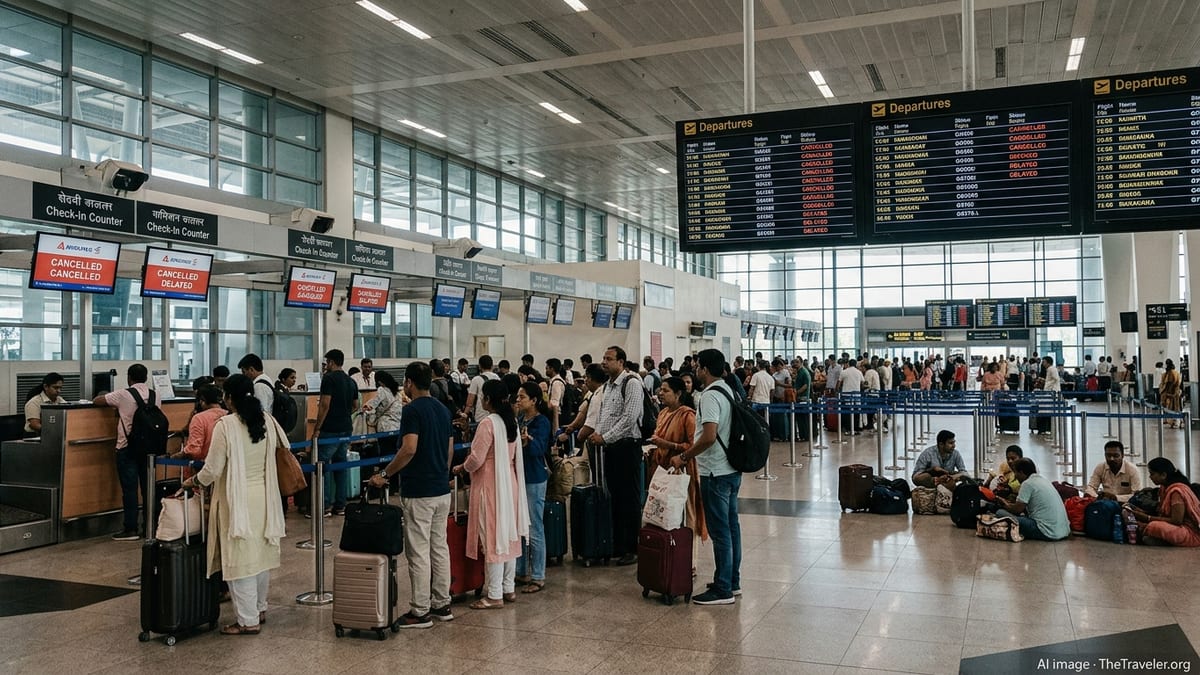
Summer Schedules Redrawn as Costs Climb
Preliminary schedule filings and industry analyses indicate that Indian carriers are scaling back planned summer capacity by roughly 8 to 10 percent compared with earlier expectations, translating into about 3,000 fewer weekly flights. The reductions are focused on routes with thinner demand and services where operating costs have surged most sharply, especially longer domestic legs and international sectors that now require detours around closed or risky airspace.
Publicly available data shows that the largest cuts are being led by full‑service and low‑cost carriers with significant exposure to international routes, including services from northern Indian hubs to West Asia and onward to Europe and North America. These flights have seen sharp increases in flight times and fuel burn, making some frequencies commercially marginal at current fare levels.
Aviation analysts note that the latest pullback comes on top of earlier disruptions triggered by aircraft delivery delays, maintenance bottlenecks and crew scheduling rules, leaving airlines less flexibility to absorb external shocks. As a result, carriers are using the summer timetable revision to consolidate operations around higher‑yield routes and to build in additional buffers for disruptions.
For travellers, the net effect is a leaner summer schedule that may still look busy on main trunk routes but offers noticeably fewer options on secondary city pairs and overnight services. The thinner network is expected to place further upward pressure on fares, particularly around holiday peaks.
West Asia Conflict and Airspace Closures Reshape Routes
The decision to pare back flights is closely linked to the continuing conflict in West Asia and a patchwork of airspace restrictions stretching from the Middle East to South Asia. Reports indicate that Indian carriers are avoiding or are barred from using several key corridors, forcing wide detours for flights linking India with West Asia, the Caucasus, Europe and parts of North America.
The closure of Pakistani airspace to Indian operators, in particular, has added hours to many long‑haul and regional routes, according to published coverage. Flights that once followed relatively direct paths now trace more southerly or over‑water routings, lengthening block times, complicating crew scheduling and in some cases necessitating technical refuelling stops that raise costs further.
Industry assessments suggest that each additional hour in the air can significantly erode margins when combined with higher fuel prices and airport charges. On some routes, the added time and fuel consumption have tipped the economics against maintaining all previously scheduled frequencies, prompting airlines to consolidate departures into fewer, fuller flights.
While some foreign carriers have also rerouted or trimmed services into India, the impact is particularly acute for Indian airlines because their networks are heavily built around West Asia as a gateway to the wider world. The uncertainty over how long the current airspace constraints will persist has encouraged planners to bake conservative assumptions into the summer schedule rather than risk large‑scale ad hoc cancellations.
Fuel Prices and Currency Pressures Squeeze Margins
At the same time, the cost side of the ledger has deteriorated. Aviation turbine fuel prices have tracked global crude benchmarks higher since the escalation of hostilities in West Asia, with refiners and tax structures amplifying the increase for Indian buyers. Publicly available information shows that fuel already accounts for a substantial share of airline operating expenses in India, and recent surcharges introduced by major carriers highlight the pressure on margins.
Several large airlines have announced fuel surcharges on domestic and international tickets in recent weeks, signalling that base fares alone are no longer sufficient to cover the jump in variable costs. Analysts suggest that these measures only partially offset the impact of more expensive fuel when combined with longer routes, meaning airlines still have strong incentives to trim less profitable flights from their rosters.
Currency movements add another layer of strain. A weaker rupee against the US dollar increases the local‑currency cost of fuel, aircraft leases, maintenance and insurance, all of which are typically dollar‑denominated. This combination of higher dollar costs and limited pricing power on many routes has narrowed the gap between profitable and loss‑making frequencies, prompting closer scrutiny of summer schedules.
In this environment, cutting 3,000 weekly flights functions as a form of capacity discipline. By concentrating demand on a smaller number of services, carriers seek to support higher average fares and improve load factors, helping to stabilise finances after several volatile seasons.
Impact on Travellers and Key Tourism Corridors
The reduction in weekly flights is expected to be felt most strongly on routes connecting India’s tier‑two and tier‑three cities with major domestic hubs and popular outbound leisure markets in West Asia. Travel industry reports indicate that some smaller airports may see fewer daily connections to metro centres, requiring passengers to rely on less convenient timings or additional one‑stop journeys.
Outbound tourism flows to destinations such as Dubai, Abu Dhabi, Doha and other Gulf gateways are likely to face tighter seat supply, especially during peak school holiday weeks. Similar constraints may appear on itineraries linking India to Europe and North America via West Asian hubs, as schedule cuts and rerouting compress available capacity even when demand remains robust.
For domestic leisure travellers, the trimmed schedules could mean fewer last‑minute deals and a greater need to book well in advance to secure preferred dates and times. Corporate travellers may find that early‑morning and late‑evening options, which are often favoured for day trips, are preserved on key business routes but reduced elsewhere.
Tourism boards and hospitality operators in India’s resort regions will be watching the situation closely. While demand for travel remains resilient, fewer direct flights can dampen impulse trips and make some destinations less competitive compared with alternatives that retain more frequent or cheaper air links.
Airlines Balance Short‑Term Cuts With Long‑Term Growth Plans
Despite the near‑term pullback, Indian aviation remains on a structural growth path, and airlines continue to talk up long‑term fleet expansion and network development in public statements and filings. Large aircraft orders placed in recent years point to confidence that demand will keep rising once current geopolitical and cost headwinds ease.
However, the immediate priority is stabilising operations and finances. The planned reduction of around 3,000 weekly flights offers airlines breathing space to manage crew rosters, maintain on‑time performance and conserve cash. Some carriers are also using the opportunity to accelerate cabin refurbishments and maintenance checks that are harder to schedule when networks are stretched.
Aviation commentators suggest that the current summer could act as a reset period in which Indian airlines recalibrate their mix of domestic and international flying, reassess the role of regional jets and turboprops, and refine their strategies for serving West Asia without over‑reliance on vulnerable corridors. The lessons from operating through airspace closures and conflict‑driven volatility are likely to shape route planning well beyond this season.
For now, travellers face a paradoxical situation: demand for air travel to, from and within India remains strong, but the network offering is tightening as carriers respond to unprecedented external shocks. How quickly airlines restore the 3,000 weekly flights being trimmed for this summer will depend largely on the trajectory of fuel prices, regional security and the reopening of key airspace links.