

More news on this day
Indian airlines have begun cutting roughly 3,000 weekly flights as a regional war-driven surge in jet fuel prices and disrupted airspace push operating costs sharply higher, reshaping how millions of travelers move within India and to key overseas destinations.
Get the latest news straight to your inbox!
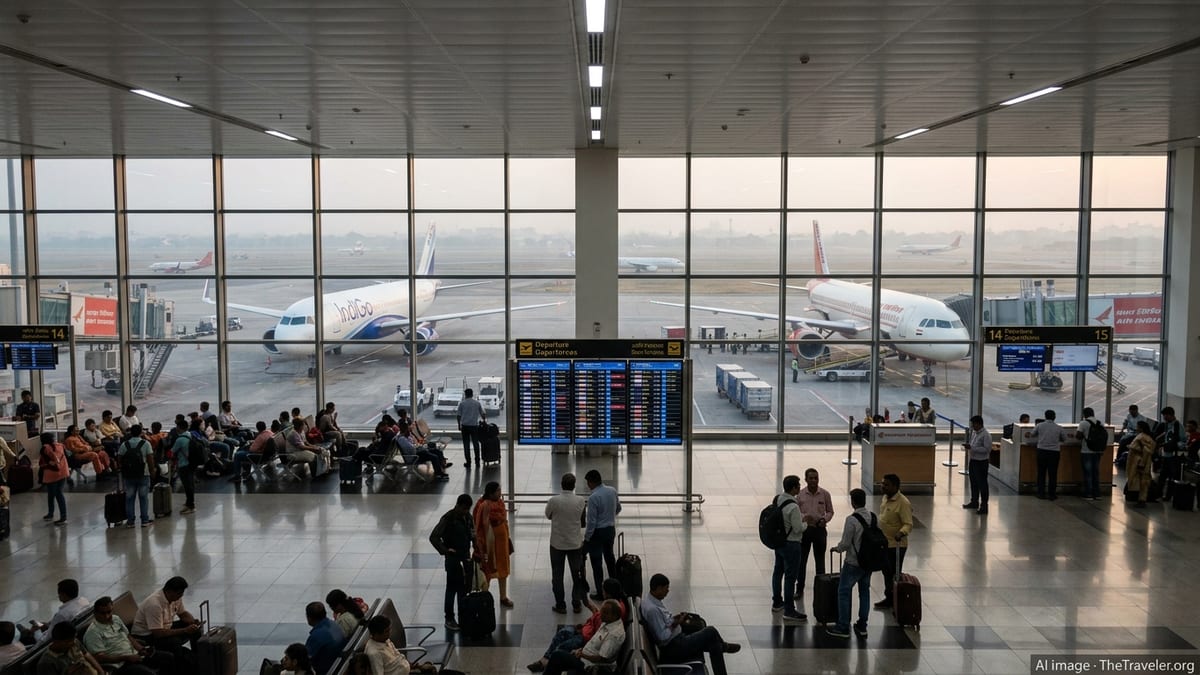
War in West Asia and Airspace Curbs Reshape Indian Skies
Published coverage on India’s aviation sector indicates that the 2026 conflict in West Asia, combined with Pakistan’s ongoing closure of its airspace to Indian carriers, has created one of the harshest operating environments for Indian airlines in years. Jet fuel prices, already elevated after previous global shocks, have climbed further, while several traditional corridors to Europe and the Middle East now require longer routings and extra fuel burn.
Air India, IndiGo, SpiceJet and newer carriers have been forced to navigate a patchwork of restricted flight paths and security-sensitive zones, reworking schedules that once relied heavily on direct routings via West Asian hubs. Publicly available information shows that Pakistani airspace remains closed to Indian aircraft, forcing long-haul services to Europe and North America to detour and, in some cases, adding hours to flight times.
Industry reports suggest that the combined effect of the war and airspace bans has pushed Indian airlines to trim capacity aggressively, with reductions concentrated on less profitable domestic routes and selected international flights. The headline figure of about 3,000 weekly flights cut reflects a mix of outright cancellations, seasonal suspensions and frequency reductions as carriers attempt to stem mounting losses.
The squeeze comes just as demand for travel within India remains robust, leaving airlines in the difficult position of trying to balance full planes against the risk of flying unprofitable sectors. Network planners are now focusing on preserving key trunk routes and high-yield international services, even if that means thinning out connectivity to smaller cities and secondary overseas markets.
Fuel Costs Surge as Airlines Add Surcharges and Trim Networks
Available industry analysis shows aviation turbine fuel has surged to levels that many carriers describe as unsustainable without either higher fares or substantial capacity cuts. Unlike some global peers that actively hedge fuel costs, Indian airlines typically bear price spikes more directly, reflecting both tax structures and limited access to sophisticated hedging tools.
In recent weeks, major Indian airlines have announced fuel surcharges on both domestic and international tickets, citing the latest jump in crude prices linked to the Iran conflict and tensions across West Asia. Public statements and press coverage indicate that Air India led the move, followed closely by IndiGo and other carriers, adding a flat surcharge per sector that scales with distance.
These surcharges, however, only partially offset higher costs. Analysts tracking the sector note that on long rerouted flights skirting conflict zones and closed airspace, additional fuel burn, crew time and overflight fees can erase already thin margins. As a result, carriers are combing through their schedules and identifying flights where even full loads cannot justify the operational expense.
By paring back roughly 3,000 weekly services, airlines aim to consolidate demand onto fewer flights, improve average loads and reduce exposure to loss-making sectors. The cuts are particularly visible on routes where multiple carriers once competed with high frequency, as well as overnight and off-peak services that are more sensitive to cost spikes.
Domestic Travelers Face Higher Fares and Thinner Connectivity
For domestic passengers, the new reality is fewer options and higher prices on many routes. With government-imposed airfare caps recently rolled back after last year’s IndiGo scheduling crisis, airlines now have greater freedom to pass a portion of their rising fuel bill on to consumers. Aviation commentators report that average fares on busy metro-to-metro routes have begun to climb, especially around peak travel periods.
Secondary cities and regional airports are feeling the brunt of the 3,000-flight reduction, as carriers concentrate aircraft on routes where demand and yields are strongest. Passengers in these markets are increasingly pushed toward one-stop itineraries via larger hubs, lengthening journey times and reducing flexibility for business and last-minute travel.
Reports from consumer forums and aviation-focused publications highlight growing frustration among travelers facing last-minute schedule changes, longer connections and limited alternatives when flights are cancelled. At the same time, airlines argue that maintaining an overly dense network in the face of soaring fuel costs would risk wider operational instability and deeper financial stress.
Some analysts suggest that, if fuel prices remain elevated and airspace restrictions persist, India’s domestic aviation landscape could see a structural shift toward fewer frequencies but larger aircraft on core routes. This would mirror trends seen after previous fuel shocks, though the current overlay of geopolitical tension makes the adjustment more complex.
International Routes Reconfigured as Europe and Gulf Links Take a Hit
The war-driven disruptions have had an outsized impact on India’s international connectivity, particularly to Europe and the Gulf. With Pakistani airspace closed to Indian carriers and conflict zones spreading across parts of West Asia, airlines have been forced to redesign flight paths and, in some cases, suspend services altogether.
Published coverage of schedule data reveals that several India–Europe routes now operate with reduced weekly frequencies, while some nonstop flights to key Gulf destinations have been temporarily cut or consolidated. Longer routings via Central Asian or Mediterranean corridors mean that aircraft and crews are tied up for more hours per round trip, limiting the number of flights that can be economically sustained each week.
For travelers, this translates into fewer nonstop options and more reliance on one-stop itineraries via relatively unaffected hubs, including Southeast Asian and European gateways. However, the global nature of the fuel price spike means that even these alternative routings are becoming more expensive, as partner airlines adjust fares and surcharges in tandem with Indian carriers.
Industry observers note that the long-term implications for India’s ambition to become a major international hub remain uncertain. While the current cuts may be framed as a short-term response to exceptional conditions, prolonged conflict and chronically high fuel prices could slow expansion plans and delay new long-haul routes that were expected to anchor India’s global aviation growth story.
Regulatory Balancing Act Between Consumer Relief and Airline Viability
The capacity cuts are unfolding against a backdrop of evolving regulatory responses. After intervening heavily during the 2025 IndiGo crisis, India’s aviation authorities had imposed temporary caps on certain domestic fares to protect consumers from sudden spikes. With those caps now lifted, regulators appear to be relying more on monitoring and data rather than direct price controls.
Publicly available statements from government channels and industry bodies reflect a delicate balancing act. On one hand, there is pressure to ensure that air travel remains broadly affordable and that essential connectivity is preserved to smaller cities. On the other, there is recognition that airlines cannot absorb the full impact of higher fuel costs and conflict-driven disruptions without risking deeper financial instability.
Sector analysts point out that some policy levers, such as reductions in taxes on aviation turbine fuel or targeted relief for strategically important routes, are being debated in policy circles. However, no broad-based measure has yet fundamentally altered the economics driving the current round of schedule cuts and surcharges.
As airlines shed about 3,000 weekly flights and rework their networks, both the industry and regulators are watching fuel markets and geopolitical developments closely. A sustained easing of tensions and lower oil prices could pave the way for a gradual restoration of capacity, while a protracted conflict would likely entrench the leaner schedules and higher fares that travelers are now beginning to encounter across India’s skies.