

More news on this day
India’s aviation sector is entering the peak Summer 2026 travel season with fewer weekly flights, as carriers trim capacity in response to spiralling fuel costs, a weaker rupee and costly airspace diversions that are squeezing already thin margins.
Get the latest news straight to your inbox!
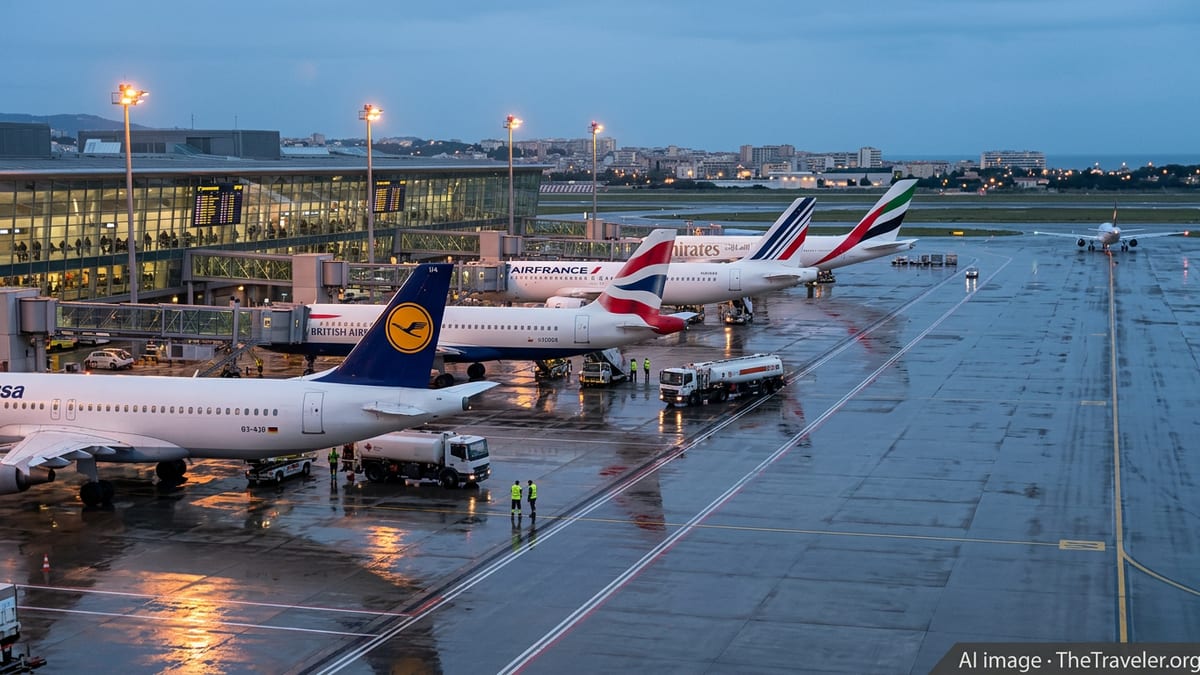
Summer 2026 Schedule Shows Noticeable Cut in Weekly Flights
Publicly available schedule data for the Summer 2026 season indicate that Indian carriers have reduced total weekly flights compared with the previous summer, breaking a multi-year trend of steady capacity additions. Domestic media coverage reports a cut of around 10 percent in planned flights, with the number of weekly services falling to roughly 23,000 as airlines recalibrate networks ahead of the April to October timetable.
The Directorate General of Civil Aviation has published airline-wise summer schedules on its website, but sector analysis notes that the consolidated weekly total is lower than in the Summer 2025 and Winter 2025–26 seasons. The pullback marks a notable shift for one of the world’s fastest-growing aviation markets, where domestic traffic had previously been supported by aggressive capacity expansion and intense fare competition.
Industry tracking suggests that IndiGo will still start the summer as India’s largest carrier by flights, with close to 2,000 daily domestic departures, while the Air India group and low-cost rivals such as SpiceJet focus on preserving yields and optimizing profitable routes. Smaller and regional airlines are also reported to be moderating growth plans, prioritizing aircraft utilization and financial resilience over market share gains.
The reduced schedule comes just as government controls on domestic airfare bands have been lifted, giving airlines more freedom to pass on rising costs through higher fares, even as the number of seats available to passengers each week is curtailed.
Fuel Prices and Rupee Slide Drive Escalating Operating Costs
Rising aviation turbine fuel prices are at the heart of the latest capacity reset. Recent financial and business coverage shows that fuel accounts for roughly 30 to 40 percent of Indian airlines’ operating expenses, making carriers highly sensitive to global oil price spikes and local tax policy. By March 2026, estimates from industry-focused outlets suggest that jet fuel prices in Delhi were around 50 percent higher than late 2025 levels, reflecting both geopolitical tensions and higher duties.
The pressure is magnified by the depreciation of the rupee against the US dollar, which has increased the cost of dollar-denominated items such as fuel, aircraft leases, maintenance and insurance. Credit rating agency assessments for FY2026 point to sector-wide losses that could reach the equivalent of 95 to 105 billion rupees, nearly double the previous financial year, underscoring how cost inflation is outpacing revenue gains.
Balance-sheet commentary from analysts notes that between 35 and 50 percent of major airline costs are now effectively dollar-linked, leaving carriers exposed when the rupee weakens or when oil markets tighten. Even with high load factors reported in late 2025, the industry is described as “flying full but bleeding cash,” with interest coverage ratios weakening and room for error shrinking.
Against this backdrop, reducing flight frequencies is emerging as a key lever for airlines to stabilize unit economics. Fewer flights can help raise average fares, improve load factors on remaining services and conserve cash by cutting fuel burn and airport charges, even if it means ceding some growth momentum in the short term.
Geopolitical Tensions and Airspace Restrictions Add to the Squeeze
The reduction in weekly flights is not being driven by fuel prices alone. Airspace disruptions linked to conflict in West Asia and a separate closure of Pakistani airspace to Indian carriers have significantly complicated flight planning, particularly for services to Europe and the Gulf. Publicly available reports outline how carriers have been forced to use longer routings to avoid restricted zones, adding time, fuel costs and crew complexity to long-haul operations.
Analysts estimate that rerouting around Pakistani airspace and conflict-affected corridors has added substantial incremental costs for widebody operators, with projections in earlier coverage suggesting potential additional expenses in the hundreds of millions of dollars if diversions persist over a full year. These factors have encouraged airlines to rationalize or temporarily suspend some long-haul and West Asia routes in the Summer 2026 schedule rather than absorb the full cost of detours.
In parallel, global market volatility has led to sharp swings in jet fuel benchmarks, amplifying the impact on Indian carriers that already face high domestic taxes on aviation fuel. Sector commentary highlights that excise duty and state-level value-added tax on jet fuel in major hubs such as Delhi and Mumbai remain elevated, further eroding margins when international prices spike.
Combined, these external shocks have made certain routes economically marginal at previously planned frequencies. Reducing weekly rotations, consolidating flights on days of stronger demand and reassigning scarce aircraft to more resilient markets are increasingly visible strategies in the revised Summer 2026 schedules.
Grounded Aircraft, Regulatory Changes and Capacity Discipline
Beyond fuel and geopolitics, structural constraints within the Indian aviation ecosystem are also influencing capacity decisions. Engine supply issues and maintenance bottlenecks have left a significant portion of the national fleet grounded at various points over the last year. Research from rating agencies and financial news outlets estimated that more than 100 aircraft across Indian carriers were out of service due to engine and supply-chain problems in early 2025, representing well over 10 percent of total industry capacity.
While some of that capacity has gradually returned, airlines continue to operate with less flexibility than their order books might suggest. Returning grounded aircraft to service requires substantial capital and careful deployment, and many airlines are using the Summer 2026 timetable to match fleet availability more tightly to demand, rather than stretching operations thin across marginal routes and times.
Regulatory changes are another factor. New crew-duty norms and evolving passenger-protection rules, such as recent changes to cancellation and refund practices, are altering operational planning and revenue management. Reporting on the sector indicates that stricter enforcement of scheduling and service standards has encouraged airlines to build more slack into rosters and turnarounds, which in turn can limit the total number of weekly flights that can be reliably operated.
At the same time, new requirements around ancillary revenues, including a recent move to increase the proportion of seats that must be available for free selection, are reshaping the balance between ticket prices and add-on charges. With some ancillary income streams constrained, carriers have added incentive to cut unprofitable frequencies and focus on segments where base fares can better reflect underlying costs.
Impact on Fares and Travellers’ Summer Plans
For passengers, the combination of fewer weekly flights and higher input costs is translating into a tougher environment for finding affordable seats during the busy summer window. Travel and consumer finance coverage notes that domestic and international airfares out of India have already risen in recent months, with international tickets to popular destinations in West Asia and Europe showing double-digit percentage increases as fuel prices and detours push up break-even levels.
The gradual removal of domestic airfare caps has given airlines more freedom to adjust prices according to demand, at precisely the moment when capacity is being reduced and operating conditions are deteriorating. With schedules trimmed and load factors already high, particularly on trunk routes linking major metro cities, last-minute bargains are becoming harder to find.
Industry watchers suggest that Indian travellers planning trips between April and October 2026 may need to book earlier than usual or be flexible on dates and timings, especially for weekend and holiday periods. The reduction in weekly frequencies not only narrows choice on specific days but can also affect onward connections and regional links, particularly from non-metro airports that rely on a limited number of daily services.
Even so, sector forecasts continue to point to robust underlying demand for air travel in India over the medium term, supported by rising incomes and ongoing airport expansion. The Summer 2026 schedule appears less a reversal of that long-term trajectory and more a tactical retrenchment, as airlines seek to navigate a difficult cost environment by flying fewer, more profitable services rather than chasing growth at any price.