

More news on this day
A regional Indian airline founded in 2007 has entered voluntary liquidation, abruptly cancelling all scheduled flights and stranding thousands of passengers who had bookings through March 2026, according to multiple recent reports.
Get the latest news straight to your inbox!
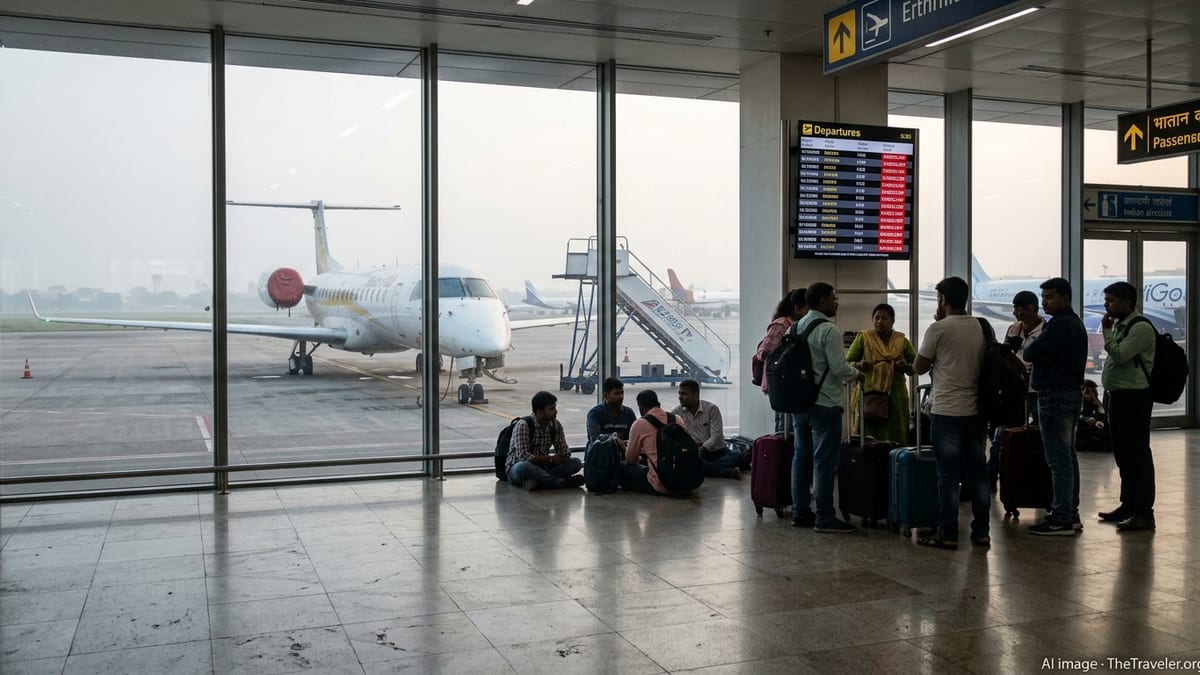
Carrier With Nearly Two Decades of Operations Halts Flights
Recent coverage from business and travel media in India indicates that the airline, based in Kolkata and operating primarily domestic routes, confirmed the cancellation of all commercial flights in early January 2026. The decision reportedly affected between 3,000 and 4,000 travellers holding tickets for journeys between January and March, many of whom had to make last-minute arrangements with rival carriers.
Publicly available information shows that the company entered a formal voluntary liquidation process on 5 January 2026, following years of financial strain and a prolonged search for fresh investment. The move brings to an end nearly two decades of activity in the Indian market, after the airline’s launch in 2007 as a regional player targeting underserved routes.
Reports describe the carrier as a relatively small but visible presence in India’s crowded aviation sector, operating a modest fleet on point-to-point services. Despite its size, the sudden withdrawal of capacity is expected to create short-term disruption on some secondary city pairs where competition is limited and alternative connectivity is already constrained.
Long-Running Insolvency Ordeal Ends in Liquidation
According to insolvency filings summarized in Indian business press, the airline had been under the supervision of the National Company Law Tribunal for several years while administrators attempted to secure long-term funding. The company spent an extended period in formal insolvency proceedings, during which various turnaround plans and investment proposals were considered but ultimately did not materialize.
More recent reports indicate that, for the financial year 2024, the airline managed only a very modest net profit, described in local coverage as equivalent to a few thousand US dollars. Analysts quoted in the Indian financial media have noted that such a thin margin was insufficient to address the carrier’s legacy debts, lease obligations, and growing operational costs, particularly in a market where fuel prices and airport charges have been volatile.
With no viable investor emerging and creditors pressing for clarity, the board is reported to have opted for voluntary liquidation under India’s Insolvency and Bankruptcy Code. This mechanism is designed to wind down companies that are no longer considered salvageable, allowing assets such as aircraft, spare parts, and takeoff and landing slots to be sold so that proceeds can be distributed to creditors according to established priority rules.
Passenger Fallout and Refund Uncertainty
The immediate consequence for travellers has been the cancellation of all existing services, with notices appearing on booking platforms and in local travel media shortly after the liquidation decision was disclosed. Passengers with upcoming trips have been advised in public statements and news reports to contact the airline’s appointed insolvency professionals or their travel agents to seek information about potential refunds or rebooking options.
Consumer advocates cited in Indian travel coverage have warned that reimbursement processes associated with airline insolvencies can be lengthy and complex. In many recent airline failures globally, customers without travel insurance or credit card chargeback protections have recovered only a portion of the value of their tickets, if anything at all. The final outcome in this case will depend on the size of the airline’s remaining asset pool and the ranking of unsecured passenger claims relative to other creditors.
Indian regulators and industry observers have also highlighted broader implications for consumer confidence in smaller carriers. While low-cost and regional airlines have expanded connectivity across India, repeated collapses in the sector may encourage passengers to favor larger, better-capitalized brands, especially for essential or time-sensitive journeys.
Regional Capacity Gap in a Competitive Market
The liquidation comes at a time when India’s aviation market is experiencing both rapid growth and intense competition. Established full-service and low-cost carriers have been expanding fleets and consolidating networks, while newer entrants target niche routes. Against this backdrop, a relatively small regional operator with limited capital reserves has faced mounting pressure, particularly on routes where larger airlines could deploy additional capacity at short notice.
Industry commentary suggests that the disappearance of the Kolkata-based carrier will create short-term capacity gaps on a number of regional routes, especially those connecting smaller cities that were heavily reliant on its services. Over time, however, analysts expect other airlines to fill at least part of the void, either by launching new flights or upgauging aircraft on nearby trunk routes that can feed connecting traffic.
Airport operators in eastern India are also expected to feel the impact, as the airline’s closure means the loss of aircraft movements, aeronautical charges, and associated non-aeronautical revenue from passengers. Some regional airports had promoted the carrier as a key partner in boosting connectivity, and will now need to court alternative operators to maintain growth trajectories.
Part of a Wider Wave of Airline Failures
The collapse of the 2007-founded airline is consistent with a broader pattern of aviation restructurings and failures seen globally in the past two years. Legal and financial analyses of the sector point to a combination of high fuel costs, aircraft lease obligations, currency fluctuations, and lingering post-pandemic demand shifts as factors that have eroded the financial resilience of smaller carriers in particular.
Across Asia, Europe, and the Pacific, a succession of regional airlines have either entered formal restructuring or ceased operations outright since 2024. Commentaries from aviation consultancies and law firms describe a landscape in which access to capital often determines survival, and in which airlines with limited scale or constrained balance sheets struggle to withstand sudden revenue shocks or sustained competitive pressure.
In India, where domestic passenger numbers continue to grow, the liquidation underscores the uneven nature of that expansion. While the country’s largest carriers are placing large aircraft orders and building international hubs, smaller regional operators remain vulnerable to fluctuations in demand and costs. The demise of this Kolkata-based airline, after nearly nineteen years in business, highlights the challenges of sustaining a niche regional model in one of the world’s most competitive aviation markets.