

Planning a trip to Indiana’s parks has never been more rewarding, but understanding the growing mix of entrance fees and passes can be confusing, especially around Indiana Dunes. With recent changes affecting nonresident pricing at state parks and a separate fee system for Indiana Dunes National Park, it pays to know exactly what you need before you pull up to the gate or trailhead. This guide walks you through how Indiana’s park passes work, what they cost as of the 2025–2026 seasons, and how to choose the best option for your style of travel.
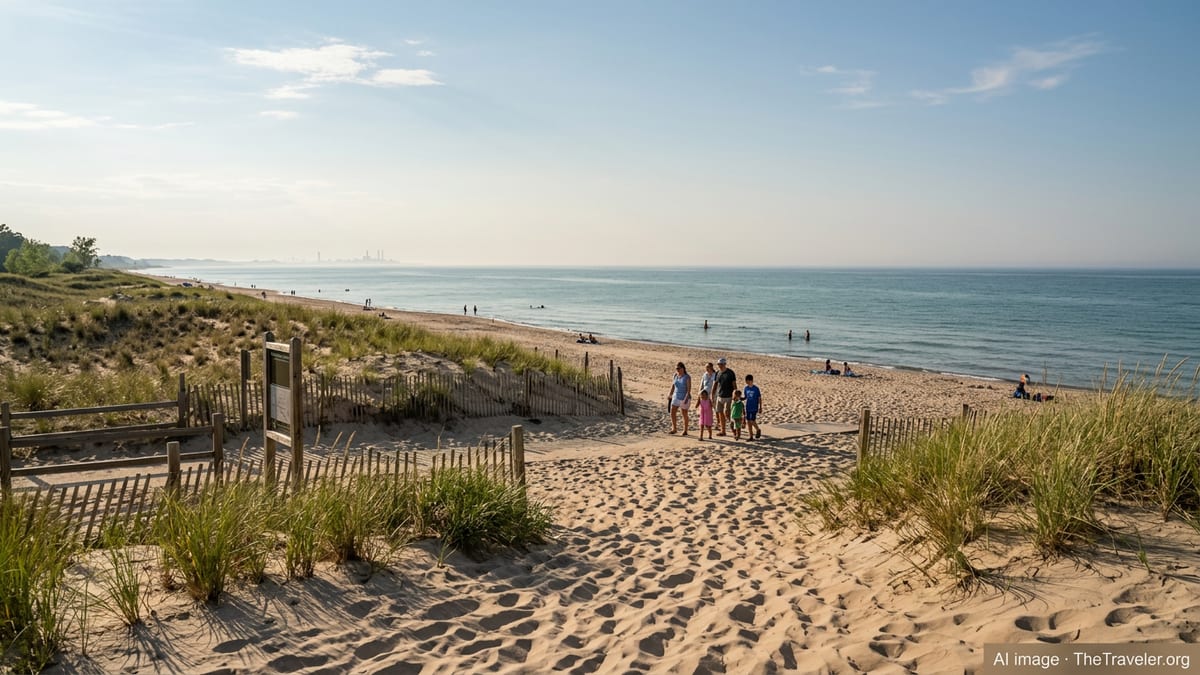
How Indiana State Park Entrance Fees Work
Indiana funds most of its state park operations through user fees rather than general taxes, which means gate fees and passes are central to how the system works. When you drive into an Indiana state park, you are usually paying for two things at once: access to the land and help maintaining trails, campgrounds, and facilities for future visitors. As a result, nearly every park with a staffed gate will charge some form of daily entrance fee or require a valid annual entrance pass.
For day visitors, Indiana typically charges a per-vehicle fee at state parks and reservoirs. As of the 2025 season, the standard daily rate for vehicles with Indiana license plates remains relatively modest, while nonresident rates have increased at many properties to generate more revenue without placing additional burden on local taxpayers. Pedestrians and cyclists entering without a vehicle generally pay a small per-person fee. These fees apply at Indiana Dunes State Park as well, but not at the neighboring federal Indiana Dunes National Park, which has its own structure.
Gate fees are charged each time you enter unless you have a qualifying pass hanging from your mirror or on your dashboard. This can add up quickly for families who like to return to favorite parks multiple times each season, which is where the state’s annual entrance passes offer real savings. The same basic rules apply across state parks, reservoirs, and most Department of Natural Resources properties that have entrance gates.
Importantly, state park gate fees and passes do not cover specialized attractions inside certain parks, such as historic sites, caves, or interpretive centers that may charge separate admission. Those are considered optional add-ons. For most travelers, however, the primary cost to plan around is the combination of daily per-vehicle fees and the choice of whether to invest in an annual pass.
Indiana State Park Passes: Types, Costs, and Who They Suit
Indiana’s system of annual entrance passes is built around how often you visit and whether you are a resident. For 2025, the standard resident annual entrance pass costs about the same as several weekend day visits combined, making it a good value once you expect more than a handful of trips. The nonresident annual pass is significantly higher than the resident version, reflecting higher nonresident daily rates across the system, but still offers a discount for regular out-of-state visitors who frequent Indiana Dunes State Park or other popular locations.
Several specialty passes expand access for older visitors and those with disabilities. The Golden Hoosier Passport is available to Indiana residents who meet age or disability-related eligibility, offering a reduced annual cost while still covering entry for the cardholder’s vehicle at most DNR properties. There are also passes or discounts for disabled Hoosier veterans and Indiana residents receiving Social Security disability benefits. These programs are designed to ensure that cost alone is not a barrier to enjoying the state’s public lands, especially for those on fixed incomes.
All annual entrance passes are valid for a single calendar year, typically from January 1 through December 31, regardless of when you purchase them. They cover the cardholder and everyone riding in a single private, noncommercial vehicle, or two motorcycles when used together. That structure makes passes particularly attractive for families and friend groups who tend to travel together, whether for camping weekends, day hikes, or beach outings.
It is worth noting where these passes do and do not work. Indiana’s annual entrance passes are valid at Indiana Dunes State Park but not at Indiana Dunes National Park. They also do not cover admission at Indiana State Museum sites or most state historic sites, which operate under different funding arrangements. At Falls of the Ohio State Park, for example, an annual entrance pass will cover parking but not full access to the interpretive center, which retains its own ticketing system.
Daily State Park Fees: Residents vs. Nonresidents
Daily entrance fees at Indiana state parks are one of the most important details for travelers passing through the state or planning a one-off visit. Vehicles with Indiana plates typically pay a lower per-vehicle daily rate than out-of-state visitors. As of early 2026, state officials have held in-state fees steady while raising nonresident rates at many properties, including Indiana Dunes State Park, to increase revenue from tourism while minimizing the impact on local residents.
At most Indiana state parks, Indiana residents pay a flat daily fee per noncommercial vehicle that is competitive with other Midwestern park systems. Nonresidents, by contrast, now often pay a considerably higher per-vehicle fee, particularly at heavily visited parks close to the Chicago area. In some cases, nonresident daily rates have nearly doubled in recent years, reflecting both growing visitation and the costs of managing crowded beaches, parking, and high-demand trail systems.
For pedestrians and cyclists, many parks charge a small per-person daily entrance fee, usually starting at around school-age children and up. This allows local residents who live near trails to access parks without driving, while still contributing modestly to maintenance. School buses, commercial coaches, and organized groups follow different pricing structures that are often based on group size and whether a formal program has been reserved with park staff.
The bottom line is that if you are a nonresident planning more than one or two days at Indiana Dunes State Park or other Indiana parks within the same calendar year, it is wise to compare the nonresident annual pass price with the sum of daily vehicle fees. For frequent visitors from neighboring states like Illinois or Michigan, a nonresident annual pass can quickly pay for itself, especially during a summer of repeated beach trips.
Indiana Dunes State Park vs. Indiana Dunes National Park
Indiana Dunes is unique because two different park systems meet along the same stretch of Lake Michigan shoreline. Indiana Dunes State Park is managed by the state and uses the Indiana Department of Natural Resources fee structure. Its entrance station sits at the end of a dedicated access road and charges the standard Indiana state park vehicle rate, with the higher nonresident fee for out-of-state plates. The park is compact, with a single continuous block of more than 2,000 acres, a guarded swimming beach in season, and a tight network of hiking trails including the popular Three Dune Challenge route.
Indiana Dunes National Park, by contrast, is a federal park managed by the National Park Service. It is made up of a patchwork of beaches, dunes, wetlands, and historic sites stretching along more than a dozen separate areas around the southern shore of Lake Michigan. In 2022, the National Park Service began charging entrance fees at Indiana Dunes National Park, aligning it with most other national parks. This means that the federal park has its own fees and passes that are completely separate from Indiana Dunes State Park.
The difference matters every time you arrive at a trailhead or beach parking lot. A state park annual entrance pass will get you past the gatehouse at Indiana Dunes State Park but is not valid at any of the national park’s access points. Likewise, a federal national park pass will cover entrance at Indiana Dunes National Park sites, but it will not be accepted at the state park gate. Many first-time visitors only realize this at the entrance station, which is why planning ahead for both systems can save money and surprises.
From a visitor experience perspective, both parks offer impressive dunes, beaches, and views of Lake Michigan, but they feel different. The state park tends to concentrate visitors into one main beach, campground, and trail hub, whereas the national park spreads people across multiple locations, from large developed sites like West Beach to quieter access points. Which you choose, and which passes you buy, depends on whether you prefer a classic beach day with services in one place, or a series of stops exploring different corners of the lakeshore.
Indiana Dunes National Park Fees and Federal Pass Options
Indiana Dunes National Park now requires an entrance fee at essentially all of its access points, whether you are parking at a beach lot, hiking a dune trail, or visiting certain historic areas. The National Park Service typically charges either a per-vehicle fee valid for multiple days or a per-person rate for those who arrive on foot, by bike, or via public transit. At Indiana Dunes, the standard federal structure applies: private vehicles pay a flat fee for a pass covering up to seven consecutive days, while individuals entering without a vehicle are charged a smaller per-person amount.
In addition to these short-term passes, Indiana Dunes National Park issues its own annual park pass. Priced well below the national interagency pass, it is aimed at repeat visitors who focus primarily on the Indiana Dunes area. This pass is valid for one year from the month of purchase and covers the pass holder and accompanying passengers in a single noncommercial vehicle at Indiana Dunes National Park sites. It does not cover entrance to Indiana Dunes State Park or other state-managed properties.
Travelers who plan to visit multiple national parks or other federal recreation areas within a 12-month period may be better served by the America the Beautiful national parks and federal lands pass. This interagency pass typically costs more than a single-park annual pass but is valid across more than two thousand federal sites. For many Midwest travelers, combining Indiana Dunes National Park with trips to places like Sleeping Bear Dunes, Cuyahoga Valley, or Gateway Arch can easily justify the price of the federal annual pass.
Federal passes at Indiana Dunes are usually available at staffed visitor centers, some entrance stations, and online through official platforms. When you buy a digital pass for Indiana Dunes National Park, you will be asked to show the pass on your phone or a printed copy when you arrive. As with Indiana’s state passes, federal passes admit the pass holder and accompanying passengers in a single private vehicle, but you should always check current federal rules for details, because policies and pass types can change from one year to the next.
Planning a Trip: Choosing the Right Pass for Your Itinerary
Choosing between daily fees and annual passes begins with an honest look at your travel plans. If you are an Indiana resident who loves hiking, camping, and beach days scattered throughout the year, a resident annual entrance pass is often the simplest, most cost-effective option. It allows you to drop into nearby state parks on a whim, from spring wildflower hikes to last-minute summer swims, without rethinking the cost each time. Pairing a resident annual pass with occasional national park day passes works well for those who only visit Indiana Dunes National Park once or twice a year.
Out-of-state visitors face a different calculation. Because nonresident daily fees at Indiana Dunes State Park and other properties have increased, a nonresident annual entrance pass becomes attractive if you plan multiple visits in the same calendar year, such as repeat beach weekends or a mix of camping and day trips. For those on a single, one-time vacation, however, paying daily fees at both Indiana Dunes State Park and Indiana Dunes National Park may still be the most economical approach, especially if your stay is shorter than a week.
Families and road-trippers who aim to string Indiana Dunes National Park together with other national parks within a 12-month period should weigh the value of the federal America the Beautiful pass. Even a couple of multi-day park visits can quickly match or exceed the cost of that annual national pass, and it simplifies logistics: one card, widely recognized at entrances across the country. You can still add a state park annual pass if you are spending significant time elsewhere in Indiana, since the two systems are independent.
When in doubt, sketch out your likely park days for the next year, estimate how many times you will pass through a gate, and compare those totals with the current prices for state and federal passes. Because both Indiana and the National Park Service occasionally adjust fees, especially for nonresidents, checking the latest official rates before you buy is important. Many travelers find that the peace of mind of an annual pass, and the ability to make spontaneous trips without revisiting the budget each time, is worth the upfront cost.
Where and How to Buy Indiana Park Passes
Buying an Indiana state park pass is straightforward once you know where to look. The most common option is to purchase your annual entrance pass at the gatehouse of any state park or reservoir when staff are on duty, especially at the start of the season. Many Indiana travelers pick up their pass on the first warm weekend of spring as they drive into a favorite park. Passes are usually available as physical cards that hang from your rearview mirror or sit on your dashboard, clearly visible to gate staff or roving rangers.
In addition to on-site sales, Indiana offers annual entrance passes through state customer service centers and official online outlets. Ordering online can be convenient for planning ahead, particularly if you want your pass in hand before a long weekend or camping reservation. If you choose to buy online, allow time for shipping or look for digital options where available, and always confirm that you are using an official state platform rather than a third-party reseller.
Federal passes for Indiana Dunes National Park follow a similar pattern. You can often purchase a seven-day vehicle pass or the Indiana Dunes National Park annual pass at visitor center desks or staffed entrance stations. Many national park passes are also sold online through federal recreation pass portals, where you can choose digital or physical formats. Digital passes usually require that the named pass holder be present and able to display the pass and a matching photo ID when requested by rangers.
Regardless of whether you are buying state or federal passes, keep your receipts and know the terms: passes are generally nontransferable, nonrefundable, and invalid if altered. If you are replacing a vehicle during the season, ask staff how to handle transferring or updating your pass information. And remember that neither state nor federal park passes usually guarantee a parking spot during peak times, so smart trip planning still matters, especially on sunny summer weekends around Indiana Dunes.
Saving Money and Avoiding Surprises at Indiana Dunes
The combination of a popular state park and a national park wrapped around the same shoreline can easily trip up first-time visitors. One common surprise is realizing that you might pay two different entrance fees in the same day if you decide to explore both Indiana Dunes State Park and Indiana Dunes National Park. To avoid that, many travelers pick one system per day, planning a full state park beach and hiking day under a state pass or daily vehicle fee, and saving national park sites for another day covered by a federal pass or weekly vehicle permit.
Timing your arrival is another strategy to make the most of your money. Even with the right passes, parking lots at Indiana Dunes fill quickly in midsummer. Arriving early not only increases your odds of securing a spot but also lets you spread your time between beaches and trails without worrying about re-entry. Some visitors like to start in the cooler morning hours hiking dune trails in the state park, then spend mid-afternoon at a national park beach or vice versa, but this only makes financial sense if your pass coverage is already in place.
If you are traveling with extended family or a group of friends in multiple vehicles, consider how many cars you actually need. Because both state and federal passes are tied to a single vehicle at any given time, consolidating into fewer cars can reduce per-vehicle fees or the number of passes you need. Carpooling also eases parking pressure at crowded lots. For groups that still require multiple vehicles, combine annual passes and one-off daily passes based on who lives in Indiana, who is likely to return later in the year, and which parks each vehicle plans to visit most.
Finally, keep an eye on special programs that can reduce or eliminate fees for certain travelers. Federal initiatives such as passes for U.S. military members, veterans, Gold Star families, and fourth graders can open the door to Indiana Dunes National Park at no entrance cost, and some of those visitors may qualify for similar discounts or special passes on the state side. Because eligibility requirements can change, it is worth checking official state and federal information shortly before your trip rather than relying on older word-of-mouth advice.
The Takeaway
Navigating Indiana’s mix of park passes and entrance fees is simpler once you separate the state system from the federal system and think about how often you expect to visit. Indiana’s state park passes are built for residents and frequent visitors who return again and again to favorite forests, lakes, and beaches, including Indiana Dunes State Park. Federal passes focus on Indiana Dunes National Park and the broader network of national parks and public lands across the country.
For many travelers, the best approach is layered: a state park annual entrance pass for spontaneous weekend hikes and beach days, and either a short-term vehicle pass or a national interagency pass for Indiana Dunes National Park and other federal destinations. Nonresidents, in particular, will benefit from carefully comparing the growing nonresident daily fees with the cost of both state and federal annual passes before they arrive at the dunes.
With a bit of advance planning, you can turn what might feel like a maze of fees into a straightforward investment in your travels. Whether you are tackling the Three Dune Challenge, wandering a quiet national park trail at sunrise, or simply watching the sun sink into Lake Michigan from a sandy beach, understanding Indiana’s park passes ensures that your time and money go where they matter most: into the experiences themselves.
FAQ
Q1. Do I need to pay separate fees for Indiana Dunes State Park and Indiana Dunes National Park?
Yes. Indiana Dunes State Park uses Indiana’s state park fee system, while Indiana Dunes National Park uses a separate federal fee and pass structure.
Q2. Will an Indiana state park annual entrance pass get me into Indiana Dunes National Park?
No. State park annual entrance passes are valid at Indiana Dunes State Park and other DNR properties but are not accepted at Indiana Dunes National Park sites.
Q3. Will a federal America the Beautiful pass cover Indiana Dunes State Park?
No. Federal passes, including the America the Beautiful pass, cover Indiana Dunes National Park but do not replace entrance fees at Indiana state parks.
Q4. As an Indiana resident, when does it make sense to buy a state park annual entrance pass?
If you expect to visit state parks several times in a year, especially with family in one vehicle, an annual pass usually becomes cheaper than paying daily gate fees.
Q5. I am visiting from out of state for a long weekend. Should I buy a nonresident annual state park pass?
If your trip is short and you only plan a day or two at Indiana Dunes State Park, daily fees may be cheaper. An annual nonresident pass makes more sense for repeat visits.
Q6. How long is the Indiana Dunes National Park vehicle pass valid?
The standard national park vehicle pass at Indiana Dunes typically covers entrance for up to seven consecutive days for one private vehicle.
Q7. Can I walk or bike into Indiana Dunes without paying a fee?
At both the state and national parks, pedestrians and cyclists are generally subject to smaller per-person entrance fees rather than free access, though exact rates can vary.
Q8. Where can I buy an Indiana state park annual entrance pass?
You can usually buy Indiana state park passes at park gatehouses, property offices, official state customer service centers, and authorized online outlets.
Q9. Do any discounts exist for seniors, veterans, or people with disabilities?
Yes. Indiana offers programs such as the Golden Hoosier Passport and discounted passes for eligible disabled veterans and residents receiving disability benefits, while federal parks have their own discount passes.
Q10. Does any pass guarantee me a parking spot at crowded Indiana Dunes beaches?
No. State and federal passes cover entrance fees but do not reserve parking. Arriving early on busy days is still essential to secure a space.