

Lake Michigan’s southern and eastern shores are within comfortable weekend range for much of the Midwest, but choosing between Indiana and Michigan can shape the entire feel of your trip. Indiana offers easy access dunes, compact beach towns, and shorter drives, while Michigan stretches out along the coast with classic resort communities and more distance between stops. This guide looks at beaches, small towns, and drive times so you can decide which side of the lake makes the most sense for your next weekend away.
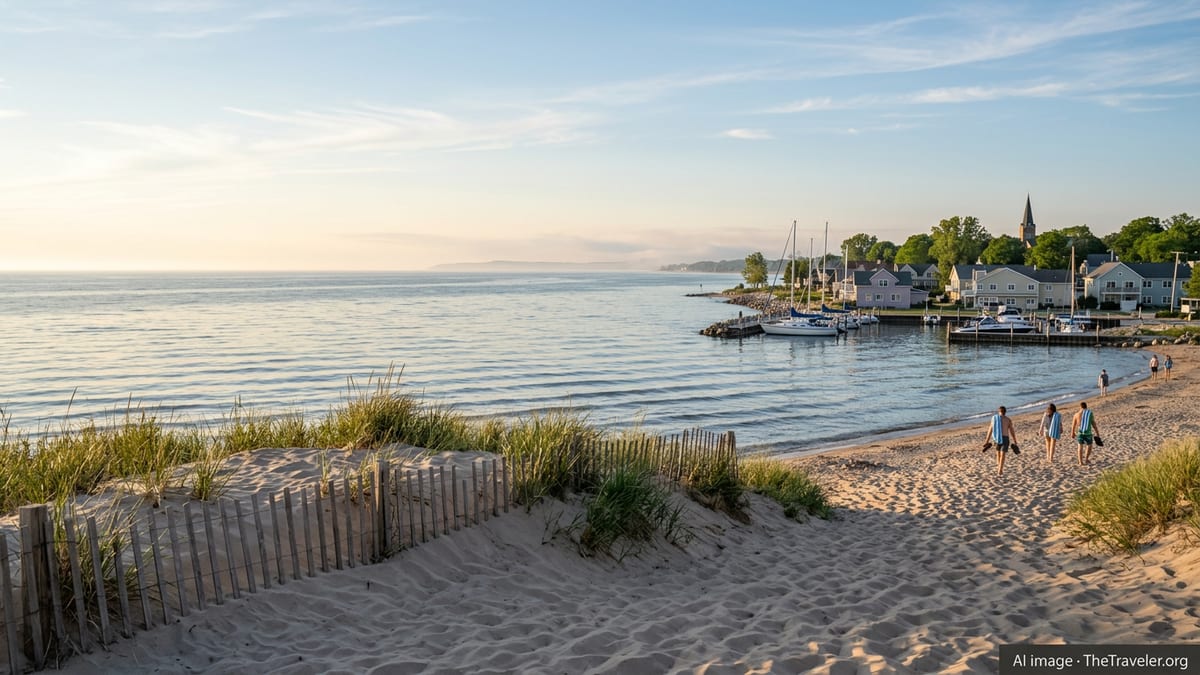
Getting Oriented: Two Different Takes on the Lake Michigan Shore
Indiana and Michigan share the same inland sea but offer very different scales of experience. Indiana’s Lake Michigan frontage runs roughly 45 to 50 miles across three counties, a compact strip centered on Indiana Dunes National Park and Indiana Dunes State Park, plus several municipal and small-town beaches. In practice, that means you can sample multiple access points, from wild dunes to urban lakefronts, in a single weekend without driving far between them.
Michigan’s shoreline on Lake Michigan by contrast is long and varied, running for hundreds of miles from the Indiana border north through small harbor towns, farming country, and forested dune landscapes. For a weekend trip, most visitors focus on the southwest corner, especially the Harbor Country communities just over the state line and the classic beach towns of St. Joseph, South Haven, and Saugatuck. These towns are spaced farther apart than Indiana’s beaches, but each feels like a self-contained vacation hub.
Because the geography is so different, the style of weekend you get differs too. Indiana is efficient: it works well if you want to maximize time on the sand and in the dunes with minimal time in the car. Michigan’s southwest coast leans into the long-weekend vibe, with walkable downtowns, wineries, and a sense that the lakefront is the center of town life. Both coasts deliver sunsets over the water and the feeling of being far from city routines, but the logistics and atmosphere are not the same.
As you compare, consider your starting point. From Chicago and northern Indiana, both coasts are within easy reach. From Indianapolis, central Illinois, or Ohio, the drive-time difference between northern Indiana and southwest Michigan becomes more noticeable. Those practical factors matter on a two- or three-night escape, where an extra hour or two spent driving can eat into the relaxed, on-the-water time you are probably chasing.
Beaches in Indiana: Compact, Dune-Focused, and Easy to Sample
Indiana’s main draw is the dramatic dune landscape that lines much of its short Lake Michigan shoreline. Indiana Dunes National Park and Indiana Dunes State Park protect wide, sandy beaches backed by rolling dunes and forested ridges. Within the park system, you can move between more developed spots with parking lots, restrooms, and lifeguarded swimming areas in summer, and quieter access points where the focus is hiking and birding rather than amenities.
Beaches like West Beach, the state park’s main swimming beach, and smaller access points near communities such as Beverly Shores, Ogden Dunes, and Dune Acres give weekend visitors plenty of choice. Many stretches feel surprisingly wild given their proximity to the Chicago metro area. Tall dune ridges frame wide views across the lake, and on clear days you can often see the Chicago skyline as a faint silhouette to the west, a reminder of how quickly you have traded skyscrapers for sand.
Indiana also offers more urban-feeling lakefront spots. Miller Beach in Gary combines a neighborhood main street with easy access to national park land and a wide, sandy shoreline. Michigan City adds a lighthouse, pier, and marina alongside a public beach that is within a short walk of restaurants and an outlet mall. These areas can be busy on peak summer weekends, but they keep everything concentrated, which can be a plus if you want to park once and stay put.
For a weekend trip, Indiana’s compactness is a real asset. If wind, waves, or crowds make one beach less appealing, it is feasible to drive ten or twenty minutes and try another without losing the better part of a day. That makes the Indiana side a strong choice for travelers who value flexibility, especially families who want a backup plan in case the conditions at one access point are not ideal for young swimmers.
Beaches in Michigan: Classic Resort Towns and Sprawling Sands
On the Michigan side, the experience shifts from a single, contiguous dune corridor to a string of individual beach towns, each with its own public access to Lake Michigan. New Buffalo and the rest of Harbor Country sit just north of the state line and have become popular as upscale weekend getaways, particularly for Chicago-area travelers. These communities combine public beaches with a growing mix of wine tasting rooms, farm-to-table restaurants, and small inns, giving the area a polished but relaxed feel.
Farther north, beach towns like St. Joseph, South Haven, and Saugatuck revolve around their waterfronts. They typically feature a central public beach with soft sand and a pier or harbor entrance, backed by a compact downtown of shops, galleries, ice cream stands, and bars. South Haven, for example, is known for its sandy North and South beaches separated by a river mouth and lighthouse, while Saugatuck pairs its beach access with forested dunes, a riverfront, and a long-standing arts scene.
In practical terms, Michigan’s beaches often feel more like self-contained resort destinations. Many visitors park near the beach in the morning, spend the day alternating between the water and town, then stay late for sunset from the pier or overlook. Local tourism boards and community groups regularly program live music, markets, or seasonal festivals in the main squares and parks during summer, which can make even a short weekend feel full.
The trade-off is that distances between these beach towns are larger than between Indiana access points. Driving from New Buffalo to Saugatuck, for example, is a significant stretch by local road or interstate, and weekend traffic can slow progress. For some travelers, that extra distance is part of the appeal because it separates the towns and preserves a sense of small-scale calm. For others, especially on tight schedules, it is a reason to choose one base and linger there rather than trying to sample multiple Michigan beaches in a single weekend.
Small-Town Vibes: Laid-Back Indiana Enclaves vs Michigan Harbor Villages
Indiana’s Lake Michigan towns tend to be smaller, more residential, and intertwined with the dunes landscape. Communities such as Ogden Dunes, Beverly Shores, and Dune Acres are largely made up of homes and cottages set among wooded ridges, with a few trailheads and beach access points rather than formal, commercial downtowns. They draw many weekend and summer residents from nearby cities, but they remain low-key in terms of visitor infrastructure, which can be attractive if you want quiet walks and early nights.
Michigan City and Gary’s Miller neighborhood are the main exceptions, offering more of a traditional town center with coffee shops, bars, and restaurants. Michigan City in particular blends its lakefront with a historic downtown, a small arts district, and a working harbor. It has a slightly grittier, more lived-in feel than polished resort towns, but that mix of everyday life and vacation energy can be part of its charm, especially if you prefer locally owned diners and neighborhood taverns to clusters of souvenir shops.
On the Michigan side, the term “beach town” is taken almost literally. New Buffalo, Union Pier, Lakeside, and other Harbor Country communities existed long before the recent surge in tourism, yet many have actively oriented themselves around visitors, with high-end vacation rentals, tasting rooms, and boutique shops. They can feel busy and even pricey in midsummer, but the payoff is a high concentration of dining options and experiences within walking distance of the water.
Farther north, South Haven and Saugatuck take that formula and add their own quirks. South Haven mixes family-friendly attractions, such as maritime museums and casual restaurants, with a lively bar scene in high season. Saugatuck foregrounds galleries, theater, and a reputation for being especially welcoming to creative communities and LGBTQ travelers, layered on top of classic beach-town pleasures. If your ideal weekend includes both time on the sand and lingering over dinner in a walkable downtown, Michigan’s harbor villages may have the edge.
Drive Times and Logistics from Major Midwestern Cities
On a weekend trip, drive time can matter as much as scenery. From Chicago, Indiana’s dunes and nearby towns are typically about a one- to one-and-a-half-hour drive in light traffic, though congestion around the city and on peak summer weekends can extend that. Many Chicagoans treat the Indiana Dunes almost like a very long neighborhood park, ducking over for a beach day without committing to a full overnight stay.
New Buffalo and the rest of southernmost Michigan are usually around 90 minutes from downtown Chicago when roads are clear, putting them just beyond the Indiana parks but still firmly within easy weekend territory. St. Joseph, South Haven, and Saugatuck fall progressively farther up the coast. Depending on traffic and the chosen route, reaching South Haven from Chicago can take on the order of three to three and a half hours, with Saugatuck in a similar range. That puts them at the upper end of what many travelers consider comfortable for a Friday evening drive after work.
From Indianapolis, northern Indiana’s lakeshore is significantly closer. Driving from Indianapolis to the Indiana Dunes or Michigan City typically requires around three hours, subject to conditions, and the route is largely interstate. Reaching South Haven or Saugatuck from Indianapolis tends to push drive time closer to three and a half to four hours or more, with local roads near the coast adding a bit of variability. For travelers starting in Indianapolis or central Indiana, that extra hour of driving each way can be a deciding factor, especially on a two-night trip.
Travelers from southeastern Michigan, Ohio, or Wisconsin face different equations. Southwest Michigan’s coastal towns may be significantly closer than Indiana’s strip of dunes, while Indiana might be a better choice for those coming from parts of Illinois or the Chicago suburbs. Regardless of origin, it helps to remember that summer weekend traffic, construction zones, and lake-effect weather can push these approximate times higher. Building a cushion into your driving schedule can keep the drive from eating into your first or last afternoon on the water.
Costs, Crowds, and Seasonal Considerations
Cost and crowd levels also vary between the two coasts. In Indiana, lodging options near the dunes range from chain hotels in nearby inland towns like Chesterton and Michigan City to a smaller set of vacation rentals and bed-and-breakfasts in the closest communities. Prices are generally more moderate than in Michigan’s most in-demand beach towns, although limited inventory near the water can drive up rates on peak summer weekends. Day-use fees or parking charges at state and national park access points are modest compared with the overall cost of a trip.
In Michigan’s Harbor Country and the likes of South Haven and Saugatuck, lodging and dining can be noticeably pricier. The region has developed a reputation as a stylish getaway area, with well-furnished rentals, boutique inns, and a strong restaurant scene. That can make the weekend feel special, but it also means that last-minute bargains are rare in July and August. Travelers on tighter budgets often stay a bit inland and drive to the beach each day, trading convenience for savings.
Crowding follows a similar pattern. Any Lake Michigan shoreline near a major metro area will be busy on hot Saturdays, but the exact experience differs. Indiana’s dunes beaches, especially at the most popular access points, can feel like big-city parks on the busiest days, with packed parking lots and a constant stream of beachgoers. However, the length of shoreline and the network of trails and secondary access points create room to spread out if you are willing to walk a bit farther.
Michigan’s small resort towns can become saturated in a different way. Central beaches and main streets may feel festive but crowded, and parking in the most convenient lots can be competitive. At the same time, the atmosphere often feels more like a holiday, with music, street life, and visitors strolling between the beach and ice cream shops well into the evening. Shoulder seasons, such as late spring and early fall, can be a sweet spot on either coast, bringing cooler water but more manageable prices and crowds.
Which Coast Fits Different Types of Travelers
Matching your travel style to the coast is just as important as comparing distances and prices. Indiana’s shoreline is a strong fit for hikers, families focused on simple beach days, and anyone who wants to build a weekend around the dunes themselves. Trail networks, birding hotspots, and boardwalks through wetlands are directly adjacent to many beaches, allowing you to blend outdoor activity with time in the water. If your idea of a good trip emphasizes fresh air and low-key evenings back at a rental or campsite, Indiana offers that in a compact, manageable package.
Michigan’s southwest coast favors visitors who enjoy pairing time on the sand with dining, shopping, and nightlife. Couples’ weekends, group getaways with friends, and special-occasion trips often gravitate toward Harbor Country, South Haven, or Saugatuck because you can leave the car parked and spend most of your time walking between the water and town. Wine tasting, brewery visits, small performance venues, and seasonal events add texture to the trip even when the weather is not ideal for swimming.
Families may find both coasts appealing for different reasons. Indiana’s straightforward access and generally shorter drives reduce backseat fatigue and make quick nap breaks or midday returns to lodging easier. Michigan’s towns, on the other hand, can be ideal for multi-generational gatherings, where grandparents, parents, and kids can each find things to do within a compact waterfront district. The key is to be honest about how much driving your group is willing to tolerate and how much structure you want around meals and activities.
Accessibility and mobility needs also play a role. Some Indiana and Michigan beaches offer paved paths, accessible overlooks, and beach wheelchairs during high season, but these amenities are not uniform. Travelers who rely on specific accommodations should research individual parks and towns before committing. In general, more developed town beaches in Michigan and the main access points in Indiana’s state and national parks are the best places to look for accessible infrastructure.
The Takeaway
Choosing between Indiana and Michigan for a Lake Michigan weekend is less about better or worse and more about matching mood and logistics. Indiana excels at quick access to dunes and open sand, with shorter drives from Chicago and Indianapolis and the ability to sample several beaches in a single trip. Its towns along the shore tend to be quieter and more residential, with the primary focus on the natural landscape rather than on a curated resort-town experience.
Michigan’s southwest coast spreads the experience across a string of harbor towns where the beach, downtown, and marina exist in close conversation with one another. Distances are longer, and weekend traffic can slow things down, but the payoff is a quintessential Great Lakes getaway atmosphere. Cafes and galleries sit just up the hill from public beaches, and sunsets over the water are integrated into the evening rhythm of town life.
For travelers who want to maximize pure beach and hiking time while minimizing planning and driving, Indiana is often the more efficient choice. Those who imagine leisurely dinners, boutique shopping, and multiple days parked in one charming town, with the option to return year after year, may lean toward Michigan. In either case, booking lodging early for peak summer weekends, keeping an eye on weather and traffic, and allowing some flexibility in your schedule will help you make the most of the limited hours of a short escape.
Ultimately, the question is not whether Indiana or Michigan is objectively better for a weekend trip, but which shoreline best aligns with your priorities right now. You can always come back and try the other side of the lake next time, comparing dune hikes with harbor strolls and building your own mental map of favorite beaches along one of North America’s great inland seas.
FAQ
Q1. Is Indiana or Michigan closer for a Lake Michigan weekend from Chicago?
From central Chicago, Indiana’s dunes and nearby towns are usually slightly closer, often around an hour to an hour and a half in light traffic, while New Buffalo and southwest Michigan towns are closer to 90 minutes or more, depending on conditions.
Q2. Which coast is better for a quick two-night trip from Indianapolis?
For a two-night trip from Indianapolis, northern Indiana’s shoreline typically makes more sense because it generally requires less driving time than reaching South Haven or Saugatuck in Michigan, leaving you with more hours on the beach.
Q3. Are the beaches cleaner or nicer on one side of Lake Michigan?
Both Indiana and Michigan have attractive, sandy beaches that are regularly used by locals and visitors. Differences in cleanliness and water clarity tend to be tied more to recent weather, wave conditions, and local management than to state lines.
Q4. Which destination is better for travelers on a tighter budget?
Indiana often edges ahead for budget-conscious travelers because chain hotels and inland lodging near the dunes can be more affordable than staying in the heart of Michigan’s most popular resort towns, though prices can still rise on peak summer weekends.
Q5. Where will I find more restaurants and nightlife within walking distance of the beach?
Michigan’s harbor towns, such as New Buffalo, South Haven, and Saugatuck, generally offer denser clusters of restaurants, bars, and shops within walking distance of the lakefront compared with the quieter, more residential communities along much of Indiana’s shoreline.
Q6. Is swimming equally safe in Indiana and Michigan waters?
Swimming conditions in both states can change quickly with wind and waves, and both coasts occasionally experience strong currents. Safety depends on current lake conditions and whether lifeguards are on duty, so it is important to follow posted advisories wherever you go.
Q7. Which side of the lake is less crowded in peak summer?
Crowds vary by specific beach and weekend. Indiana’s main dunes access points can be very busy on hot days, while Michigan’s resort towns may see heavy use in central beach and downtown areas. Seeking secondary access points or visiting in shoulder seasons can reduce crowding on either side.
Q8. Are there good options for hiking as well as beach time?
Indiana’s dunes stand out for hiking, with trails that climb sandy ridges and loop through forests and wetlands directly adjacent to the lake. Southwest Michigan also offers dune and forest trails, but Indiana’s compact dunes corridor makes it especially easy to combine hiking and swimming in a single outing.
Q9. Is one coast better for traveling without a car?
Reaching either coast without a car is possible but requires planning around train or bus schedules and local transport. Once you arrive, Michigan’s more concentrated harbor towns can be easier to navigate on foot, while Indiana’s beaches are more spread out, making a car particularly useful there.
Q10. How far in advance should I book lodging for a summer weekend?
For popular July and August weekends, it is wise to book lodging several weeks, and often months, in advance on both coasts, especially in Michigan’s high-demand beach towns and in Indiana accommodations closest to the dunes.