

More news on this day
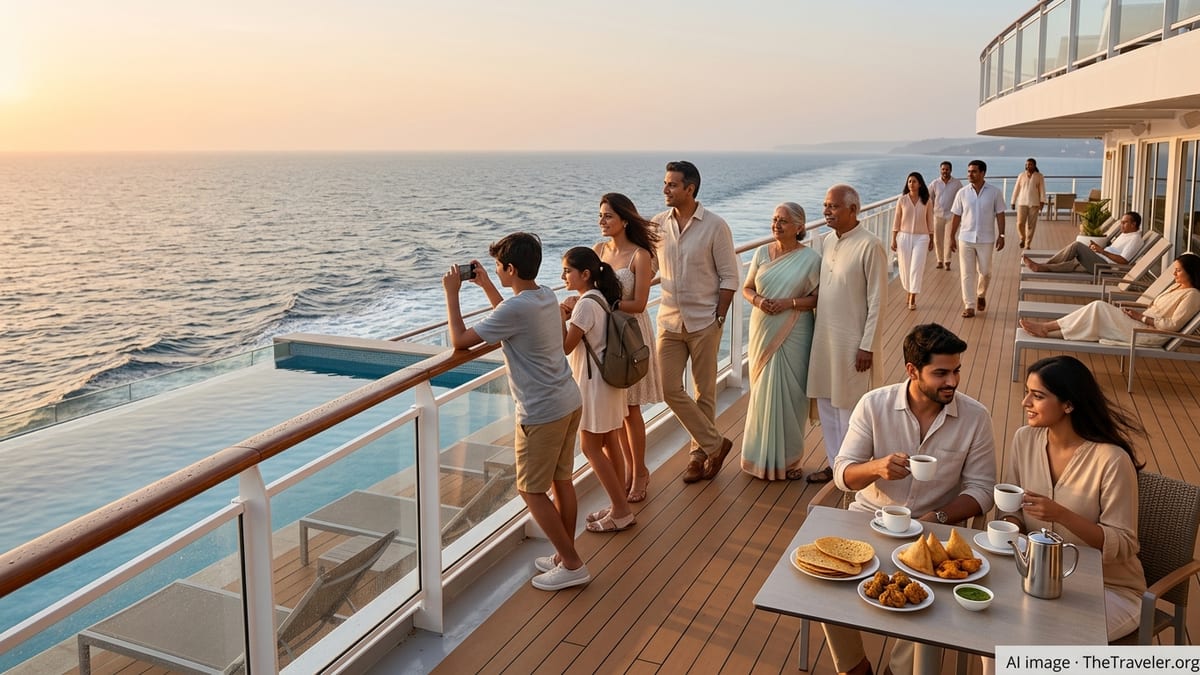
From Mediterranean megaships to Arabian Sea itineraries, a growing number of Indian travellers are swapping landlocked resorts for life at sea, transforming cruises and even residential ocean liners into distinctly desi spaces filled with familiar food, languages and lifestyle comforts.
Get the latest news straight to your inbox!
Rising Affluence Puts Ocean Luxury Within Indian Reach
Publicly available industry forecasts show India emerging as one of the fastest growing source markets for cruises, powered by a larger middle class and rising disposable incomes. Market analyses indicate that Indian cruise passenger volumes, currently a fraction of North America and Europe, are projected to multiply several times by the end of this decade as more travellers trade traditional package tours for all‑inclusive sailings.
Travel and finance reports highlight how Indians are spending more on premium holidays, including long-haul itineraries and high-end experiences such as Mediterranean and Scandinavian cruises. Cruise bookings are increasingly bundled with business travel, milestone celebrations and extended family trips, widening the appeal beyond early adopters in metros.
Data from research firms also points to a clear preference for hassle-free luxury. Cabin categories with balconies, specialty dining and spa packages are seeing stronger uptake from Indian guests, suggesting that travellers are willing to pay extra when value is bundled into a single floating “resort” rather than spread across flights, hotels and transfers.
Industry commentary suggests that this growing confidence is encouraging Indians not only to sail more frequently, but to explore cruise concepts once seen as the preserve of Western retirees and ultra-high-net-worth travellers.
From Passengers to Owners on Residential Ships
Nowhere is this shift more visible than in the niche world of residential cruise ships, where individuals purchase apartments at sea instead of booking cabins by the night. Vessels such as The World, widely described in luxury travel coverage as the largest private residential yacht afloat, sell studios and multi-bedroom residences that function as permanent homes, complete with full kitchens, concierge services and access to global itineraries.
New projects including MV Narrative, Ulyssia and other residence-style concepts plan to offer hundreds of apartments with facilities that resemble upscale waterfront communities, from gourmet restaurants and gyms to libraries, medical suites and co-working spaces. Prices listed in public material run into the millions of dollars, positioning these floating neighbourhoods firmly in the super-luxury bracket.
While these ships market themselves as international communities, travel and lifestyle reporting notes that wealthy Indians are increasingly visible among prospective and current owners. The appeal lies in the mix of anonymity and familiarity: residents can circle the globe without constant packing, while still returning to a “home” filled with personal belongings, staff who can adapt menus to Indian tastes, and neighbours who share similar global lifestyles.
For affluent Indians who once looked only to London, Dubai or Singapore for second homes, a residence at sea is being framed as the next frontier, extending the notion of diaspora beyond land borders and onto the world’s oceans.
Cordelia and the Rise of the Homegrown Desi Cruise
Alongside global projects, the domestic market is developing its own distinctly Indian response to the cruise boom. Cordelia Cruises, operated by Waterways Leisure Tourism, is currently positioned in corporate filings and trade coverage as the country’s only homegrown ocean cruise line. Its flagship Empress sails primarily from Indian ports, marketing itself as a premium ship designed around Indian cuisine, culture and entertainment.
Itineraries from Mumbai, Chennai and other hubs link popular domestic and near-shore destinations such as Goa, Kochi, the Lakshadweep islands and routes along the east coast. Travel features describe how the on-board experience is calibrated to Indian preferences, from vegetarian and Jain options to Bollywood-style shows, family-friendly activities and festive-theme sailings timed to Diwali and other holidays.
Industry reports suggest that such offerings have helped bring cruising within reach of travellers who may not yet be ready to commit to long international voyages. Short two- to three-night sailings allow first-time cruisers from tier 2 and tier 3 cities to sample life at sea without long flights or visa complications, while still delivering the resort-style amenities associated with larger foreign lines.
This domestically rooted model has also created a template for what a “desi cruise” looks like, setting expectations that Indian food, music and social norms will be central to the experience, whether in home waters or abroad.
Global Cruise Lines Court the Indian Traveller
International cruise brands are taking note of these shifts. Market analysis in specialist publications describes how global lines are adapting both product and marketing to appeal to Indian guests, from offering Indian menus and chai corners on board to promoting religious and family-friendly itineraries during school vacations and festival seasons.
Research from cruise-focused platforms indicates that a majority of Indian customers decide on destinations well in advance, but many still book within three months of departure, prompting operators to design flexible pricing and last-minute deals aimed at this market. Caribbean, Mediterranean and Southeast Asian sailings are being promoted aggressively through Indian travel agencies, with campaigns highlighting shopping, vegetarian food options and shore excursions tailored to multigenerational groups.
At the same time, infrastructure development at home is helping to position India as more than just a source of passengers. New and upgraded cruise terminals in cities such as Mumbai are designed to handle larger ships and higher passenger volumes, with official strategy documents outlining ambitions to make India a regional cruise hub in its own right.
As more Indians board foreign-flagged ships from ports in Singapore, Dubai or Europe, accounts from travel media suggest that they are reshaping on-board life, from the playlists in lounges to the length of queues at Indian buffet stations, informally turning sections of these vessels into floating extensions of Mumbai, Delhi or Bengaluru.
Why Cruises Feel Increasingly Like Floating Desi Enclaves
The result of these converging trends is an at-sea experience that feels markedly more Indian than it did even five years ago. Where Indian travellers were once a niche presence, recent coverage of global sailings describes ships where Hindi, Tamil and Punjabi are commonly heard in corridors, and where impromptu garba or bhangra sessions can appear on pool decks during festival voyages.
On domestic routes, entire groups sometimes charter large blocks of cabins for weddings, corporate incentives or community gatherings, bringing their own priests, performers and decor. Internationally, Indian passengers often cluster around shared dining times or vegetarian counters, creating informal social hubs that mirror neighbourhood dynamics at home.
Cruise companies are responding in practical ways, from hiring more South Asian staff to expanding Indian breakfast options, kids’ activities and Bollywood movie screenings. For many first-time travellers, this blend of global surroundings and familiar cultural touchpoints reduces anxiety about sea travel and foreign ports.
As residential ships and long-duration world cruises add Indian owners and repeat guests to their communities, the notion that luxury life at sea belongs mainly to Western retirees is being quietly retired. Increasingly, the oceanfront address of choice for well-heeled Indians might not be in Miami or Monaco, but aboard a ship where the sunset views are shared with neighbours from around the world, and the evening’s fine dining can still end with a perfectly spiced masala chai.