

More news on this day
India is moving from pilot projects to passenger-ready hydrogen trains, positioning its vast rail network as a test bed for zero-emission tourism that could influence how the world travels in the coming decade.
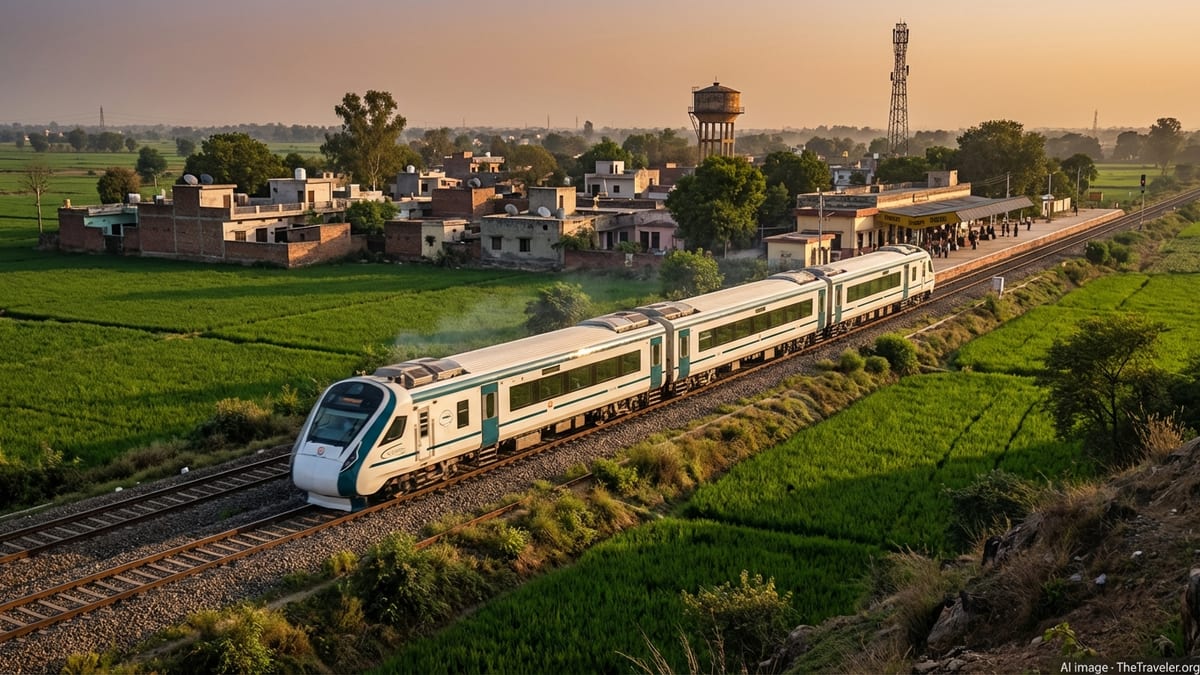
From Concept to Cabin: India’s First Hydrogen Train Rolls Out
After several years of design and testing, Indian Railways’ first hydrogen-powered train is entering the final commissioning phase on the 89-kilometre Jind–Sonipat route in Haryana. Built at the Integral Coach Factory in Chennai, the multi-coach set is being presented by officials as one of the longest and most powerful hydrogen trains in the world, capable of carrying more than 2,600 passengers on a single journey.
The train uses hydrogen fuel cells to generate onboard electricity, with only water vapour and heat as byproducts. By replacing a diesel electric multiple unit with a hydrogen system, engineers have created a near-silent train that significantly cuts emissions along a route that passes through growing regional hubs and agricultural landscapes. The service is expected to trim journey times between Jind and Sonipat to about an hour, roughly halving the current travel time.
The Jind–Sonipat pilot is widely viewed within the rail sector as India’s proof-of-concept for hydrogen traction in real passenger conditions. Safety audits, integration trials and driver training have been underway in recent months, with authorities signalling that regular services are expected to start within weeks. If successful, the model is likely to be replicated quickly on other non-electrified routes.
Hydrogen for Heritage: Linking Iconic Destinations with Clean Rail
Beyond its first commuter corridor, India is framing hydrogen trains as a tool to decarbonise some of its most iconic tourist lines. Under a programme informally known as “Hydrogen for Heritage”, railway planners have outlined a fleet of roughly 35 hydrogen fuel cell trains aimed at heritage, hill and pilgrimage routes where electrification is technically complex or environmentally intrusive.
These include corridors serving temple towns, wildlife reserves and colonial-era hill stations that attract millions of domestic and foreign visitors each year. Officials argue that swapping diesel rakes for hydrogen units on such routes would sharply lower local air pollution while preserving the visual character of fragile landscapes by avoiding new overhead wires.
Budgetary projections presented by rail authorities suggest capital costs in the region of tens of crores of rupees per train, with similar scale investment required for hydrogen production and refuelling infrastructure on each route. While substantial, planners contend that the spending should be weighed against diesel import bills, long-term climate targets and the value of a greener tourism brand for India’s global image.
Building the Backbone: Jind’s Green Hydrogen Hub
Central to the Jind–Sonipat experiment is a new hydrogen production and refuelling complex at Jind, described by officials as one of India’s largest rail-linked hydrogen facilities. The plant uses electrolysers powered by grid and renewable electricity to split water into hydrogen and oxygen, storing several thousand kilograms of hydrogen in high-pressure systems for train operations.
The hub includes compressors, pre-cooling units and dual refuelling dispensers designed to turn around full-size trainsets between peak services. Engineers have incorporated rainwater harvesting from nearby station buildings into the system to help meet the large water demand of electrolysis, a detail that underlines efforts to reduce the project’s wider environmental footprint.
By producing hydrogen at the point of use, Indian Railways is seeking to reduce the need for long-distance transport of compressed gas, which is both costly and logistically complex. Industry analysts say the Jind plant will serve as a template for a national network of smaller hydrogen hubs along key tourist and regional corridors if the pilot meets performance and safety benchmarks.
Tourism on New Tracks: What Zero-Emission Rail Means for Travellers
For tourists, the most immediate difference on a hydrogen-powered train is the soundscape. Fuel cell systems and electric traction equipment operate far more quietly than conventional diesel engines, reducing vibration and engine noise inside carriages. Early demonstrations have highlighted panoramic windows, open gangways and smoother acceleration as part of a more comfortable onboard experience.
On scenic lines, cleaner operations also change the view. Hydrogen trains avoid the diesel exhaust plumes that often hang over narrow valleys and station approaches, a particular concern near national parks and heritage precincts. Local tourism boards in states such as Haryana and Uttar Pradesh are already positioning future hydrogen routes as selling points for eco-conscious travellers who increasingly factor emissions into their itinerary choices.
Travel agents and tour operators are watching closely to see how ticket pricing compares with existing diesel and electric services. While the upfront infrastructure costs are higher, officials argue that lower maintenance requirements and the potential for cheaper green hydrogen over time could keep fares competitive. Some state tourism departments are exploring bundled products that combine hydrogen rail legs with stays in certified sustainable hotels and low-impact local excursions.
India in a Global Race for Hydrogen Rail Leadership
India’s entry into hydrogen rail comes as a handful of countries seek to carve out leadership in the emerging technology. Germany has already run regular passenger services using hydrogen multiple units on regional lines, while France, China and Sweden have announced or piloted their own projects. With its Jind–Sonipat deployment and broader fleet ambitions, India is positioning itself among the earliest large rail markets to attempt hydrogen at scale.
China has gone a step further in tourism-specific applications, unveiling a hydrogen-powered sightseeing train in Changchun that blends fuel cell technology with themed interiors and panoramic views tailored to visitors. In South Korea, hydrogen trams are being readied for metropolitan lines that double as tourist connectors between cultural districts and waterfront areas.
What sets India apart is the sheer size and diversity of its rail network and tourism portfolio. From Himalayan foothill railways and coastal pilgrim circuits to wildlife corridors in central India, the country offers dozens of potential test beds for hydrogen traction. Success on even a handful of these lines would send a powerful signal to other emerging economies grappling with how to decarbonise legacy diesel fleets without sacrificing connectivity.
Policy Push: National Hydrogen Mission Meets Rail Modernisation
The rapid progress toward a first operational hydrogen train is rooted in policy decisions taken over the past few years. Under the National Green Hydrogen Mission, New Delhi has set targets to build large-scale domestic capacity in hydrogen production, storage and fuel cell manufacturing. Transport has been identified as a priority sector alongside industry and shipping.
Within this framework, Indian Railways has emerged as both customer and test laboratory. The railway budget has earmarked dedicated funds for hydrogen rolling stock and ground infrastructure, with ministries encouraging public sector undertakings and private firms to participate in the broader value chain. Pilot projects for hydrogen buses around industrial corridors and airports are running in parallel, feeding technical lessons back into rail planning.
Environmental economists note that hydrogen trains alone will not decarbonise India’s transport system, especially given the continued expansion of electrified mainline corridors. However, they argue that for specific applications such as low-density tourist routes, remote lines and heritage assets where new electric infrastructure is impractical, hydrogen offers a pragmatic bridge technology that can deliver rapid emissions cuts.
Challenges on the Line: Cost, Safety and Clean Hydrogen Supply
Despite the optimism, significant challenges stand between the first pilot run and a hydrogen-based tourism revolution. Chief among them is cost. Fuel cells, high-pressure storage systems and tailored refuelling depots are still more expensive than diesel locomotives and standard depots on a like-for-like basis. While economies of scale and domestic manufacturing could lower prices over time, early projects rely heavily on public funding and policy support.
Safety perception is another hurdle. Although hydrogen has been used safely in industry for decades, public concern about storing and moving compressed gas on trains and at stations is real. Regulators have imposed stringent standards on leak detection, ventilation and emergency response, and authorities are preparing public awareness campaigns to explain the technology and its safeguards to passengers and nearby communities.
There is also the question of how green the hydrogen really is. If the gas is produced using electricity from fossil-heavy grids, overall climate benefits shrink. Officials maintain that pilot plants such as Jind are increasingly tied to renewable power, but energy analysts stress that scaling hydrogen rail without a parallel build-out of clean electricity would risk undermining climate goals. For tourism operators marketing zero-emission journeys, verifiable guarantees of green hydrogen origin are likely to become a commercial necessity.
A Template for the World’s Tourist Railways
As India moves toward passenger operations on its first hydrogen train, international rail and tourism planners are paying close attention to the data that will emerge from the Jind–Sonipat corridor and subsequent heritage routes. Metrics on reliability, operating costs, ridership trends and visitor satisfaction will shape how quickly other countries feel confident in adopting similar systems.
Smaller nations with popular tourist railways, from island states to Alpine regions, see potential in India’s approach of pairing modest-distance routes with on-site hydrogen hubs. The model sidesteps the need for continent-spanning hydrogen pipelines and focuses instead on self-contained corridors where demand can be forecast with some certainty, especially during peak travel seasons.
If India manages to cut emissions, keep fares reasonable and deliver a noticeably better passenger experience, hydrogen trains may shift from experimental showcases to mainstream tools of destination marketing. For travellers choosing between a short-haul flight and a scenic rail journey, a quiet, zero-emission hydrogen train through forests, coasts or temple towns could become an increasingly persuasive option.