

More news on this day
International travellers heading to India face a key procedural change from April 1, 2026, when the country’s six month transition away from paper disembarkation cards ends and a fully digital e-Arrival Card system becomes the default at immigration counters nationwide.
Get the latest news straight to your inbox!
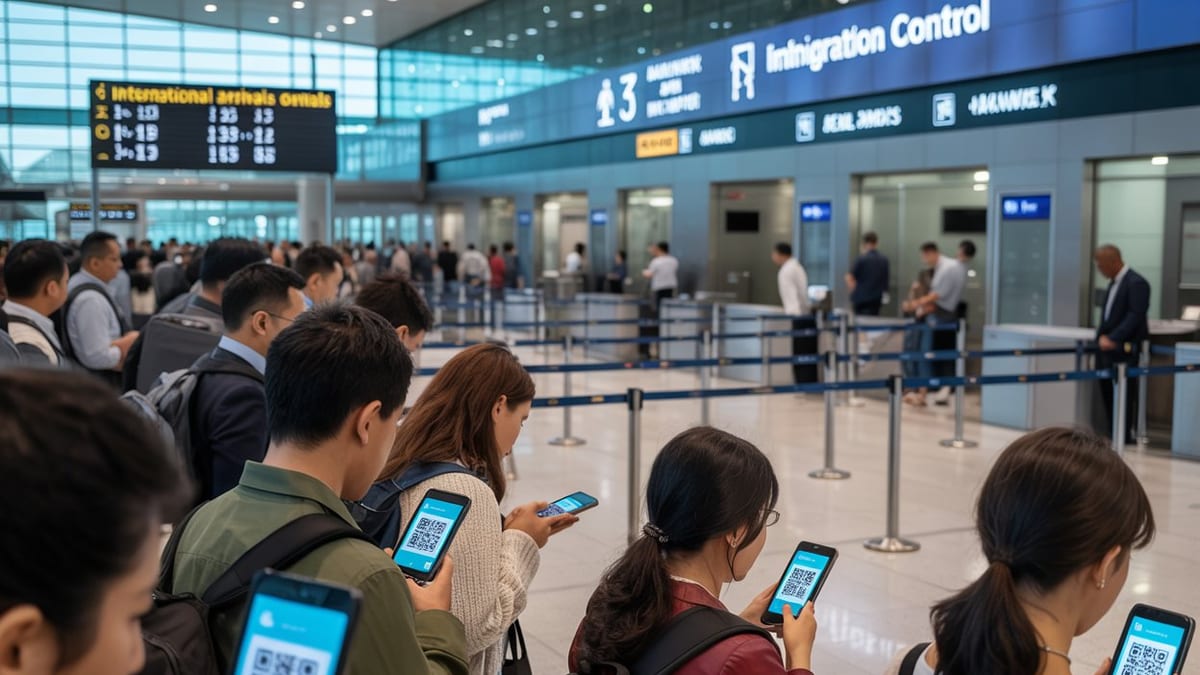
Image by Travel And Tour World
What Changes on April 1, 2026
India began rolling out its online e-Arrival Card on October 1, 2025, digitising the long standing paper disembarkation form for foreign passport holders. During an initial transition period, paper cards continued to be available at airports for passengers who had not completed the new online form. That grace period is scheduled to end on March 31, 2026, making the digital process central to how foreign visitors are screened on entry.
From April 1, 2026, publicly available advisories indicate that the e-Arrival Card will be treated as the standard entry document for foreign nationals and most non resident visitors. While a limited stock of paper cards may still be present at some airports, reports suggest these are being phased out and should no longer be relied upon as a primary option for completing immigration formalities.
The move is part of a broader digital overhaul of India’s border management systems, aligning the country with a growing number of destinations that collect passenger data before touchdown. Immigration officers are now able to access key information in advance, which is intended to support risk screening and, for compliant travellers, quicker processing at the counter.
For visitors, this shift means that tasks once done in the arrival hall or on the plane now need to be handled online in the days before departure. Travellers who ignore the new requirement, or assume they can simply grab a paper form on landing, risk encountering long delays and, in some cases, disruption at check in or boarding.
Who Must Complete the E-Arrival Card
The e-Arrival Card is required for foreign nationals entering India for tourism, business, study, conferences, medical treatment, family visits and most other short stay purposes. Published guidance from consulates and immigration related advisories notes that the rule applies regardless of visa type, covering travellers on regular visas, e visas and visa on arrival style permissions where these are available.
Overseas Citizen of India (OCI) cardholders were initially reported as exempt from the digital card, but later updates from missions abroad and travel industry coverage indicate that they are now generally expected to follow the same online process as other foreign passport holders. Indian citizens travelling on an Indian passport are not asked to complete the e-Arrival Card for entry into their home country.
The crucial point for most visitors is that the e-Arrival Card is separate from a visa or travel authorisation. Travellers must still hold a valid visa or e visa permission where required, and the new digital card does not replace those schemes or create a new route of entry. Instead, it replaces the old paper arrival form that collected itinerary details, local contact information and short term travel history.
Families travelling together should note that each person typically needs a separate e-Arrival submission, including older children who previously had their details written on a parent’s paper card. Only infants may be exempt in some cases, depending on airline practice and how strictly local staff interpret the data requirements at the time of travel.
When and How to Submit the New Form
According to consular notices and airline bulletins, the e-Arrival Card must be completed within a defined window before arrival in India, generally up to 72 hours ahead of the scheduled landing time. Completing the form too early may fall outside this window, while leaving it until the last minute increases the risk of technical issues or oversight during a busy departure day.
The online process asks for standard information that previously appeared on the paper disembarkation card. Travellers can expect to provide passport details, nationality, flight number, expected port of arrival, purpose of visit, intended length of stay, address in India and contact information. Some versions of the form also request a short history of countries visited in the days or weeks before entering India, which can be linked to prevailing health or security screening policies.
There is no government fee for completing the e-Arrival Card, and the form does not require document uploads or biometric enrolment. Once the data is submitted, travellers are typically advised to save or print the confirmation page or reference number. Many reports suggest that check in agents and immigration staff may ask to see this confirmation, particularly during the early months of the new system’s full implementation.
Airlines are increasingly expected to verify that passengers bound for India have completed their e-Arrival Card before boarding. Industry advisories note that some carriers have started integrating checks into their online check in flows and airport counters. Travellers who arrive at the airport without a completed form may be asked to fill it out on a mobile device before a boarding pass is issued, adding stress and potential delays if airport Wi Fi or mobile data is unreliable.
What Happens if You Arrive Without the E-Arrival Card
As the transition period closes, arriving in India without an e-Arrival Card is expected to become more disruptive. During late 2025 and early 2026, many travellers reported being able to fall back on paper forms in the terminal. With that option scheduled to be withdrawn from April 1, 2026, passengers who have not pre registered could face longer waiting times while staff help them complete the digital form at dedicated kiosks or side counters.
Some travel risk briefings suggest that, in busy arrival waves, immigration officers may prioritise passengers whose information is already visible in the system through the e-Arrival Card, funnelling those without a submission to slower manual lines. This creates a de facto fast and slow lane effect, amplifying the time savings for travellers who comply with the new rules in advance.
There is also a risk that the bottleneck shifts to departure airports. If airlines enforce pre departure checks more strictly, travellers without an e-Arrival Card might be asked to step out of line to complete the process online before they can check in baggage or obtain a boarding pass. For those cutting it close to departure time, this additional step could make the difference between a smooth journey and a missed flight.
While outright denial of boarding appears to be rare at this stage, industry updates indicate that carriers are under pressure to reduce the number of non compliant passengers arriving at Indian airports. As the April deadline passes and paper workarounds disappear, the balance may tilt further towards requiring proof of completion before travellers are allowed to board.
Tips to Avoid Delays and Speed Up Entry
Travel industry coverage consistently highlights preparation as the most effective way to benefit from the new system. Completing the e-Arrival Card as soon as the 72 hour window opens, double checking every field and saving an offline copy of the confirmation can significantly reduce the risk of last minute problems caused by website outages or patchy mobile connectivity.
Experts also recommend keeping key trip details handy before starting the form, including the full address and phone number of the first accommodation in India, the exact flight number and port of arrival, and a brief list of countries visited recently. Having this information ready makes it easier to complete the application in one sitting, lowering the chance of errors that might prompt extra questions at the immigration desk.
On the day of travel, carrying a printed screenshot of the e-Arrival confirmation, in addition to the digital version on a phone, can be useful where airport scanners or boarding gate staff struggle with low brightness screens or dead batteries. When approaching immigration in India, travellers who have completed the process can join the regular foreign passport queues with confidence that their data is already in the system.
For frequent visitors, including business travellers and long term partners of Indian nationals, the e-Arrival Card sits alongside other initiatives such as trusted traveller and fast track immigration schemes that promise smoother passage over time. While the initial adjustment may feel like an extra layer of bureaucracy, properly used the digital system is designed to shorten conversations at the counter, allowing well prepared passengers to move more quickly from aircraft door to arrivals hall from April 2026 onward.