

More news on this day
Foreign travelers landing in India from April 1, 2026 face a crucial new entry rule, as the country’s e-Arrival Card system becomes the only accepted arrival form at immigration counters nationwide.
Get the latest news straight to your inbox!
From Transition Period to Hard Deadline on April 1, 2026
India has been phasing in its electronic arrival system since October 1, 2025, when foreign nationals were first required to submit an online disembarkation form before landing. For the past six months, paper arrival cards were still available as a backup, creating a soft transition that allowed many travelers to adapt gradually.
That transition period ends on March 31, 2026. From April 1, 2026, reports indicate that paper disembarkation cards will no longer be routinely distributed at airports. The e-Arrival Card becomes the default and, in practice, the only recognized arrival form for most foreign passport holders entering India by air or sea.
Publicly available advisories from Indian missions abroad and recent industry updates describe the move as the final step in digitizing the country’s border controls. The change is designed to speed up immigration processing and reduce congestion in arrival halls at major gateways such as Delhi, Mumbai, Bengaluru, Chennai and Hyderabad.
For travelers, the April 1 deadline marks a clear dividing line. After this date, arriving without a completed e-Arrival Card is no longer an inconvenience that can be fixed with a paper alternative in the immigration hall; it may instead mean missed flights, boarding denials, or extended secondary processing on the ground.
Who Must Complete the E-Arrival Card and When
The e-Arrival Card is required for almost all non-Indian passport holders entering India, including tourists, business travelers, students and many other short-stay visitors. Official guidance points out that the requirement applies regardless of visa category, covering those on regular visas, e-visas and visa-free schemes where applicable.
Recent advisories also highlight that Overseas Citizen of India (OCI) cardholders, who enjoyed lighter arrival paperwork in the past, have been brought into the e-Arrival system during the rollout. Some coverage notes that interpretations around OCI exemptions have shifted over recent months, so OCI travelers are strongly advised to check the latest guidance and, in practice, to complete the e-Arrival Card to avoid disputes at check-in or immigration.
Indian citizens remain exempt from the arrival card requirement, as they are processed under separate domestic procedures. However, mixed-nationality families should pay close attention, since non-Indian spouses or children traveling on foreign passports still need to complete the online form even if accompanying an Indian citizen.
Most current advisories specify that the e-Arrival Card must be submitted within a short pre-travel window, typically up to 72 hours before arrival. Travelers are encouraged to complete the form as soon as their flight details are final to avoid last-minute technical issues or time-zone confusion.
How the Digital Arrival Process Works in Practice
The e-Arrival Card is a digital version of the old paper disembarkation form and collects similar basic data. Travelers are asked to provide passport details, flight information, planned address in India, contact information and the purpose and duration of their visit. There is no fee for submitting the form, and no supporting documents are uploaded.
Once the form is submitted through the official platforms, travelers receive an electronic confirmation, typically in the form of a QR code or similar reference. Aviation and travel industry reports state that airlines are increasingly treating this confirmation as a mandatory pre-boarding requirement, alongside a valid visa or OCI card where relevant.
At the airport, airline staff may ask passengers to show the e-Arrival confirmation at check-in or the boarding gate. Without evidence that the form has been completed, travelers risk being denied boarding, particularly after March 31, 2026 when the paper fallback effectively disappears.
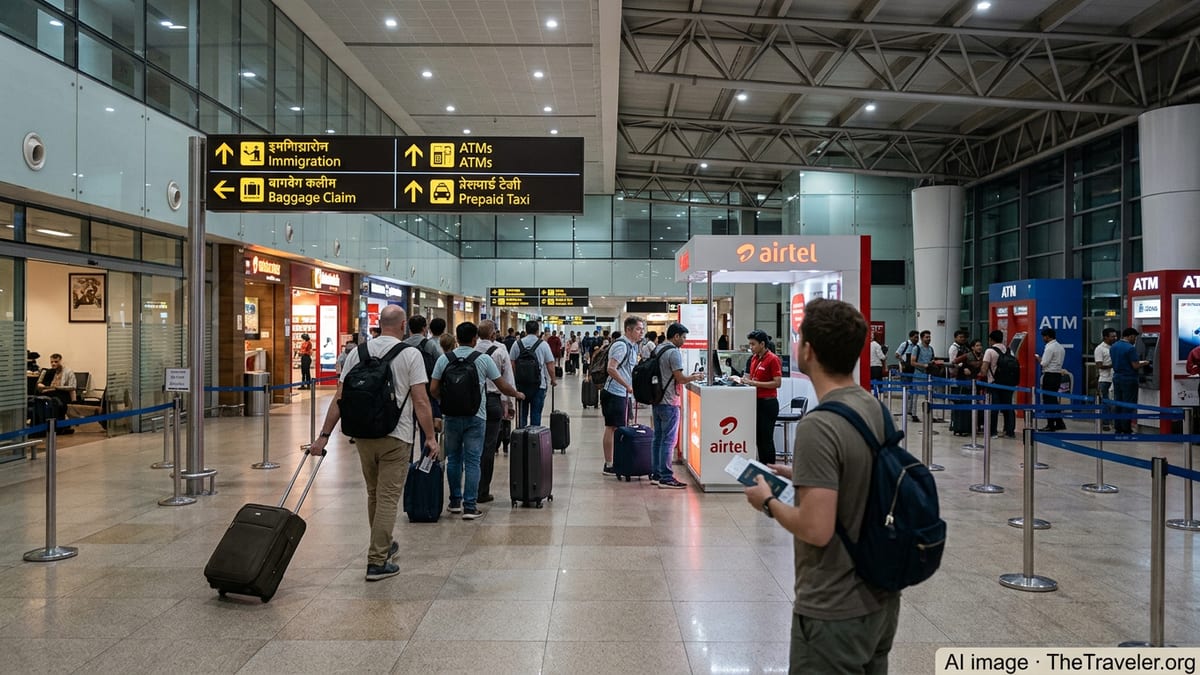
On arrival in India, travelers proceed to immigration as usual, but instead of handing over a paper card, they present their passport and visa while their digital arrival record is retrieved from the system. Early feedback from frequent flyers and travel operators suggests that, when the system is functioning properly, clearance times can be significantly faster than under the previous paper-based process.
Risks of Non-Compliance: Delays, Missed Flights and Longer Interrogations
As the mandatory deadline takes effect, the greatest risk for travelers is turning up at the airport without having completed the e-Arrival Card. With airlines increasingly responsible for verifying eligibility before boarding, failing to show proof may mean being stopped long before reaching Indian immigration desks.
Published accounts from the transition period describe travelers being required to fill in the online form at the airport using their phones, sometimes struggling with slow Wi-Fi or heavy website traffic close to peak travel times. In cases where the platform has experienced outages, some travelers have reported long queues and confusion while ground staff sought clarification on temporary workarounds.
From April 1, 2026, those workarounds are likely to become less generous, as carriers and border agencies align with the end of the paper-option grace period. Travelers who arrive in India without a valid digital record may be directed to secondary inspection, face extensive questioning about their travel plans, or be held for manual data entry that significantly extends their time in the arrivals hall.
In the worst cases, especially when the missing form is caught at the departure airport, passengers could be offloaded or told to rebook to a later flight after completing the process online. Given the tight booking windows and high loads on routes between India and major hubs in North America, Europe, the Middle East and Asia, even a short administrative delay can cascade into missed connections and additional costs.
How to Prepare Before You Fly to India After April 1
Travel specialists and aviation reports consistently advise treating the e-Arrival Card as essential as the visa itself. Before travel, passengers should confirm that they are using the official digital platforms and avoid third-party websites that mimic government portals or attempt to charge unnecessary service fees.
Because the form relies on flight details, travelers are advised to wait until tickets are confirmed but to complete the e-Arrival Card as early as the pre-travel window allows, typically within 72 hours of arrival. Keeping a screenshot or printout of the confirmation and QR code is recommended in case of weak mobile signals at the airport or issues retrieving email attachments on the move.
Those with connecting flights into India should also factor in time-zone differences when calculating the 72-hour window, particularly if they depart from North America or Oceania and cross the International Date Line. Submitting the form too early may fall outside the permitted window, while leaving it to the last minute increases the impact of any technical problems.
Finally, travelers who booked their trip before awareness of the new rule became widespread should double-check their airline’s latest check-in requirements, since carriers may update their procedures and pre-travel notifications in the days leading up to April 1, 2026. Treating the e-Arrival Card as a non-negotiable part of the documentation checklist is emerging as the most reliable way to avoid last-minute surprises and keep immigration queues in India as short as possible.