

More news on this day
Indian carriers IndiGo and Air India have issued urgent travel advisories for the Middle East as conflict-linked airspace closures and security concerns trigger sweeping changes to schedules, cancellations and diversions, prompting both airlines to roll out special rebooking and refund options for affected passengers.
Get the latest news straight to your inbox!
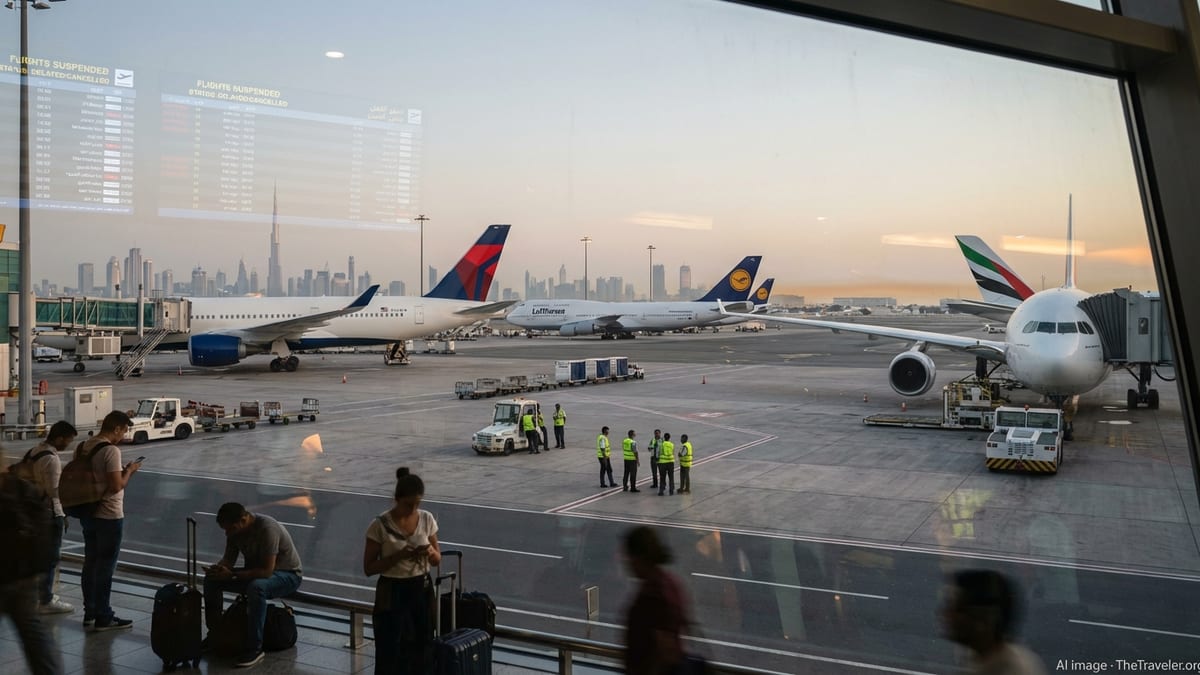
Escalating Middle East Crisis Hits Indian Flight Schedules
Publicly available information indicates that the latest wave of disruption follows the intensification of the Middle East conflict in late February 2026, including Iranian strikes on key Gulf hubs and the closure or restriction of multiple regional airspaces. As a result, Indian airlines operating heavily used corridors between India and the Gulf have had to suspend, curtail or reroute services at short notice.
Reports from India’s major airports show that hundreds of international flights to the Gulf and wider Middle East region have been cancelled or heavily delayed in recent weeks, stranding thousands of travelers and creating long queues at airline counters. Reuters and Indian business media coverage describe a sharp reduction in departures to destinations such as Dubai, Abu Dhabi, Doha, Jeddah and Riyadh, as carriers reassess overflight risk and airport operating conditions.
The disruption has not been limited to point to point Gulf services. Long haul routes to Europe and North America that typically track across West Asia have also been affected, with aircraft forced to take longer routings over Central Asia or Africa to avoid conflict zones. These extended flight paths have added hours to some journeys and increased fuel burn at a time when jet fuel prices are already elevated.
Against this backdrop, IndiGo and Air India have both moved to formalise their responses through public travel advisories that detail route suspensions, curtailed schedules and passenger options for rebooking or refunds, in an attempt to bring some clarity to rapidly shifting operations.
Air India Scales Back West Asia Network And Offers Flexibility
According to updates posted on Air India’s newsroom and policy documents for trade partners, the flag carrier and its low cost arm Air India Express have dramatically scaled back their combined West Asia operations. A recent media note outlines a reduced schedule of a few dozen flights per day across the wider West Asia region, with certain routes and airports temporarily without regular service.
The airline’s published advisories indicate that services to and from several airports in the United Arab Emirates, Saudi Arabia, Qatar and Israel remain suspended or are operating only on an ad hoc basis. Where flights do operate, timings and routings may change at short notice depending on evolving airspace restrictions and security assessments, and travelers are being urged to monitor their booking status closely before leaving for the airport.
To cushion the impact, Air India has activated a special waiver regime for affected tickets to the Gulf and Middle East. Publicly available guidance shows that passengers booked on cancelled or significantly changed flights can request free date changes within a defined travel window, reroute to alternate gateways where capacity is available, or claim full refunds without standard cancellation penalties.
Additional material from aviation industry trackers notes that Air India has also adjusted routings on select long haul services, including some New York and European flights, to avoid high risk corridors over the Middle East. These operational changes may not always involve cancellations but can lead to longer flight times, technical fuel stops and late arrivals, further underlining the importance of checking updated schedules on the day of travel.
IndiGo Issues Advisory And Activates Rebooking And Refund Options
IndiGo, India’s largest airline by market share, has likewise issued a travel advisory alerting customers to potential disruption on sectors touching the Middle East. Regional media coverage referencing the carrier’s guidance notes that instability along certain West Asia routes has already prompted cancellations and diversions, with warnings that further schedule changes remain possible as the situation evolves.
Reports point to selective suspension of flights on specific Middle East routes and more frequent last minute adjustments to timings and routings. Travelers flying between Indian hubs such as Delhi, Mumbai, Hyderabad and Kochi and popular Gulf destinations are being advised that previously routine services may operate on altered schedules or, in some cases, not at all on certain days.
In response, IndiGo has opened up a range of options under its disruption policy. Passengers whose flights have been cancelled or substantially rescheduled are being offered the opportunity to move to alternate IndiGo services to the same or nearby destinations without change fees, subject to seat availability, or to claim refunds in line with the airline’s waiver instructions. In some instances highlighted by passenger reports, IndiGo has provided a self service “plan change” link enabling travelers to process changes or refunds online rather than queuing at airport counters.
Analysts commenting in Indian aviation forums suggest that IndiGo is balancing the need to protect crew and aircraft from conflict zone exposure with sustained demand for labor and family travel to the Gulf. The result is a patchwork of still operating routes, reduced frequencies and sudden cancellations that can look unpredictable from a passenger perspective, increasing the importance of vigilance and flexibility when planning journeys.
What Affected Passengers Can Expect On Rebooking And Refunds
Guidance published by Air India, IndiGo and India’s aviation regulator sets out a broad framework for passenger rights during large scale disruptions, but the specifics vary by airline and fare type. In the current Middle East crisis, both carriers have gone beyond their standard rules in certain cases by waiving date change fees and offering penalty free refunds on cancelled flights within specified travel periods.
Travel industry coverage explains that when a flight is cancelled by the airline, customers are typically entitled to either a full refund of the unused ticket value or a free transfer to another available departure on the same route. For Middle East services, Air India and IndiGo advisories indicate that travelers can often change to a later date or a different nearby destination in the same region without paying change charges, although additional fare differences may apply if the new itinerary is more expensive.
Some passengers have reported being able to shift their bookings from suspended Gulf routes to alternative networks that remain operational, such as connections via European or Central Asian hubs, subject to capacity. However, this kind of rerouting is usually more complex and may not be covered by blanket waivers, making it essential for travelers to review the terms of any rebooking carefully before confirming changes.
Consumer experts quoted in Indian financial media also highlight the parallel role of travel insurance, noting that policies with robust trip interruption or war risk coverage may reimburse additional expenses such as extra hotel nights and new tickets purchased after cancellations. However, many basic policies contain exclusions for war or armed conflict, so travelers are being urged to read policy wording closely rather than assuming automatic protection.
Advice For Travelers Heading To Or Through The Middle East
With operational conditions in the region changing day by day, publicly available advisories from airlines, airports and foreign ministries all stress the importance of checking flight status repeatedly before travel. Passengers booked on IndiGo or Air India to any Middle East or Gulf destination are being encouraged to use official airline apps and manage booking tools to monitor real time updates on their specific flights.
Travel planners suggest that, where possible, customers should opt for more flexible fare types or refundable tickets on routes that are particularly exposed to conflict related closures. Although such fares are more expensive upfront, they can significantly limit financial losses if travel plans are derailed by sudden cancellations or extended suspensions, as has been seen in the current crisis.
For those with essential travel, industry commentary recommends allowing extra time for airport processes, preparing for longer routings or technical stops, and keeping accommodation and onward transport bookings flexible. Passengers are also advised to retain all receipts for unexpected expenses, which may be useful when seeking reimbursement from airlines or insurers.
As the situation in the Middle East remains fluid, IndiGo, Air India and their regional partners are expected to continue adjusting schedules in response to changing airspace, security and demand conditions. Travelers heading to or connecting via the region over the coming weeks may benefit from treating provisional schedules as subject to change and planning with as much flexibility as possible.