

More news on this day
An IndiGo flight from Delhi to Manchester was forced to abandon its transcontinental journey and return to India after flying for several hours over Africa, when last-minute airspace restrictions linked to the conflict in West Asia abruptly closed a key corridor on its planned route.
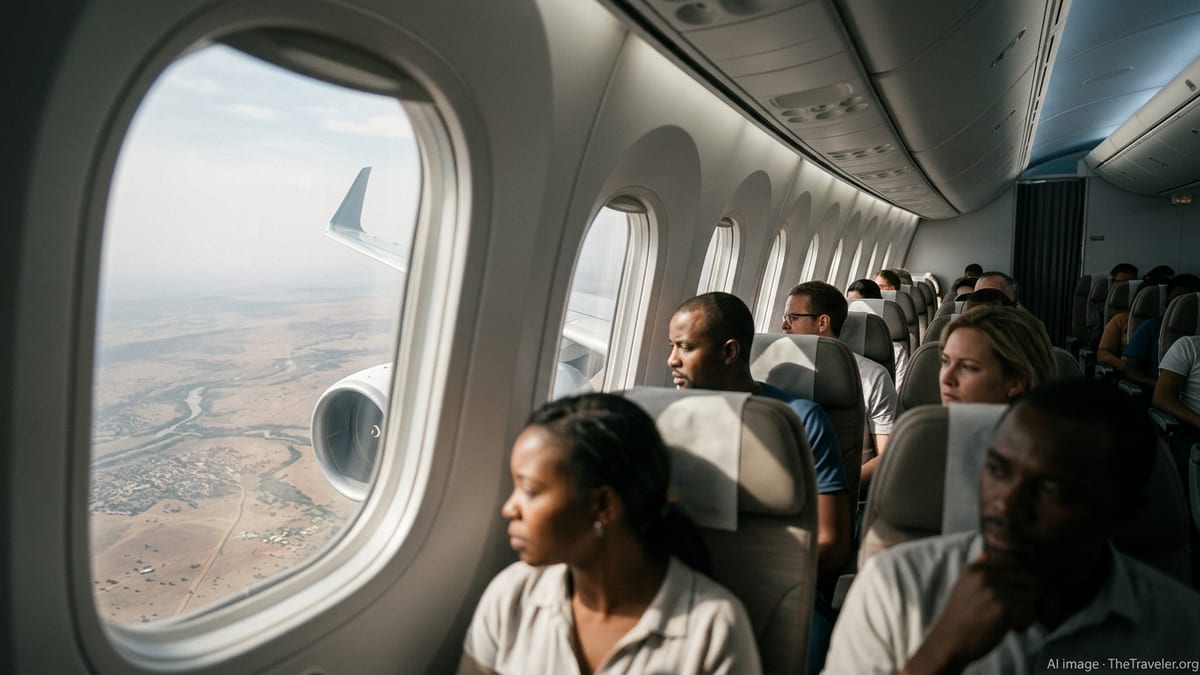
Seven-Hour Flight Ends Back Where It Started
Flight 6E 033, operated for IndiGo by a leased Boeing 787-9, departed from Indira Gandhi International Airport in Delhi on Monday morning local time bound for Manchester in the United Kingdom. According to flight-tracking data and airline statements, the aircraft proceeded southwest across the Arabian Sea and on to northeastern Africa before being instructed to turn back.
The widebody jet reportedly made its U-turn near the border region between Ethiopia and Eritrea, an area that would normally sit on the edge of routings used to skirt restricted airspace in the Middle East. Instead of continuing toward Europe on a longer diversion, the crew retraced much of the outbound track and headed back to Delhi.
By the time the aircraft landed back at its origin, it had been airborne for around seven to eight hours, turning what should have been an overnight journey to northern England into a long-haul loop that began and ended at the same airport.
IndiGo confirmed the disruption in a statement, saying the service had to return due to “last-minute airspace restrictions” along its intended path and that safety considerations required the airline to abandon the crossing rather than improvise an unvetted reroute mid-flight.
Passengers Face Fatigue and Uncertainty
For those on board, the episode brought an unusual mix of long-haul fatigue and uncertainty, compounded by the emotional letdown of finding themselves back at the departure gate instead of in another country. Travelers had already settled in for the roughly nine-hour sector to Manchester, only to be informed several hours into the journey that the aircraft would not continue to Europe.
Passengers described extended periods of normal cruising followed by announcements from the cockpit explaining that evolving airspace closures related to the West Asia conflict meant the original route was no longer available. With no immediate safe and approved alternative, the crew informed customers that they would return to Delhi rather than risk entering restricted zones.
Upon arrival back in the Indian capital, ground staff faced the complex task of rebooking hundreds of passengers, arranging meals and accommodation where required, and assisting those with missed onward connections. The airline said it was working to accommodate affected travelers on subsequent services and on partner carriers where feasible, while also processing refunds for those who preferred not to travel.
Some passengers also took to social media to seek clarity on revised schedules and compensation rules, underscoring how disruptions that originate from geopolitical tensions can quickly become personal for travelers caught in the middle.
Airspace Restrictions Ripple Across IndiGo’s International Network
The mid-air return of the Delhi–Manchester flight comes as IndiGo continues to grapple with widespread operational challenges triggered by sudden airspace closures across parts of West Asia and adjacent regions. Since late February, the airline has cancelled or rerouted hundreds of international flights, affecting services not only to Gulf destinations but also to Europe, Central Asia and the United Kingdom.
Complicating matters further, several of IndiGo’s long-haul flights to Europe and the UK are currently operated by Boeing 787-9 aircraft leased from Norse Atlantic Airways, a European carrier subject to separate regulatory constraints. Safety advisories and restrictions issued by European aviation authorities on overflying certain conflict-affected airspaces have narrowed the corridor options available to these jets.
That patchwork of prohibitions has forced IndiGo to suspend or heavily modify a number of routes, sometimes at short notice. In recent days, a London–Mumbai service was diverted to Cairo, where passengers faced lengthy waits on the ground, while other Europe-bound departures from India have been cancelled outright or rescheduled as the airline attempts to redraw its long-haul maps.
While many carriers have found alternative routings by detouring further north or south, that often means significantly longer flight times, higher fuel burn and tighter crew duty margins. For IndiGo, which is still consolidating its relatively new long-haul operations, the sudden loss of predictable corridors has been particularly disruptive.
Broader Disruption Across West Asia and Beyond
The challenges facing IndiGo are part of a wider shock to international aviation brought on by the conflict in West Asia and related airspace restrictions stretching from Iran to portions of the Red Sea corridor. Multiple national regulators have issued notices limiting or prohibiting overflights of certain regions, forcing airlines to redraw long-established routes between South Asia, the Middle East and Europe.
As a result, thousands of flights across several carriers have been cancelled, rerouted or subjected to extended flight times in recent weeks. Indian airlines, including IndiGo and Air India, have been especially exposed because of their reliance on westbound corridors for services to the Gulf, Turkey, Central Asia and Western Europe.
Airports in India and the Middle East have seen fluctuating schedules as airlines experiment with temporary workarounds, while also keeping enough buffer in their crew duty rosters to deal with unexpected delays. Travel agents and tour operators report a surge in inquiries from passengers anxious about upcoming itineraries and asking whether to switch carriers or reroute via Southeast Asia instead.
Industry analysts note that as long as conflict-linked airspace closures continue, airlines may have to operate more circuitous routings or scale back some services altogether, potentially driving fares higher on remaining non-stop options and shifting demand toward one-stop itineraries via unaffected hubs.
What Travelers Should Know Before Flying West from India
The experience of those aboard IndiGo flight 6E 033 is a stark reminder for travelers that even flights that are already airborne can be affected by rapidly changing security assessments along their route. Aviation authorities and airlines typically err on the side of caution when conflict zones expand or new intelligence emerges, which can result in sudden closures that invalidate previously cleared paths.
For passengers planning trips from India to the Middle East, Europe or the UK in the coming days, travel experts recommend closely monitoring flight status directly with airlines, rather than relying solely on older booking confirmations. Same-day changes are possible, and departure times may be adjusted to fit within revised routings and crew schedules.
Travelers are also being urged to allow extra buffer time for onward connections and to familiarize themselves with each carrier’s policies on rebooking, refunds and duty-of-care provisions such as meals and accommodation in the event of extended disruption. Flexible tickets and comprehensive travel insurance may offer some additional protection when routes are subject to ongoing geopolitical uncertainty.
While the specific circumstances that forced IndiGo’s Delhi–Manchester service to loop back to its origin were exceptional, industry observers say they highlight how fragile global air connectivity can become when conflict affects multiple adjoining airspaces, leaving pilots and airlines with few safe and efficient corridors to work with.