

More news on this day
Qatar has joined Jordan, Saudi Arabia, the United Arab Emirates, Kuwait, Bahrain, Syria and other Middle Eastern destinations benefiting from IndiGo’s expanded free cancellation and change waiver, as the India-based carrier moves to shield passengers from mounting disruption caused by the region’s deepening airspace crisis.
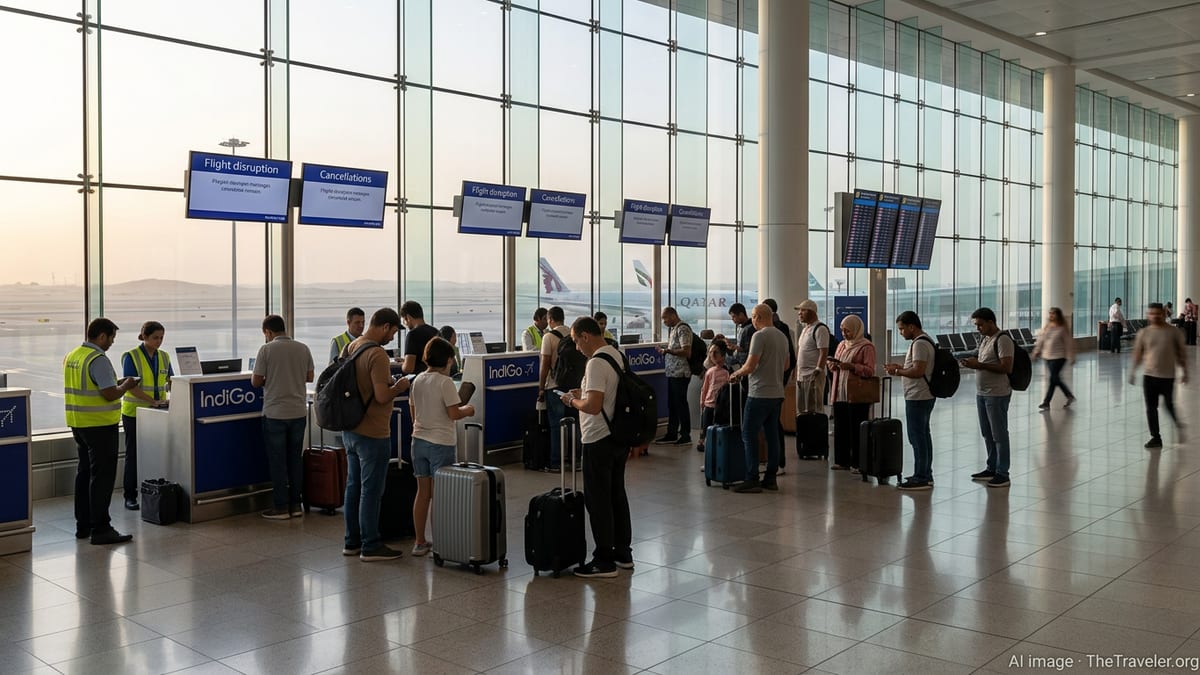
IndiGo Broadens Waiver as Airspace Crisis Deepens
IndiGo confirmed in a recent travel advisory that it has extended a full waiver on cancellation fees, along with free rescheduling, for passengers booked on flights to and from the Middle East and Istanbul through March 31, 2026. The move effectively covers all of the airline’s services into key Gulf and Levant markets, including Qatar, Jordan, Saudi Arabia, the United Arab Emirates, Kuwait, Bahrain and Syria, where schedules have been thrown into turmoil by the closure or restriction of large swathes of regional airspace.
The latest update broadens an earlier policy that initially focused on the most heavily impacted routes and comes after days of rolling cancellations and last minute reroutes triggered by the ongoing conflict involving Iran, Israel and the United States. IndiGo has repeatedly stressed that safety remains its foremost priority and that operations will continue to be adjusted in line with government directives and airspace availability.
For affected customers, the expanded waiver offers the option of cancelling for a full refund or shifting travel dates without penalty, a significant financial relief at a time when many travellers are facing unexpected layovers, extended hotel stays and rapidly changing itineraries. IndiGo has urged passengers to monitor their booking status closely as flight plans remain subject to change at short notice.
Qatar and Gulf Neighbours Grapple With Widespread Cancellations
The decision to explicitly include Qatar and a broader range of Gulf states in IndiGo’s waiver reflects the severity of operational challenges across the region. Since the latest escalation, authorities in Qatar, the UAE, Bahrain, Kuwait and Jordan have imposed varying degrees of airspace closure or restrictions, forcing airlines to cancel or divert thousands of flights and leaving major hubs operating far below normal capacity.
Analytics from industry data providers suggest that on some recent days, more than three quarters of scheduled flights into Qatar and the UAE have been grounded, with Bahrain and other Gulf states seeing similarly high cancellation rates. That has put intense pressure on carriers that rely on these hubs to connect Asia, Europe, Africa and the Americas, and has stranded large numbers of transit passengers who were using Doha, Dubai or Abu Dhabi as connecting points.
While some Gulf airlines have begun operating limited repatriation and relief services, schedules remain highly constrained and subject to operational approvals. Against this backdrop, IndiGo’s India–Middle East network continues to run on a sharply reduced basis, focusing on a mix of regular and special flights to key destinations when safe corridors open, and scaling back again when airspace conditions tighten.
Thousands of Travellers Seek Flexibility and Clarity
The sudden scale of disruption has left leisure travellers, migrant workers and business passengers urgently seeking flexibility. With hotel rooms filling up in transit hubs and ticket prices on alternative routings spiking, many stranded travellers have been weighing whether to wait out the uncertainty or cancel plans altogether.
By removing standard change and cancellation penalties on Middle Eastern routes, IndiGo is positioning its waiver as a way to ease that decision. Passengers holding valid tickets can now opt to postpone trips into April or request full refunds without incurring the usual fees, a policy that is expected to encourage early rebooking rather than last minute airport crowding.
Travel advisers say the expanded waiver is particularly important for passengers heading to countries such as Saudi Arabia, Qatar, Kuwait and Bahrain for work or family reasons, where onward connections by local and regional carriers may also be disrupted. In many cases, a cancelled IndiGo leg can cascade into missed domestic flights or visa issues, making fee-free flexibility on the first sector a crucial safety net.
India–Middle East Air Corridor Faces Prolonged Uncertainty
The Middle East is one of IndiGo’s most important international markets, linking Indian cities with Gulf employment centres and onward global routes. The current airspace crisis has therefore hit not only tourism but also the daily movement of expatriate workers and visiting families, many of whom travel on tight schedules pegged to work contracts and school calendars.
In recent days, IndiGo and other Indian carriers have operated a rotating pattern of flights into select Gulf airports, including Dubai, Abu Dhabi and Sharjah, when safe routings have been cleared by aviation authorities. At the same time, planned services to other cities in Saudi Arabia, Jordan, Kuwait, Bahrain, Qatar and Syria have been repeatedly suspended or rerouted, reinforcing the sense that the corridor will remain volatile for some time.
Industry observers note that even as some regional airspace begins to reopen on a limited basis, the cumulative impact of earlier closures, aircraft displacement and crew scheduling challenges means that flight networks will take time to stabilise. For now, airlines are leaning heavily on flexible ticketing policies, with IndiGo’s broadened waiver emerging as one of the more extensive protections currently available to India–Middle East travellers.
What IndiGo Passengers Should Do Next
With conditions changing quickly, aviation authorities and consumer advocates are advising IndiGo passengers bound to or from the Middle East to treat their bookings as provisional until they have been reconfirmed shortly before departure. Travellers are being encouraged to check for schedule changes using official airline channels, arrive at the airport only once flights are confirmed as operating, and keep contact details updated so that notifications can be received in real time.
For those who choose not to fly during the current period of uncertainty, the extended free cancellation and change window until March 31 provides a practical option to step back and replan without financial penalty. Travel agents say many customers are now shifting itineraries to late April or May, hoping that by then airspace in and around Qatar, the UAE, Saudi Arabia and neighbouring states will have stabilised enough for airlines to rebuild more reliable schedules.
As the Middle East’s airspace crisis continues to evolve, IndiGo’s decision to align its waiver across an expanded list of regional destinations offers immediate relief to thousands of ticket holders. How long the policy will remain in place will likely depend on both the security situation and the pace at which key hubs such as Doha and Dubai are able to restore normal traffic flows.