

More news on this day
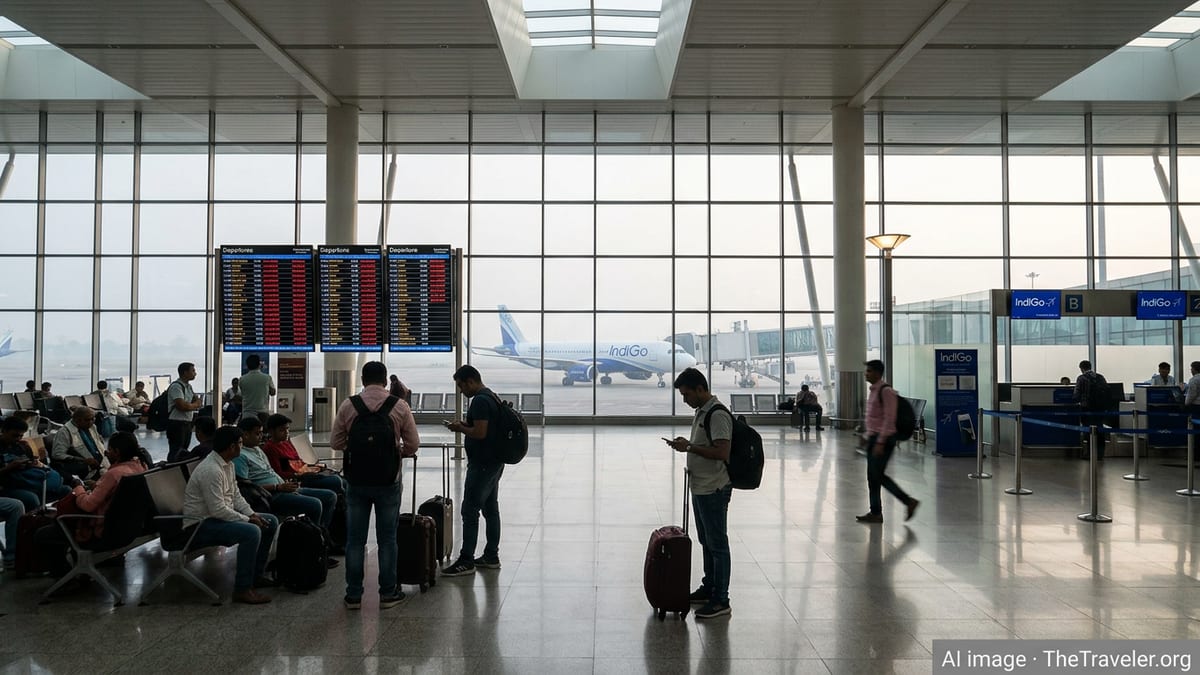
InterGlobe Aviation, the parent of IndiGo, saw its share price slide to an 11-month low on March 4 as the carrier scrapped hundreds of flights to the Middle East amid sudden airspace closures linked to escalating tensions between the United States, Iran and Israel, exposing how vulnerable India’s fast-growing aviation market remains to geopolitical shocks.
Stock Slides as Investors React to Rapid Deterioration in West Asia
IndiGo’s stock dropped around 5 percent in intraday trade on March 4 to about ₹4,293 on the BSE, extending a three-session decline of roughly 13 percent and taking the counter back to levels last seen in early April 2025. The fall has dragged the share price within striking distance of its 52-week low of ₹4,272, wiping out a large part of the gains built up during last year’s aviation rebound.
The slide comes as investors reassess the earnings outlook for India’s largest airline by market share in light of flight suspensions across West Asia. Brokerages say the abrupt disruption of some of IndiGo’s most lucrative international routes, combined with a sharp jump in crude oil prices, has created a potent short-term headwind for the stock even as its long-term growth story remains intact.
Analysts at several firms have warned that the impact will be felt immediately in IndiGo’s March quarter performance. Estimates from PL Capital and HSBC suggest a hit of between 6 and 10 percent to profit before tax in a scenario where current restrictions and cancellations persist through much of March, with the market now pricing in this earnings risk.
Despite that, research houses have largely stopped short of calling a structural reversal, characterising the sell-off as a reaction to a sudden, exogenous shock rather than a deterioration in IndiGo’s underlying cost advantages and dominant position in the domestic market.
Hundreds of Flights Cancelled as Gulf Airspace Closes
The market rout has been driven in large part by the scale and speed of IndiGo’s operational pullback in the region. In disclosures to stock exchanges and regulator updates, the airline said that more than 500 international services were cancelled between February 28 and March 3 as airspace over Iran and key Gulf corridors was restricted following US and Israeli strikes on Iranian targets and subsequent regional retaliation.
The suspensions cover a swathe of routes linking Indian cities with major hubs in the United Arab Emirates, Saudi Arabia, Qatar and Israel, as well as some flights to Europe that rely on overflying contested airspace. Industry data indicate that West Asia accounts for roughly a fifth to a quarter of IndiGo’s international capacity, making the disruption particularly painful at the start of the busy late-winter and spring travel period.
IndiGo has said its operations teams are working around the clock to recalibrate schedules, reroute aircraft where possible and coordinate repatriation flights with Indian and foreign authorities. The carrier is offering full refunds and free rescheduling on affected services, moves that protect passengers but add to short-term revenue and cash-flow pressure.
For travellers, the fallout has been immediate: crowded rebooking desks, sharply higher fares on remaining services and extended journey times on aircraft forced to skirt closed airspace. For the airline, the combination of lost flying, higher unit costs and customer-handling expenses is now feeding directly into investor anxiety.
Geopolitics, Oil Prices and Margin Risk Converge
The turbulence in IndiGo’s share price is not only about grounded aircraft. The conflict in West Asia has pushed Brent crude prices higher in recent weeks, reviving a familiar risk for aviation equities. Jet fuel is one of IndiGo’s largest operating costs, and the airline has limited hedging in place, leaving its margins exposed to even modest spikes in oil.
Brokerage models suggest that a sustained increase of 5 dollars a barrel in crude prices could compress IndiGo’s earnings by more than 10 percent if other variables such as the rupee remain unchanged. With oil already drifting higher on fears of prolonged disruption to shipping and energy flows through the region, investors are now factoring in a double shock of weaker revenues and fatter fuel bills.
The sell-off has also hit the broader travel ecosystem. Shares of rival low-cost carrier SpiceJet and online travel agencies such as Ixigo and Easy Trip Planners have dropped sharply over the past two sessions as markets reassess demand for Middle East travel and the cost implications of longer routings. The aviation index has underperformed the benchmark Nifty in early March, underlining how concentrated the risk is for companies tied to Gulf connectivity.
Still, some analysts argue that the situation remains fluid and that any easing of tensions or reopening of airspace could prompt a rebound. In past episodes of geopolitical stress in the region, traffic and yields have often normalised quickly once safety concerns recede, though the timing of such a reset is now highly uncertain.
What It Means for India’s Aviation and Tourism Outlook
The latest bout of volatility is a stark reminder that India’s aviation and outbound tourism sectors, despite their strong domestic underpinnings, are deeply intertwined with the fortunes of the Middle East. Gulf destinations double as major employment hubs for Indian workers and as vital transit points for long-haul travel to Europe, Africa and the Americas, magnifying the ripple effects when airspace closes or conflict flares.
In the short term, tour operators and corporate travel managers are scrambling to rework itineraries, with some leisure and religious travel to the region reportedly being postponed or redirected. Travel search platforms have reported a surge in queries for alternative routings via Southeast Asia and for non-stop services that avoid West Asian airspace altogether, although these options remain limited and often more expensive.
For IndiGo, the episode comes at a time when the airline had been consolidating its lead in the domestic market and ramping up international expansion, including deeper connections into the Gulf and new codeshare partnerships. The sudden reversal of that strategy, even if temporary, is forcing a rethink of capacity deployment plans and may slow the pace of international growth in the coming quarters.
Regulators and policymakers are also watching closely. India has been championing itself as a global aviation hub, backed by airport expansion in cities such as Delhi and Mumbai. The present disruption highlights how much that ambition still relies on predictable access to neighbouring air corridors and how quickly geopolitical rifts can undercut carefully laid plans.
Volatility Ahead as Markets Await Clarity
With little visibility yet on how long airspace restrictions will remain in place, traders expect IndiGo’s stock to stay volatile in the near term. Short-term investors and momentum funds have been trimming positions, while some long-only institutional investors appear to be selectively adding on dips, betting that the airline’s cost leadership and strong balance sheet will see it through the storm.
Brokerage calls reflect that divide. Some houses have retained positive or neutral ratings on the stock, arguing that IndiGo enters this phase with relatively low leverage, robust cash reserves and a large order book of fuel-efficient aircraft that should support earnings once operations normalise. Others caution that if tensions escalate further, leading to prolonged closures or broader economic fallout, current earnings estimates may still prove optimistic.
For now, IndiGo’s management is signalling a focus on operational resilience rather than forward guidance. The airline has indicated that it will continue to adjust schedules day by day, prioritise safety and work with authorities on repatriation where required, while keeping a close watch on demand trends and yields across its network.
That cautious stance mirrors the broader mood across India’s aviation market. After a period marked by record passenger numbers and bullish expansion plans, the sector is once again confronting a familiar reality: in an interconnected air travel system, distant geopolitical flashpoints can translate into immediate financial turbulence on trading screens in Mumbai.