

More news on this day
IndiGo Airlines has issued an urgent travel advisory to passengers after joint United States and Israeli strikes on Iran prompted widespread Middle East airspace closures on February 28, disrupting key routes linking India with the Gulf, Europe and North America.
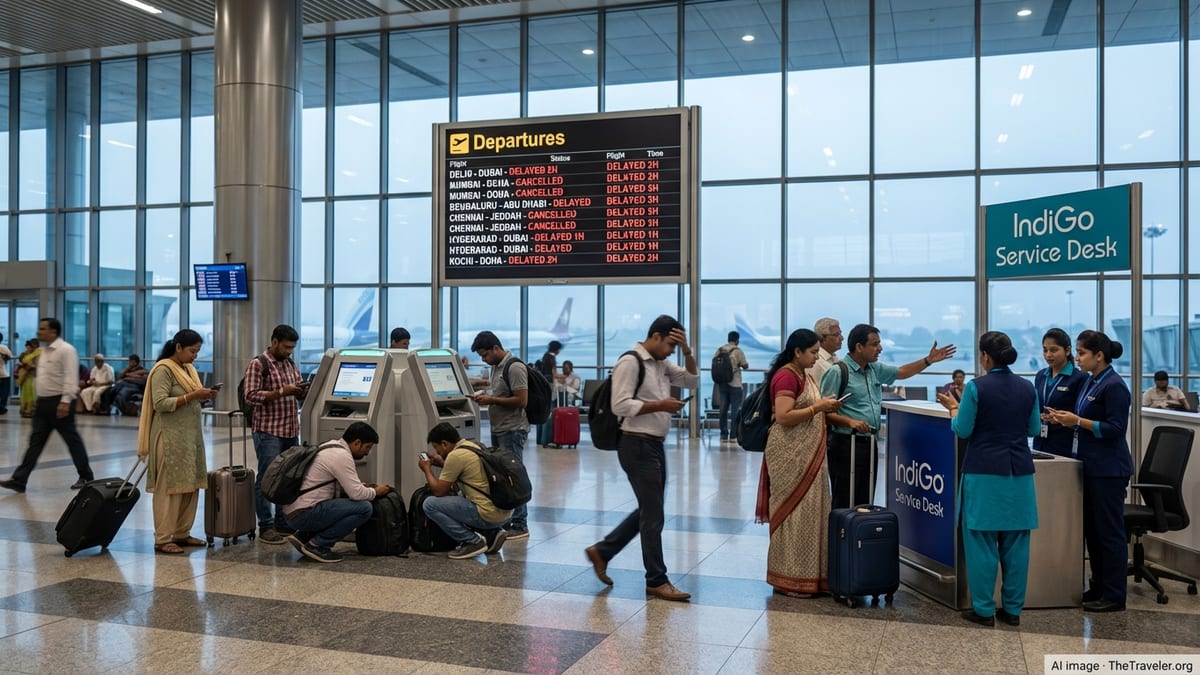
IndiGo Cancels Middle East Network Amid Escalating Tensions
India’s largest carrier by market share moved quickly to suspend its extensive Middle East schedule as aviation authorities and militaries closed swathes of airspace over Iran and neighbouring regions for safety reasons. IndiGo announced that all flights to and from the Middle East are cancelled until 0000 hours Indian Standard Time, affecting services to major hubs including Dubai, Abu Dhabi, Doha, Jeddah, Dammam, Bahrain, Sharjah, Kuwait and Ras Al Khaimah.
In a passenger advisory posted on social media, the airline said the temporary halt was being implemented out of “highest priority” concern for the safety and security of customers and crew. The carrier added that dedicated operational teams are “continuously monitoring the evolving situation” and recalibrating schedules to minimise disruption where possible as authorities update restrictions on overflights through the Tehran Flight Information Region and adjoining corridors.
IndiGo has urged travellers booked on Middle East routes, and on long-haul itineraries that transit through Gulf gateways, to closely monitor their booking status through official airline channels and to avoid turning up at airports without a confirmed, operating flight. Same-day cancellations and rolling schedule changes are expected as governments and air navigation services review risk assessments in real time.
US-Israel Strikes on Iran Trigger Wider Airspace Closures
The urgent advisory comes in the immediate aftermath of coordinated strikes by the United States and Israel on targets in and around Tehran, an operation that prompted Iran and Iraq to close their airspace and led Israel to temporarily shut its skies. The resulting no-fly zones have forced airlines to divert or turn back flights that would normally cross the region, with knock-on effects across Asia, the Middle East and Europe.
Flight-tracking platforms show a significant reduction in traffic over Iran, Iraq and adjacent areas, with carriers redirecting aircraft south over the Arabian Sea or north via Central Asia and the Caucasus. These longer routings increase flight times, fuel burn and crew duty periods, creating operational challenges for airlines already working near capacity at the tail end of the busy winter travel season.
Global majors such as Emirates, Qatar Airways and Turkish Airlines have announced cancellations or schedule reductions to selected destinations, while European carriers are publishing alerts about extended flight times and potential last-minute diversions. Aviation analysts note that whenever a large airspace block in the Middle East closes, the impact is felt far beyond the region, particularly on heavily trafficked corridors linking South and Southeast Asia with Europe and North America.
Indian Carriers Rework Routes and Suspend Westbound Flights
IndiGo’s move is part of a broader response by Indian airlines adjusting operations to the fast-moving security picture. Air India has turned back at least one Delhi to Tel Aviv service and has suspended flights to multiple Middle Eastern destinations as it reassesses the safety environment for its crews and passengers. Sister carrier Air India Express has halted all westbound international flights, citing the developing situation across parts of the Gulf.
With much of Iranian and surrounding airspace effectively off limits, airlines that continue to operate long-haul services are planning substantial reroutes. For longer sectors between India and North America, some carriers are preparing for additional refuelling stops in Europe due to the extra distance flown around restricted zones. These detours are expected to lengthen travel times, compress connection windows at already busy hubs, and impose fresh logistical strain on airline networks.
India’s aviation regulator is in close contact with carriers as they rework flight plans around the restrictions. Officials have emphasised that route choices are being guided first by safety considerations, with commercial impacts treated as secondary. Travellers, however, are being advised to brace for a period of irregular operations, with the prospect of rolling delays and cancellations so long as the security situation remains volatile.
Airports and Authorities Warn of Rolling Disruptions
Major Indian gateways are also sounding the alarm about potential knock-on effects. Delhi International Airport has warned passengers that westbound international flights could face significant schedule adjustments due to the evolving political and security crisis across the Middle East. Airport operators are advising travellers to check the latest status of their flights with airlines before leaving home and to rely only on official channels for verified operational updates.
Across the wider region, airports that usually function as transfer hubs between Asia, Europe and the Americas are contending with a mix of diversions, aircraft repositioning and stranded passengers. Ground handling teams are being reinforced to process rebookings, handle baggage from disrupted flights and offer accommodation where required, particularly for those caught in overnight delays after missed connections.
Industry observers note that this latest airspace disruption comes at a time when airlines have limited spare capacity to absorb shocks. Aircraft utilisation remains high and crew resources are stretched, meaning that cascading delays can quickly propagate through networks. Travellers can expect fuller flights, limited rebooking options and a premium on flexibility as airlines juggle safety, regulatory requirements and customer demand.
What IndiGo Passengers Should Do Now
With IndiGo’s entire Middle East network suspended for the current operating window, the airline is urging affected customers to stay closely engaged with digital channels rather than crowding airport counters. Passengers are being asked to monitor real-time flight status using the IndiGo app or contact centre, and to watch for direct notifications regarding rebooking options, travel credits or refunds once the immediate operational picture becomes clearer.
Travel agents and corporate travel managers are advising clients to keep itineraries flexible, avoid non-essential journeys that rely on Middle East connections, and factor in the possibility of extended transit times if alternative routings are used. Travellers already en route are being reminded to maintain updated contact details in their bookings so airlines can reach them quickly with schedule changes.
For upcoming trips in the next several days, aviation experts recommend that passengers build in longer buffers for onward connections, travel with essential medication and valuables in hand luggage, and stay alert to official advisories from airlines and national authorities. While there is no clear timeline yet for the reopening of closed airspace or the full resumption of IndiGo’s Middle East operations, the carrier has signalled it will restore flights as soon as it judges conditions safe.