

More news on this day
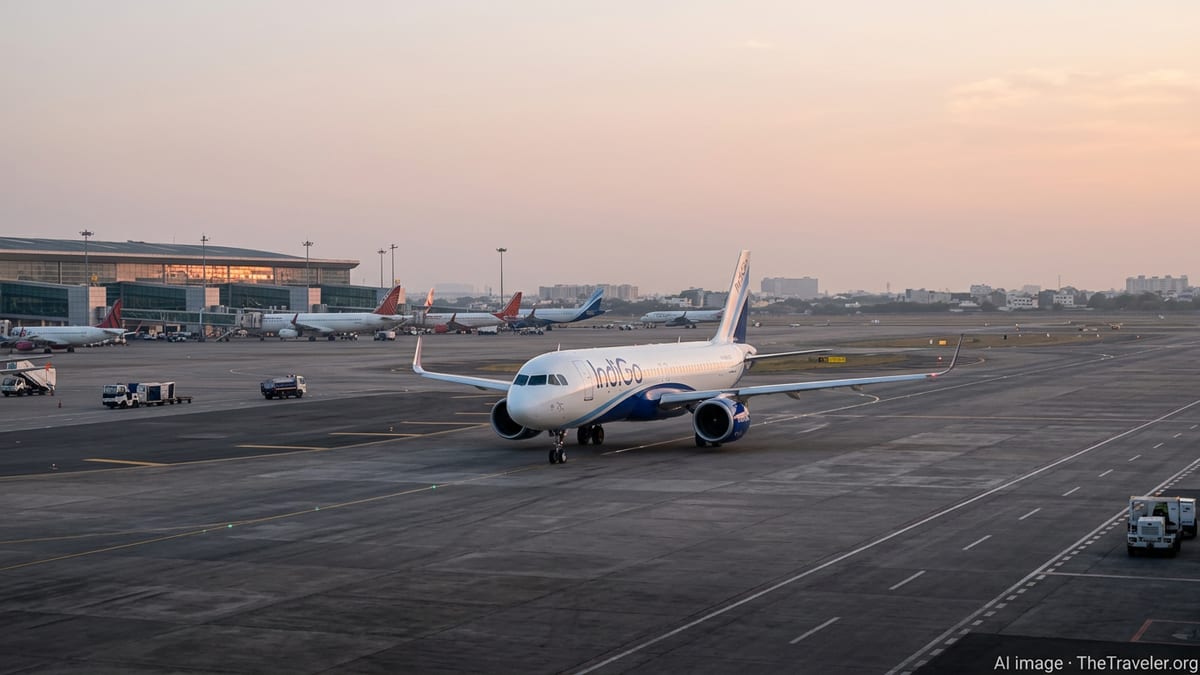
IndiGo is cautiously piecing back together its Middle East and Europe network after sweeping airspace closures triggered by the Iran–Israel crisis forced India’s largest airline to halt dozens of routes and strand thousands of passengers across key transit hubs.
From Overnight Shutdowns to Gradual Reopenings
The latest flare-up in the Iran–Israel conflict, drawing in the United States and prompting a cascade of regional airspace bans in late February 2026, initially brought IndiGo’s Gulf and beyond-Europe operations to an abrupt halt. With Iranian, Israeli and parts of Gulf airspace effectively closed, the low-cost carrier suspended all flights to and from the Middle East, cutting a vital bridge between India and destinations further west.
In parallel, IndiGo was forced to cancel or suspend several European services, including links to major hubs such as London, Amsterdam and Manchester, which had relied on overflight corridors across West Asia. The airline joined a growing list of global carriers scrambling to reroute or ground aircraft as safety advisories expanded to cover much of the Persian Gulf and Levant region.
Within days, however, partial openings over Saudi Arabia and Oman created narrow but crucial corridors for limited services to resume. Indian authorities issued time-bound safety advisories, while carriers began reintroducing flights on a case-by-case basis, subject to rapidly changing NOTAMs and security assessments.
By early March, IndiGo had moved from a blanket suspension to a patchwork restart, reinstating select Middle East flights and planning additional services on routes where demand, safety and operational feasibility aligned.
Reconnecting Gulf Gateways and Stranded Travellers
Saudi Arabia has emerged as a focal point of IndiGo’s recovery strategy. With Jeddah serving as a critical gateway for both migrant workers and religious traffic, the airline announced a set of dedicated flights on March 3 to bring back passengers who had been left in limbo by the sudden shutdown. These special services to Indian cities including Mumbai, Hyderabad and Ahmedabad were designed to clear the immediate backlog and restore a measure of confidence among travellers.
Two days later, as more Gulf airspace reopened for civilian operations under tightened security oversight, IndiGo joined other Indian carriers in operating limited scheduled and additional flights to select Middle Eastern destinations. Capacity remains well below pre-crisis levels, but the move signalled a decisive shift from crisis management to phased restoration of connectivity between India and the Gulf.
For passengers, the experience is still far from seamless. IndiGo has urged customers not to head to airports unless they have been contacted directly, and to rely on airline channels for the latest schedule updates as individual flights are added, retimed or rerouted at short notice. Flexible policies, including fee waivers for rescheduling and refunds on affected sectors, have become a core part of the carrier’s customer-relief toolkit.
Airport operators across India, from major hubs to regional gateways, are bracing for uneven traffic flows as special flights, repositioning services and partially restored schedules overlap. Ground handlers and immigration facilities are contending with bursts of arrivals from previously suspended routes, alongside continuing cancellations when security conditions tighten again.
Europe Links Survive via Longer, Costlier Detours
Beyond the Gulf, the Iran–Israel crisis has challenged IndiGo’s westward ambitions into Europe, where it has been building a presence with direct and one-stop services. With both Pakistan and large sections of Middle Eastern airspace subject to restrictions or de facto no-fly status at various points since 2024, Indian carriers have been funnelling traffic along narrow northern or southern corridors, often via the Caucasus or over Egypt and the Arabian Sea.
For IndiGo, that has meant difficult trade-offs on European routes. While some services have been suspended outright in recent days, others are being evaluated for operation via longer routings that increase block times and fuel burn. Analysts note that these detours can erode the cost advantages of low-cost carriers, forcing them to weigh network presence against short-term profitability in a highly competitive India–Europe market.
Industry data from India’s aviation regulator indicates that more than 800 flights across Indian airlines were cancelled over two days at the peak of the latest airspace shutdown, with revenue losses estimated in the hundreds of crores of rupees. IndiGo, as the country’s largest international operator by frequency, has absorbed a significant share of that hit while still maintaining a strategic interest in keeping key corridors alive.
For now, passengers flying between India and Europe on IndiGo can expect a mix of outright cancellations, rerouted flights with extended journey times, and last-minute operational changes as the carrier responds to evolving security advisories. Travel agents report that many customers are opting for flexible tickets or postponing non-essential trips until routings stabilise.
Balancing Safety, Costs and Operational Complexity
Behind the scenes, IndiGo’s network planners and safety teams are working through unprecedented operational complexity. Since early tensions between Iran and Israel intensified in 2024, Indian airlines have had to keep contingency routings on standby, often avoiding Iranian airspace entirely and treating parts of the region as dynamically restricted zones.
The latest crisis has hardened those practices. Indian authorities have directed carriers to conduct continuous risk assessments, monitor security bulletins and be prepared to adjust routings or suspend sectors at short notice. IndiGo, which previously warned passengers of delays and cancellations when Iran and neighbouring states closed their skies in 2025, has refined its communication strategy to provide faster updates across digital channels and airport information systems.
The financial pressure is significant. Longer routings translate into higher fuel costs, additional crew hours and tighter turnarounds, all of which cut into margins at a time when demand for international travel remains robust. Yet safety imperatives are non-negotiable, leaving airlines to absorb near-term costs in exchange for preserving their reputation and market position.
IndiGo’s decision to progressively rebuild Middle East and European connectivity despite these headwinds reflects a broader industry view that disruptions, however severe, are unlikely to be permanent. By maintaining an operational foothold and investing in alternative routings, the carrier aims to be ready with capacity when conditions improve and full corridors reopen.
What Travellers Can Expect in the Coming Weeks
For international travellers passing through IndiGo’s Middle East and Europe network in March 2026, uncertainty will remain a defining feature of the journey. Schedules are subject to rapid revision as conflict dynamics and airspace advisories evolve, while certain high-risk destinations may stay offline for longer than others.
Passengers are being advised to check flight status repeatedly in the 24 hours before departure, allow extra time for immigration and security formalities, and be prepared for last-minute gate or routing changes. Travel experts recommend building in longer connection buffers, especially when combining IndiGo services with other airlines, given the heightened risk of delays.
On the positive side, the resumption of targeted services, particularly from Gulf hubs and select Saudi airports, signals that the complete shutdown seen in late February is receding. Each small reinstatement of a sector tightens the web of connectivity linking Indian cities with the wider Middle East and, by extension, Europe and North America via partner networks.
For IndiGo, the path ahead will be shaped as much by geopolitics as by traditional airline metrics. Its ability to keep rebuilding capacity safely, while managing costs and maintaining passenger trust, will determine how quickly the carrier can regain cruising altitude on some of its most strategically important international routes.