

More news on this day
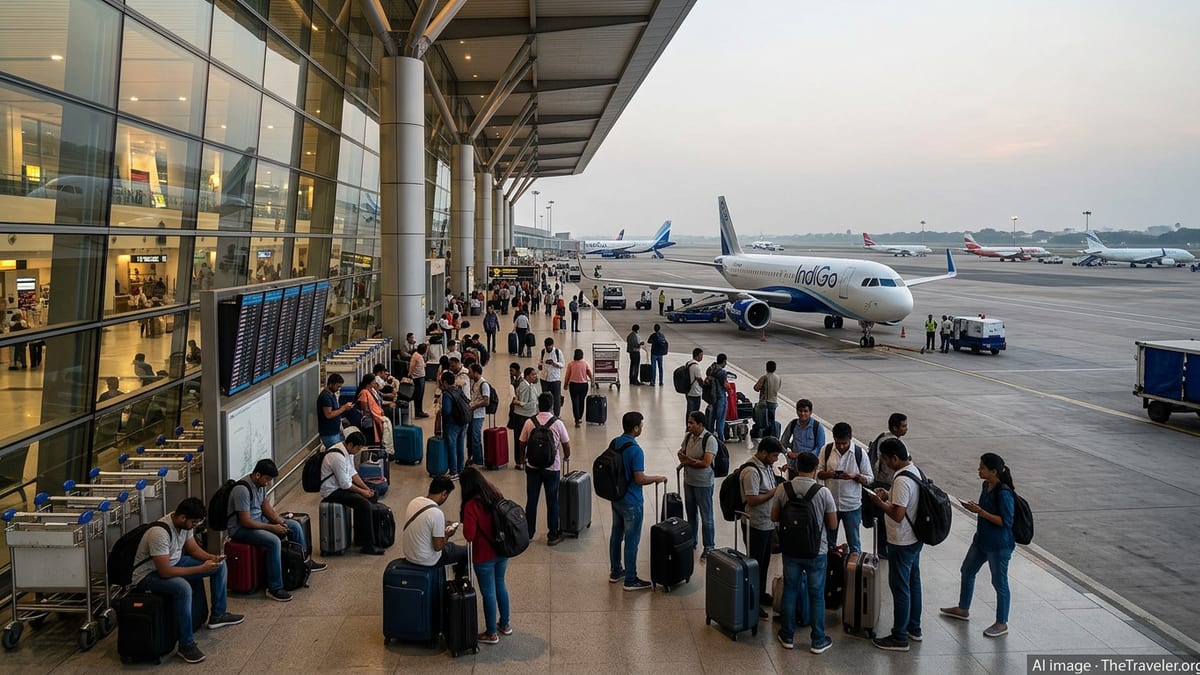
IndiGo passengers are grappling with a fresh wave of uncertainty as the budget carrier contends with suspended Middle East routes, spiraling fuel costs and war-related airspace closures that are reshaping flight schedules across India and beyond.
Get the latest news straight to your inbox!
Middle East Conflict Shuts Corridors and Grounds Key IndiGo Routes
Publicly available aviation data and recent news coverage show that the latest escalation of conflict involving the United States, Israel and Iran has led to partial or full airspace closures over Iran, Iraq, Kuwait, Bahrain and Qatar. Major hubs in Dubai, Abu Dhabi and Doha have sharply restricted operations after missile and drone strikes in the region, triggering thousands of flight cancellations and diversions worldwide.
For IndiGo, which relies heavily on high-density routes between Indian cities and Gulf destinations, the disruption has been particularly acute. Recent reports indicate that the airline has suspended or curtailed services to and from Abu Dhabi, Doha, Kuwait and several Saudi Arabian cities on select days in early March 2026, as carriers avoid unsafe airspace and adjust to limited slots at operating airports.
Schedules shared in domestic business media suggest that large numbers of IndiGo flights scheduled for early March between India and the wider Middle East network have been either cancelled or re-timed, affecting connections from Mumbai, Delhi, Hyderabad, Bengaluru, Kochi, Chennai and Ahmedabad to the Gulf. Travelers booked on these sectors are being pushed onto later dates or alternate routings where available, with priority given to stranded passengers returning to India.
At the same time, routes considered relatively safer have seen a phased resumption. Coverage in Indian newspapers notes that IndiGo has restarted a limited number of departures to destinations such as Dubai, Muscat, Riyadh, Jeddah, Dammam, Kuwait and Bahrain on specific dates, while keeping other services suspended until authorities relax airspace restrictions and airport operations stabilize.
Rerouted Flights Mean Longer Journeys and Higher Operating Costs
The Middle East turmoil has collided with an already constrained regional aviation map for Indian carriers. Pakistani airspace restrictions on Indian airlines, in place since 2025 according to public records, had already forced longer routings for flights to Europe and parts of the Gulf. The new round of closures across West Asia now removes additional key corridors and hubs, leaving airlines with few efficient options.
Analysts cited in recent coverage explain that many India to Europe and long-haul services are now detouring over Central Asia or the Horn of Africa to avoid conflict zones, adding several hours of flying time. For a predominantly narrow-body operator like IndiGo, which operates most international routes with single-aisle aircraft optimized for shorter segments, these diversions translate into tighter fuel margins, payload limits and higher per-seat costs.
The knock-on effect for passengers is already visible. Travel industry trackers report steep spikes in fares on routes where capacity has been cut or rerouted, including sectors linking India with the Gulf, Europe and North America that typically rely on Middle Eastern hubs for connectivity. Seats on remaining IndiGo flights to the Gulf are reported to be in high demand, with last-minute tickets pricing significantly above pre-crisis levels.
Operational complexity has also increased. With multiple airspaces closed and schedules in flux, IndiGo and other carriers are engaging in near-daily timetable adjustments. Public advisories urge passengers to check flight status repeatedly before departure and to allow extra time for unexpected delays, equipment changes or diversions, especially on itineraries involving the Middle East or onward connections through Europe.
Fuel Surcharges Return to the Spotlight as Jet Prices Climb
IndiGo’s exposure to fuel costs predates the current conflict. In October 2023, the airline introduced a distance-based fuel charge on all domestic and international tickets to offset a sharp rise in aviation turbine fuel prices, as documented by financial news outlets and sector reports at the time. The surcharge, tiered by sector length, was added on top of base fares and taxes.
While that fuel charge has since become a standard line item in IndiGo’s ticket structure, the latest geopolitical shock in the Gulf has again pushed jet fuel prices higher. Industry commentary in recent days points to significant increases in regional aviation fuel benchmarks since early March 2026, driven by concerns over supply routes and refinery output in and around the conflict zone.
Other carriers in India have already announced fresh or expanded fuel surcharges in response to the price surge, and IndiGo faces similar pressure. Analysts note that fuel historically accounts for around 35 to 40 percent of an Indian airline’s operating costs, meaning that prolonged elevation in prices or persistent detours around closed airspace can erode margins quickly unless offset by higher fares or additional surcharges.
For passengers, this environment makes already expensive tickets even costlier. Travel consultants quoted in local media warn that any extended period of elevated fuel prices and disrupted routings is likely to keep IndiGo’s fares on Middle East and longer international routes at a premium, with limited scope for near-term discounts or sales until operational stability returns.
Passengers Caught Between Cancellations, Emergency Flights and Uncertain Timetables
The immediate human impact of IndiGo’s route suspensions has been seen in the Gulf, where thousands of Indian workers and tourists have faced sudden cancellations. Coverage by Indian newspapers and television channels describes crowded terminals and extended waits as passengers try to secure scarce seats on emergency or repatriation-style services launched by Indian airlines to bring people home.
IndiGo has scheduled special flights from cities such as Jeddah back to multiple Indian destinations on select dates in early March, subject to regulatory approvals and available air corridors. These flights, highlighted in public announcements and media reports, are designed primarily to clear backlogs of stranded travelers rather than to restore regular commercial schedules.
On the booking side, passengers report facing a patchwork of options. Some are offered complimentary date changes or alternative routings on IndiGo’s remaining Gulf services, while others are opting for refunds and switching to different airlines, indirect routings via Southeast Asia, or even non-air alternatives for regional trips within India. The variability reflects the fact that conditions are changing day by day as airspace restrictions evolve.
Consumer advocates quoted in commentary pieces have advised travelers to document all communications with airlines and travel agents, to monitor airline social media feeds and official advisories for the latest schedule changes, and to consider flexible tickets or travel insurance where possible on upcoming trips that might pass anywhere near the Middle East region.
What Travelers Should Watch in the Days Ahead
For now, IndiGo’s operations remain in a state of managed disruption rather than full-scale shutdown. Published schedules show that the airline is attempting a phased normalization on select Middle East routes while holding back from committing to full restoration until there is greater clarity on airspace access and security conditions.
Travel news coverage suggests that three variables will shape the outlook for IndiGo passengers. The first is the duration and intensity of the conflict itself, which will determine how long critical Middle Eastern airspaces and airports remain constrained. The second is the trajectory of aviation fuel prices, which will influence both the level and structure of IndiGo’s fares and surcharges over the coming weeks.
The third variable is regulatory response, including any adjustments by Indian and foreign aviation authorities to slot allocations, overflight permissions and safety assessments. Easing of restrictions or opening of new temporary corridors could allow IndiGo to reintroduce suspended routes more quickly, while tighter rules or additional closures would prolong the current turmoil.
Until those factors become clearer, passengers planning to fly with IndiGo on Middle East or Europe-linked routes are being encouraged by travel industry observers to build flexibility into their plans. That may mean allowing longer connection windows, preparing for last-minute schedule changes, or, where feasible, considering alternative routings that avoid the most affected corridors. For many IndiGo customers, the coming weeks are likely to remain a period of elevated uncertainty in the skies.