

More news on this day
Passengers flying in and out of Delhi are being urged to brace for disruptions after IndiGo issued a fresh advisory warning of possible delays at Indira Gandhi International Airport, following a weather-related yellow alert that has tightened operating conditions at India’s busiest aviation hub.
Get the latest news straight to your inbox!
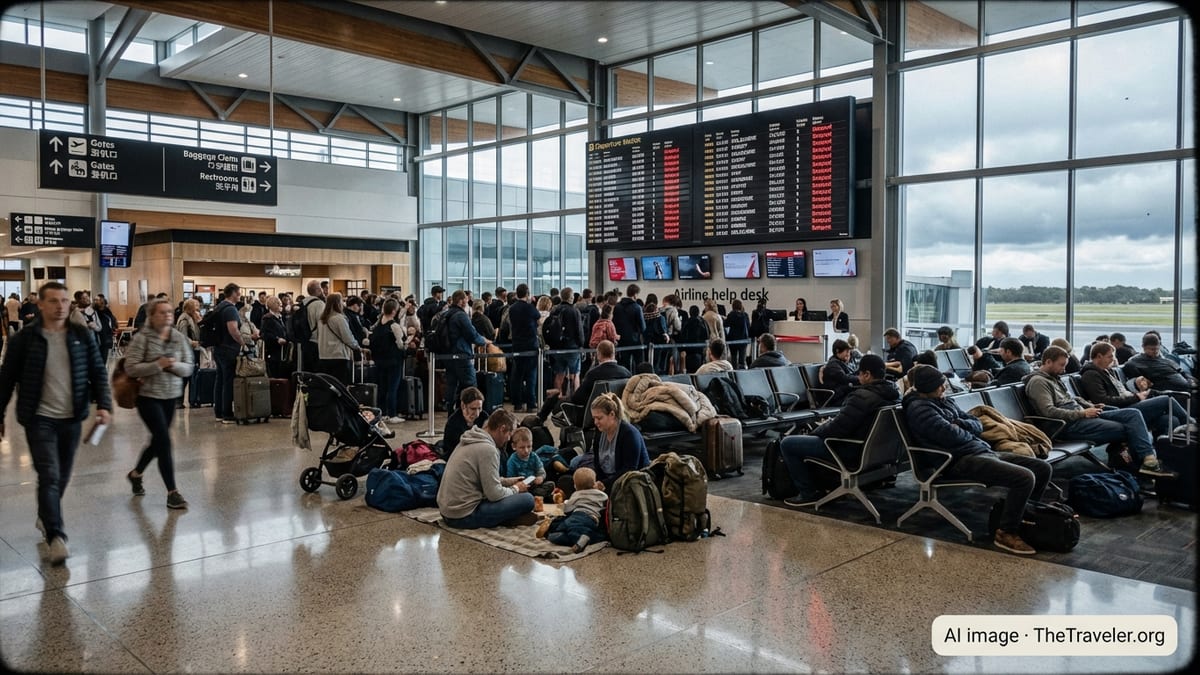
Yellow alert triggers fresh caution at Delhi airport
Recent weather bulletins placing Delhi under a yellow alert have prompted renewed warnings about flight punctuality at Indira Gandhi International Airport, with IndiGo advising customers that schedules could be affected. The alert, linked to reduced visibility and seasonal conditions, has increased the likelihood of knock-on delays as aircraft and crews rotate through an already congested network.
According to publicly available information and local media coverage, Delhi airport has periodically operated under low-visibility procedures during recent spells of dense fog, with average delays stretching beyond the half-hour mark on some mornings. When a yellow alert is in force, airports and airlines typically increase buffers in turnaround times and sequencing, which can ripple through departures and arrivals throughout the day.
IndiGo’s latest advisory focuses on passengers traveling to or from Delhi, urging them to check flight status before leaving for the airport and to allow extra time for security and boarding. While the airline has not announced mass cancellations linked specifically to the current alert, it has signaled that the combination of adverse conditions and heavy traffic can lead to last-minute gate or timing changes.
Operational data cited in recent reports indicates that Delhi’s position as a central hub makes it particularly sensitive to even minor weather-related restrictions. When runway capacity is temporarily reduced or aircraft need additional spacing, the impact is felt not only on domestic shuttles to metros such as Mumbai, Bengaluru, and Hyderabad, but also on international connections banked around peak hours.
Winter weather compounds an already fragile schedule
Over the past several winter seasons, dense fog episodes across northern India have repeatedly unsettled flight operations, and this year has been no exception. Published coverage notes that Delhi airport has been running under advanced instrument-landing categories during prolonged low-visibility stretches, a procedure designed to keep flights moving but one that often leads to slower throughput and longer holding patterns.
For IndiGo, which runs one of its largest bases out of Delhi, the yellow alert arrives on top of a period of closer scrutiny of its broader schedule resilience. Earlier disruptions in the past year highlighted how tightly timed rotations can unravel when confronted with a mix of weather delays, airspace constraints and crew-duty limits. The current advisory is being interpreted by aviation watchers as a sign that the carrier is attempting to flag risks early and reduce the sort of last-minute chaos that has drawn criticism in the recent past.
Reports from Indian aviation trackers show that fog-related disruption typically peaks in the early morning, when many of IndiGo’s high-density trunk flights are scheduled. Even when conditions improve later in the day, the initial backlog can be slow to clear, especially when aircraft are required to reposition or when crew rosters are stretched by extended duty times.
These pressures are not unique to IndiGo, but the airline’s scale means that any systemic slowdown at Delhi can quickly translate into crowded terminals, long queues at check-in and rebooking counters, and heightened passenger frustration. The yellow alert therefore serves as both a weather warning and a reminder of the thin margins under which India’s busiest routes currently operate.
Passenger impact and travel advisory details
Publicly available airline notices indicate that IndiGo is asking passengers traveling from Delhi, or connecting through the capital, to monitor real-time updates through official status channels and to keep contact details updated in their bookings. The advisory also encourages travelers to factor in additional time for ground transportation to the airport, as adverse weather can slow road traffic at peak periods.
Industry commentary suggests that travelers on early-morning and late-night departures are particularly vulnerable to changes when a yellow alert is active, given the greater likelihood of poor visibility and the reliance on precision approach systems. Daytime services can also feel the pinch if morning banks of flights are significantly delayed, leading to aircraft arriving late for subsequent legs.
For passengers, the most immediate consequences are extended waits at the gate, potential missed connections and, in more severe cases, rebooking on later services. Travel analysts note that even short delays of 20 to 30 minutes, when multiplied across dozens of departures, can strain terminal infrastructure and place additional pressure on customer-service teams.
Consumer advocates are urging travelers to remain alert to changing conditions in the days when a yellow alert is in place, to keep boarding passes and identification handy for rapid security processing, and to understand the compensation and accommodation policies that apply if delays tip into cancellations. Transparency in communication and regular updates are seen as critical to maintaining trust at a time when air travel demand remains robust despite operational headwinds.
Wider network implications across northern India
The weather-related alert centred on Delhi has implications that go beyond the capital. Coverage of recent disruption periods shows that airlines often adjust schedules at nearby airports such as Amritsar, Lucknow, Chandigarh and Varanasi when dense fog or poor visibility threatens to spill across the wider northern belt.
IndiGo’s advisory on possible delays at Delhi is therefore being interpreted by observers as a signal that flights into and out of other affected cities may also experience timing changes, particularly where aircraft and crews are scheduled on tightly timed multi-sector rotations. Even if local conditions at outstation airports remain acceptable, delays to inbound aircraft originating in Delhi can force quick rescheduling and knock-on impacts.
Aviation analysts point out that this pattern of cascading disruption has become familiar during India’s winter, with airlines juggling punctuality targets against safety margins and regulatory requirements tied to crew duty hours. Yellow alerts, while not as severe as higher-level warnings, still serve as formal markers that conditions require greater caution, potentially curtailing some of the flexibility carriers rely on to recover time.
For IndiGo and its peers, this underscores the importance of building additional slack into winter schedules and of communicating proactively with passengers about the range of possible outcomes. As Delhi’s aviation ecosystem continues to grow in scale and complexity, each seasonal weather alert is testing how well India’s largest airline and its competitors can balance growth with reliability under challenging operating conditions.