

More news on this day
IndiGo is set to launch daily non stop flights between Jamnagar in Gujarat and Navi Mumbai from April 23, 2026, a move expected to significantly strengthen regional connectivity in western India and unlock new opportunities for tourism and trade across the Gulf of Kutch and the Mumbai metropolitan region.
Get the latest news straight to your inbox!
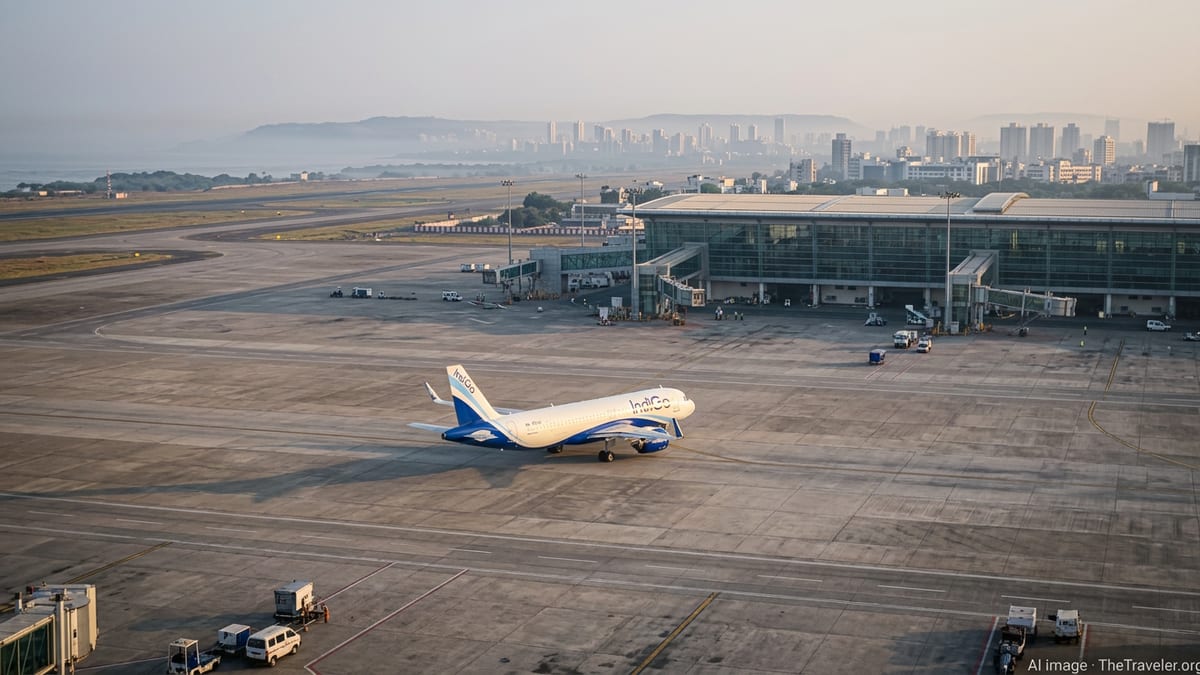
New Daily Link Between Jamnagar and Navi Mumbai
According to the airline’s recent announcement, the Jamnagar–Navi Mumbai route will be operated once daily, adding Jamnagar as another key point in IndiGo’s fast expanding western India network. The service will use aircraft from the carrier’s existing narrow body fleet and is being positioned as a convenient link for both business and leisure travellers who previously had to rely on less direct options via Mumbai or Ahmedabad.
Industry schedule filings indicate that the new daily service will commence on April 23, 2026, aligning with IndiGo’s broader summer schedule ramp up from Navi Mumbai International Airport. The flight from Navi Mumbai is expected to operate in the late afternoon, with an evening return from Jamnagar, offering same day connectivity suitable for short business trips as well as longer leisure stays.
Aviation analysts note that Jamnagar’s growing profile, driven by its energy, petrochemicals and defence infrastructure, makes it a natural candidate for improved air links to the Mumbai region. The daily frequency is being seen as a measured start that could be scaled up if demand proves robust in the initial months of operation.
For Navi Mumbai, the route further diversifies the city’s early domestic network, complementing planned services to key cities in Gujarat and neighbouring states. The addition of Jamnagar helps position the new airport as a practical gateway for western coastal destinations that were previously reliant on Mumbai’s saturated main hub.
Strengthening Gujarat’s Regional Air Network
The Jamnagar–Navi Mumbai flight is part of a wider IndiGo strategy to deepen connectivity across Gujarat, following recent announcements of increased capacity between Bhavnagar and Navi Mumbai and new links from Navi Mumbai to cities such as Rajkot and Diu. By weaving Jamnagar into this pattern of routes, the airline is effectively creating a more integrated air corridor between Gujarat’s industrial and coastal centres and the Mumbai metropolitan area.
Travel planners in the region say the move is likely to be welcomed by small and medium sized enterprises that rely on quick access to clients and suppliers across the Gulf of Khambhat and the broader western seaboard. Previously, many travellers from Jamnagar routed via Mumbai’s primary airport, often facing longer transfer times and congestion related delays. The shift of traffic to Navi Mumbai aims to ease that pressure while offering more predictable schedules.
Policy watchers also point to alignment with Gujarat’s wider push to enhance multimodal connectivity. With improvements under way on highways and rail links, additional air routes such as Jamnagar–Navi Mumbai are seen as filling a crucial gap for time sensitive travel, particularly for sectors such as port logistics, oil and gas, defence and large scale manufacturing.
By extending its presence in secondary cities rather than focusing solely on metros, IndiGo is also reinforcing a broader trend in Indian aviation, where airlines are increasingly betting on tier two destinations to deliver the next phase of passenger growth. Jamnagar’s inclusion in the carrier’s Navi Mumbai schedule is being read as a vote of confidence in the city’s long term economic trajectory.
Tourism and Pilgrimage Hubs Set to Benefit
Beyond business travel, tourism stakeholders expect the new Jamnagar–Navi Mumbai flight to spur visitor interest in Gujarat’s lesser explored coastal and cultural attractions. Jamnagar serves as a convenient access point for destinations such as the Marine National Park in the Gulf of Kutch, the birding hotspots of Khijadiya and Narara and historic temple towns in Saurashtra, all of which could see increased weekend and short break traffic from the Mumbai region.
Travel agents say that easier air access is often the missing link in converting intent into actual trips, especially for urban travellers with limited time. With a non stop daily service, itineraries combining wildlife, coastline and heritage experiences become far more feasible for residents of Navi Mumbai, Mumbai and neighbouring districts who are willing to travel to the new airport.
The route is also likely to support pilgrimage travel, with Jamnagar’s proximity to important religious centres across Saurashtra. Tour operators can now design air based circuits linking Jamnagar with other Gujarat destinations that are gradually gaining new flights from Navi Mumbai, creating flexible options that reduce overall journey times.
On the outbound side, residents of Jamnagar gain a new, one stop gateway into Maharashtra’s Konkan belt, coastal hill stations and the cultural attractions of Mumbai, via IndiGo’s growing network from Navi Mumbai. As more connections are added from the new airport over the coming seasons, these links are expected to broaden further.
Relief for Congested Mumbai and Boost for Navi Mumbai Airport
IndiGo’s decision to route Jamnagar flights through Navi Mumbai rather than the main Mumbai airport reflects a strategic effort to decongest one of India’s busiest hubs. Navi Mumbai International Airport has been developed precisely to share the load of the metropolitan region’s fast expanding air traffic, and new routes like Jamnagar are key to establishing it as a viable alternative for both airlines and passengers.
By basing a portion of its western India expansion at Navi Mumbai, IndiGo can pursue growth while avoiding some of the slot constraints and infrastructure pressures that have long challenged carriers at the existing Mumbai facility. Passengers, in turn, gain from a more streamlined terminal experience, shorter check in queues and potentially quicker ground handling, all of which can improve on time performance.
Local authorities in Navi Mumbai have argued that strong domestic connectivity in the first phase of operations is essential to building public confidence in the new airport. With routes like Jamnagar, Bhavnagar and Kolhapur now on the map, the airport is beginning to assemble a network that serves both point to point demand and onward connections deeper into IndiGo’s system.
Transport planners caution that the full benefits will depend on continued improvements in last mile access to the airport from across the Mumbai metropolitan region. However, they acknowledge that each new daily route gives travellers more reasons to consider Navi Mumbai as a practical departure and arrival point, gradually shifting behaviour away from an exclusive reliance on the older airport.
Outlook: Western India’s Aviation Map Continues to Evolve
As IndiGo prepares to open bookings and ramp up marketing for the Jamnagar–Navi Mumbai service, industry observers see the route as another marker of how western India’s aviation landscape is being reshaped by new infrastructure and shifting traffic patterns. With Navi Mumbai expected to handle an increasing share of domestic movements in the coming years, routes that directly link emerging commercial centres like Jamnagar play a central role in that transition.
Airline planners will be watching load factors closely in the early weeks after the April 23 launch to gauge whether additional capacity or revised timings might be warranted. If the daily service performs well, it could encourage not only IndiGo but also rival carriers to explore similar links between Gujarat’s secondary cities and Navi Mumbai, deepening competition and choice for passengers.
For now, the announcement gives both Jamnagar and Navi Mumbai a tangible boost in visibility, signalling to investors, tourists and residents that they are part of a more closely knit regional air network. As more such city pairs are connected with regular, reliable flights, the broader promise of India’s new aviation infrastructure in driving economic and tourism growth across state boundaries will come more sharply into focus.