

More news on this day
IndiGo’s decision to restart limited flights from Jeddah to India this week, even as airspace closures spread across the Gulf amid escalating conflict with Iran, is injecting a sliver of normalcy into a region where tourists, airlines and hotel operators are suddenly back in crisis mode.
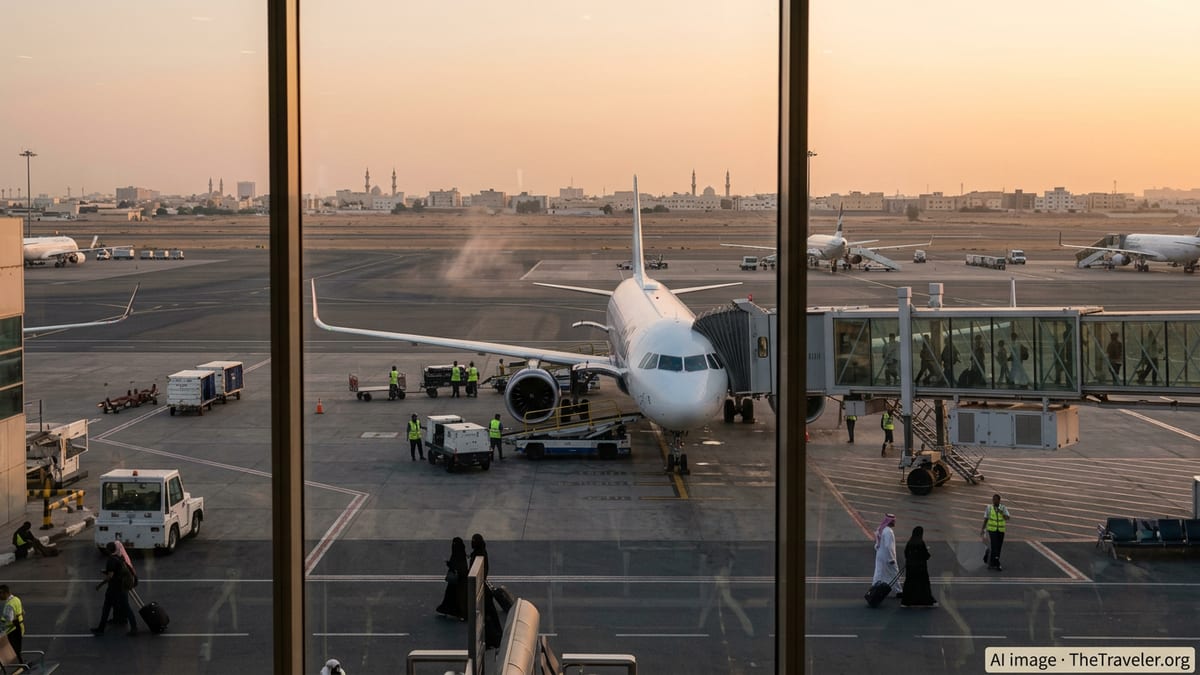
Relief Flights From Jeddah Signal a Fragile Reopening
India’s largest carrier by market share has moved quickly to restore a skeletal link out of Saudi Arabia, announcing special services from Jeddah to multiple Indian cities on March 3. The flights, positioned as relief operations for stranded passengers, come after days of widespread cancellations across the Middle East as air forces trade strikes and key corridors near the Strait of Hormuz face heightened risk.
While IndiGo’s schedule is a far cry from full commercial restoration, the decision to operate into and out of Jeddah underlines both the airline’s confidence in Saudi Arabia’s partially open airspace and the pressing demand from Indian expatriates, Umrah pilgrims and leisure travelers desperate to get home. It also sets IndiGo apart from some rivals that have extended outright suspensions on routes touching the most volatile zones.
Authorities in New Delhi have framed the flights as part of a coordinated evacuation-style effort, with consular teams in Jeddah helping triage and prioritize passengers. For travelers who had been stuck for days in airport hotels or short-term rentals, the reopening of even a single reliable corridor is reshaping onward travel plans, often via Dubai, Abu Dhabi and Muscat, which remain key hubs for long-haul connectivity to Europe and North America.
However, aviation planners stress that these operations are contingent on rapidly changing overflight permissions and security assessments. Any further escalation in the conflict could see the narrow window through Saudi airspace close again, underscoring how precarious this return to the skies really is.
Ripple Effects for Tourists Transiting Dubai, Riyadh and Abu Dhabi
For international tourists, the resumption of IndiGo’s Jeddah services is both a relief and a reminder that Gulf travel is still operating on a knife-edge. Many visitors with multi-stop itineraries that weave together India, Saudi Arabia and the United Arab Emirates now face an uncomfortable calculus: stick with carefully re-routed flights that detour around conflict zones or postpone trips entirely.
Dubai and Abu Dhabi, in particular, have long sold themselves as safe, efficient stopover cities. In recent years they have attracted a surge of high-spending visitors connecting between Asia, Europe and Africa, supported by robust air access from Emirates, Etihad, Air India and a growing cohort of Indian low-cost carriers. When airspace closures and missile alerts begin to dominate headlines, that perception of seamless safety comes under strain, even if the UAE itself remains physically distant from direct strikes.
Riyadh, meanwhile, is in the midst of an ambitious tourism makeover, pitching itself as both a business gateway and a culture-focused destination. Tourists already in the Saudi capital are closely watching whether regional carriers follow IndiGo’s lead in cautiously reinstating flights, or whether war-risk insurance costs and operational uncertainties keep schedules thinned out well past this week.
For now, travel advisers are urging clients to build extra buffer days into Gulf itineraries, opt for flexible tickets and keep an eye on last-minute schedule changes. Those transiting through Dubai or Abu Dhabi to join cruises, desert tours or events in Saudi Arabia face the greatest disruption risk if any new strike prompts an overnight tightening of airspace rules.
Gulf Hotels Face a Sudden Hit After Years of Outperformance
The timing of the latest flare-up in Middle East tensions is especially painful for hotel owners in Dubai, Abu Dhabi and Riyadh. After several years of record or near-record occupancy and room rates driven by mega-events, corporate meetings and a surge in luxury leisure travel, many properties had finally shifted focus from survival to expansion.
Industry data through late 2025 painted a picture of resilience, with Dubai and Abu Dhabi both hovering around or above the 80 percent occupancy mark for much of the year and Riyadh climbing steadily as new supply opened. That strength encouraged investors to green-light thousands of additional rooms across the Gulf, betting that regional stability and the return of long-haul travelers would keep beds filled in 2026 and beyond.
The current airspace disruption and jittery consumer sentiment are now testing those assumptions. Early booking data shared by regional operators point to a spike in cancellations and deferrals for March and April stays, especially from European and North American guests who rely on complex connecting itineraries. Hotels that had been benefitting from compressed supply during previous conflicts elsewhere are suddenly seeing softer pipelines and more aggressive price-shopping.
Abu Dhabi’s large inventory of business and conference hotels appears particularly exposed, with several multinational events reviewing contingency plans in case delegates face extended travel disruptions. In Dubai, beach resorts and urban lifestyle properties report more short-term “wait and see” behavior, with travelers postponing rather than cancelling trips outright in the hope that tensions ease and flight options stabilize.
Opportunities and Risks for Indian Travelers and Pilgrims
IndiGo’s cautious return to Jeddah is especially consequential for Indian travelers, who form one of the largest visitor cohorts to the Gulf. The route is a crucial lifeline for Umrah pilgrims, workers on short-term contracts and families that frequently shuttle between India, Saudi Arabia and the UAE. When those air links falter, the impact is felt not only at departure gates, but also in the occupancy metrics of affordable hotels and serviced apartments across Dubai, Sharjah, Abu Dhabi and Riyadh.
With India’s outbound middle class still expanding, Gulf destinations are reluctant to lose momentum in one of their most reliable source markets. Hoteliers are responding with targeted offers aimed at Indian guests who may be wary of long-haul travel but still open to short regional breaks or stopovers, especially if they can combine religious travel to Jeddah or Medina with shopping and entertainment in Dubai or Abu Dhabi.
At the same time, travel risk has become far more personal. Families booking pilgrimages are weighing the security assurances of airlines, tracking real-time flight paths and scrutinizing cancellation policies more closely than in previous years. Travel agencies in Indian metros report a surge in queries about which carriers are still operating into Jeddah, whether routings avoid the most sensitive airspace and how quickly passengers can be rebooked if a new round of strikes grounds flights again.
The upshot is a more cautious, better-informed Indian traveler, one who may still fill seats on IndiGo’s Jeddah services but will demand transparency and flexibility from both airlines and hotels along the way.
What Travelers Should Watch in the Coming Weeks
The restart of IndiGo’s Jeddah flights is best seen as a tentative step in a broader regional reset rather than a definitive return to business as usual. For tourists eyeing Dubai’s skyline, Abu Dhabi’s cultural district or Riyadh’s new entertainment zones, several variables will shape how safe and practical Gulf travel feels in the weeks ahead.
First, the trajectory of the conflict itself will dictate whether airspace restrictions tighten or loosen. Any attack that brings the fighting closer to major hubs or sea lanes is likely to trigger another wave of flight suspensions. Second, insurance and security assessments by carriers and aircraft lessors will determine which routes remain viable; high war-risk premiums could make some services commercially unattractive even if technically permissible.
Third, traveler confidence will hinge on how smoothly current relief and repatriation flights operate. If IndiGo and other airlines can move thousands of stranded passengers without incident, it will help reassure tourists that the region’s aviation infrastructure remains robust under pressure. Conversely, any major disruption or safety scare could harden perceptions and encourage would-be visitors to divert to alternative destinations in Asia or the Mediterranean.
For now, the message from hoteliers in Dubai, Riyadh and Abu Dhabi is one of guarded optimism. They know that connectivity is their lifeblood. As IndiGo’s planes once again lift off from Jeddah, the entire Gulf tourism ecosystem is watching closely, hoping that a fragile reopening in Saudi skies marks the beginning of a broader stabilization rather than a temporary reprieve.