

More news on this day
Indonesia is gearing up for what officials predict will be one of the largest Eid travel seasons on record in 2026, with authorities simultaneously rolling out transport incentives and warning hotels in major tourist destinations against excessive price hikes.
Get the latest news straight to your inbox!
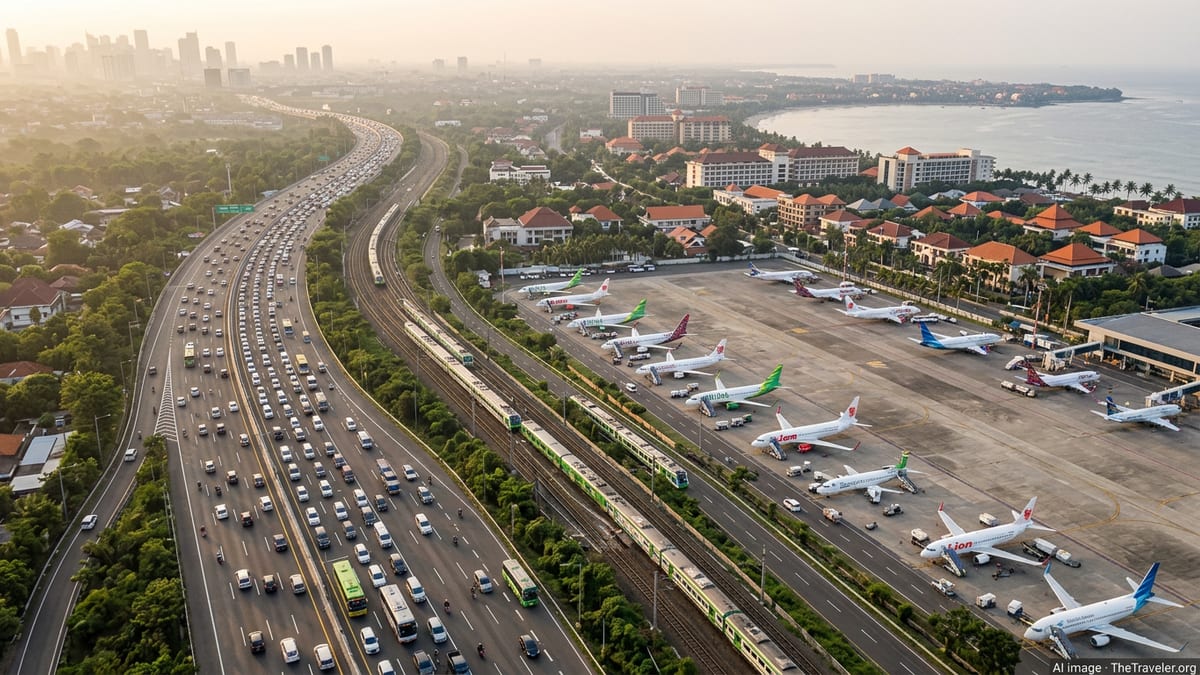
Record-Breaking Eid Movements Forecast for 2026
The Indonesian Ministry of Transportation projects that around 143.9 million trips will take place during the 2026 Eid homecoming period, known locally as mudik, keeping the annual exodus among the world’s largest seasonal movements of people. The volume includes interprovincial journeys and shorter regional trips as families travel from urban centers back to hometowns and on to popular holiday spots.
Recent surveys and post-event data from the 2025 Eid period showed overall travel movements exceeding 150 million trips across the archipelago, confirming that demand rebounded strongly after several years of economic uncertainty. Despite a softer trend in some urban hotel bookings in 2025, officials and transport analysts say mobility around Eid is expected to remain structurally high in 2026.
Authorities are preparing for pressure points across key corridors on Java, Sumatra and Bali, where toll roads, ferries, airports and train stations regularly operate beyond normal capacity during the peak Eid window. Local police and transport agencies in West Java have already designated alternative southern routes between Sukabumi and the Central Java border to help ease congestion along the traditionally overloaded northern and central arteries.
The government’s focus is not only on returning migrants but also on the growing number of domestic tourists who use the Eid holidays to extend trips to destinations such as Bali, Yogyakarta, Bandung, Lombok and Labuan Bajo. These mixed flows are expected to put additional strain on both infrastructure and accommodation supply in 2026.
Airline Incentives and Price Controls Aim to Contain Costs
In an effort to keep 2026 Eid journeys affordable, Indonesia’s economic and transport authorities have announced plans for temporary airline ticket discounts during the holiday period, building on incentive schemes first tested in 2025. Coordinating ministers say the goal is to ease pressure on household budgets while boosting occupancy on routes where demand has become more price sensitive.
The planned incentives, to be implemented in coordination with carriers and airport operators, are expected to target both trunk domestic routes connecting Jakarta and Surabaya with provincial capitals, as well as select international gateways serving Bali and other tourism hubs. Officials hope reduced fares will encourage staggered departures and help distribute passenger loads more evenly across the holiday calendar.
At the same time, regulators are under pressure to monitor for opportunistic fare spikes, particularly on routes with limited competition. Indonesia’s transport ministry has signaled that it will maintain upper fare limits and intensify supervision during the peak Eid booking window to ensure airlines remain compliant with pricing rules.
For travelers, this means that booking early remains critical, but last-minute shoppers may also encounter targeted promotions as airlines respond to real-time load factors. Passengers are being urged to use official carrier channels and trusted travel agents to avoid scams and sudden price changes that do not reflect government-capped fare structures.
Government Push for Fair Hotel Pricing in Tourist Hotspots
Beyond transport costs, the Indonesian government is sharpening its focus on accommodation pricing in major tourist destinations, after complaints in recent years about steep holiday markups in popular areas such as southern Bali, Yogyakarta, Bandung and coastal resort towns. Officials from the tourism and creative economy ministry have reiterated that while dynamic pricing is part of the market, abrupt and extreme increases during Eid risk deterring visitors and undermining the country’s tourism recovery.
Industry data from the 2024 and 2025 Eid periods showed that hotel and villa rates in several hotspots jumped sharply, with some high-end and boutique properties in Bali and Yogyakarta commanding premium prices even as occupancy remained uneven. Travelers also increasingly shifted to private rentals and villas, sometimes paying millions of rupiah per night, a trend that complicated monitoring efforts and raised questions about pricing transparency.
In response, regional governments and hotel associations have been encouraged to adopt voluntary guidelines on reasonable rate adjustments during peak holidays. Some local authorities are exploring agreements that would see participating hotels publicize indicative ranges for Eid stays, making it easier for travelers to compare options and identify outliers.
Authorities have also warned accommodation providers that sudden, unjustified surcharges or misleading pricing practices could attract sanctions under consumer protection rules. For international visitors planning Eid trips in 2026, this evolving regulatory stance is intended to deliver more predictable costs, especially in destinations where demand from domestic holidaymakers and foreign tourists overlaps.
What Travelers Should Watch When Planning a 2026 Eid Holiday
With forecasts pointing to another intense Eid travel season, both domestic and foreign travelers are being advised to plan earlier and more strategically than in previous years. Transport officials recommend avoiding the predicted peak travel days immediately before and after Eid, when highways, ferry terminals and airports typically experience the highest congestion and longest delays.
Travelers heading to tourist destinations are encouraged to secure accommodation well in advance and to monitor price movements across multiple platforms. Comparing rates between major hotel chains, independent properties and vetted homestays can provide a clearer picture of what constitutes a fair price during the holiday window, particularly in cities known for sharp demand spikes.
Experts also suggest paying attention to cancellation policies and minimum-stay requirements, which some hotels adjust during peak periods. Booking options that allow for date flexibility may prove valuable if authorities introduce staggered public holidays or recommend alternative travel windows in an effort to spread traffic more evenly.
For foreign tourists, understanding the mudik dynamic is key. While Bali’s resort areas may feel busy but manageable, major urban gateways such as Jakarta, Surabaya and Bandung can be heavily congested in the days leading up to Eid. Allowing extra time for transfers, using official airport taxis or ride-hailing services, and coordinating arrival and departure dates to sidestep local peaks can make a significant difference to overall trip comfort.
Balancing Economic Opportunity and Traveler Experience
The 2026 Eid period represents a crucial opportunity for Indonesia’s tourism sector, which is seeking to consolidate gains after a volatile few years marked by shifting consumer behavior and uneven recovery across regions. Domestic holidaymakers remain a backbone of demand, but policy makers are eager to reassure international visitors that the country can manage big seasonal surges without sacrificing service quality or affordability.
Tourism officials argue that fair pricing and transparent communication from hotels, airlines and tour operators will be central to that effort. They note that while higher demand during Eid justifies some premium compared with shoulder seasons, price shocks risk pushing travelers to shorter stays, lower spending or alternative destinations within the region.
For local businesses, the challenge is to strike a balance between capitalizing on peak-season revenue and building longer-term loyalty. Industry groups are urging members to view the 2026 Eid holidays as a test of how well Indonesia’s tourism ecosystem can coordinate: keeping transport flowing, maintaining realistic room rates and ensuring that visitors feel they receive value for money even at the busiest time of the year.
As surveys continue to refine projections ahead of Eid 2026, authorities stress that conditions remain fluid and will be closely monitored. For would-be travelers, the key message is clear: prepare early, scrutinize prices, and stay informed about official guidance as Indonesia prepares for another massive holiday migration.