

More news on this day
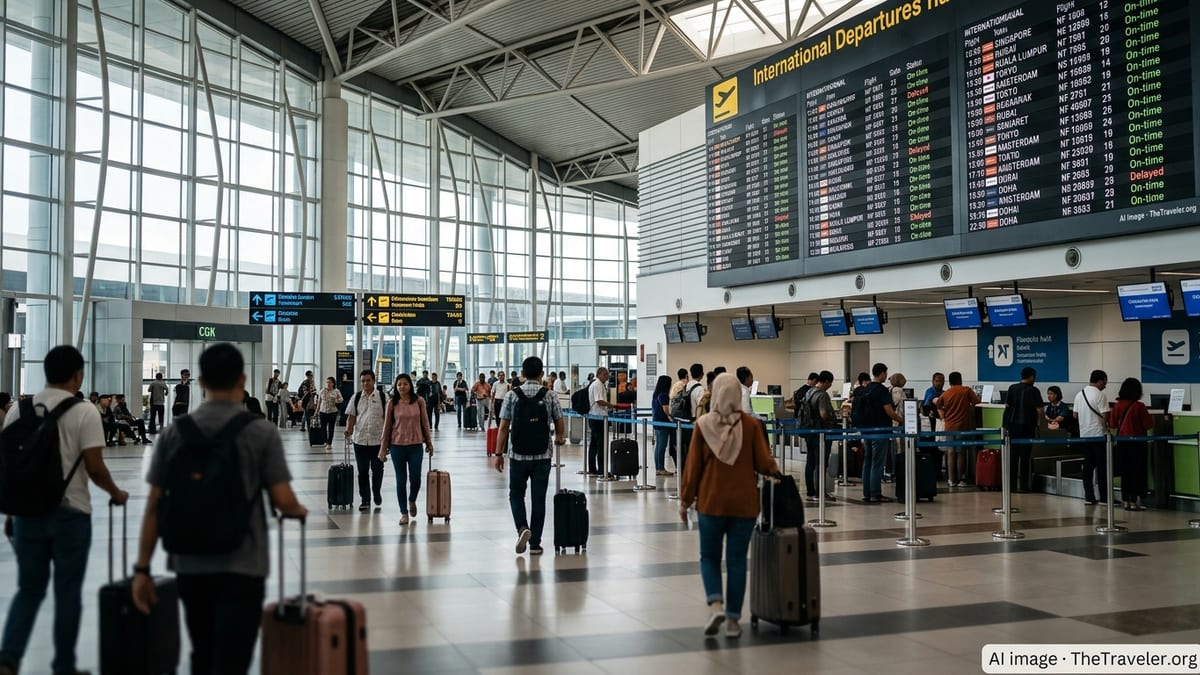
Indonesia’s Transport Ministry has issued a formal denial of reports suggesting an official ban or suspension of international flights, stressing that the country’s air gateways remain open despite severe disruptions to routes over the Middle East.
Get the latest news straight to your inbox!
Clarification Amid Heightened Regional Turbulence
Publicly available information from recent government briefings indicates that Indonesian regulators have not ordered a blanket halt to international commercial flights. The clarification follows days of confusion as airlines worldwide diverted or cancelled services in response to escalating airspace restrictions and military activity in parts of the Middle East.
Coverage in Asian and Gulf-based newspapers shows that some outbound and inbound flights connecting Indonesia with hubs in the Gulf and wider Middle East have been rerouted or temporarily paused by carriers reacting to changing risk assessments. These decisions are described as airline-led operational measures rather than the result of a new Indonesian government ban.
Reports also highlight that Indonesia continues to frame its aviation stance around international safety advisories and overflight notices, while maintaining that airports serving international traffic, such as Jakarta and Bali, remain available for scheduled operations as long as airlines are willing and able to fly.
The ministry’s denial aims to distinguish between targeted schedule changes driven by geopolitical risk and a formal policy move that would close Indonesian skies or seal its borders to foreign air traffic, which current information shows has not taken place.
Airlines Adjust Routes Without Jakarta-Imposed Suspension
According to recent aviation and business press coverage, carriers across Europe, the Gulf and Asia have been forced to recalibrate flight paths to avoid affected Middle Eastern airspace. This has led to longer routings, additional fuel stops and, in some cases, cancellations of specific city pairs when alternative paths are not commercially viable.
In this environment, flights linking Indonesia to destinations such as Doha, Dubai or other regional hubs have seen intermittent disruptions. However, published airline statements attribute these changes to local airspace closures and wider regional risk, not to Indonesian regulatory prohibitions on international travel.
Industry reporting notes that Indonesian airports continue to process international arrivals and departures on routes that do not rely on contested air corridors. Services to parts of East Asia, Australia and other Southeast Asian countries are generally described as operating, albeit with the caveat that schedules remain fluid as carriers respond to evolving overflight constraints.
This distinction is crucial for travelers and the tourism sector. While the broader Middle East crisis has clearly affected global connectivity, the absence of a Jakarta-mandated suspension means airlines retain flexibility to maintain or restore services when conditions and demand allow.
Tourism Sector Watches Demand and Sentiment Closely
Indonesia’s tourism industry, heavily reliant on inbound visitors to destinations such as Bali, Lombok and Labuan Bajo, is monitoring the situation closely. Travel trade publications report that bookings from some long-haul markets have softened as prospective visitors wait for greater clarity on flight reliability and regional security.
At the same time, domestic tourism and shorter regional trips from nearby countries remain an important buffer. Observers in the travel sector point out that continued access to alternative hubs in Southeast Asia and the wider Asia Pacific region helps mitigate the impact of reduced capacity through certain Middle Eastern gateways.
Market commentary suggests that the ministry’s explicit denial of any official international flight ban is intended in part to reassure airlines and tour operators that Indonesia is not adding policy barriers on top of existing geopolitical challenges. By keeping formal entry channels open, the government appears to be signaling support for gradual recovery whenever carriers are ready to restore or expand services.
Nevertheless, analysts caution that traveler confidence can be sensitive to headlines about airspace closures and conflict, even when no direct restrictions apply to Indonesia itself. Clear communication about actual rules, as opposed to speculation, is therefore seen as critical for sustaining demand.
Traveler Guidance: Check Carriers, Not Just Government Notices
Travel advisories and consumer reports emphasize that, in the current environment, the most immediate risk to itineraries involving Indonesia lies in airline-specific decisions and foreign airspace rules rather than any broad Indonesian prohibition. Passengers are being encouraged to pay close attention to updates from their operating carriers and transit airports.
Aviation tracking data and timetable changes show that airlines may alter routings with little notice as flight corridors across the Middle East open or close. This can affect connections to and from Indonesia, especially for journeys that typically pass over Iran, Iraq or neighboring states.
Travel industry guidance recommends that passengers with upcoming trips involving Middle Eastern transit points allow extra time between connections, monitor booking portals frequently, and be prepared for rebooking options via alternative hubs in Asia or Europe. Since Indonesian authorities have not imposed an international flight suspension, options to reroute often exist, although they may be limited by capacity and pricing.
For now, Indonesia’s official stance, as reflected in its transport communications, underscores a desire to remain connected to global air networks even as external shocks test the resilience of international aviation.