

More news on this day
Indonesia is recalibrating its tourism strategy in 2025, pivoting toward regional visitors, expanded domestic connectivity and higher-spending guests as global travel demand becomes more volatile and competition within Southeast Asia intensifies.
Get the latest news straight to your inbox!
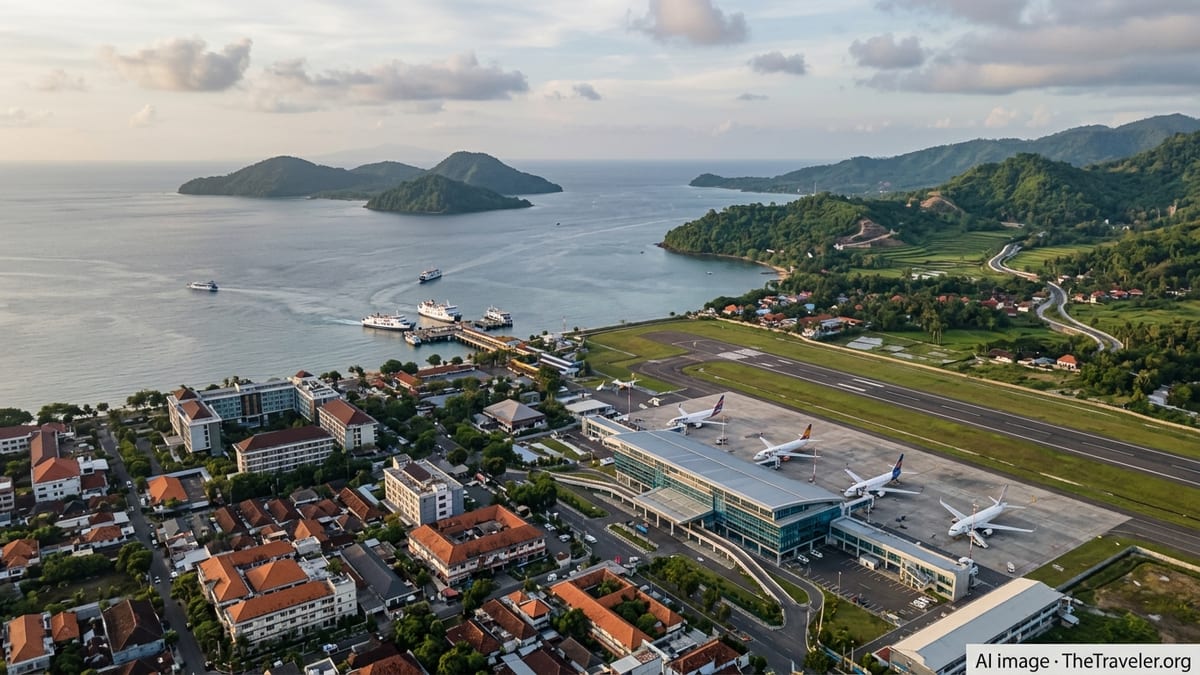
Refocusing on Regional Tourism Amid Shifting Global Flows
As long-haul travel patterns remain uneven, publicly available data shows Indonesia leaning more heavily on near-market demand from fellow ASEAN countries and broader Asia. Recent regional outlooks highlight intra-ASEAN travel as a dominant growth engine, with neighbouring markets delivering resilient flows even as global economic and geopolitical uncertainty weighs on long-distance trips.
Indonesia’s visitor numbers have recovered, but reports indicate the country has lost some market share within ASEAN to destinations such as Vietnam and Singapore. Analysts note that this has sharpened the focus in Jakarta on winning back regional travellers who typically visit more frequently, adapt quickly to new routes and promotions, and often combine leisure with education, health care or business travel.
Policy documents and industry commentary emphasise that regional tourists are increasingly viewed as a core economic driver rather than a secondary segment. This shift is prompting Indonesia to align its tourism plans more closely with ASEAN connectivity initiatives, joint marketing campaigns and efforts to encourage multi-destination trips that link Indonesian cities with other hubs across Southeast Asia.
The recalibration also reflects an acknowledgement that global shocks, from health crises to fuel price volatility, can rapidly disrupt long-haul demand. By placing regional tourism at the centre of its strategy, Indonesia is aiming for a more stable base of arrivals that can support airlines, hotels and small businesses across the archipelago.
Connectivity Push: Airports, New Routes and Inter-Island Links
A major pillar of Indonesia’s response is an accelerated drive to improve air connectivity, both internationally and between its far-flung islands. Publicly available information shows that dozens of commercial airports and selected regional airfields have recently gained international status, significantly expanding the number of official gateways for foreign visitors.
Government statements and industry coverage describe a strategy that couples these designations with physical upgrades, including runway extensions, expanded terminals and new navigation facilities. Expansion at key airports in Java, Sulawesi and Kalimantan is designed to handle larger aircraft and rising passenger volumes, while easing congestion at traditional entry points such as Bali and Jakarta.
New and proposed routes are another focus. Tourism planners have promoted direct services linking secondary Indonesian cities, such as Yogyakarta and Medan, with major source markets in China, South Korea, Japan, Australia and India. Reports indicate that airlines are being encouraged through promotional support and coordinated marketing to test new connections that can open up lesser-known destinations to international travellers.
Beyond aviation, Indonesia’s long-running investment in port and logistics infrastructure continues to have knock-on benefits for tourism. Upgrades to cruise and ferry facilities, as well as the national sea toll network serving outer islands, are improving access to emerging coastal destinations and helping integrate remote communities into the visitor economy.
Beyond Bali: Spreading Tourism Benefits Across the Archipelago
Bali remains Indonesia’s flagship destination, but officials and analysts have repeatedly warned about the risks of overdependence on a single island. Prior to the pandemic, Bali absorbed a large share of international arrivals, and recent data shows it continues to draw the majority of foreign visitors even as concerns over congestion, environmental pressure and social tensions mount.
In response, the government has elevated a group of so-called super priority destinations, including Yogyakarta and Borobudur in Java, Lake Toba in Sumatra, Mandalika in Lombok, Likupang in North Sulawesi and Labuan Bajo in Flores. According to published coverage, these areas are receiving accelerated investment in roads, airports, power and water infrastructure, alongside destination management and community-based tourism initiatives.
New infrastructure in eastern Indonesia, combined with Bali’s growing role as a transit gateway, is also reshaping domestic travel patterns. Travel industry reports describe an emerging circuit in which visitors land in Bali but then continue on to nearby islands such as Lombok, Sumba and Flores, distributing spending more evenly and easing pressure on Bali’s most crowded beaches and cultural sites.
At the same time, the planned move of Indonesia’s capital to Nusantara in East Kalimantan is expected to create another focal point for future tourism. The development of Nusantara International Airport and supporting roads and ports is framed as part of a broader effort to diversify growth toward Kalimantan and other under-visited regions, though much of this potential remains long term.
Targeting High-Impact Visitors Through Policy and Product Mix
Alongside efforts to rebalance where tourists go, Indonesia is reshaping who it wants to attract. Publicly available information on the country’s new golden visa framework shows that it is explicitly designed to welcome high-value investors, global talent and longer-stay visitors who can contribute more significantly to the economy.
The scheme offers multi-year residence permits and streamlined procedures to qualifying individuals and companies, with an emphasis on sectors such as tourism, technology and renewable energy. Reports indicate that the government intends to periodically review the programme to ensure it aligns with national development goals and prioritises reliable, high-quality travellers.
Broader tourism policy has also shifted vocabulary from volume-based targets to concepts such as “quality tourism” and “Tourism 5.0,” focusing on higher spending per visitor, better distribution of visits across seasons and destinations, and closer integration with local supply chains. Recent national planning documents highlight sustainability, standardisation and improved transport as central themes for the 2025 to 2029 period.
Industry observers note that attracting higher-impact visitors requires more than immigration incentives. Efforts are underway to improve service quality, modernise digital visa and immigration platforms, and expand training for tourism workers so that destinations can deliver experiences that justify premium pricing and encourage repeat visits.
Balancing Growth, Competition and Sustainability
Indonesia’s evolving strategy unfolds against a backdrop of intense regional competition. Recent analyses of ASEAN tourism trends point to gains in countries such as Vietnam, which has combined aggressive visa reforms with targeted air connectivity and destination branding to capture a larger slice of high-growth markets, including China.
Indonesia’s response, centred on regional tourism, connectivity and visitor quality, is intended to stabilise earnings even if total arrival numbers grow more slowly than in rival destinations. By seeking travellers who stay longer, spend more and explore beyond a single island, the government aims to generate stronger economic linkages with local communities and small businesses.
Sustainability considerations are increasingly built into this approach. Official planning frameworks emphasise managing carrying capacity in popular areas, reducing environmental pressures in Bali and other hotspots, and channelling new investment into regions where tourism can support conservation and cultural preservation.
Observers caution that execution will be critical. Success depends on synchronising airport upgrades with airline route development, ensuring that new destinations are genuinely ready to receive international visitors, and maintaining regulatory stability for investors. Nonetheless, Indonesia’s current trajectory suggests a deliberate shift away from a pure numbers game toward a more resilient, regionally integrated visitor economy that seeks deeper, longer-lasting economic impact.