

More news on this day
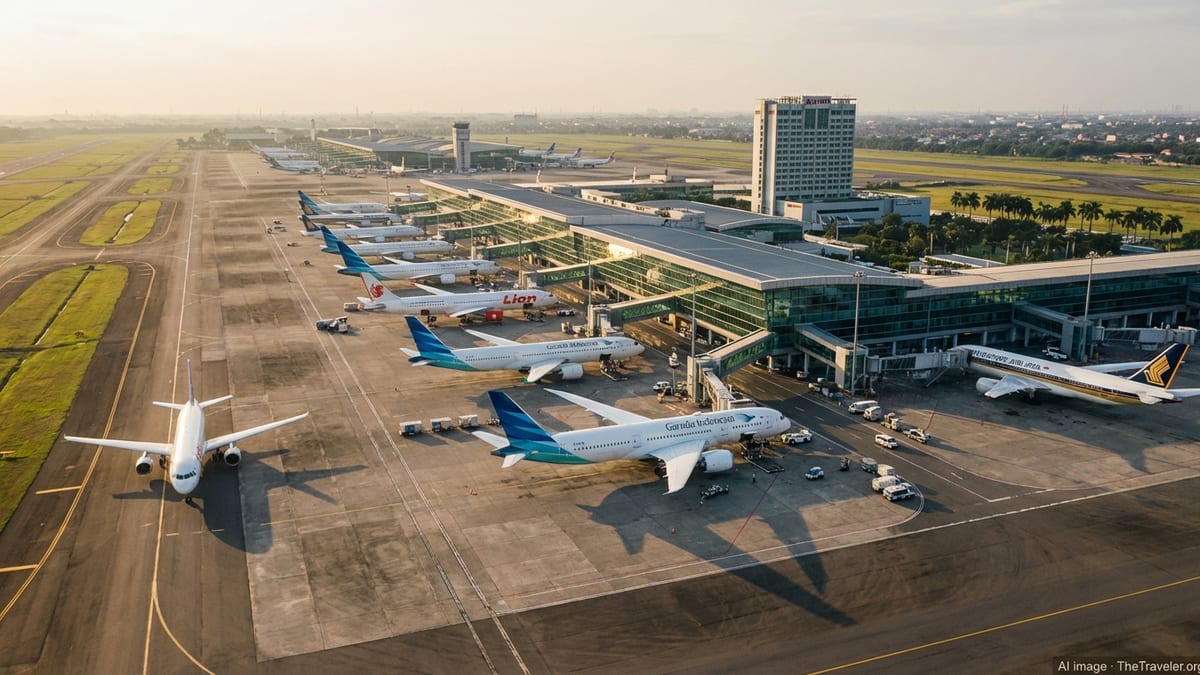
Indonesia’s landmark commitment to purchase 50 Boeing jets under a new trade deal with the United States is poised to reshape aviation and tourism across Southeast Asia, widening route networks, intensifying airline competition, and unleashing a new wave of hotel and infrastructure investment from Jakarta and Bali to Singapore.
A Landmark Trade Pact Anchored in Aviation
The announcement of Indonesia’s intention to acquire 50 Boeing aircraft comes as part of a broader Agreement of Reciprocal Trade signed between Washington and Jakarta, a framework that rebalances tariffs and deepens industrial cooperation between the two countries. Officials presented the aircraft commitment as a centerpiece of a deal that lowers U.S. tariffs on many Indonesian exports while locking in substantial purchases of American-made goods, led by the Boeing order.
Under the new framework, Indonesian exports entering the United States will generally face a 19 percent tariff, down from the previously threatened 32 percent level, even as Indonesia secures zero tariffs on more than a thousand specific product lines seen as vital to its export competitiveness. In return, Jakarta has pledged to open more space in its fast-growing aviation market to U.S. aerospace manufacturers and service providers, with the 50-jet commitment symbolizing both economic pragmatism and political alignment.
Aviation analysts say the deal sends a signal that Indonesia intends to modernize its fleet and infrastructure rapidly, positioning itself alongside Singapore, Vietnam, and Thailand as one of the region’s primary aviation hubs. By tying the Boeing purchase to a wider trade accord, policymakers are also betting that tourism, cargo, and business travel will help absorb the new capacity and support stronger, more resilient growth.
While detailed allocations of the jets among Indonesian carriers have not yet been disclosed, industry observers expect the bulk to flow toward flag carrier Garuda Indonesia and its low-cost affiliates, with a mix of narrow-body and wide-body aircraft tailored to domestic, regional, and long-haul demand.
Garuda Indonesia’s Bid to Reclaim Regional Clout
For Garuda Indonesia, which has spent much of the past decade juggling restructuring plans, debt pressures, and a pandemic-driven collapse in passenger numbers, the Boeing commitment marks a potential turning point. New aircraft would give the airline a chance to refresh an ageing narrow-body fleet and selectively rebuild long-haul capacity that was cut during its financial overhaul.
Fleet planners expect Boeing 737 family jets, including the 737 MAX series, to form the backbone of domestic and short-haul regional expansion, enabling more frequencies on trunk routes such as Jakarta to Bali and new point-to-point services linking secondary Indonesian cities. These aircraft promise lower fuel burn per seat and reduced maintenance costs compared with older models, a critical factor in a price-sensitive market where low-cost rivals have steadily eroded Garuda’s share.
On longer routes, Garuda is widely tipped to consider Boeing wide-bodies for destinations in North Asia, the Middle East, and potentially North America, complementing its existing mix of Airbus and Boeing long-haul aircraft. Fresh capacity could revive ambitions for non-stop or one-stop connections from Jakarta to key financial and diaspora centers, from Tokyo and Seoul to Los Angeles, tapping into both corporate traffic and Indonesia’s growing outbound leisure segment.
The modernization push also has a reputational component. Premium cabins equipped with newer seats, improved inflight entertainment, and better connectivity are increasingly seen as baseline expectations rather than luxuries on competitive regional routes. A younger, more efficient fleet could help Garuda rebuild its brand as a reliable full-service alternative amid a crowded Southeast Asian marketplace.
Regional Connectivity and the Singapore Airlines Advantage
The ripple effects of Indonesia’s Boeing deal will extend well beyond its own carriers, with Singapore Airlines positioned among the key beneficiaries. As the region’s dominant full-service hub airline, Singapore Airlines has long relied on Indonesia as one of its largest feeder markets, funnelling passengers through Changi Airport to long-haul destinations in Europe, North America, and the wider Asia-Pacific.
As Indonesian capacity grows and more secondary cities gain direct links to Singapore, travel planners expect a rise in connecting traffic onto Singapore Airlines and its regional arm, Scoot. Additional flights from cities such as Medan, Makassar, and Surabaya into Singapore would shorten overall journey times for Indonesian travelers heading onward to London, San Francisco, or Sydney, reinforcing Changi’s role as a preferred one-stop option.
Increased airlift into Indonesia is also likely to boost inbound demand from Singapore and beyond. Tourists, business travelers, and conference delegates who start or end their journeys in Singapore may find it easier to add side trips to Indonesian destinations, supported by competitive fare combinations between Singapore Airlines, Indonesian carriers, and alliance or codeshare partners.
For Singapore Airlines, a more connected and dynamic Indonesian market brings both opportunities and challenges. While greater competition on some city pairs is inevitable, the overall expansion of the travel pie is expected to outweigh the risks, especially if Indonesia succeeds in diversifying beyond Bali and Jakarta to promote new leisure and business destinations.
Marriott and Global Hotels Position for a Visitor Surge
The prospective influx of aircraft into Indonesia comes at a time when international hotel groups, including Marriott, are already accelerating development plans across the archipelago. More seats and better connectivity generally translate quickly into higher hotel occupancy, especially in gateway cities and resort corridors that can be packaged easily into short and medium-haul trips.
Marriott, which operates a broad portfolio of brands from luxury to select-service segments in Indonesia and neighboring Singapore, is expected to benefit from increased demand on multiple fronts. In Jakarta and Surabaya, corporate travel and meetings are likely to rebound as connectivity improves, supporting upscale and business-focused properties. In Bali and emerging leisure markets such as Lombok, Labuan Bajo, and North Sumatra’s Lake Toba region, new flights can help fill resort rooms midweek and during shoulder seasons, smoothing revenue volatility.
Stronger Indonesia–U.S. ties and improved access for American travelers could also support growth in higher-spend segments, including long-stay guests, destination weddings, and incentive trips. International hotel chains are already tailoring offerings to capitalize on these trends, from loyalty program partnerships with airlines to curated experiences that showcase Indonesian culture, cuisine, and nature while maintaining global service standards.
Domestic tourism, a crucial pillar of Indonesia’s recovery, is another part of the equation. As new jets enable more affordable fares and better connectivity between islands, middle-class Indonesians are likely to travel more frequently for both leisure and family visits, creating additional demand for midscale and economy hotel brands in secondary cities. Marriott and its competitors have been steadily rolling out such properties, anticipating precisely the kind of aviation-led growth the Boeing deal is designed to unlock.
Tourism Hubs From Bali to Jakarta Brace for Growth
Indonesia’s tourism authorities have spent recent years promoting a “10 new Balis” strategy aimed at spreading visitor flows beyond the country’s best-known resort island. The injection of 50 Boeing jets into carrier fleets could provide the lift needed to turn that slogan into reality by making it easier and cheaper for international travelers to reach alternative destinations.
More direct international flights into places like Lombok, Yogyakarta, and Labuan Bajo would reduce the need for time-consuming domestic connections and encourage travelers to explore beyond Bali’s beaches. For tour operators and online travel platforms, increased air capacity presents an opportunity to design multi-stop itineraries that link cultural, adventure, and eco-tourism experiences across several islands, supported by a wider range of hotel and villa options.
Jakarta, often seen primarily as a transit point, may also stand to gain. Enhanced long-haul capacity could encourage airlines to market the capital more aggressively as a city-break destination, highlighting its dining, shopping, and creative scenes. Greater connectivity from Jakarta to secondary cities in Java, Sumatra, and Sulawesi, in turn, would make it a more attractive base for both leisure and corporate travelers.
Yet rapid growth will test infrastructure. Airports from Bali’s Ngurah Rai to Jakarta’s Soekarno Hatta are already grappling with congestion at peak times, and secondary airports may need upgrades to handle more frequent jet operations. Authorities will face pressure to align runway expansions, terminal improvements, and air traffic management upgrades with the delivery schedule of new aircraft.
Economic and Industrial Tailwinds From the Boeing Order
Beyond tourism, the 50-jet commitment carries significant implications for Indonesia’s broader economy and its ambitions to climb the aerospace value chain. The agreement opens the door for deeper cooperation between Boeing and Indonesian aerospace firms in areas such as component manufacturing, maintenance, repair, and overhaul services, and training of pilots and engineers.
Such collaboration could generate skilled jobs within Indonesia, particularly around existing aviation hubs like Jakarta, Bandung, and Batam, and support ancillary industries from materials and logistics to digital services. Investments in simulators, training centers, and technical academies would also help build a more robust pipeline of aviation professionals, addressing staffing shortages that have constrained growth in parts of the global industry.
The trade pact’s tariff provisions are another economic lever. By securing lower tariffs and zero-duty access for select exports, Indonesia aims to free up fiscal space and corporate budgets that can be redirected into high-return infrastructure and tourism projects. At the same time, opening its market more fully to U.S. agricultural and industrial goods reflects a calculated bet that lower input costs and increased competition will strengthen domestic productivity over the medium term.
For Boeing, the deal underscores Southeast Asia’s status as one of the world’s most important growth regions for commercial aircraft. A successful implementation of the Indonesian order would reinforce the manufacturer’s foothold in a market where rival Airbus also has a strong presence, intensifying competition that could ultimately benefit airlines and passengers through better pricing and product choice.
Opportunities and Risks in a Rapidly Expanding Market
While enthusiasm is high, industry experts caution that Indonesia’s aviation boom will not be without risks. The speed of fleet expansion must be matched by investments in safety oversight, air traffic management, and environmental mitigation to ensure that growth is sustainable and does not erode public trust.
Regulators will be under pressure to maintain rigorous standards as carriers induct new aircraft, open routes, and recruit large numbers of pilots and engineers. Past accidents and capacity bottlenecks in the region serve as reminders that rapid expansion can expose systemic weaknesses if not carefully managed. Transparent safety reporting, strong cooperation with international regulators, and continuous training will be essential components of the next phase.
Environmental concerns are also coming to the fore. Even with more fuel-efficient jets, a sharp rise in flight numbers will challenge national and corporate climate targets. Airlines, airports, and hotel groups are responding with a mix of sustainability initiatives, from investment in sustainable aviation fuel and carbon offset schemes to greener building standards and waste-reduction programs at hotels and resorts.
Nevertheless, the prevailing view among carriers, hotel operators, and tourism authorities is that the benefits of expanded connectivity, job creation, and economic diversification are too significant to ignore. For Singapore Airlines, Garuda Indonesia, Marriott, and a long list of regional players, Indonesia’s 50-jet Boeing deal is more than a procurement contract; it is a catalyst that could redefine how people move, meet, and experience Southeast Asia in the decade ahead.