

More news on this day
Indonesia’s latest Eid holiday period has brought another major upswing in air travel, with publicly available data indicating that InJourney-managed airports recorded approximately 4,410,000 passengers and 33,099 flights, underscoring a strong new phase in the country’s aviation boom.
Get the latest news straight to your inbox!
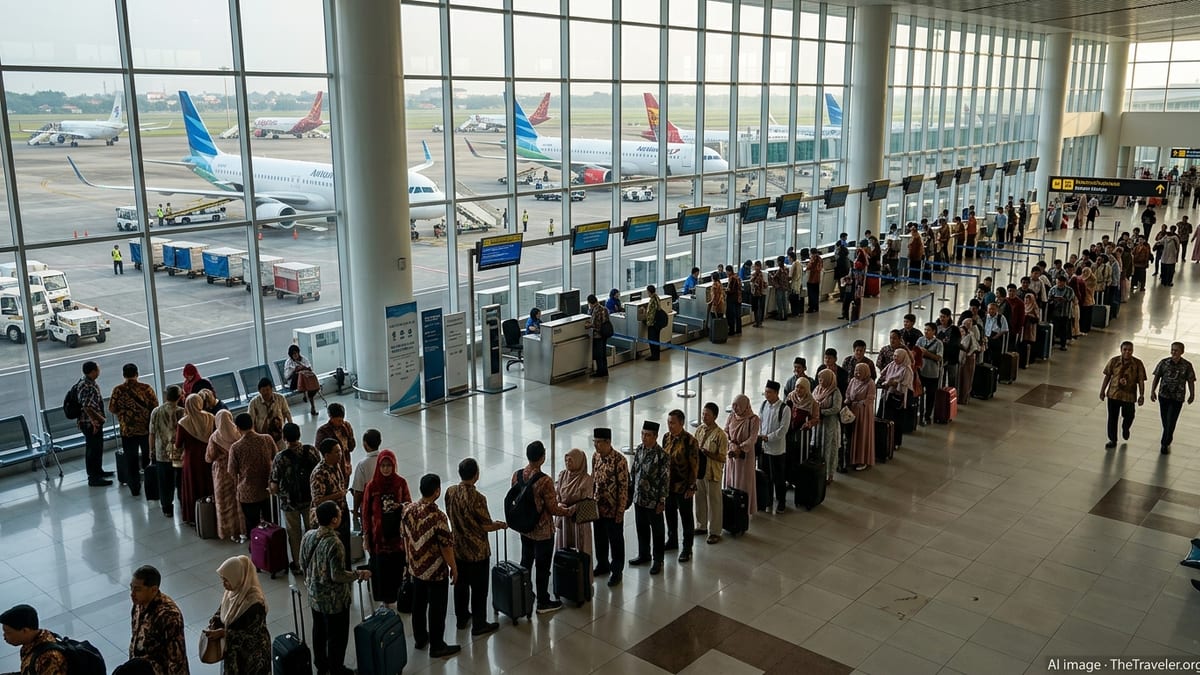
Holiday Surge Highlights Indonesia’s Aviation Momentum
The reported 4.41 million passengers moving through InJourney airports during the Eid travel window reflect how rapidly Indonesia’s air sector is expanding after several difficult years. The Eid exodus is traditionally one of the busiest times on the national calendar, and the latest figures indicate that demand has not only recovered but is increasingly exceeding pre-pandemic benchmarks at many gateways.
InJourney Airports, the state-linked airport operator formed as part of Indonesia’s wider tourism and transport restructuring, manages a growing portfolio of strategic hubs across the archipelago. Major facilities such as Soekarno Hatta International Airport in Tangerang, I Gusti Ngurah Rai International Airport in Bali, Sultan Aji Muhammad Sulaiman Sepinggan in Balikpapan, and several regional gateways form the backbone of this network, channeling domestic and international flows between the nation’s islands.
The intensity of the Eid travel rush has turned these airports into focal points of Indonesia’s broader economic trajectory. Passenger movements of more than 4.4 million people within a defined holiday period point to robust household mobility, rising confidence in air travel and the continuing relevance of aviation in connecting workers and families spread across the country’s vast geography.
The 33,099 flights recorded at InJourney airports over the same period underscore how airlines have been able to respond to demand with additional frequencies and special services. More rotations on busy domestic corridors such as Jakarta to Surabaya, Medan, Makassar and Denpasar, along with strengthened links to secondary cities, are helping to spread the benefits of the surge beyond the primary hubs.
Domestic Connectivity Drives the Eid Travel Wave
The latest Eid numbers are driven primarily by domestic travel, as millions of Indonesians take to the skies to return to their hometowns for the annual mudik tradition. Publicly available information shows that carriers have prioritized trunk routes linking Jakarta’s airports with key provincial capitals, deploying larger aircraft and adjusting schedules in anticipation of peak flows before and after the main holiday.
Several regional airports operated by InJourney, including growing hubs in Sumatra, Kalimantan and Sulawesi, have reported steady increases in passenger volumes over the past two years. Expanded terminal capacity at facilities such as Sultan Aji Muhammad Sulaiman Sepinggan and upgrades at a range of provincial airports are enabling these gateways to accommodate higher traffic levels during compressed peak periods without the severe bottlenecks seen in earlier years.
Domestic low-cost and hybrid carriers, together with the country’s full-service airlines, have been central to sustaining this momentum. With Indonesia’s geography making long-distance road and sea travel time-consuming, aviation remains the most efficient option for many holidaymakers. The Eid spike therefore acts as a stress test for the system, offering a clear view of how far capacity, punctuality and passenger handling have improved.
Reports indicate that, in the latest season, improved coordination between airport operators, ground handling providers and airlines has contributed to more stable operations despite the elevated number of flights. While congestion and delays still occur at peak hours, the overall handling of over 33,000 flights during the Eid period points to greater operational resilience compared with just a few years ago.
Infrastructure Investments Underpin Capacity and Service Gains
The strength of Eid traffic at InJourney airports is closely linked to a series of infrastructure projects completed or advanced in recent years. Terminal expansions, runway enhancements and upgraded airside facilities at major hubs have raised theoretical capacity and allowed for more efficient aircraft movements during busy holiday waves.
At the country’s primary gateway, Soekarno Hatta International Airport, ongoing modernization and optimization of terminals and taxiways are intended to support annual passenger volumes approaching 100 million in the medium term. Similar capacity-focused projects at Bali’s Ngurah Rai and other tourist and industrial hubs align with government ambitions to attract more international arrivals while also improving domestic connectivity.
Regional airports under the InJourney portfolio have also benefited from new terminals and improved passenger amenities. Facilities such as expanded check-in areas, additional boarding gates, improved baggage systems and better landside access are designed to smooth passenger flows during concentrated surges like Eid. These investments reduce dwell times in critical zones and help airports maintain service standards even when volumes climb sharply.
Publicly available planning documents and investor materials highlight an integrated strategy that combines physical expansion with digitalization. More widespread use of self-service kiosks, mobile check-in options and enhanced data sharing between stakeholders is gradually shifting airports toward more predictable and data-driven operations, a key factor in safely accommodating tens of thousands of additional flights each holiday season.
Tourism, Trade and Regional Economies Benefit from the Boom
The Eid aviation surge across InJourney airports carries implications well beyond the terminals themselves. The movement of 4.41 million passengers in a concentrated window provides a substantial boost to local economies, from airport retail and hospitality businesses to transport, accommodation and food services in destination cities.
Tourism-oriented regions such as Bali, Lombok and parts of eastern Indonesia are especially sensitive to air connectivity and seasonal peaks. Higher passenger throughput during religious holidays often dovetails with vacation travel, supporting hotels, guesthouses, restaurants and tour operators. The ability of airports to reliably handle more flights and passengers increases confidence among local businesses that they can plan staffing and inventory around anticipated surges.
The boom is also reinforcing Indonesia’s ambitions to position aviation as a backbone of its broader economic development agenda. Consistent high volumes through InJourney airports during Eid and other peak periods support arguments for continued investment in route development, maintenance facilities and multimodal links that connect airports to seaports, industrial estates and logistics hubs.
For regional governments, stronger passenger and flight numbers translate into higher local revenue potential through tourism levies, airport-linked business activity and secondary spending. The latest Eid statistics therefore serve as both a snapshot of current demand and a signal of the long-term role that well-managed airports will play in balancing growth between Indonesia’s major cities and its secondary regions.
Challenges Ahead as Indonesia Manages Rapid Aviation Growth
Despite the upbeat Eid figures, Indonesia’s aviation boom also presents a series of challenges for policymakers, operators and communities. The concentration of more than 4.4 million passenger journeys and tens of thousands of flights into a short festive period puts pressure on air traffic management, terminal space, ground transport and staffing levels.
Reports from recent peak seasons point to ongoing concerns about congestion at access roads to major airports, long queues at check-in and security during certain hours, and limited public transport options at some regional gateways. Addressing these issues will require coordinated planning that extends beyond the airport perimeter, including improved rail and bus connectivity, better traffic management and continued investment in passenger information systems.
There is also heightened attention on environmental considerations as flight volumes rise. Higher traffic at InJourney airports brings associated noise, emissions and waste management demands. Published coverage of Indonesia’s transport and climate strategies indicates that authorities are examining pathways to improve energy efficiency at terminals, expand the use of renewable power at airports and support airlines’ efforts to adopt more efficient fleets and sustainable aviation fuels over time.
For now, the latest Eid travel season has demonstrated that Indonesia’s reconfigured airport system is capable of handling a substantial spike in demand. The figures of 4,410,000 passengers and 33,099 flights across InJourney airports stand as a marker of the sector’s renewed strength, while also underscoring the importance of sustained investment, careful planning and broader sustainability measures as the country’s aviation boom enters its next phase.