

More news on this day
A new viral cabin video of a social media influencer insisting that airline rules do not apply to him has intensified public scrutiny of entitled behavior in the air and the growing clash between influencer culture and aviation safety expectations.
Get the latest news straight to your inbox!
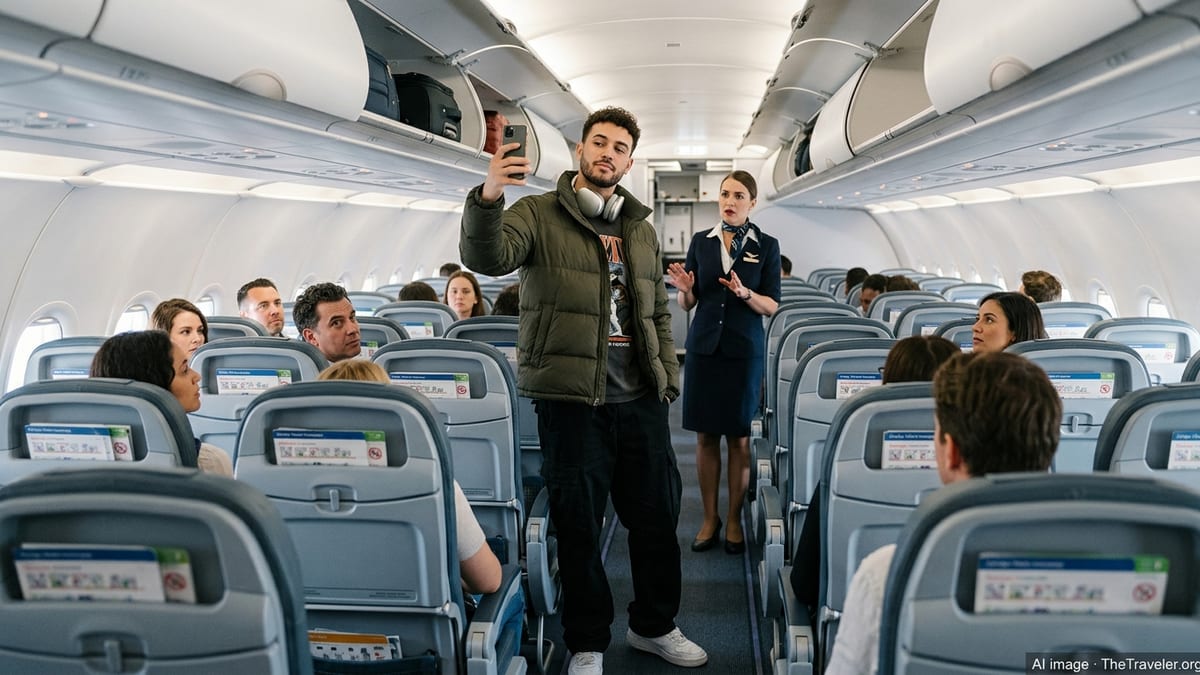
A Viral Clip of Defiance at 35,000 Feet
In the latest in-flight controversy to grip social media, video circulating on platforms such as TikTok and Instagram shows a self-described influencer arguing with cabin crew and insisting he will “do as he pleases” on board a commercial flight. In the footage, the passenger can be heard dismissing safety instructions and suggesting that his status and online following offer protection from any real consequences.
Reports indicate that the dispute began when crew members reminded the passenger of basic safety requirements, including remaining seated, following electronic device rules and stowing items for taxi and takeoff. Rather than comply, the traveler repeatedly challenged the instructions, framing them as unreasonable and claiming that staff were “overreacting” to ordinary behavior.
While details such as the route and exact timing of the incident have not been officially summarized by the airline, publicly available commentary from aviation blogs and social media watchdog accounts describe the confrontation as part of a wider pattern of passengers prioritizing personal content creation, comfort or status over standardized safety procedures.
Similar clips of disruptive behavior have regularly gone viral in recent years, but viewers responding to this incident have been particularly critical of the influencer’s suggestion that rules are optional for those with large followings, calling it a worrying reflection of how online fame can distort expectations in shared public spaces like aircraft cabins.
What Airline Rules Actually Require of Passengers
Behind the viral outrage lies a relatively clear framework governing passenger conduct. In the United States and many other jurisdictions, aviation rules give flight and cabin crew broad authority to issue instructions related to safety, and passengers are legally required to comply. Publicly available regulatory guidance explains that refusal to follow crew instructions on issues such as seat belts, seatbacks, carry-on baggage, smoking or vaping, and electronic devices can constitute a violation of federal law.
Published information from aviation regulators and airline contracts of carriage stresses that these rules are not discretionary or cosmetic. Rather, they are grounded in decades of incident analysis and safety testing. Requirements like having seatbacks upright for takeoff and landing, switching devices to airplane mode when instructed, and keeping aisles and exits clear are designed to minimize injury and allow rapid evacuation in an emergency.
Industry commentary notes that crew members are held accountable for enforcing these standards and can face scrutiny if passengers are seen ignoring them. This is one reason that conflicts sometimes escalate when a traveler repeatedly refuses to cooperate. The legal framework is structured so that, once on board, the captain and crew have final say over what is acceptable behavior in the cabin when safety is at stake.
In practice, this means that an individual’s profession, social media audience or ticket class does not exempt them from the same basic obligations as any other traveler. Analysts point out that when passengers openly proclaim that rules do not apply to them, they place crew in a position where failing to act could expose the airline to greater risk if a later incident occurs.
Influencer Culture Meets Aviation Safety
The latest controversy is unfolding against a broader backdrop of influencers testing boundaries in the travel space. In recent years, creators have posted videos of elaborate stunts on planes, from aggressive attempts to secure upgrades by leveraging their online profiles to filming pranks and livestreams in ways that clash with carrier policies. Travel blogs and tech-focused outlets have documented several cases where frequent vloggers and influencers ultimately faced suspensions or bans from particular airlines after repeated disputes.
Industry observers say the dynamic is fueled by a social media ecosystem that rewards spectacle and confrontation. Clips of dramatic showdowns with cabin crew or other passengers often attract millions of views, far exceeding the reach of routine travel content. For some creators, this can create a perverse incentive to provoke or prolong conflicts on board, turning real flights into stages for personal branding.
At the same time, aviation professionals and passenger advocates warn that recording content inside aircraft is not inherently problematic. Many airlines have embraced the role of influencers in promoting destinations and onboard products. The tension arises, they note, when filming or performance crosses into ignoring safety guidance, interfering with crew duties or disrupting fellow travelers’ journeys.
The most recent clip, in which the influencer appears to frame his refusal to follow instructions as a statement of independence, has been widely cited by commentators as an example of how online personas can collide with the structured, rule-bound environment of commercial aviation, where individual expression is limited by the shared safety responsibilities of everyone on board.
Rising Concern Over Unruly Passengers
Beyond influencer-specific incidents, the episode adds to anxiety about the broader trend of unruly passenger behavior. Publicly released data in North America and Europe over the past several years has shown spikes in reported cases of verbal abuse, noncompliance and physical confrontations on flights. Many of these stem from disputes over masks during the pandemic, alcohol consumption, seat etiquette, baggage space and, increasingly, filming and social media use.
Airline and union statements reviewed in recent coverage describe cabin crew as facing greater levels of hostility and stress, with some workers reporting that they are more frequently challenged when enforcing rules that were once considered nonnegotiable. Passenger rights organizations, while sympathetic to concerns over inconsistent service, generally acknowledge that aggressive defiance of safety-related instructions undermines the travel experience for everyone.
Observers note that when a high-profile figure is seen disregarding rules on camera without immediate visible consequences, it can unintentionally normalize similar behavior among followers. This is one reason why professional associations and aviation commentators often advocate for strong, visible responses to serious onboard disruption, even when an incident originates as content for social media.
Public debate around the current video reflects this concern. Comment sections across platforms include calls for stricter penalties and for airlines to make clear that viral status offers no protection from being removed, fined or refused transport on future flights if behavior crosses the line from frustration into willful noncompliance.
Consequences for Ignoring the Rules in the Air
Despite the influencer’s apparent confidence that rules were a matter of personal choice, published legal and industry guidance indicates that consequences for defiance can be significant. Under existing frameworks, passengers who refuse to follow lawful instructions related to safety can face removal from aircraft, denial of boarding for future flights with the same carrier, and referral to law enforcement for potential civil penalties.
In recent years there have been widely reported cases of travelers, including online personalities, being barred from flying specific airlines after disputes over masks, business-class upgrades or onboard filming spilled into outright refusal to comply. In several of those cases, airlines publicly confirmed bans or long-term suspensions following internal reviews, emphasizing that behavior, not social status, determines such decisions.
Legal experts cited in aviation-focused reporting point out that monetary penalties for the most serious incidents can reach into the tens of thousands of dollars when disruptive behavior forces diversions, delays or additional safety measures. While not every confrontation escalates to this level, the framework exists to send a strong deterrent message when behavior is deemed particularly egregious.
The fallout from the latest influencer video is still unfolding, but early public reaction has focused on the tension between the pursuit of online attention and the shared responsibilities of air travel. For many frequent flyers, the incident is another reminder that, regardless of who occupies the seat, the rules that govern what happens in the cabin are designed to apply equally to everyone.