

More news on this day
Perched atop a new skyscraper in central Tokyo, 1 Hotel Tokyo is reimagining the urban high-rise as a plant-filled sanctuary, layering greenery, natural materials and soft light over sweeping skyline views.
Get the latest news straight to your inbox!
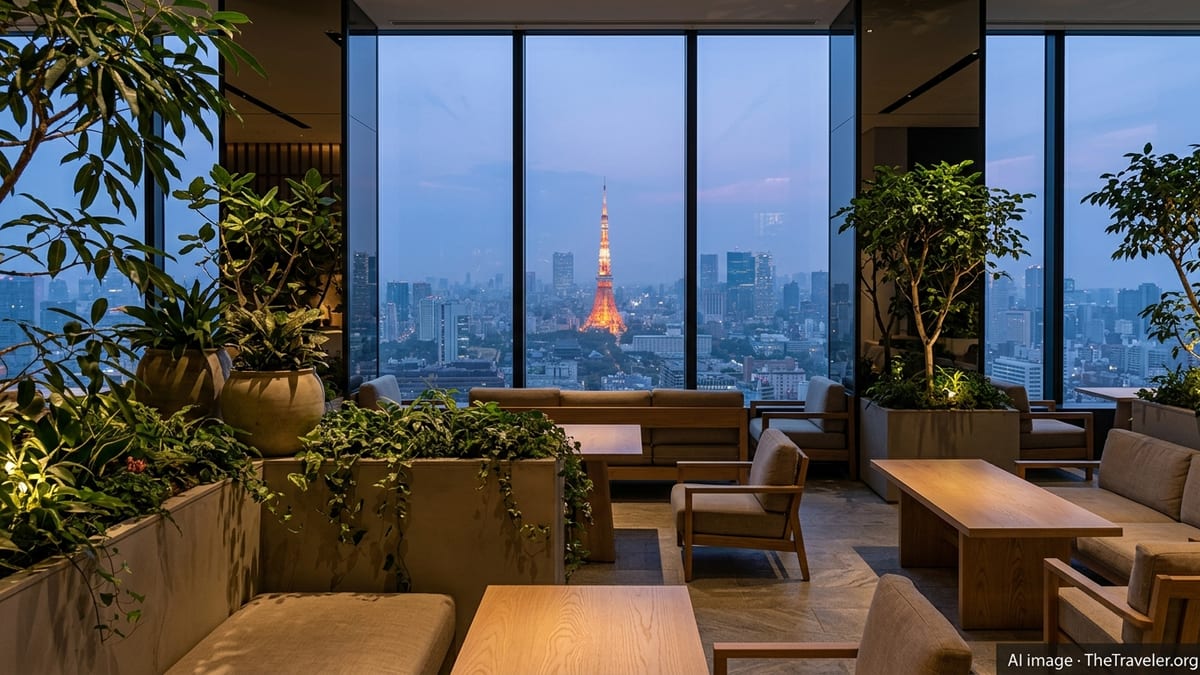
A new kind of high-rise hideaway in Akasaka
Rising from the upper floors of the Akasaka Trust Tower, 1 Hotel Tokyo occupies levels 38 through 43 of the mixed-use development that anchors the Tokyo World Gate Akasaka district. Publicly available information shows that the 211-room property has recently begun welcoming guests, marking the nature-focused brand’s entry into Japan and its first opening in Asia.
Instead of treating altitude as a purely visual advantage, the hotel leans into the idea of a garden in the sky. Reports indicate that glass-framed public areas open onto long views of the Imperial Palace Outer Garden, Tokyo Tower and the wider city, while layered plantings, warm woods and stone details pull the focus back to tactile, human scale.
The setting in Akasaka, a neighborhood where corporate towers meet long-established dining streets and shrines, shapes the hotel’s positioning. The new opening is being framed in industry coverage as both a lifestyle destination for locals and an elevated base for visitors seeking quick access to business districts and cultural landmarks without sacrificing a sense of retreat.
Biophilic design brings a forest mood to the 43rd floor
Biophilic design, a core element of the 1 Hotels brand, drives the look and feel throughout the Tokyo property. According to design-focused coverage, guests arriving at the sky lobby step into a space where living and preserved greenery climbs walls and columns, complemented by textured Oya stone, recycled timber panels and soft, indirect lighting that echoes filtered daylight.
Guest rooms continue the theme with floor-to-ceiling windows, muted earth tones and abundant plants that soften the geometry of the tower. Descriptions highlight organic fabrics, exposed wood grain and stone basins, with small design moments such as moss-based art or reclaimed-wood headboards reinforcing the connection to nature.
The visual language leans on Japanese craftsmanship as much as on the global vocabulary of eco-luxury. Publicly available materials describe joinery, screens and furniture that reference traditional techniques, creating a dialogue between local artisanship and the brand’s more familiar recycled and upcycled elements.
Sustainable systems behind the greenery
Beyond its botanical aesthetic, 1 Hotel Tokyo is being presented as a test case for high-rise sustainability in a dense urban core. The property has achieved CASBEE S, the highest rating in Japan’s widely used environmental performance system for buildings, a detail highlighted in trade coverage of the opening.
According to the hotel’s own sustainability statements, operations are structured around energy-efficient systems, extensive use of reclaimed and locally sourced materials, and a focus on indoor environmental quality. Water-saving fixtures, careful waste separation and reduced single-use plastics are positioned as standard practice rather than add-ons.
The greenery itself is part of this infrastructure. Reports note that plantings are selected to support biodiversity and to function as a micro-ecosystem at altitude, particularly around outdoor decks and the pool level. In a city where hard surfaces dominate, this vertical garden approach is being framed as both an aesthetic choice and a response to rising interest in urban rewilding.
Wellness, dining and a sky-high social scene
The sanctuary positioning extends into the hotel’s wellness and culinary spaces. Industry coverage points to a light-filled fitness and wellness floor that includes a gym, spa facilities and an indoor pool edged by an outdoor terrace planted with species that attract pollinators, creating a calm, resort-like pocket above the business district below.
Dining venues are designed to showcase Japanese seasonality while staying aligned with the brand’s emphasis on responsible sourcing. Reports describe a main restaurant on the 38th floor that weaves garden references into its layout, including stone paths and framed views, alongside bars and lounges that look over the city’s landmarks and are expected to draw both hotel guests and local residents.
Meeting and event spaces, including salons named for seasonal flowers, add another layer to the social program. With floor-to-ceiling glazing and greenery continued indoors, these rooms are positioned as alternatives to more conventional corporate venues elsewhere in the city’s office towers.
A strategic statement for Tokyo’s evolving hotel scene
The arrival of 1 Hotel Tokyo comes at a moment when Japan’s capital is seeing renewed investment in high-end, design-led hotels, from long-established luxury names to new lifestyle concepts. Trade publications are reading the opening as a signal that sustainability-focused brands now see central Tokyo as a stage for their most ambitious urban projects.
The collaboration between the hotel operator and developer Mori Trust, one of Japan’s prominent real estate companies, underpins that strategy. By installing a nature-centered, wellness-oriented hotel atop a major office and retail hub, the partners are effectively repositioning a slice of the skyline as a green refuge, without stepping outside the city’s commercial heart.
For travelers, the property’s plant-filled corridors, natural textures and panoramic views represent a new interpretation of the Tokyo tower hotel. For the city, the opening adds another experiment in how vertical architecture can host not only offices and observation decks, but also restorative, climate-conscious spaces that feel surprisingly close to a forest floor.