

More news on this day
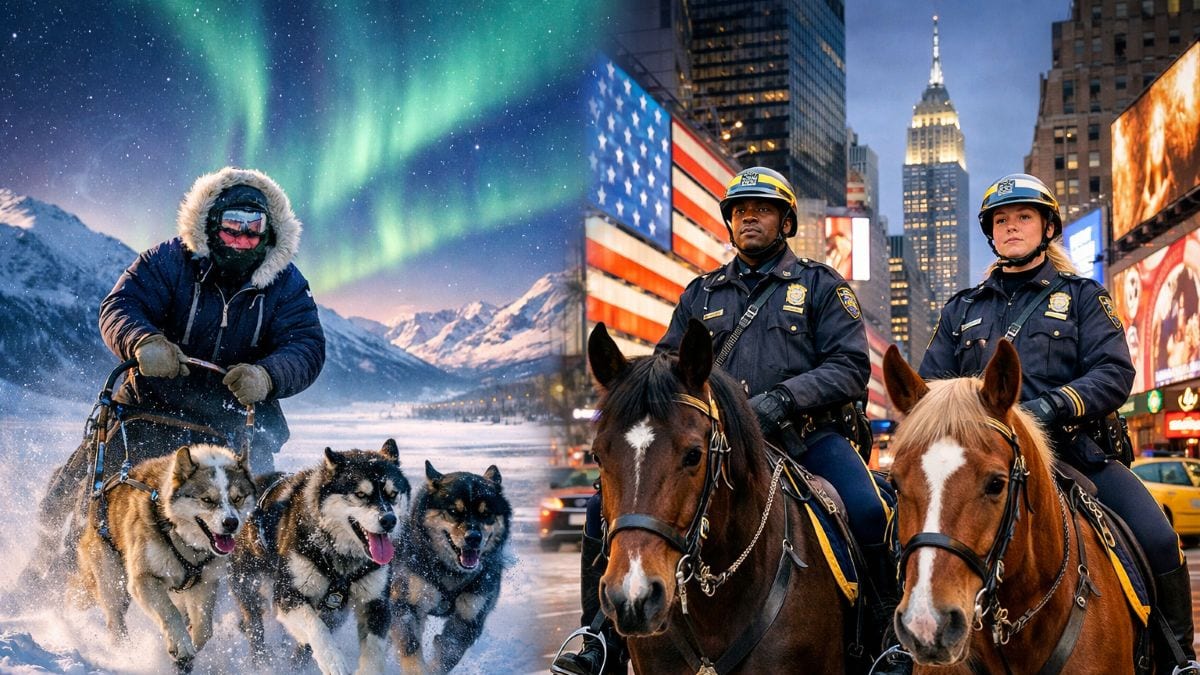
Far from the cruise ship docks and big-city observation decks, two deeply rooted traditions are quietly shaping how visitors experience the United States: Alaska’s long winter sled dog races and the horse-mounted patrols that watch over some of the country’s busiest public spaces.
Get the latest news straight to your inbox!
Alaska’s Iditarod Trail Turns Into a Winter Travel Magnet
Each March, the Iditarod Trail Sled Dog Race draws global attention to Alaska, transforming remote communities into waypoints on a frozen sporting stage. The 2026 edition, scheduled to begin in Anchorage on March 7, continues a tradition that has evolved into one of the state’s most recognizable winter tourism calling cards. The long-distance race, which traces historic freight and gold rush routes to Nome, brings an influx of visitors who pair race viewing with aurora hunting, glacier excursions and cultural tours in Anchorage and smaller hub towns.
Recent tourism impact reports from the Alaska Travel Industry Association describe winter as a growing, though still smaller, slice of the state’s visitor economy. Travel analysts note that while winter tourist numbers have softened slightly over the past two seasons amid broader economic uncertainty, marquee experiences such as dog mushing remain a powerful draw. Publicly available interviews with tour operators indicate that many winter packages are built around the chance to ride behind a sled dog team or to intersect with Iditarod events along the trail.
For local businesses in Anchorage, the Mat-Su Valley and interior communities, race season can provide an important shoulder-season boost between the late-summer cruise departures and spring break. Lodges, outfitters and restaurants often report higher occupancy and reservations around ceremonial and restart events, as well as during key checkpoints that are more accessible to spectators. Economic modeling cited by regional development organizations links these spikes in overnight stays and spending to broader investments in winter trail systems and visitor infrastructure.
At the same time, organizers and tourism planners continue to wrestle with climate and logistical challenges. In some years, low snow conditions near Anchorage have forced alterations to the traditional start and restart locations, shifting visitor flows to Fairbanks and other interior communities. Race rules for 2026 highlight an increased reliance on GPS tracking and contingency planning for unbroken trail sections, underscoring how changing weather patterns can reshape both the competition and the tourism footprint that grows around it.
Beyond the Finish Line: How Sled Dog Culture Shapes Visitor Experiences
The Iditarod is only the most visible part of a wider sled dog culture that has become central to winter tourism marketing across Alaska. Tourism coverage points to smaller mid-distance races such as Montana’s Race to the Sky, which serves as a qualifying event for the Iditarod, as part of a North American circuit that keeps mushers, dogs and support crews on the move each winter. In Alaska, commercial kennels offer half-day and multi-day excursions that allow visitors to drive their own team under supervision, learn basic commands and hear stories about historic mail routes and gold rush travel.
Alaska Public Media reporting notes that for many visitors, the chance to see sled dogs in action is as compelling as the northern lights. Travel experts interviewed in that coverage describe dog mushing as a gateway activity that introduces first-time winter travelers to other experiences, from snowshoeing and fat biking to cultural programming in Indigenous communities. Some visitors now time their trips to coincide with early portions of the race, combining day tours with attendance at ceremonial starts or layovers in road-accessible checkpoints.
Community leaders along the historic Iditarod corridor also highlight the race’s role in keeping stories of the trail alive. Educational materials produced by the Iditarod organization describe how the modern route overlaps with former mining supply lines and mail trails, including sections around the old gold camp of Iditarod itself. Interpretive signage, museum exhibits and school programs build on those themes, helping visitors connect a high-profile sporting event with deeper narratives of survival, commerce and communication in Alaska’s interior.
That visibility brings scrutiny along with tourism revenue. Discussions in sled dog racing circles, reflected in public forums and commentary, increasingly focus on animal welfare standards, the cost of maintaining competitive kennels and the need to make the sport financially sustainable for smaller teams. For travelers, those debates translate into questions about how to choose ethical operators and what it means to participate in a tradition that is both culturally significant and under pressure to adapt.
America’s Mounted Patrols Move From Crowd Control to Visitor Icon
Thousands of kilometers away from Alaska’s frozen trail, another enduring symbol quietly shapes visitor experiences in some of the country’s most crowded urban and park settings: the mounted patrol. From New York City’s “10-foot cops” to the United States Park Police Horse Mounted Patrol in Washington, D.C., horse units remain a visible part of the urban landscape and a frequent subject of tourist photographs.
According to published information from the New York City Police Department, the Mounted Unit is deployed across much of the city for crowd management at parades, protests, concerts and sporting events. The height of both horse and rider is believed to extend visibility in dense crowds and to create what training materials describe as a strong “command presence.” For visitors in areas such as Times Square or around major stadiums, these patrols have become almost as recognizable as the bright billboards and team jerseys that surround them.
In the nation’s capital, publicly available material from the Department of the Interior describes the U.S. Park Police Horse Mounted Patrol as both a safety tool and a community ambassador. Officers assigned to the unit undergo months of specialized training, while the horses themselves are selected and conditioned to tolerate sirens, traffic, large crowds and unexpected sights. An education center and stables complex on the National Mall, highlighted in local media coverage, has opened limited viewing areas where the public can learn about the horses and the unit’s history.
The appeal of mounted patrols reaches beyond large cities. Municipal park systems and regional agencies in California and the East Coast continue to maintain volunteer and professional units that combine trail patrol with visitor outreach. Program descriptions from the Golden Gate National Recreation Area and the East Bay Regional Park District, for example, emphasize how riders provide basic safety information, alert staff to hazards and answer questions from hikers and cyclists, turning routine patrols into informal interpretation sessions for visitors.
From Quiet Trails to City Streets: Tourism’s Hidden Interfaces
Although sled dog teams in Alaska and mounted patrols in places such as Washington or New York operate in very different environments, both illustrate how working animals shape the way visitors move through and remember a destination. In Alaska, the race trail links remote communities to a global audience and draws travelers into parts of the state that see relatively few summer cruise passengers. In major U.S. cities, mounted patrols create human-scale points of contact amid concrete, steel and dense crowds, offering a visual counterpoint to patrol cars and surveillance cameras.
Tourism analysts point out that these institutions also influence infrastructure decisions. Investment in race checkpoints, trail maintenance and winter transportation around the Iditarod supports broader backcountry travel and independent winter itineraries. Similarly, funding for stables, training grounds and public education centers connected to mounted units contributes to equestrian facilities that may host riding lessons, therapeutic programs or community events alongside law enforcement functions.
For travelers, the impact often registers in subtle ways. A visitor who first hears about Nome or the Yukon River because of race coverage may later book a small-ship cruise or cultural tour in western Alaska. A family that stops to watch a mounted patrol pass along the National Mall or in Central Park may come away with a heightened sense of security or curiosity about the city’s history and public safety systems. Over time, these encounters help turn working animals into unofficial mascots for the places they serve.
As destinations compete for attention in a crowded global travel market, both Alaska’s frozen race and America’s mounted patrols offer a reminder that some of the most powerful tourism stories unfold not only in glossy brochures but in the everyday work of dogs and horses. For visitors willing to look beyond the obvious attractions, they provide a window into living traditions that are still evolving, one trail and one patrol at a time.