

I had heard Casa do Capitão described as a kind of creative clubhouse for Lisbon, a hybrid of bar, cultural venue and casual canteen tucked into the old military maintenance complex in Beato. When I finally made it there, I found something that was less polished than I expected, more chaotic than the photos suggested, but also more alive.
It was not the seamless, foodie-forward experience I had naively imagined. Instead, it felt like dropping into a lived-in, slightly improvised corner of the city’s cultural scene, with all the charm, irritations and rough edges that implies.
Getting There, First Impressions and Practicalities
Reaching Casa do Capitão was my first lesson in managing expectations. On the map, it sits in Beato, right by the river, inside the old Manutenção Militar complex. In reality, getting there felt more like heading to a semi-abandoned industrial site than to a stylish night out. I took a bus from the center and then walked several minutes through a quiet, somewhat scruffy stretch of warehouses and construction fences, the kind of area that makes you double-check you have not gone past your stop.
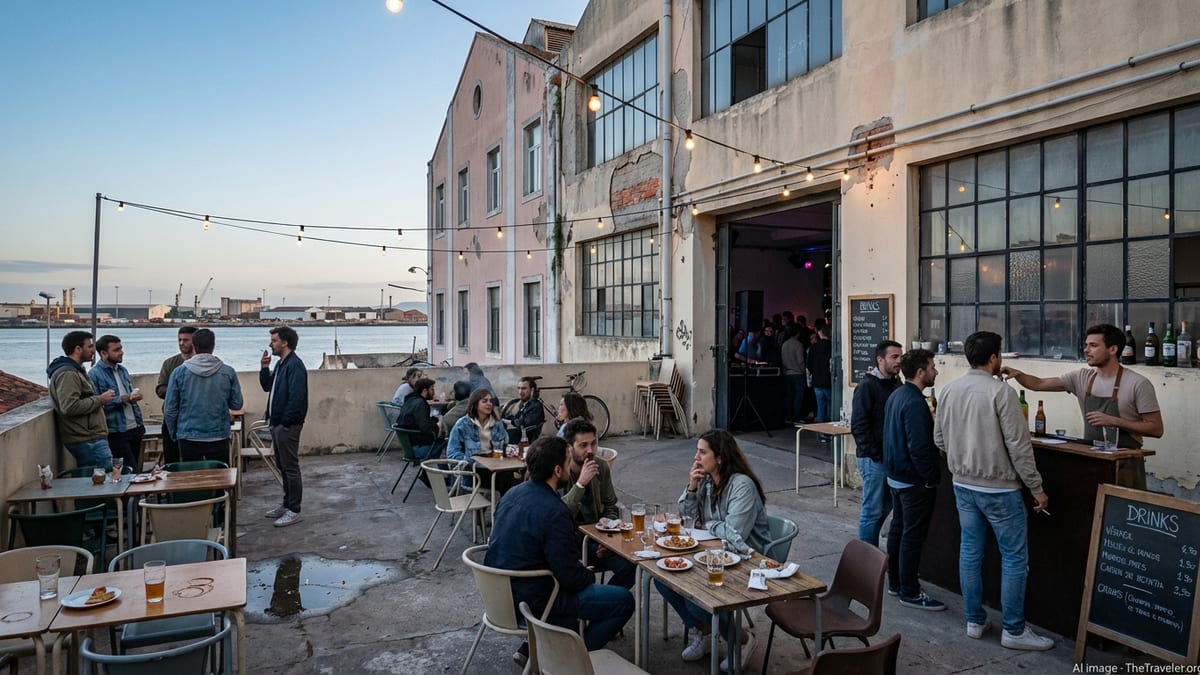
The entrance to the complex is understated to the point of being almost hidden. There is no grand sign waiting to welcome you, and if you arrive a bit earlier in the evening, security and staff presence can feel minimal. I had to ask someone lingering by the gate to confirm I was in the right place. Once inside, though, the atmosphere changes abruptly. You step into a courtyard surrounded by the old industrial buildings, and Casa do Capitão occupies one of these, spilling out onto a wide terrace that looks toward the river and the city beyond.
Before going, I checked the current opening hours carefully, because they are not intuitive. Casa do Capitão is effectively a night and late-night operation. Officially it runs from Tuesday to Sunday, staying open into the early hours on most nights, with Monday closed. Midday service is irregular and tends to be limited to certain days, and the schedule can stretch into the small hours for concerts and DJ sets. That means it is a place you plan as an evening or night outing, not somewhere to casually drop in for a reliable weekday lunch. I was glad I checked, because I changed my plan from an early afternoon visit to an early evening arrival and avoided turning up to shuttered doors.
Those early impressions set the tone: Casa do Capitão is not about convenience or predictability. It takes a bit of effort to reach, a bit of patience to decode its hours, and a willingness to accept that things may not run on a tight restaurant schedule. If you go in anticipating a conventional dining venue with rigid service rhythms, you are likely to be frustrated at the outset.
Atmosphere: Between Ruin, River and Creative Scene
Once I settled in, the atmosphere turned out to be the strongest card in Casa do Capitão’s hand. The space retains the bones of its former industrial life. There are high ceilings, concrete floors, exposed walls and a feeling that things have been added on in layers rather than designed from scratch. The terrace, dotted with mismatched chairs and tables, opens toward the Tagus and catches a soft, slanting light in the early evening. It is not picture-perfect in a postcard sense. There are still construction works visible in the distance, and the view includes cranes and warehouses as well as water. But it feels real, like a genuine piece of the working riverfront that has not yet been fully gentrified into gloss.
Inside, the mood is more clubby and creative than gastronomic. There are different floors and rooms, some geared to DJ sets and live music, others more geared to lounging and conversation. When I was there, the soundtrack shifted from mellow, jazzy electronic tunes early on to more assertive dance music as the night went on. The programming clearly matters here, and people come as much for the culture as for the drinks. That has consequences: if you are noise-sensitive or hoping for a quiet, candlelit dinner, this is the wrong address. The sound system is present, and sometimes borderline intrusive, especially indoors.
I liked the way people used the space. Groups of friends drifted between the terrace and the interior, some clearly there for the concert lineup, others just hanging out. Solo visitors did not feel out of place either, and I appreciated that it did not have the exclusive, velvet-rope vibe that some of Lisbon’s trendier night spots cultivate. At the same time, that ease comes with a certain looseness. Smoking is common on the terrace, and at times the wind pushed the smoke across big portions of the outdoor seating, which might be an issue if you are sensitive to it.
What surprised me was how much the atmosphere changed through the evening. Before ten, it felt almost like a neighborhood bar with a great terrace. After midnight, when more people arrived for the music, it tipped toward club energy. That may sound obvious, but it noticeably affects whether you can still focus on your plate and conversation. By one in the morning, eating felt like a side activity at best. At that stage, Casa do Capitão is a place to drink, dance, grab a snack if available and soak up the scene, not somewhere to linger over nuanced flavors.
Service: Charming, Overstretched and Inconsistent
The service at Casa do Capitão was a study in contrast. On a personal level, the staff I dealt with were warm, unfussy and clearly part of the broader creative energy of the place. Nobody recited a script or tried to upsell me. When I had questions about the drinks, I got honest answers, and one bartender went out of his way to tweak a cocktail when I asked if it could be less sweet. I appreciated that sense of casual, human interaction.
Systemically, though, service felt disorganized and often overwhelmed. Ordering at the bar meant joining a loosely defined queue that blurred into the crowd. At one point, it took me about fifteen minutes to get a drink, not because the bartenders were slacking but because there simply were not enough of them for the number of people waiting. There was no clear division between people ordering food and those just grabbing a beer, and the bottleneck made the process feel more stressful than it needed to be.
Food service was similarly patchy. Tables outside were not consistently cleared; mine still had the remains of someone else’s drink when I sat down, and nobody came to wipe it until I asked at the bar. When my food came, it arrived with no cutlery, and I had to go back inside to request some. The staff apologized, but the impression remained that the operational side has not fully caught up with the popularity of the venue.
I noticed that communication about what was available was also not always clear. When the kitchen ran out of a particular dish, there was no visible menu update or sign. People would order, wait, and then be told that option was no longer possible. That might be acceptable in a tiny wine bar, but in a busy multi-room venue it quickly leads to frustration. It left me with the feeling that Casa do Capitão works best for people who are flexible and patient, not those on a tight schedule or hoping for sharp, restaurant-style coordination.
Dining Style and Food: Bar Snacks First, Restaurant Second
Casa do Capitão does not pretend to be fine dining, but I had hoped the kitchen would be a bit more central to the experience than it turned out to be. The food offering, at least when I visited, felt like it sat somewhere between an elevated snack bar and a simple canteen. Think tapas-style plates, sandwiches and small dishes rather than composed mains. On paper, that can be exactly what you want in a place that is equal parts bar and venue. In practice, the execution was mixed.
I started with a couple of small plates to share: one centered on simple local cheese and cured meats, and another that played with grilled vegetables and a citrus dressing. The cheese plate did what it said on the tin. The products were decent, the portion was generous enough for a snack, and it went well with a glass of white wine. There was nothing particularly imaginative about it, but it was satisfying and felt fairly priced for Lisbon standards. The vegetable dish was less convincing. The vegetables were slightly under-seasoned, as if the kitchen was hesitant with salt and acid, and the textures suggested they had been prepped in advance and then warmed, rather than grilled to order.
Later in the night, I tried one of their more filling options. Here the limitations of the setup showed more clearly. This was food designed to be produced quickly in a high-volume bar context, not something that demanded close attention from the kitchen. It arrived lukewarm, and while the flavors were acceptable, they were not memorable. If I had come primarily to eat, I would have been disappointed. Coming from a city with such a strong and competitive food scene, Casa do Capitão’s cooking felt like it lagged behind what is available in many smaller, more focused Lisbon taverns.
One consistent positive was that the menu did make an effort to include some vegetarian-friendly bites. While the selection was not wide enough to build a fully satisfying dinner solely from plant-based dishes, it was a step above the token salad and fries approach some bars still take. That said, diners with specific dietary needs would likely find the lack of detailed information frustrating. There were no clear indications about allergens, and asking staff about ingredients yielded vague answers. This again underscored that the kitchen is operating within the priorities of a music venue and bar, not a fully fledged restaurant.
Drinks, Music and the Nightlife Layer
If the food leans toward functional, the drinks and music are where Casa do Capitão asserts its identity more strongly. The bar menu offered a solid range of Portuguese wines by the glass, local craft beers and a handful of house cocktails. Prices, while not budget, felt aligned with what you would expect at a central Lisbon bar that also functions as a cultural spot. The cocktails I tried were competently made rather than groundbreaking. They were balanced, not overly sweet, and matched the relaxed, come-as-you-are layout of the space.
The music programming is what truly shapes the evening. By the time my second drink arrived, a DJ had settled into a groove of warm, bass-led tracks that gradually nudged the volume up without tipping into full-blown club territory. People started to cluster around the decks, and the energy in the room shifted. Later, when the night was fully underway, the music was louder, the lighting dimmer, and any pretense of a sit-down dining venue had evaporated. At that point, Casa do Capitão felt closer to a cultural club, where the food and drink sustain the event rather than define it.
One detail that did bother me was the sound bleed between spaces. Even on the terrace, where I had initially hoped for a more conversational environment, the music level from inside made it hard to talk without raising my voice once the night got going. If you go on a night with a strong lineup, you should be prepared for an auditory experience that dominates the space. That is not necessarily a criticism if you are there for the music, but it does make the venue less suitable for a laid-back, intimate dinner.
From a practical standpoint, payment and logistics were straightforward. I paid at the bar each time rather than running a tab, which is standard for this kind of venue. Card payments were accepted without issue. The only weak point was the line to order, which remained an almost constant feature of the evening. Again, that is manageable if you factor it into your expectations, but it contributes to the sense that this is a place built primarily around the creative program, with hospitality processes catching up as best they can.
Crowds, Comfort and Timing Your Visit
Casa do Capitão’s comfort level depends heavily on when you go. Early in the evening, particularly on weekdays, the terrace can feel almost tranquil. You get the benefit of the river breeze, the golden hour light on the old factory walls and enough space to choose a table without feeling crowded. At that time, it is perfectly pleasant to sit with a drink, a plate of snacks and a friend and simply enjoy the surroundings. The music is present but not overwhelming, and service, while still informal, is less strained.
As the night progresses, especially from late night into the very early morning hours, the dynamic shifts. Crowds swell, especially on weekends or nights with a stronger music or events lineup. The line at the bar thickens, seats become harder to find, and moving between different levels and rooms can feel like navigating a small indoor festival. If that sounds energizing, you will probably love the intensity. If you prefer space and calm, you will quickly start looking at your watch.
Temperature and comfort were another subtle factor. The terrace can get quite breezy in the late evening, even in warmer months. There were some heaters and sheltered corners, but not enough to comfortably accommodate everyone outside once the temperature dropped. Inside, by contrast, it could get warm and crowded, especially near the dance areas. I found myself doing a small dance of my own between indoors and outdoors, trying to find a comfortable middle ground of fresh air and acceptable noise level.
Timing also matters with regard to food. The earlier you arrive, the more likely you are to find the full menu available and the kitchen less overloaded. Later at night, certain items may disappear without much explanation. That is fine if you are there mainly for drinks and music, but if you are counting on a specific dish, it can be frustrating. As a rule of thumb, I would treat Casa do Capitão as a place to have an early evening snack and drink before the main wave of nightlife, or as a late-night bar and venue with food as a bonus, not as the core of a carefully planned dinner.
The Takeaway
Looking back on my time at Casa do Capitão, I would not describe it as a perfect night, but I would call it an honest one. My expectations had been shaped by glowing word of mouth that made it sound like a hidden gem combining top-tier atmosphere with strong food and effortless service. The reality was more complicated. The atmosphere and cultural energy were there in abundance. The food was fine but rarely rose above adequate. The service was kind but overstretched. Logistics from getting there to ordering were sometimes clumsy.
If I go back, I will approach it very differently. I would not choose Casa do Capitão as the main destination for a special dinner. Instead, I would eat properly elsewhere in Lisbon, then head out to Beato later for drinks, music and a sense of being part of the city’s creative undercurrent. I would also plan my visit around its opening hours and event schedule, arriving early enough to secure a good spot on the terrace and bracing myself for longer waits at the bar as the night wears on.
In spite of the shortcomings, I came away feeling that Casa do Capitão has a genuine role in Lisbon’s cultural landscape. It offers a stage for DJs and artists, a semi-raw industrial setting that stands apart from the polished tourist core, and a space where locals and visitors mingle without the rigid separation you sometimes feel in more purely touristic bars. It is not trying to be everything to everyone, and when I stopped asking it to be a polished restaurant, I appreciated it more for what it actually is.
Casa do Capitão is still worth it if you know what you are signing up for. If you are a traveler who prioritizes atmosphere, music and a sense of place over meticulous plating and impeccable service, you will likely forgive the rough edges and embrace the vibe. If what you want is a reliable, quiet, food-first experience, Lisbon offers many better options. For me, Casa do Capitão is a place I would return to on a night when I want to feel plugged into the city’s creative beat, with a drink in hand, a simple snack on the table and the river somewhere just beyond the lights.
FAQ
Q1. Is Casa do Capitão easy to reach without a car?
It is reachable by public transport, but it is not in the most central, tourist-heavy part of Lisbon. I took a bus and then walked several minutes through a quiet industrial area to get there. The walk can feel a bit desolate at night, though I did not feel unsafe. If you prefer more convenience or are returning late, using a taxi or ride-hailing service for at least one leg of the journey is more comfortable.
Q2. Do I need a reservation to eat or drink at Casa do Capitão?
During my visit, it functioned much more like a bar and cultural venue than a reservation-driven restaurant. I did not book ahead and found a spot by arriving early in the evening. Later in the night, seating became scarce, but people mostly hovered, shared tables or moved around. If there is a specific event on, I would check in advance if tickets or registration are required, but for casual drinks and snacks I treated it as a walk-in space.
Q3. What are the current opening hours and are they reliable?
Casa do Capitão generally operates from Tuesday to Sunday, with Monday closed, and stays open late into the night, sometimes into the early morning, particularly for events. Daytime hours are more limited and irregular. I strongly recommend checking the latest schedule shortly before you go, because hours can shift with programming and seasons. When I planned my visit, verifying those details saved me from showing up in the middle of a closed period.
Q4. Is Casa do Capitão suitable for a quiet, romantic dinner?
In my experience, no. Early in the evening you can find a relatively calm corner on the terrace, but the venue’s core identity is as a bar and cultural spot with music. As the night progresses, the sound level increases and the space fills up. Conversation becomes more difficult, and the atmosphere tilts toward nightlife rather than intimacy. I would choose a smaller neighborhood restaurant for a romantic dinner and come to Casa do Capitão afterward for drinks and music if you still feel like going out.
Q5. How good is the food and is it worth going there just to eat?
The food struck me as serviceable rather than destination-worthy. It focuses on snack-style plates, simple dishes and bar-friendly options. Some things were enjoyable and fairly priced, but nothing I tried would justify a special trip solely for the food, especially given Lisbon’s strong dining scene elsewhere. I would go with the mindset that you are there primarily for the space, atmosphere and events, with food as a convenient accompaniment rather than the main reason to visit.
Q6. What kind of crowd does Casa do Capitão attract?
When I visited, the crowd was a mix of local creatives, young Lisbon residents and a smattering of curious visitors who had clearly heard about the place. It did not feel tourist-only or heavily curated, more like a natural extension of the city’s music and art community. Dress was casual and varied, and I never felt underdressed or out of place. It is the sort of venue where people come to linger, talk, listen to music and move between inside and out without much formality.
Q7. Is Casa do Capitão family-friendly?
Early in the day or early evening, I could imagine families with older children feeling comfortable on the terrace, especially if there is a more relaxed event on. As the night goes on, though, the space becomes noisy, crowded and adult-oriented, with a strong focus on drinks and music. I would not choose it as a primary dining destination with small children, and I would treat it more as a nightlife spot than a family restaurant.
Q8. How expensive are the drinks and food compared with central Lisbon?
Prices felt broadly in line with other popular bars and venues in Lisbon. Drinks were not cheap, but they were not shockingly expensive either for a place with a cultural program and a unique setting. Food portions and pricing seemed fair for the quality, though the value equation depends heavily on how much you care about the atmosphere. If you purely compare flavor and execution, you can eat better for your money elsewhere. If you factor in the setting and music, the costs feel more justified.
Q9. Are there vegetarian or vegan options available?
There were some vegetarian-leaning small plates and sides when I visited, and I managed to piece together a snack-friendly meal without meat. However, the selection was not broad enough to comfortably build a full, varied dinner, and there was limited information about ingredients and allergens. If you are strictly vegetarian or vegan, I would not rely on Casa do Capitão as your main dining choice. It works better as a place where you can find something to tide you over while you enjoy drinks and music.
Q10. Who is Casa do Capitão best suited for?
Based on my experience, Casa do Capitão suits travelers and locals who prioritize atmosphere, music and a sense of being plugged into Lisbon’s evolving cultural scene. It is ideal if you enjoy semi-industrial spaces, mixed crowds and staying out late with drinks and a soundtrack. It is less suited to those seeking polished service, a structured meal or a quiet, comfort-first setting. If you arrive with realistic expectations, already fed, and ready to embrace a bit of improvisation, it can be a memorable part of a night out in Lisbon.