

More news on this day
Korean Air has pulled the wraps off a dramatically redesigned flagship lounge at Los Angeles International Airport, turning a once-standard waiting area into one of the most ambitious premium spaces at the Tom Bradley International Terminal and signaling how the airline wants its passengers to experience long-haul travel from the US West Coast.
A Flagship Lounge Built to Redefine LAX Layovers
The new Korean Air lounge, which officially opened in early March in the Tom Bradley International Terminal, is the carrier’s largest overseas lounge and the first full expression of its next-generation ground experience outside Seoul. After nearly two years of construction and an investment of around 65 billion won, the space has been rebuilt from the ground up rather than lightly refreshed.
Spread across 1,675 square meters on two levels, the lounge is roughly one-quarter larger than its predecessor. It has been designed to capture both the scale and energy of Los Angeles while showcasing what the airline calls “Modern Korean Luxury,” a visual language it is now rolling out across its global network.
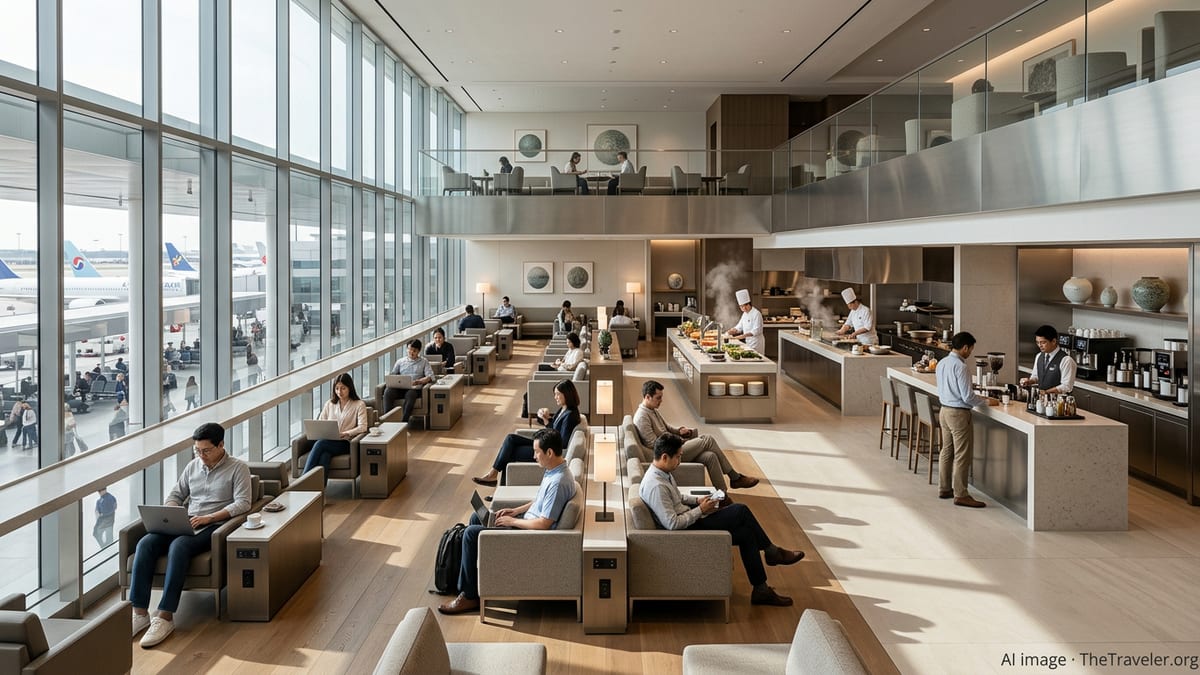
Positioned on an upper mezzanine with sweeping views into the terminal, the lounge trades the dark, enclosed feel of many legacy spaces for an open, daylight-filled environment. Floor-to-ceiling windows, an internal balcony terrace and sightlines across the concourse create an immediate sense of arrival rather than mere transit.
For Korean Air, LAX is a critical North American hub and a proving ground. The carrier views this lounge as its statement of intent in a terminal that already hosts competitive premium spaces from rival global airlines.
Design: Modern Korean Luxury Meets West Coast Light
While many airport lounges lean on generic marble and chrome, Korean Air’s new LAX space layers in distinct cultural cues. Warm woods, pale stone and soft neutral fabrics form the base palette, punctuated by curated Korean artworks such as Buncheong ceramics and moon jar pieces that quietly nod to the airline’s heritage without turning the room into a themed gallery.
The layout has been arranged around natural light and privacy. Seating areas step back from the windows to preserve views, while semi-enclosed niches and high-backed armchairs create quieter zones for passengers who want to work or rest. The overall impression is closer to a modern hotel lobby than a traditional airport lounge.
Lighting has been calibrated to match the Los Angeles daylight outside, with softer, warmer tones in the evening that aim to reduce travel fatigue. Textured walls, natural wood grain and fabric upholstery add visual depth, and subtle design details, including metal trims and patterned glass, bring a contemporary edge without overwhelming the space.
Importantly for travelers accustomed to crowded lounges, the expanded footprint and more distributed seating zones are intended to prevent the crush that has become common as premium access has broadened through credit cards and status tiers.
Two Levels, Two Very Different Experiences
The flagship lounge is divided into two distinct tiers. On the sixth floor, a dedicated first class lounge caters to the airline’s highest-paying passengers and top-tier frequent flyers. This space is the most intimate of the two, with a quieter atmosphere, more generous personal seating, and an emphasis on table service rather than self-serve buffets.
One level down, on the fifth floor, the combined Miler Club and Prestige lounge serves business class travelers and SkyTeam elites. This level is larger and more animated, with a variety of seating types ranging from communal tables for groups to quieter corners for solo travelers, along with direct views of the terminal activity below.
Both levels share a consistent design language, but the zoning makes the experience feel tailored rather than one-size-fits-all. Families are directed toward more flexible seating and a dedicated family area, while business travelers can gravitate to a clearly defined work zone with desks, power outlets and higher partitions for privacy.
Additional amenities including expanded shower facilities, upgraded restrooms and better luggage storage are intended to make the lounge viable not just for short pre-boarding stops, but for multi-hour layovers and complex itineraries through Los Angeles.
Dining, Drinks and a New Approach to Time on the Ground
The renovation does not only focus on aesthetics. Korean Air has overhauled its food and beverage approach in Los Angeles, aligning the offer with what it has been rolling out at its remodeled lounges in Seoul. In the first class area, passengers can expect an a la carte dining concept with plated dishes served at the table, including Korean classics and lighter, Western-style options designed for pre-flight dining.
In the Miler Club and Prestige lounge, a central live cooking station anchors the dining zone, where chefs prepare hot dishes to order during peak periods. This is supported by a buffet that emphasizes fresher, smaller-batch servings over mass-produced trays, a move intended to answer long-standing criticism of crowded international lounges.
Beverage options have also been localized. The airline is pouring a Los Angeles-specific craft beer and has introduced a signature coffee blend unique to the LAX lounge, alongside a selection of premium teas, soft drinks and a full bar. The intent is to offer a sense of place that goes beyond generic wine and spirits.
For many long-haul passengers, especially those connecting from or to Asia, the lounge is now positioned as an integral part of the journey rather than merely a holding zone. By encouraging travelers to dine and unwind in the lounge, Korean Air is also aiming to streamline the onboard experience and manage cabin service more efficiently once in the air.
Who Can Access the Lounge and What It Signals for Future Travel
Access rules largely mirror Korean Air’s broader premium policy. First class ticket holders and the airline’s highest elite members are directed to the sixth-floor first class lounge, while business class passengers, Miler Club members and SkyTeam Elite Plus travelers are welcomed on the fifth floor. The lounge does not currently participate in major pay-in or third-party membership programs, reinforcing its positioning as an exclusive branded experience.
The LAX flagship is also a visible piece of a much larger strategy. Korean Air is in the midst of a multiyear investment in its lounges at Seoul Incheon, including expanded footprints and upgraded catering, and plans to extend the new design language and service model to other key international hubs such as New York JFK.
For travelers, the practical impact at LAX is immediate. The new lounge offers more space, more daylight, better food and a wider range of seating options than the facility it replaces. For the airline, it is a test case in whether a premium, culturally grounded lounge can stand out in one of the most competitive international terminals in the United States.
If the response in Los Angeles is strong, Korean Air’s overhaul at LAX may prove to be more than just a cosmetic upgrade, instead reshaping how the carrier thinks about every hour its passengers spend on the ground before they fly.