

More news on this day
London North Eastern Railway has pulled back the curtain on its next generation of long-distance trains, unveiling new interiors that promise a step-change in comfort and convenience for both tourists and business travellers.
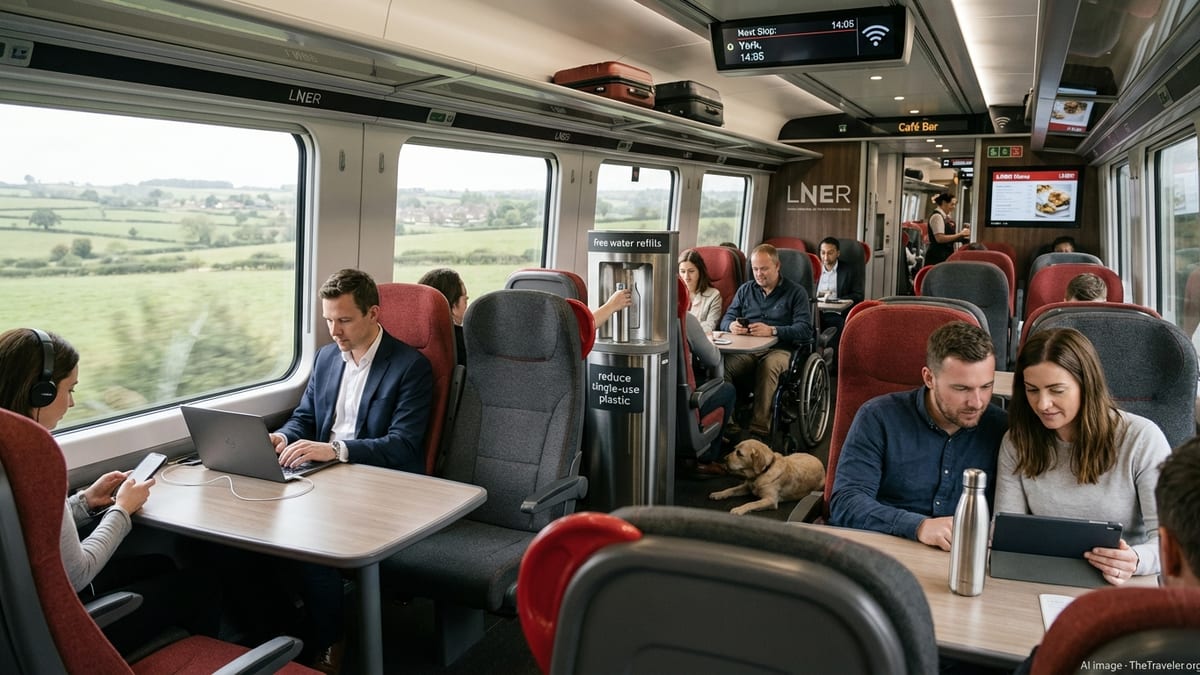
The new Class 897 fleet, branded “Serenza,” will introduce reclining First Class seats, free water refill stations, upgraded seating, improved accessibility and a suite of digital enhancements designed to make journeys along the East Coast Main Line smoother and more sustainable.
More News
- Caribbean Travel to U.S. Upended by New Visa Freezes and Expanded Bans
- Mexico Restores E-Visas for Brazilians, Paving the Way for Borderless Tourism
- Philippine Airlines Joins Regional Carriers Powering Southeast Asia’s Tourism Boom
A New Era for East Coast Main Line Travel
The Serenza trains mark the first long distance tri mode fleet to be introduced under the developing Great British Railways structure and will ultimately replace LNER’s much loved but aging InterCity 225 sets. Built by CAF and financed by Porterbrook, the 10 ten carriage trains are being positioned as a flagship example of how the UK rail industry is trying to win back and grow ridership after the pandemic.
LNER has seen demand surging, carrying more than 24 million customers in the 2024 to 2025 period and introducing a new timetable in December 2025 that added around 60,000 seats a week to its network. The Serenza fleet is the rolling stock answer to that growth, adding capacity with 569 seats on each train and giving the operator the flexibility to deploy comfortable, modern trains across a route that stretches close to 1,000 miles from London King’s Cross to destinations including Leeds, York, Newcastle and Edinburgh.
The Class 897s are being developed as tri mode trains able to draw power from overhead wires where available, switch to diesel engines on non electrified stretches and use onboard batteries for low emission operation in sensitive areas such as stations without wires. For travellers, that should translate into quieter arrivals and departures, as well as a more reliable service when infrastructure or power supply issues affect one part of the system.
LNER’s leadership has framed Serenza as both a practical capacity boost and a showcase for a more customer focused railway. While many technical details have now been confirmed, the company says some elements will continue to evolve until the fleet reaches its final design freeze ahead of entry into service later this decade.
Comfort Upgrades: Reclining Seats and Better Space for Work and Rest
Central to LNER’s pitch is a more comfortable onboard environment. Both Standard and First Class coaches are being fitted with redesigned seats that use enhanced padding, reshaped cushions, wider headrests and more supportive side bolsters. The intention is to reduce pressure points on longer journeys and to make it easier for travellers to work on laptops or relax with a book without constant readjustments.
In First Class, the upgrade will be most visible through reclining seats, a feature that has often been missing or limited on British intercity services. The new reclining mechanisms are being paired with updated mood and table lighting, aimed at creating a calmer, more premium atmosphere for passengers paying for additional space and service. Business travellers in particular are likely to welcome the combination of extra comfort with more controllable lighting, making it easier to switch between an office like setting and a quieter space for rest.
The seat designs have also been shaped by direct customer and stakeholder feedback gathered by LNER. The operator’s Accessibility Forum and regular passengers were asked to comment on prototype layouts and fixtures, resulting in more generous leg room around key seats, revised leg positions to make it easier to stow bags and move around, and a wider focus on making every seat feel more usable throughout a long journey rather than simply maximising seat count.
For Standard Class customers, the emphasis has been on closing the comfort gap with premium cabins without sacrificing affordability. While seats in Standard will remain fixed rather than reclining, the new padding and support, coupled with ready access to power, storage and information screens, is intended to give leisure travellers and commuters a noticeably upgraded experience compared with older rolling stock.
Onboard Water Refill Stations and Café Bar for Modern Travellers
One of the most eye catching upgrades on the Serenza trains will be the introduction of five free water refill points on every set, allowing passengers in both Standard and First Class to top up reusable bottles without having to visit the café or purchase single use plastic. These stations will be distributed through the train to avoid queues and to support LNER’s wider sustainability commitments.
The move puts LNER alongside a small group of UK operators that have integrated refill points into their newest fleets and reflects growing passenger expectations around environmental responsibility. For long distance tourist journeys, particularly during summer or on routes where travellers may be arriving from long haul flights, easy access to drinking water can be a small but important comfort factor.
Complementing the refill stations is a refreshed Café Bar concept in Standard Class. The counter area is being reconfigured with a continuous grab rail, making it easier for passengers with reduced mobility to navigate the space in motion. Digital menu screens will display real time information about the availability of food and drink, and LNER plans to continue its practice of working with suppliers along its route to showcase regional produce on board.
The combination of refill points and an updated catering offer is intended to give price conscious tourists more choice, allowing them to rely on their own bottles while still having the option to purchase snacks, hot drinks or meals. Business travellers may be more interested in reduced queuing times and clearer information on stock levels, helping them make quick decisions during short dwell times at intermediate stations.
Digital Enhancements: Always Connected, Better Informed
Serenza sets will continue LNER’s approach of providing power at every seat, but with a future proofed twist. Each seat will be equipped with a standard plug socket alongside a USB C charging port, while table seats will gain integrated power bars mounted on the tabletop. This should make it significantly easier for passengers to charge multiple devices simultaneously without stretching cables across aisles or negotiating limited shared sockets.
Information delivery is also being upgraded. New digital screens will be installed in every carriage to show real time journey details, calling patterns, disruption updates and information about onboard services such as the Café Bar. For visitors to the UK who may not be familiar with station names and interchange options, clearer visual information can reduce anxiety and help them plan onward travel more confidently.
LNER is one of several publicly owned operators working with government and industry partners on more responsive passenger information systems, including the use of artificial intelligence to generate instant alerts and rebooking guidance during disruption. The new fleet is expected to serve as a test bed for these tools once they are fully rolled out, with screens and onboard connectivity designed to support faster updates than have traditionally been possible.
Alongside seat power and information displays, the trains will retain Wi Fi connectivity throughout, enabling business travellers to work en route and tourists to research attractions or accommodation as they travel. The consistent availability of power and data is increasingly seen as a core part of the rail value proposition, especially on corridors where airlines and long distance coaches are improving their own onboard technology.
Accessibility, Inclusive Design and Practical Amenities
A standout feature of the Serenza project is the depth of consultation on accessibility. LNER’s Accessibility Forum and other specialist groups contributed dozens of recommendations, with the vast majority incorporated into the final design. The new trains will offer wheelchair spaces with dedicated companion seating and redesigned tables that allow more room for wheelchair users to position themselves comfortably.
Seat legs near accessible areas have been repositioned to create additional space for assistance dogs, addressing a frequent complaint on older rolling stock where under seat structures limited room. Additional luggage racks are being added in carriages containing wheelchair spaces to discourage passengers from placing bags in those priority areas and to improve overall circulation around the coach.
Braille seat numbers are being introduced across the fleet to help visually impaired travellers locate their seats more easily. This relatively simple measure fits into a wider push by LNER to improve wayfinding and information for passengers with reduced vision or hearing, complementing earlier station initiatives such as tactile studs along platform edges and integrated British Sign Language elements on some departure boards.
Within the toilets, the layout has been reworked to include clearer signage, more intuitive wash basin controls and upgraded baby changing facilities, which should benefit families touring the UK as well as regular commuters. The accessible toilets are designed to modern standards, with improved turning circles and grab rail positions intended to better reflect feedback from wheelchair users and carers.
Sustainability and the Tri Mode Advantage
Beyond comfort and convenience, the new Class 897s are also a key part of LNER’s response to environmental targets and the push to make rail a more attractive alternative to domestic flights and long car journeys. As tri mode units, the trains combine the energy efficiency of electric operation under overhead wires with the route coverage of diesel and the low emission benefits of battery power.
On sections of the East Coast Main Line that remain without full electrification, the combination of diesel and battery systems should allow LNER to reduce fuel consumption and cut local air pollution, particularly when arriving at and departing from stations where air quality is a concern. Over time, as the national rail infrastructure evolves, the tri mode design offers flexibility to adapt to more extensive electrification or future battery improvements without replacing the entire fleet.
Inside the trains, sustainability has also influenced material choices. Seat fabrics, interior panels and flooring have been selected with durability and recyclability in mind, aiming to reduce waste over the multi decade life of the fleet. The introduction of water refill stations is expected to cut down on single use plastic bottles sold onboard, while digital menu and information screens reduce the need for printed materials.
For environmentally conscious travellers, particularly international visitors comparing UK rail options with European high speed networks, these measures may help close the perception gap. Combined with growing capacity and improved punctuality targets, LNER is positioning Serenza as a cornerstone of a cleaner, more modern intercity rail offering.
Routes, Timelines and What Travellers Can Expect Next
The Serenza trains are being built as 10 carriage sets with a total of 569 seats each, configured for use across LNER’s core East Coast Main Line routes. Once in service, they will gradually replace the InterCity 225 trains that have served the corridor since the late 1980s, while complementing the existing Azuma fleet on busy flows such as London to Leeds, York, Newcastle and Edinburgh.
LNER and industry partners have indicated that the new trains are planned to enter service later this decade, with detailed rollout schedules to be confirmed closer to delivery. As is typical with major rolling stock projects, the introduction is expected to be phased, allowing the operator to test new systems in live service, train staff on the new layouts and refine timetables as capacity increases.
For regular passengers, the transition period will likely mean a mix of rolling stock on key routes, with some services operated by Serenza sets and others by Azuma or remaining InterCity 225 trains. Over time, the consistency of experience should improve as more new trains enter traffic, making it easier for travellers to know what to expect in terms of seating, power availability, water refill points and accessibility features.
Tourism bodies along the East Coast corridor are watching the rollout closely. With inbound visitor numbers recovering and cities such as York, Edinburgh and Newcastle marketing themselves aggressively overseas, a more comfortable and reliable rail link from London is seen as an important part of the destination offer. For business travellers, particularly those in finance, tech and professional services who commute between London and major regional hubs, the new fleet promises a more conducive environment for productive travel time.
FAQ
Q1. What is the LNER Serenza train and how is it different from current services?
The Serenza is LNER’s new Class 897 long distance fleet, a series of 10 ten carriage tri mode trains that will replace the older InterCity 225 sets. Compared with existing services, they offer redesigned seating, reclining First Class seats, more power outlets, digital information screens, water refill stations and enhanced accessibility features throughout.
Q2. When will the new LNER Serenza trains start carrying passengers?
The Class 897 Serenza fleet is scheduled to enter service later this decade after testing and approvals are complete. LNER has begun unveiling interior designs and technical details now so that customers and industry partners can understand what to expect when the trains are introduced on the East Coast Main Line in the coming years.
Q3. Which routes will the new trains operate on?
The Serenza trains are being designed for use across the full LNER network on the East Coast Main Line, including core routes from London King’s Cross to destinations such as Leeds, York, Newcastle, Edinburgh and other key cities. Their tri mode capability means they can operate on both electrified and non electrified sections as required.
Q4. Will all passengers have access to the new water refill stations?
Yes. Each Serenza set will feature five free water refill points located in different parts of the train, and they will be available to both Standard and First Class passengers. The refill stations are intended to support sustainable travel by encouraging the use of reusable bottles and reducing reliance on single use plastic.
Q5. What comfort improvements can business travellers expect in First Class?
First Class on Serenza trains will feature reclining seats with improved padding, wider headrests and enhanced side bolsters, along with mood and table lighting that can be adjusted for work or relaxation. Every seat will have access to power, and the overall layout is designed to provide a quieter, more spacious environment suitable for working on laptops or taking calls.
Q6. How have accessibility needs been addressed in the new design?
LNER has worked closely with its Accessibility Forum and other stakeholders to shape the Serenza interiors. The trains will include wheelchair spaces with companion seating, redesigned tables for better access, repositioned seat legs to create more room for assistance dogs, additional luggage racks near accessible areas, braille seat numbers and improved accessible toilets with clearer signage and layouts.
Q7. Will the new trains be more environmentally friendly?
Yes. As tri mode units, Serenza trains can run on overhead electric power where available, switch to diesel on non electrified stretches and use batteries to reduce emissions and noise, especially when entering and leaving certain stations. Interior materials and features such as water refill points and digital displays have also been chosen with sustainability and reduced waste in mind.
Q8. What onboard technology will help passengers stay connected and informed?
Each seat on Serenza trains will offer a plug socket and a USB C charging port, while table seats will feature integrated power bars. New digital screens in every carriage will provide real time journey information, disruption updates and details of onboard services such as the Café Bar, alongside the continued provision of Wi Fi throughout the train.
Q9. How many seats will each Serenza train have and how does this affect capacity?
Each Serenza set will have 569 seats across Standard and First Class, along with dedicated wheelchair spaces. Combined with timetable changes that have already added tens of thousands of weekly seats on the East Coast Main Line, the new fleet will significantly increase LNER’s ability to handle growing passenger numbers on key intercity flows.
Q10. How will tourists visiting the UK benefit from the new trains?
Tourists can expect a more comfortable and intuitive journey, with clearer digital information, easy access to power and Wi Fi, free water refill points and improved luggage and bike storage. Enhanced accessibility and better signage should make it easier for travellers unfamiliar with the network to navigate the route, while more comfortable seating and modern interiors offer a better first impression of long distance rail travel in the UK.