

More news on this day
Nikki Beach Hotels & Resorts is sharpening its focus on experiential luxury and lifestyle-led development, with newly appointed chief operating officer Rémi Delpech positioned to scale a model that prioritizes vibrant social programming, multi-use spaces, and local partnerships as much as room keys.
Get the latest news straight to your inbox!
A Hospitality Group Built Around a Lifestyle, Not Just Rooms
Publicly available company information shows that Nikki Beach Hospitality Group today spans beach clubs, hotels and resorts, residences, restaurants and special events, evolving from a single Miami concept into a global lifestyle platform. Its hotels division, created to translate the beach club DNA into overnight stays, now operates in destinations including Dubai, Santorini and Porto Heli, with additional developments under way.
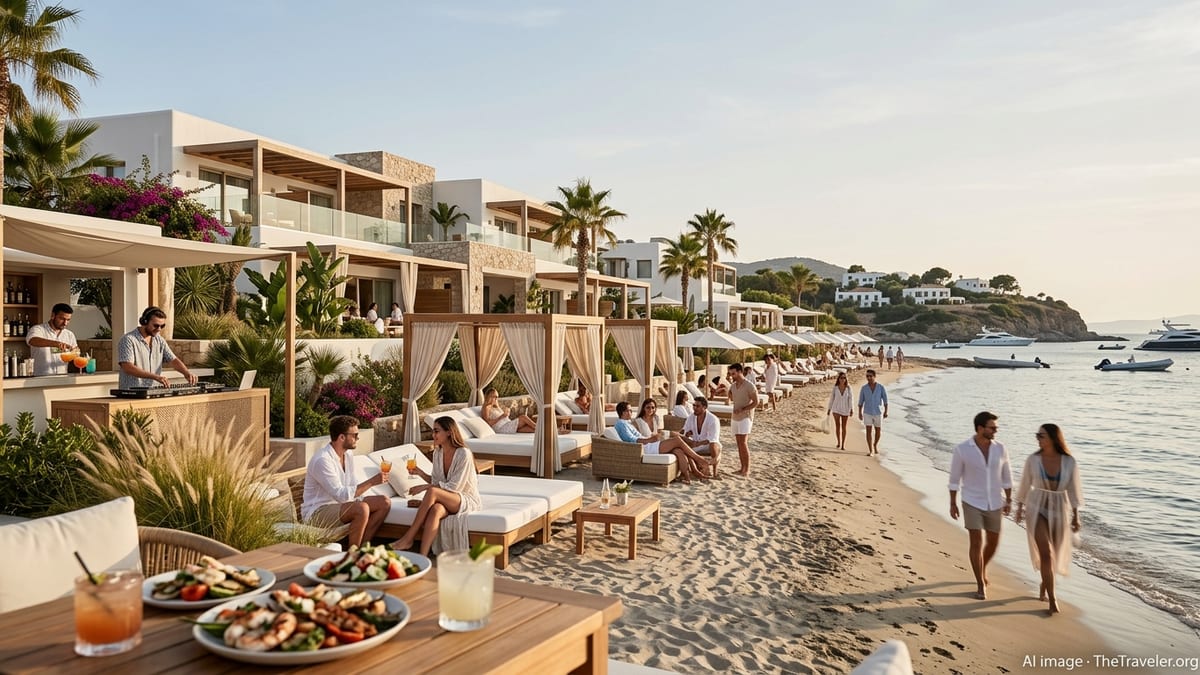
Rather than leading with inventory counts or conventional metrics such as average daily rate, the group positions its resorts as an extension of the brand’s signature social scene. Marketing materials emphasize music, dining, fashion and entertainment alongside design, presenting each property as a hub for day-to-night experiences that blend local culture with a recognizable Nikki Beach aesthetic.
This lifestyle-first positioning is increasingly relevant as luxury travelers seek social connection and curated programming alongside privacy and comfort. Industry coverage indicates that demand for immersive, branded experiences has supported the expansion of hybrid models that combine resort stays, standalone beach clubs and branded residences under a single hospitality umbrella.
Within this context, Delpech’s operational focus centers on tightening the integration between the group’s divisions so that each new opening can function as both a destination for guests and a platform for the wider Nikki Beach ecosystem of events, partnerships and retail.
Experiential Luxury as a Revenue Multiplier
Recent reporting on openings such as Nikki Beach Costa Smeralda in Sardinia and ongoing operations in Dubai illustrates how the brand’s experiential strategy translates into revenue beyond traditional room sales. At Costa Smeralda, the beach club is paired with an elevated cocktail concept and seasonal culinary collaborations, designed to drive high-spend visitation from both overnight guests and external clientele.
In Dubai, resort information highlights a mix of daybeds and cabanas, destination dining, music-led events and wellness offerings layered around a relatively compact key count. This configuration allows the property to monetize its beachfront real estate across multiple dayparts, attracting hotel guests, local residents and international visitors who engage through dining, nightlife and events rather than accommodation alone.
Analysts following the lifestyle and luxury segment note that such models can help hedge against seasonality and rate pressure by diversifying revenue streams. Beach clubs, restaurants, branded boutiques and membership-style experiences can maintain cash flow even when room demand softens, while also reinforcing brand desirability that, in turn, supports premium pricing on suites and villas.
Delpech’s background in urban luxury hotels and complex mixed-use assets is seen by observers as well suited to this approach, where programming calendars, F&B concepts and partnerships can be just as critical to performance as traditional yield management.
Global Growth and a Pipeline Built on Mixed-Use Concepts
LinkedIn and trade announcements in early 2026 confirm that Nikki Beach Hotels & Resorts is in expansion mode, with Delpech’s appointment coinciding with a ramp-up of its Barcelona and Dubai offices to support development and operations. The official website lists projects in destinations such as Baku and Ras Al Khaimah, indicating a strategy weighted toward resort markets where beach clubs and branded residences can anchor larger coastal developments.
Coverage of the brand’s plans in Azerbaijan and the Caribbean describes schemes that combine resorts, residences and beach clubs, often embedded within broader master-planned communities. This approach aligns with a broader trend in luxury hospitality, where branded residential components and membership-style access to amenities can provide more stable, long-term income alongside seasonal travel demand.
Industry observers suggest that by co-locating beach clubs with hotels, residences and ancillary retail, Nikki Beach aims to create self-reinforcing ecosystems. Residents and hotel guests provide a base audience for events and F&B, while the public-facing venues extend awareness of the brand and drive incremental spend. For owners and investors, this integrated model can translate into stronger asset valuations and more resilient returns.
At the same time, the company is recalibrating its footprint, with media reports documenting both new openings and strategic exits from legacy sites. This selective pruning is viewed by some analysts as a sign that the group is prioritizing destinations that can support its full lifestyle proposition and yield the broadest mix of revenue sources.
Community Impact and the Challenges of High-Profile Development
As Nikki Beach pursues larger, more complex projects, the community impact of its developments has come under closer scrutiny. Planning documents and environmental and social impact assessments for resort proposals, including a high-profile Caribbean project, outline efforts to evaluate coastal ecosystems, beach access and local employment effects as part of the approval process.
These filings describe commitments around shoreline management, integration with existing hotel structures and consideration of public access to beachfront areas, reflecting the growing expectation that luxury coastal projects demonstrate environmental stewardship. Observers note that the brand’s success now depends not only on guest satisfaction but also on its ability to position properties as additive to local communities.
In established destinations, the brand’s presence has sometimes intersected with broader redevelopment debates. Public discussions around the future of the original Miami Beach site, for example, have raised questions about land use, urban design and the balance between public space and private hospitality operations along the waterfront.
For Nikki Beach and for executives such as Delpech, these dynamics mean that community impact is increasingly integral to long-term performance. Properties that secure local support and align with destination development goals may enjoy smoother operational environments, while those that clash with policy priorities can face uncertainty that complicates investment decisions.
A Lifestyle Blueprint Shaping the Next Wave of Coastal Luxury
With its current portfolio and pipeline, Nikki Beach is emerging as a case study in how lifestyle hospitality brands move “beyond rooms.” The emphasis on experiential luxury, revenue diversification and mixed-use integration is shaping both new-build coastal destinations and the repositioning of existing resorts.
Publicly available information on the group’s strategy suggests that Delpech’s remit as chief operating officer extends from on-the-ground operations to the calibration of this blueprint as the brand enters new markets. That includes harmonizing beach club energy with residential privacy, aligning design and programming with local culture, and managing the environmental and social footprint of each project.
As competition intensifies across Mediterranean, Caribbean and Middle Eastern resort markets, observers will be watching how effectively Nikki Beach’s model can scale without diluting its appeal. For now, its combination of experiential focus, multi-channel revenue and attention to community impact is positioning the brand at the forefront of a shift in how coastal luxury is imagined, financed and experienced.