

More news on this day
As airlines around the world continue to rely on the Boeing 737 MAX, attention has shifted from grounding orders and courtroom battles to the intricate digital brains that keep the twin-engine jet in the air. At the center of that scrutiny is the MAX’s flight control system, a web of computers, sensors and software laws that has been significantly reworked since the aircraft’s two fatal crashes and prolonged global grounding.
Get the latest news straight to your inbox!
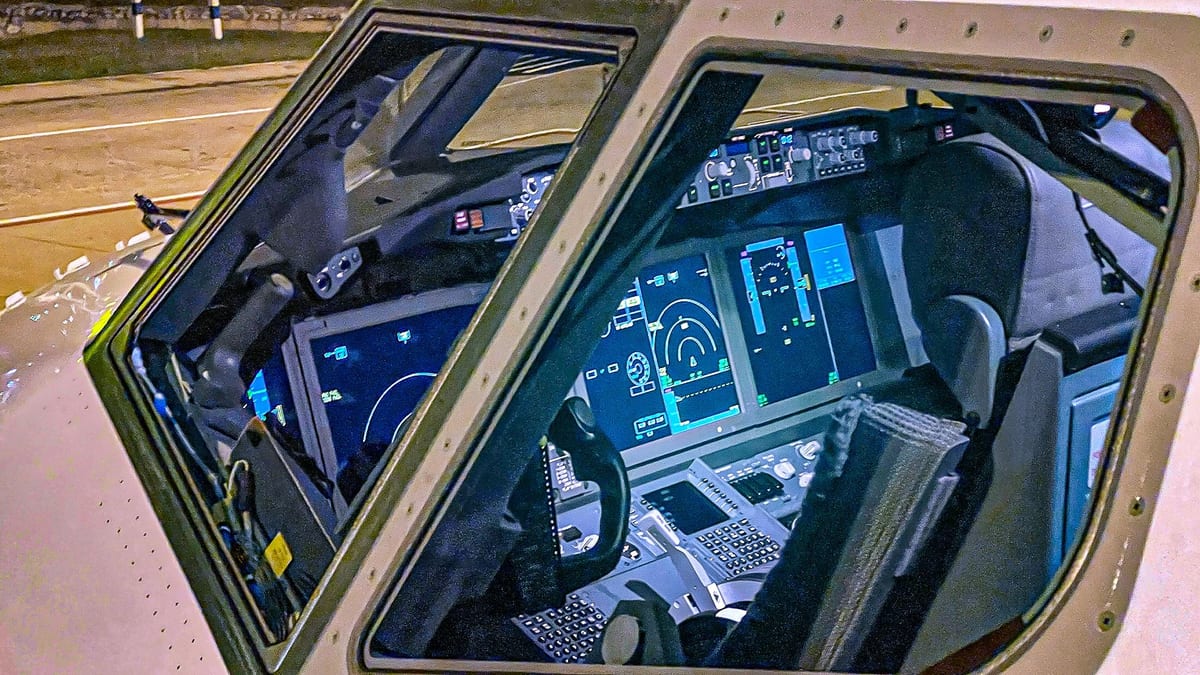
Image by Simple Flying
From Conventional Controls to a Software-Intensive Jet
The Boeing 737 family began as a largely mechanical aircraft, with hydro-mechanical linkages and limited automation. The 737 MAX, first delivered in 2017, retained the basic philosophy of manual feel and yoke-driven control surfaces, but it layered on more sophisticated electronic augmentation to cope with larger, more efficient engines and modern performance expectations. Publicly available technical descriptions indicate that the MAX’s primary flight control computers monitor pilot inputs, aircraft attitude and air data, then apply software “laws” that shape how the jet responds.
In routine operations, the system integrates long-standing features such as the speed trim system and autopilot with newer logic designed to help the MAX handle similarly to earlier 737 Next Generation models. This focus on common handling qualities was intended to minimize additional pilot training. However, subsequent investigations into the crashes of Lion Air Flight 610 in 2018 and Ethiopian Airlines Flight 302 in 2019 highlighted how an added software layer, not fully disclosed in early manuals, could dominate the aircraft’s pitch behavior under certain fault conditions.
The global grounding that followed, which began in March 2019 and lasted for nearly two years in many markets, forced regulators and Boeing to revisit assumptions about how much authority automated systems should hold and how they should be integrated into an aircraft that is still flown through traditional control columns and trim wheels. The result has been a series of hardware and software revisions that changed both the internal logic of the flight control system and the way pilots are trained to interact with it.
How MCAS Fits Into the 737 MAX Architecture
Central to the MAX’s story is the Maneuvering Characteristics Augmentation System, or MCAS. According to widely cited technical summaries, MCAS is a flight control law embedded in the aircraft’s flight control computer. It is designed to automatically adjust the horizontal stabilizer in specific, high angle-of-attack situations so that the MAX’s pitch feel and handling remain similar to earlier 737 models. In effect, it is a background system that trims the nose down when the computer believes the angle of attack has become too high under manual flight with flaps retracted.
Original implementations of MCAS relied heavily on input from a single angle-of-attack sensor. If that sensor fed erroneous high values to the flight control computer, MCAS could repeatedly command nose-down trim even though the aircraft was not actually approaching an aerodynamic stall. Accident investigations and regulatory reviews concluded that this vulnerability, combined with limited information in pilot documentation and challenging cockpit alerts, formed a critical part of the chain of events that led to the two crashes.
Publicly available documentation from regulators and independent technical review panels describes MCAS as part of a broader, federated architecture in which separate subsystems exchange data but are not fully integrated in a modern fly-by-wire sense. This structure meant that MCAS interacted with other systems such as stick shaker warnings and speed trim, while still depending on a small number of sensors and limited cross-checking. After the grounding, those dependencies and failure modes became a primary focus of redesign work.
Redundancy, Cross-Checks and Software Rewrites
One of the most significant changes to the MAX flight control system involved sensor redundancy and computer architecture. Regulators have reported that updated MCAS software now compares data from both of the aircraft’s angle-of-attack sensors rather than relying on just one. If the readings do not agree within a defined tolerance, MCAS is designed to deactivate, leaving the aircraft to be flown with conventional controls and alerts rather than automated nose-down trim commands.
In addition, updated documentation indicates that MCAS no longer repeatedly drives the stabilizer without limit. The revised logic permits only a single activation for any given high angle-of-attack event, with a capped authority that pilots can more readily counter using the control column or trim switches. Later technical coverage also describes broader changes to the flight control computers themselves, moving from a single-channel active architecture to a more robust, two-channel redundant setup in which each computer can cross-monitor the other and rely on separate sensor suites.
These changes required extensive software rewriting, ground simulation and flight testing overseen by authorities in multiple jurisdictions. Public reports from aviation agencies describe thousands of test hours devoted to validating the new logic, including extreme scenarios with sensor failures and conflicting cockpit indications. The outcome has been a more transparent set of protections that regulators state are designed to prevent a single-point fault from driving powerful stabilizer movements without clear opportunities for pilot intervention.
Human Factors, Training and Cockpit Alerts
The evolution of the 737 MAX flight control system has not been limited to lines of code. Human factors have become a central element of the redesign effort. Research cited in academic and policy analyses points to the way cockpit automation, when not properly understood or communicated, can overload crews during rapidly evolving emergencies. In the original MAX configuration, pilots encountering simultaneous stick shaker activation, sensory warnings and unexpected nose-down trim could struggle to diagnose the underlying fault in the seconds available after takeoff.
Regulators’ summaries of the return-to-service process show that additional pilot training became a key requirement for lifting the grounding. Airlines operating the MAX now typically provide detailed instruction on MCAS behavior, revised checklists and procedures for handling erroneous angle-of-attack indications. Simulator sessions focused on runaway stabilizer trim and mis-sensed high angle-of-attack scenarios aim to ensure crews recognize and respond to uncommanded nose-down inputs even when other warnings compete for attention.
Changes were also made to cockpit alerting, including clearer information when the two angle-of-attack sensors disagree. This has practical implications: if the flight crew is immediately aware that the aircraft’s angle-of-attack data is unreliable, they can more quickly disregard related protections and revert to basic pitch-and-power flying. Analysts following the MAX program note that this combination of technical safeguards and enhanced human-centered design reflects a broader shift in how manufacturers and regulators view automated assistance on conventionally controlled airframes.
Ongoing Oversight and Future Tweaks to the System
Even after the MAX returned to commercial service, scrutiny of its systems has continued. Flight control logic remains under review as part of a wider oversight regime that followed the Alaska Airlines 737 MAX 9 door plug incident in January 2024, which focused attention on Boeing’s production quality and safety culture more generally. While that event centered on fuselage structures rather than flight control software, it reinforced regulatory expectations that any potential vulnerabilities, including in avionics and automation, must be addressed promptly.
Industry coverage indicates that Boeing is working on further control software updates for the MAX family, including refinements to engine-related systems intended to better manage rare but severe failure cases. These are separate from MCAS, but they form part of the same overarching flight control ecosystem, where data from sensors, engine controls and aircraft attitude all feed into the decisions made by computers and crews. Aviation analysts suggest that such incremental changes are likely to continue for years as operational data from millions of flight hours accumulates.
For travelers, much of this complexity remains invisible behind the cabin door. However, the 737 MAX’s history has pushed its flight control system into the spotlight in a way few technical subsystems ever experience. The aircraft now flies under a level of regulatory and public attention that is unusual for a single-aisle workhorse, with every update to its digital nervous system closely parsed by airlines, pilots and safety experts seeking evidence that lessons from the past have been fully absorbed.