

More news on this day
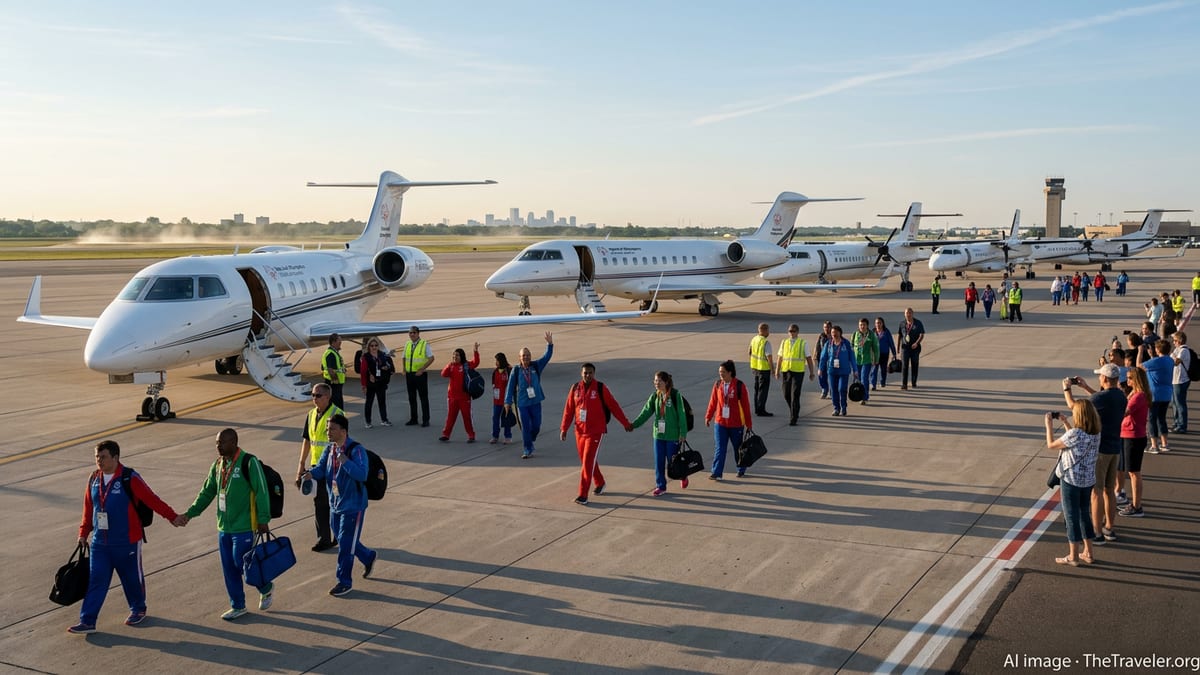
Across North America, business jets and turboprops are already being enlisted for a singular mission in June 2026: forming a volunteer air bridge that will fly thousands of Special Olympics athletes to the USA Games in Minnesota, turning routine hops into once-in-a-lifetime journeys.
Get the latest news straight to your inbox!
An Air Bridge Built on Volunteer Wings
The 2026 Special Olympics Airlift is emerging as one of the most ambitious general aviation mobilizations in the world, timed to bring delegations to the Special Olympics USA Games in Minneapolis and Blaine from June 20 to 26, 2026. Publicly available information shows that Textron Aviation is coordinating the effort with support from the broader general aviation community, inviting owners and operators of business jets and turboprops to donate their aircraft, crews, and time to transport athletes directly to the host region.
Reports indicate that organizers are working toward flying hundreds of aircraft into Minnesota on tightly choreographed arrival windows, echoing previous Special Olympics airlifts that have operated almost like “mini air traffic control marvels.” Pilots are assigned specific routes, slots, and handling procedures so that aircraft can land in rapid sequence, minimizing ground time while ensuring athletes experience a smooth, dignified arrival.
According to published coverage from participating programs, the airlift is intended to serve delegations from across all 50 states and the Caribbean, complementing commercial travel while easing both cost and logistical pressure on local Special Olympics organizations. For many teams, boarding a donated private aircraft rather than navigating multiple commercial connections is more than a convenience; it removes barriers that might otherwise keep athletes from reaching the Games at all.
In past editions of the airlift, the skies above host cities have filled with corporate jets and turboprops bearing Special Olympics logos, handmade banners, and cheering ground crews. Early descriptions of the 2026 plans suggest a similar spirit, with general aviation positioned not as a symbol of exclusivity but as a tool for inclusion.
Connecting Communities to Minnesota’s 2026 USA Games
The 2026 Special Olympics USA Games are set to bring more than 4,000 athletes and unified partners, around 1,500 coaches, and thousands of volunteers to the Minneapolis and Blaine area. Fact sheets released by state and national programs describe 19 Olympic-style sports staged at some of Minnesota’s signature facilities, building on the state’s long history with Special Olympics events.
Within that wider picture, the airlift operates as a travel backbone linking hometown training fields with national-stage arenas. Delegations preparing in places such as Louisiana, Massachusetts, and other state programs have begun to highlight the airlift in their own Games briefings, describing how athletes may travel together from regional airports rather than navigating distant hubs. That shared journey can start the team experience days before the opening ceremony, with athletes, coaches, and families traveling as a unified group.
For Minnesota itself, the air bridge adds a distinctly aviation-focused layer to its role as host. Local airports and fixed-base operators are expected to play a visible role in handling arrivals, with ground teams greeting aircraft, assisting with transfers, and managing a complex schedule of turnarounds. Travel planners note that the airlift is only one part of a larger transportation puzzle that includes charter buses, public transit, and traditional commercial flights, all converging on venues across the Twin Cities and beyond.
By concentrating so many arrivals into a carefully managed window, the airlift also reduces strain on families and support staff who might otherwise be responsible for intricate itineraries. Instead, many will see athletes depart from nearby airfields on direct flights aligned with their competition schedules.
From Airport Runways to Life-Changing Firsts
For athletes, the significance of the 2026 Special Olympics Airlift is as emotional as it is logistical. Coverage of previous airlifts has captured scenes of first-time fliers peering out jet windows, teammates high-fiving on tarmac ramps, and volunteers forming human corridors of applause. The 2026 edition is expected to recreate that atmosphere for a new generation, giving many athletes their first experience on a business aircraft or their first trip outside their home state.
Travel-day rituals often begin long before takeoff: team check-ins, group photos at local airports, and send-offs from families, local law enforcement torch run participants, and community supporters. By the time aircraft arrive in Minnesota, each athlete’s journey already includes layers of memory that extend well beyond the competition itself. The airlift effectively turns what might have been a stressful travel day into a highlight of the Games experience.
Observers note that this travel model can be especially meaningful for athletes who need additional accommodations. Smaller aircraft, more predictable schedules, and familiar coaching staff on board can offer a calmer environment than crowded commercial terminals. The result is a smoother transition from home to host city, helping athletes arrive focused on competition rather than exhausted from transit.
These runway moments resonate long after the Games end. Athletes often return home not only with medals and stories from the field of play, but with a broader sense of confidence from having navigated a complex journey and explored a new part of the country.
General Aviation’s Big Inclusive Moment
The 2026 Special Olympics Airlift is also shining a spotlight on the social potential of general aviation. Trade coverage and corporate responsibility reports describe how Textron Aviation and partners are recruiting a mix of corporate flight departments, individual aircraft owners, and fleet operators to volunteer aircraft ranging from turboprops to business jets. Many of these aircraft typically serve business travelers; during the airlift, they are repurposed as flying bridges of inclusion.
Flight departments that participate often integrate the airlift into their broader community engagement plans, encouraging pilots, maintenance specialists, and schedulers to contribute time and expertise. Aircraft that would otherwise remain in hangars on summer weekends are slated to cover long cross-country routes, repositioning to gather delegations before converging on Minnesota in tightly spaced waves.
Aviation groups that have publicly endorsed the effort describe the airlift as both a logistical challenge and an opportunity to showcase the accessibility of general aviation. Well beyond the 2026 event, such initiatives can influence how local communities view their airports and the aircraft that operate from them, recasting these facilities as gateways for inclusive travel rather than distant, fenced-off infrastructure.
In this sense, the airlift doubles as a narrative about what private aviation can do when aligned with social impact goals. Instead of symbolizing distance or exclusivity, volunteer aircraft become the means by which thousands of people with intellectual disabilities and their supporters step directly into a national spotlight.
Legacy in the Skies After the Games
Although the focus is on the week of competition in June 2026, organizers and participating programs are already emphasizing the longer-term legacy of the Special Olympics Airlift. Documentation from previous editions shows that the relationships built during these flights often carry forward into future sponsorships, volunteer commitments, and ongoing support for local Special Olympics programs.
As teams return home from Minnesota, many are expected to retrace their inbound routes on the same volunteer aircraft, closing a loop that began at hometown airports months or years earlier when training for the Games first started. For pilots and flight crews, those return legs can be a chance to see how the experience of competing on a national stage has changed the athletes they flew in.
The visibility of the airlift may also inspire other large-scale sporting events and host cities to explore similar aviation partnerships, particularly where geography and limited commercial options make travel a barrier. The 2026 edition, centered on Minnesota, offers a high-profile case study in how coordinated air travel can expand access to elite competition for athletes with intellectual disabilities.
By the time the last aircraft departs Minnesota skies after the Games, the 2026 Special Olympics Airlift will have done far more than deliver passengers to a destination. It will have demonstrated how coordinated flights, volunteer spirit, and careful planning can turn the act of travel itself into a core part of the Special Olympics story, carrying athletes toward dreams that once seemed out of reach.