

Florida is one of the easiest places in the United States to stay connected, but visitors still face a maze of options when it comes to SIM cards, eSIM plans, and mobile coverage. Whether you are flying into Miami, road tripping to the Florida Keys, or exploring the theme parks around Orlando, a little preparation will help you get fast data at a fair price without roaming surprises.
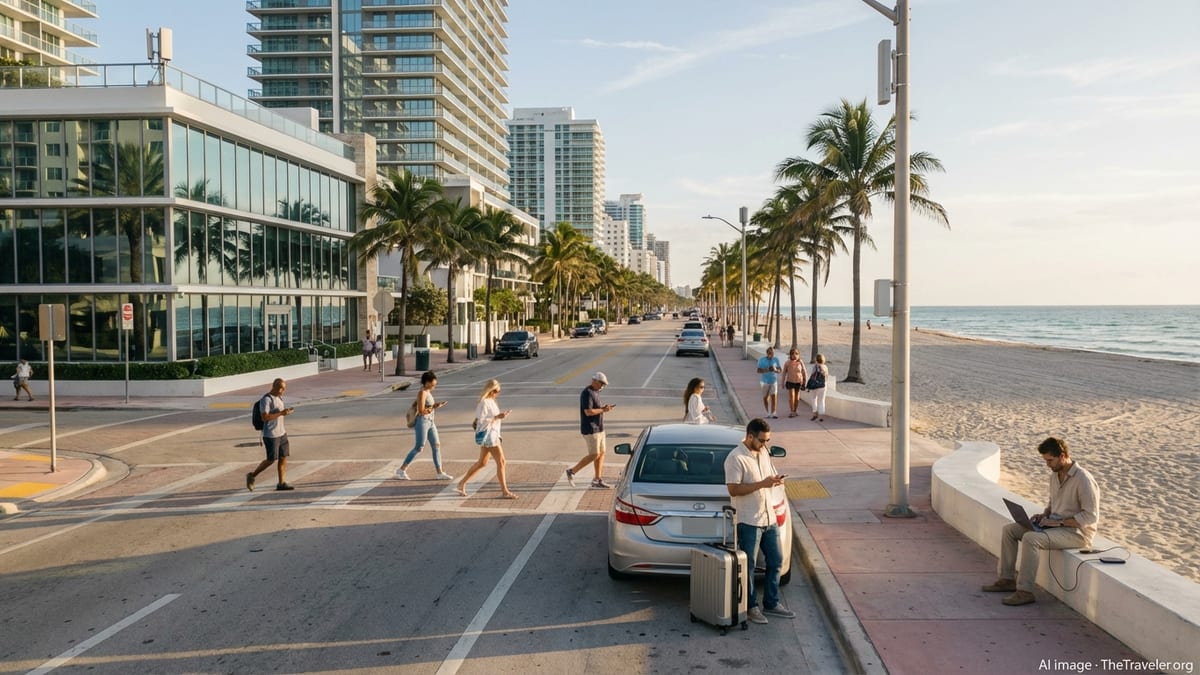
How Mobile Networks Work in Florida
Florida sits at the heart of several of the strongest mobile networks in the United States, which makes staying online straightforward for most travelers. The state is served primarily by the national operators AT&T, T Mobile and Verizon, plus an increasing number of smaller providers and cable brands that resell access to those big networks. For a visitor, this usually translates into solid 4G LTE coverage in cities and along major highways, with rapidly expanding 5G in and around metropolitan areas.
In practical terms, you will notice the differences most in speed and consistency rather than basic signal availability. Built up areas like Miami, Orlando, Tampa, Fort Lauderdale and Jacksonville tend to have dense 5G coverage with high capacity, so streaming, video calls and navigation are smooth even at peak times. Suburban communities and popular coastal strips typically fall back on a mix of 4G and 5G, while rural interior counties, wetlands, and Everglades areas may offer slower 4G or patchy service.
Many secondary brands, often called mobile virtual network operators, rely on the same underlying towers as the major carriers. This means a prepaid brand that uses, for example, the T Mobile or Verizon network will usually mirror those coverage footprints across Florida, though speeds can be deprioritized when the network is congested. For most short term travelers, these brands can be a good value, especially if you mainly need data and do not mind slightly lower priority during busy hours.
One important distinction in Florida is between outdoor and indoor coverage. Concrete high rises, hotel towers and heavily air conditioned malls can weaken signal, especially higher frequency 5G bands. You may see your device jump between 5G and 4G inside buildings or elevators. This is normal and usually not a cause for concern as long as you still have a few bars of service for calls and data.
Florida Coverage: Cities, Beaches and Road Trips
Travelers visiting Florida’s cities will generally have an easy experience. Urban centers such as Miami, Orlando and Tampa are priority markets for all major operators, and their 5G and 4G footprints cover most neighborhoods, airports and tourist districts. You can expect strong data performance in places like Miami Beach, Downtown Miami, Brickell, Orlando’s tourism corridor around International Drive and Lake Buena Vista, and Tampa’s waterfront and central districts.
Florida’s famed beaches are also well covered, but performance can vary depending on how built up the coastline is. Developed areas such as Miami Beach, Fort Lauderdale Beach, Clearwater Beach and St. Pete Beach usually benefit from multiple nearby towers and modern 5G deployments. More remote stretches of sand, state park beaches and sections of the Gulf Coast that are less densely populated may have fewer towers, which can mean lower speeds on busy weekends or holidays when many people are connected at once.
Road trips tell a more mixed story. Interstates like I 95 along the Atlantic coast and I 75 across the state offer extensive coverage for navigation and streaming, but coverage can thin out on smaller state roads, in the Big Cypress and Everglades region, and in parts of the Panhandle away from the main towns. In these areas, you may see your phone drop back to 4G or even lose data intermittently. Offline maps and pre downloaded playlists are helpful if you plan long drives in remote regions.
Island style destinations require a bit more patience. The Florida Keys, for example, are linked by a single highway that runs across bridges and low lying islands. Coverage exists along the route, but signal quality may fluctuate as you move between populated keys and stretches of open water. Around Key West itself, all major carriers have a footprint, but speeds can vary with visitor numbers. The same pattern holds for barrier islands and smaller coastal communities along both coasts.
Buying a Physical SIM Card in Florida
For travelers who prefer a traditional plastic SIM card, Florida offers numerous purchase points. Major carriers operate branded stores in malls and retail strips across the state, and these locations typically sell prepaid starter kits that include a SIM and a short term plan. You will also find prepaid SIMs from large carriers and virtual operators in electronics stores, big box retailers, pharmacies and some supermarkets. Staff can often help you with basic setup if you are not familiar with US phone settings.
At airports, the situation varies. Large hubs such as Miami International, Orlando International and Tampa International usually have at least one electronics or travel shop carrying prepaid SIMs or devices, but the prices in terminals can be higher and the selection more limited than in town. If you can manage a short trip to a mall or carrier store after arrival, you may find better value and more flexible data options. Factor in your arrival time and energy level when deciding whether to buy immediately at the airport or wait.
When buying a SIM card, you will typically need your passport and an unlocked phone that supports US bands. Most modern devices from Europe, Asia and Latin America work well, but it is sensible to confirm your phone is unlocked with your home provider before travel. At the store, you can usually choose between plans that focus on unlimited data with some throttling after a threshold, or fixed data allotments at a lower price. For stays of one to four weeks, prepaid unlimited or mid sized data bundles are often the most convenient.
Activation is usually quick. Staff can insert the SIM, scan a barcode and help you select or top up a plan. In many cases the line becomes active within a few minutes, though it can occasionally take a bit longer for data to kick in fully. Make sure you test both calls and data before leaving the shop, and keep the SIM card packaging, as it often includes your new number and support information.
Using eSIM in Florida for a Seamless Arrival
eSIM, the digital version of a SIM card that is built into your phone rather than a removable plastic chip, has become one of the most convenient options for visitors to Florida. Many recent iPhone and high end Android models now support one or more eSIM profiles, allowing you to download a plan before you leave home and arrive in Florida already connected. This can be especially useful if you want to order a ride share, access hotel confirmations or use maps immediately after landing.
There are two main paths for using eSIM in Florida. First, some US carriers sell prepaid eSIM plans directly, which can be purchased online and activated through an app or QR code. Second, global eSIM platforms offer travel focused data packs that work throughout the United States, including Florida. These travel eSIMs usually provide data only, while calls run over internet based apps. Both approaches allow you to keep your home physical SIM in the phone for emergencies or authentication texts, while using the eSIM for local data at a predictable price.
Most eSIM plans for the United States are structured by data volume or number of days, such as a certain number of gigabytes over a week or two. For typical tourist use, including maps, messaging, social media and occasional video calls, a medium sized package is often enough, provided you connect to hotel or cafe Wi Fi when convenient. If you plan to upload large amounts of video, stream high quality content or work remotely, choosing a higher data allowance or a domestic style plan from a main carrier may be more suitable.
Installation is usually straightforward. After purchasing, you receive a QR code or a set of activation instructions. On your phone, you open the mobile data or cellular menu, select the option to add an eSIM, and either scan the QR code or follow the app prompts. The profile downloads in a minute or two, and you can then select whether to use it for data only or for both calls and data if the plan supports voice. Always check roaming and hotspot rules in the app so you understand any limitations on tethering or data sharing.
Costs, Roaming and How to Avoid Bill Shock
While Florida has excellent mobile infrastructure, costs can be confusing, particularly for international travelers used to different billing practices at home. Roaming with your home carrier is often the most expensive approach, especially if you leave data roaming on without a capped travel pass. Many visitors return home to discover their phone has quietly used data in the background for maps, cloud backups or app updates, leading to unexpectedly high bills.
Using a US based prepaid SIM or eSIM usually brings costs down and makes them easier to predict. Prepaid plans normally have a fixed price with clearly advertised data or usage limits, and they simply stop or slow down once that limit is reached. There are no surprise overage fees in the way postpaid contracts can sometimes impose. Prices vary widely by brand, but travelers can often find competitive short term packages aimed at tourists or heavy data users.
To keep costs in check, it helps to adjust settings on your device as soon as you connect to a new US plan. Turning off automatic video autoplay in social apps, limiting background data for non essential applications, and downloading offline maps for Florida in advance can all reduce your data consumption. When on hotel or vacation rental Wi Fi, backup photos, update apps and download media there, keeping mobile data for when you are out exploring.
If friends or family need to reach you by voice, internet based calling and messaging apps are usually the simplest solution. They run over your data connection and do not use international voice minutes. Be mindful, though, that high definition video calls consume significantly more data than text chats or audio calls. For important work meetings, it may be worth joining from a strong Wi Fi connection instead of relying solely on mobile data, especially if you are near the end of a smaller data package.
Practical Tips for Staying Connected Around Florida
Beyond choosing the right SIM card or eSIM, a few practical habits will make your connected life in Florida simpler. First, think about how many devices you truly need online. If you are traveling with a laptop and tablet but mostly use your phone while out and about, consider using your phone’s hotspot sparingly for quick tasks, and rely on accommodations or coworking spaces for heavier laptop use. This approach keeps your data usage concentrated on one mobile line, which is easier to monitor.
Second, plan around known coverage weak spots, especially if you are heading into nature. The Everglades, some state parks, and stretches of inland countryside do not always have reliable mobile internet. Download maps, permits and trail information in advance, and let someone know your plans if you will be out of coverage for several hours. Your phone’s offline GPS will continue to work even without a data signal as long as you have the maps stored locally.
Third, pay attention to battery life, which can drain faster when your device searches for a signal or maintains high speed 5G connections. Carrying a small power bank on long days out in the sun is a smart idea, particularly if you are relying on your phone for navigation, digital tickets and payment apps. Florida’s heat and humidity can also reduce battery performance, so avoid leaving your phone on dashboards or in direct sun for extended periods.
Finally, remember that Wi Fi remains an important part of the connectivity puzzle. Many hotels, vacation rentals, cafes and attractions provide guest networks, some free and some with simple registration. Speeds range from basic browsing levels to fast enough for streaming and video calls, and they can help stretch a smaller mobile data plan. As always, avoid accessing sensitive financial accounts on unsecured public networks, or use a trusted security app if you must.
The Takeaway
Florida is a highly connected destination, and with a bit of planning, travelers can enjoy fast and affordable mobile internet throughout their stay. The state’s major cities and resort areas benefit from extensive 4G and 5G coverage from national carriers, while more remote parks and islands may require offline maps and some patience. Choosing between a physical SIM and an eSIM largely comes down to convenience and device compatibility, with eSIMs offering a smooth arrival experience for modern phones.
For most visitors, a prepaid US based plan, whether from a main operator or a reputable travel provider, offers the best balance of price and control. It reduces the risk of roaming bill shock and lets you focus on exploring beaches, theme parks and wildlife rather than worrying about data meters. By understanding the basics of Florida’s coverage landscape, tuning your phone settings and using Wi Fi wisely, you can stay connected when it matters and disconnect when you choose.
Approach your mobile setup with the same care you give to flights and accommodation, and the result is a smoother, less stressful trip. Whether you are working remotely under palm trees or simply sharing sunset photos from the Gulf Coast, reliable internet access will feel like one more part of the Florida welcome.
FAQ
Q1. Do I really need a local SIM or eSIM for a short trip to Florida?
For many travelers, a local SIM or eSIM is the simplest way to get predictable data costs, but if your home carrier offers a reasonably priced US roaming pass, you may be comfortable using that for very short stays.
Q2. Can I buy a SIM card on arrival at Florida airports?
Some major airports in Florida have shops selling prepaid SIM cards, though prices and choice may be limited. You will usually find better value and more options by visiting a carrier or electronics store in the city.
Q3. Will my unlocked phone from abroad work with Florida networks?
Most modern unlocked smartphones from Europe, Asia and Latin America function well on US networks, but it is wise to confirm your device supports US frequency bands and is fully unlocked before departure.
Q4. Is 5G widely available in Florida?
5G coverage is extensive in major cities and many populated areas of Florida, but you may see your device switch between 5G and 4G in buildings, on highways or in rural regions.
Q5. Are eSIMs cheaper than physical SIM cards in Florida?
Prices depend on the provider and plan, not the format of the SIM. Some travel eSIMs can be very competitive, while local prepaid physical SIMs may offer good value for longer stays.
Q6. Can I keep my home number active while using a US eSIM?
Yes, if your phone supports multiple lines, you can usually keep your home SIM active for texts and calls while using a US eSIM for data, as long as you control roaming settings.
Q7. How much mobile data do I need for a week in Florida?
Typical travelers who use maps, messaging and social media but rely on Wi Fi when possible often find a moderate data package sufficient for a week, while heavy streamers or remote workers may need a larger allowance.
Q8. Is mobile coverage reliable in the Florida Keys and Everglades?
There is coverage along main roads and in towns, but signal and speeds can be weaker between islands and in remote wetlands, so offline maps and advance planning are helpful.
Q9. Can I use my Florida data plan as a hotspot for my laptop?
Many prepaid and travel plans allow hotspot use, but the rules vary, so it is important to check the specific terms of your plan before relying on tethering for work.
Q10. What is the safest way to use public Wi Fi in Florida hotels and cafes?
Public Wi Fi is fine for general browsing and streaming, but for sensitive tasks like banking, consider using mobile data or a trusted security app to reduce risks.