

Staying connected in Germany has become significantly easier in recent years, but the landscape of SIM cards, eSIM options, roaming rules, and public WiFi can still be confusing for visitors. Whether you are planning a city break in Berlin, a rail journey through Bavaria, or a long work stay, understanding how to get reliable and affordable internet access will save you time, stress, and money once you arrive.
Mobile Networks and Coverage in Germany
Germany has one of Europe’s most advanced mobile infrastructures, particularly in cities and along major transport routes. The three main network operators are Deutsche Telekom, Vodafone Germany, and Telefónica Germany (often marketed as O2). Together they provide extensive 4G coverage and fast expanding 5G networks, with urban 5G availability now reaching well over 80 percent and coverage in the largest cities often above 90 percent. For most travelers, this means smooth navigation, social media, and video calls in and around major destinations, with occasional slower speeds in remote rural areas or deep valleys.
Deutsche Telekom generally offers the widest and fastest coverage, especially in large cities and business hubs. Vodafone is strong in many metropolitan areas and focuses heavily on key transport corridors, including major highways and rail routes. O2 tends to provide slightly more budget-friendly offers while still delivering solid performance in cities, though its rural coverage can be patchier. For short-term visitors who stick mostly to urban areas and major tourist regions, any of the three networks will usually provide reliable service.
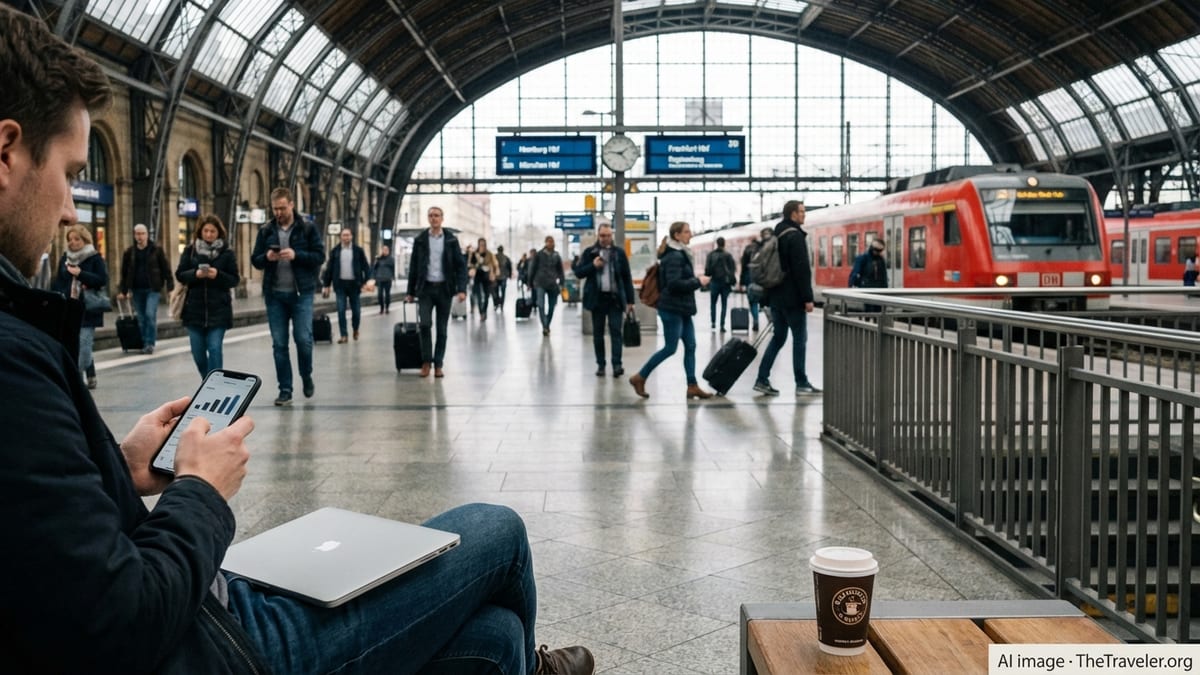
Germany’s dense transport network also benefits from good connectivity. Mobile reception is typically strong at airports, large railway stations, and on high-speed trains, although tunnels and very remote stretches can still cause brief dropouts. 5G is increasingly common at transport hubs and in central districts of cities such as Berlin, Munich, Hamburg, and Frankfurt, which is helpful if you plan to use data-heavy apps like cloud storage or HD video conferencing while on the move.
That said, Germany is not entirely free of dead zones. In some rural regions, forested areas, or small villages, you may find coverage limited to 3G or basic 4G speeds, and in rare cases voice-only service. If you plan road trips into the countryside, downloading offline maps and key documents in advance remains a sensible backup.
Understanding Roaming Rules for EU and Non‑EU Travelers
Germany follows the European Union’s “roam like at home” framework for mobile roaming within the EU and closely associated countries. If you hold a SIM card from another EU or European Economic Area provider, in most cases you can use your phone in Germany with the same domestic tariffs you pay at home. Calls, texts, and mobile data typically come out of your usual allowance, although operators may impose fair-use caps on very heavy roaming data use. This has removed the shock of sky-high roaming bills for most EU-based travelers.
For visitors arriving from outside the EU, including the United States, Canada, the United Kingdom, Australia, and many Asian countries, roaming charges depend entirely on your home provider. Some carriers sell add-on passes for daily or weekly roaming in Europe, which can be convenient but often work out more expensive than buying a local SIM or eSIM, especially if you plan to use a lot of data. It is vital to check your home network’s current roaming rates for Germany before departure, and to confirm whether 5G roaming is supported or limited to 4G.
A small number of non-EU countries have or are developing closer roaming arrangements with the EU, which gradually lower surcharges. From 2026, for example, EU-level decisions extend roam-like-at-home benefits to Moldova and Ukraine, allowing subscribers in those countries to use their phones in the EU, including Germany, without extra roaming fees and vice versa. However, these arrangements are specific to those national providers and do not apply to visitors from other regions.
Because roaming policies and promotional offers can change frequently, especially after mergers, regulatory adjustments, or currency shifts, treating your provider’s information as the single source of truth is prudent. Even if your contract advertises “Europe roaming included,” carefully read the fine print for any daily usage caps, fair-use limits, or restrictions on tethering before you rely on roaming as your main connection in Germany.
Prepaid SIM Cards in Germany: What Visitors Should Expect
Prepaid SIM cards remain a popular and cost-effective way to get connected in Germany, especially for travelers staying more than a few days. Prepaid offers are widely available from the three main networks and from numerous budget brands that use their infrastructure. You will find starter packs in official carrier shops, electronics stores, large supermarkets, and many kiosks at major train stations and shopping centers. Airport shops also sell SIM cards, though prices can be slightly higher than in the city.
German prepaid plans typically bundle a fixed volume of high-speed data with national minutes and texts over a 28- or 30-day period. As of 2025 and early 2026, data allowances for mainstream prepaid packs are often generous enough for typical tourist use, covering mapping, social media, messaging, and some streaming. Activation usually requires your passport or ID because of Germany’s strict registration rules, and you may be asked to complete a brief video identification or in-store verification before the SIM becomes active.
While exact prices shift over time, prepaid data in Germany is generally competitive within Europe, though not the absolute cheapest. Basic tourist-friendly packages tend to offer several gigabytes of data, with the larger bundles more suitable for remote work, frequent video calls, or heavy streaming. Top-ups can be purchased in-store at supermarkets or kiosks, via vouchers, or digitally through apps and online accounts linked to your SIM provider.
Most prepaid SIMs support at least 4G LTE, and many now also allow 5G access in compatible phones, especially when you choose offers directly from the main networks. If you need to share your connection with a laptop or tablet, personal hotspot and tethering are widely permitted on consumer plans, reflecting European rules that prevent mobile operators from restricting tethering through contract clauses.
eSIM Options: Digital Connectivity for Modern Travelers
For many visitors, eSIM has become the most convenient way to get connected in Germany. An eSIM is an embedded digital SIM inside your smartphone, tablet, or laptop that can be activated remotely using a QR code or app, without inserting a physical card. Most recent iPhone and high-end Android models, as well as many modern laptops and tablets, now support eSIM, which allows you to add a German or regional data plan on top of your regular number.
There are two broad types of eSIM offers relevant to Germany. First, several global eSIM providers sell regional or worldwide data packages that include Germany. These plans can often be purchased online before travel, then activated just before or upon arrival. Many of them are data-only and do not include a local phone number, but they are popular for their simplicity, especially for travelers visiting multiple European countries on the same trip, as one plan can cover most of the continent.
Second, a growing number of traditional mobile operators and digital brands offer local or Europe-wide eSIM plans that are specifically optimized for use within the region. In Germany’s case, some of these eSIMs provide strong 5G performance and are designed with travelers in mind, combining decent data allowances with reasonable validity periods. Activation is generally straightforward: you receive a QR code by email or through an app, scan it with your device, and the eSIM profile installs automatically so that your phone connects once you reach Germany.
When choosing between providers, consider whether you need only data or also a local number for calls and SMS. Certain modern global eSIM plans now include a local phone number in addition to data, which can be useful for verifying accounts that require text messages, contacting accommodation hosts, or receiving calls from local businesses. However, if you rely heavily on voice calls within Germany, a traditional prepaid SIM or a hybrid plan that includes minutes may still offer better value.
Buying and Activating SIM or eSIM in Practice
Purchasing a physical SIM card in Germany is relatively simple, though it can take a little longer than in some other countries due to identity verification rules. At a carrier shop or major electronics retailer, you choose a prepaid package, show your passport or ID, and sign a brief registration form. Staff usually complete the activation process for you and may help configure APN settings if required, though most modern smartphones detect these automatically. In supermarkets or kiosks, you might receive a starter pack and then complete online or video verification at your accommodation shortly after.
For eSIM, the entire process can typically be completed online. Once you buy a plan from a global or local provider, you receive a QR code or a link within an app. On your compatible device, you open the mobile data settings, select “add eSIM” or “add mobile plan,” and scan the code. The eSIM profile is then downloaded and installed. Many providers allow you to install it days or weeks before your trip, with the plan’s validity beginning only after it first connects to a network in Germany, though policies vary so you should check the start conditions before purchase.
Keeping your home SIM and adding a German eSIM is often the most flexible configuration. This way you retain your primary number for banking codes and messages while routing data through the local eSIM. Most modern smartphones let you choose which line handles data and which line handles calls and texts, and you can usually switch data back to your home SIM temporarily if needed. Make sure to disable data roaming on the home SIM if you want to avoid accidental roaming charges.
In all cases, double-check whether your phone is unlocked before you travel. Many North American carriers now sell devices unlocked or will unlock them upon request once certain contract conditions are met, but older or subsidised handsets may still be restricted. An unlocked, eSIM-capable smartphone gives you the broadest choice and usually delivers the most cost-effective connectivity in Germany.
Public WiFi, Hotspots, and Internet Access on the Move
For years, Germany had a reputation for limited and inconvenient public WiFi, in part because providers feared legal liability if users committed copyright infringements on their networks. Regulatory changes in the late 2010s reduced this liability and encouraged businesses and municipalities to offer more open access, resulting in a slow but steady expansion of free or low-cost hotspots in many cities. While Germany is still less saturated with free WiFi than some neighbouring countries, visitors will now find it much easier to get online without using mobile data.
Major airports, many train stations, and a growing number of long-distance trains provide complimentary or time-limited WiFi. In larger cities, municipal networks and projects such as community-led wireless initiatives add thousands of access points, particularly in central squares, libraries, and cultural venues. Speeds can range from modest to quite fast depending on location and network load, but they are usually sufficient for messaging, light browsing, and checking travel information.
The hotel and hospitality sector has also caught up. It is now standard for mid-range and upscale hotels to offer WiFi included in the room rate, often with reasonable speeds suitable for streaming and video calls, although performance can still vary in older buildings or during peak evening use. Cafes, coworking spaces, and many restaurants provide WiFi for customers, sometimes with a password printed on receipts or displayed at the counter. Staff are accustomed to foreign visitors asking for the password in English.
Despite these improvements, relying solely on public WiFi in Germany is rarely ideal. Networks may require repeated logins, may be absent in suburbs or small towns, and can be congested at busy times. Moreover, public WiFi is inherently less secure, so using a reputable VPN and avoiding sensitive operations such as online banking on open networks is advisable. A modest local data plan or eSIM, combined with occasional WiFi use, offers a far more reliable experience.
Using Your Phone as a Hotspot and Staying Secure
Most consumer mobile plans in Germany allow personal tethering, meaning you can turn your phone into a WiFi hotspot for your laptop, tablet, or travel companions’ devices. European net neutrality rules and court decisions have made it difficult for operators to ban tethering through contract clauses, and large German carriers have adjusted their terms accordingly. As long as you stay within your data allowance or fair-use policy, using your phone as a hotspot is considered normal usage.
Tethering is particularly useful if you are working remotely from a rental apartment, riding a long-distance train without functional WiFi, or sharing a connection with family members who do not have their own SIM. When doing so, keep an eye on your data consumption: activities such as video conferencing, cloud backups, and streaming in high resolution can quickly consume large portions of even generous data bundles. Many carriers’ apps provide real-time usage tracking, and most phones allow you to set warnings at specific data thresholds.
Security is another important consideration. Public WiFi networks in stations, airports, and cafes are more vulnerable to eavesdropping and attacks than private connections. Whenever possible, enable encryption on your personal hotspot, use strong passwords, and limit sharing to trusted devices. When connecting to external WiFi, especially open networks with no password, using a well-regarded VPN service, keeping your system software updated, and avoiding the transmission of sensitive data will significantly reduce risk.
For travelers who handle confidential work information, combining a local SIM or eSIM with encrypted personal tethering is often the safest solution. This setup limits your dependence on unknown public networks, offers a stable connection for online meetings, and gives you more control over who and what connects through your device.
Money‑Saving Tips and Practical Advice
Choosing the best way to get online in Germany depends on how long you are staying, how many countries you will visit, and how heavily you use data. Short visitors who spend only a few days in one or two cities might find that a modest eSIM data package or an EU roaming add-on from their home provider is sufficient, especially if they primarily use WiFi in hotels and cafes. Longer trips or itineraries that include multiple European countries usually benefit from a regional eSIM or a local SIM with generous data.
If your phone supports dual SIM with eSIM, a good strategy is to keep your home number active for calls and banking codes while adding a German or Europe-wide eSIM for data. This often eliminates the need for expensive roaming passes and makes budgeting easier, as you know exactly how much data you have purchased. Remember to turn off data roaming on your home line to avoid accidental background usage, which can be costly outside the EU.
Before purchasing any plan, think realistically about your daily data needs. Navigation apps, messaging, and casual browsing use relatively little data, while music and video streaming, large app downloads, and frequent video calls quickly multiply consumption. Opting for a slightly larger data bundle than your minimum estimate is wise, as topping up mid-trip can be more expensive or time-consuming than buying an appropriate plan from the outset.
Finally, keep all documentation relating to your SIM or eSIM purchase, including receipts, QR codes, and any PIN or PUK numbers. If you lose your phone or need to reinstall an eSIM profile, these details may be essential. Storing them in a secure cloud folder or password manager gives you peace of mind and allows you to recover quickly if anything goes wrong during your travels.
The Takeaway
Germany has become a far more welcoming destination for connected travelers than it was a decade ago. Robust 4G and rapidly expanding 5G networks, widespread availability of prepaid SIMs, and a flourishing market for eSIM plans all make it easier to stay online without overspending. While public WiFi still lags behind some European neighbours in density, the combination of hotel, cafe, and municipal networks usually covers casual needs, especially when supplemented by a modest mobile data plan.
For most visitors, the optimal strategy is to use a local or regional eSIM or prepaid SIM for data while retaining their home number for essential calls and messages. Understanding EU roaming rules, checking your carrier’s fine print, and budgeting realistically for data will prevent unwelcome surprises on your bill. With a little preparation, you can navigate Germany’s cities and countryside, share your experiences in real time, and manage work and personal life on the road without worrying about connectivity.
FAQ
Q1: Do I need a German SIM card if I have an EU phone plan?
In many cases you do not, because EU “roam like at home” rules let you use your domestic allowances in Germany, although fair-use limits may still apply.
Q2: Is eSIM widely supported in Germany?
Yes. Modern smartphones and many mobile operators and global providers support eSIM, and Germany’s networks handle eSIM data and 5G connections much like physical SIM cards.
Q3: Can I buy a prepaid SIM card at German airports?
At major airports you will usually find carrier shops or electronics stores selling prepaid SIM starter packs, though buying in the city can offer a wider choice and slightly better prices.
Q4: How much data do I need for a one‑week trip to Germany?
Light users who mainly message and navigate often manage with a few gigabytes, but adding a buffer for photos, social media, and occasional streaming is sensible for most travelers.
Q5: Is public WiFi in Germany free and reliable?
Public WiFi is increasingly available in airports, stations, hotels, and cafes and is often free, but reliability and speed can vary, so it is best seen as a supplement to mobile data.
Q6: Can I use my phone as a hotspot in Germany?
Yes. Personal tethering is generally allowed on German mobile plans, as long as you stay within your data allowance and respect any fair-use policies.
Q7: Are there any security concerns with using WiFi in Germany?
Security risks are similar to those elsewhere. Open public networks are less secure, so using a VPN and avoiding sensitive transactions on unsecured WiFi is recommended.
Q8: What should I check before relying on roaming in Germany?
Confirm current roaming prices, data caps, and fair-use policies with your provider, and verify whether 5G roaming is included or if you will be limited to 4G speeds.
Q9: Will my North American phone work on German networks?
Most recent unlocked phones from North America support European frequency bands and work fine, but checking compatibility and ensuring the device is unlocked before travel is important.
Q10: Is it better to get a local SIM or an international eSIM for Germany?
Local SIMs can be cost-effective for longer stays in Germany alone, while international or regional eSIMs are convenient if you plan to visit multiple European countries on one trip.