

More news on this day
A new interoperable digital identity system for seafarers is moving from pilots to real-world deployment, promising to accelerate crew processing, cut port delays and modernize how maritime workers prove who they are at sea and ashore.
Get the latest news straight to your inbox!
A Breakthrough Moment in Seafarer Identification
The launch of an interoperable digital identity for seafarers marks a significant step in the wider digitalization of global shipping. Building on biometric seafarer identity documents, digital certificates and secure wallets trialed over the past decade in Europe and Asia, the latest platforms are beginning to connect these elements into a single, verifiable identity that can be recognized across borders and IT systems.
According to publicly available information from maritime technology providers and national administrations, the new solutions act as a digital passport and credentials wallet in one. A seafarer can carry verified certificates of competency, training records and medical clearances on a smartphone or secure token, rather than a bundle of paper documents and plastic cards issued by different authorities.
Industry reports indicate that the current generation of systems is designed with interoperability at its core. They typically use international standards for digital identity, such as verifiable credentials and secure QR codes, so that port state control, shipping companies, crewing agencies and training institutions can all validate the same trusted record without needing to share underlying databases.
This shift is emerging as the maritime sector responds to tighter security expectations and the need for more resilient supply chains. As ports, customs and immigration move to fully digital maritime single windows, having a compatible, portable digital identity for seafarers is rapidly becoming a practical necessity rather than a distant ambition.
How the New Digital Identity Works in Practice
In operational terms, the interoperable digital identity functions as a secure wallet that holds multiple credentials issued by recognized authorities. When a seafarer is hired for a voyage, the shipping company can request access to specific verified records, such as certificates of competency or tanker endorsements. The seafarer can share only the relevant data, with cryptographic proofs confirming authenticity and validity.
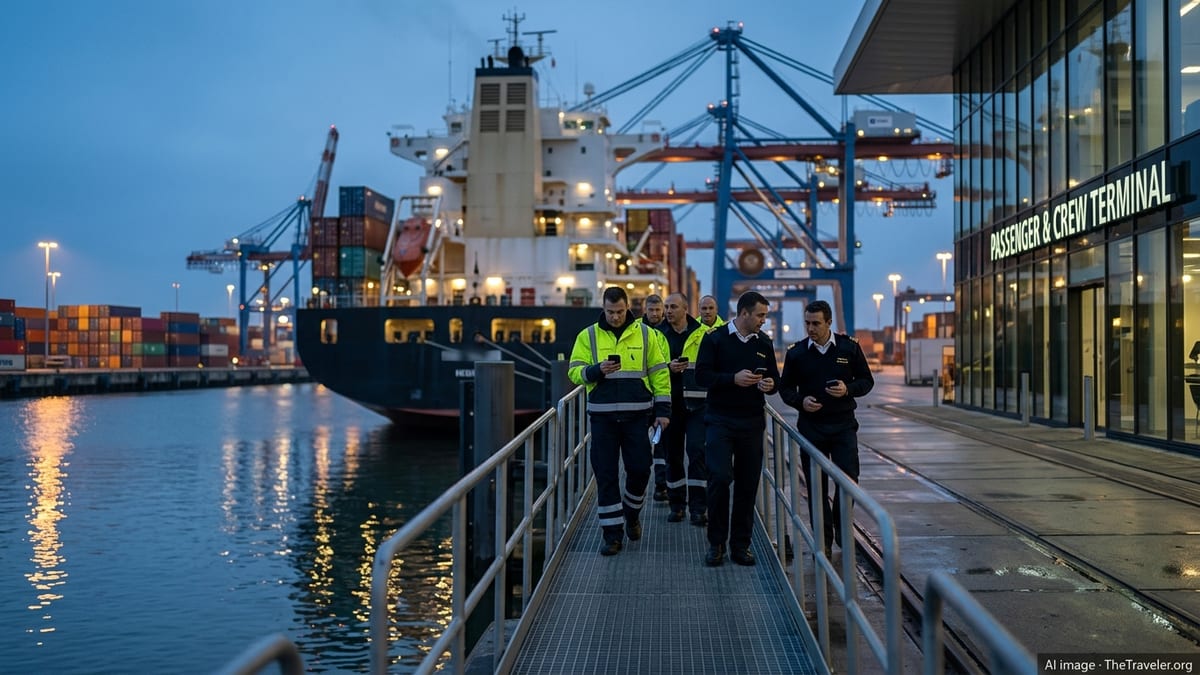
At ports, the system promises to reduce repetitive checks and manual form filling. Instead of copying passport details, seaman’s books and assorted certificates into separate port and immigration systems, officers can scan a code or read a secure token that instantly confirms identity and qualifications. This is intended to shorten clearance times for crew changes and shore leave, while still aligning with international conventions on seafarer identity and security.
The architecture is generally designed to work even in low-connectivity maritime environments. Reports on pilot projects show that identity data can be stored locally on the device and validated offline using pre-loaded keys, with synchronization occurring when a network is available. This offline capability is particularly important for long voyages, remote ports and smaller vessels that may not have constant broadband connectivity.
Cybersecurity is another core feature. Publicly available technical material describes layered encryption, hardware security modules and strict access controls built into the platforms. The goal is to ensure that if a device is lost or stolen, personal and professional data remain protected, and credentials can be revoked and reissued without disrupting a seafarer’s ability to work.
Implications for Ports, Shipowners and Global Operations
For ports and terminal operators, the arrival of interoperable seafarer identities aligns with the wider push toward intelligent, paperless port calls. When combined with digital crew lists and automated reporting through maritime single window systems, digital identities can support faster arrival clearance, real-time risk assessment and better coordination between port, immigration and security agencies.
Shipowners and managers are likely to see operational benefits in crew management and compliance. Maintaining up-to-date training and medical records across a global fleet is a complex task, especially when crew members work under different flags and with multiple manning agencies. A unified digital identity allows companies to check credential status in seconds, helping to avoid unplanned delays due to missing or expired documents.
The new systems may also ease the pressure on seafarers themselves. Instead of carrying a stack of original documents and repeatedly filling out forms, they can maintain a single, portable identity that follows them from one contract to the next. Public discussions among seafarers have long highlighted the administrative burden of current practices; a trusted digital record that travels with the individual could reduce that friction and improve mobility in a tight global labor market.
On a strategic level, interoperable digital identities support the maritime sector’s broader transition to data-driven operations. As shipping companies adopt more connected systems on board and ashore, having a consistent and secure way to identify people alongside ships and cargo becomes foundational for future automation and advanced analytics.
Alignment with Global Digital Identity and Regulatory Trends
The move toward a common seafarer digital identity is unfolding alongside major initiatives in wider digital identity policy. In regions such as the European Union, regulators are rolling out interoperable digital identity wallets that allow citizens to use verifiable credentials across borders and services. Maritime-focused projects are drawing on similar standards and governance models to ensure that seafarer identities can plug into national and regional frameworks without creating parallel, incompatible systems.
International organizations have been updating guidance on e-certification, data exchange and port digitalization, encouraging authorities to accept electronic documents where security and authenticity can be demonstrated. As more flag states pilot digital certificates for competency and proficiency, the logical next step is an identity layer that can handle cross-border trust, so that a credential issued in one country can be reliably verified in another.
Legal and privacy considerations remain central. Publicly available policy discussions emphasize the importance of clear roles and responsibilities between issuing authorities, platform providers and employers. Seafarers need assurances that they control how their personal data are shared, that information is only used for legitimate purposes such as safety and compliance, and that they have recourse if data are mishandled.
Standardization efforts are therefore focused not only on technical interoperability, but also on governance, liability and data protection. The aim is to avoid a fragmented landscape of proprietary solutions and instead create a trusted ecosystem where multiple certified providers can operate within shared rules.
Next Steps and What Travelers Should Expect
In the near term, most of the impact will be felt behind the scenes of global travel rather than at the passenger-facing level. As more ports and shipping companies adopt interoperable digital identities for crew, travelers may notice smoother port operations, fewer delays linked to crew documentation issues and more resilient shipping schedules supporting tourism supply chains.
Regions with strong digital public infrastructure and active maritime technology sectors are likely to see faster rollout of the new systems. Early adopters are already experimenting with fully digital crew workflows, from remote identity proofing and contract signing to automated reporting to flag and port authorities. These experiences will shape best practices and help refine standards before broader global uptake.
For seafarers, awareness and training will be critical. Industry bodies and training institutions are beginning to integrate digital identity literacy into their programs, ensuring that new entrants understand how to manage their digital credentials securely and existing crew can transition from paper-based processes with confidence.
As interoperable digital identity moves from pilot to production, it is poised to become a foundational layer of global maritime operations. While many details will continue to evolve, the direction is clear: fewer physical documents, more trusted data, and faster, more predictable movements for the people who keep international shipping and travel moving.