

More news on this day
A new wave of digitalization in global shipping has reached a milestone with the launch of the first interoperable digital identity systems for seafarers, a development that aims to streamline crew movements, reduce paperwork at ports and strengthen security across international maritime operations.
Get the latest news straight to your inbox!
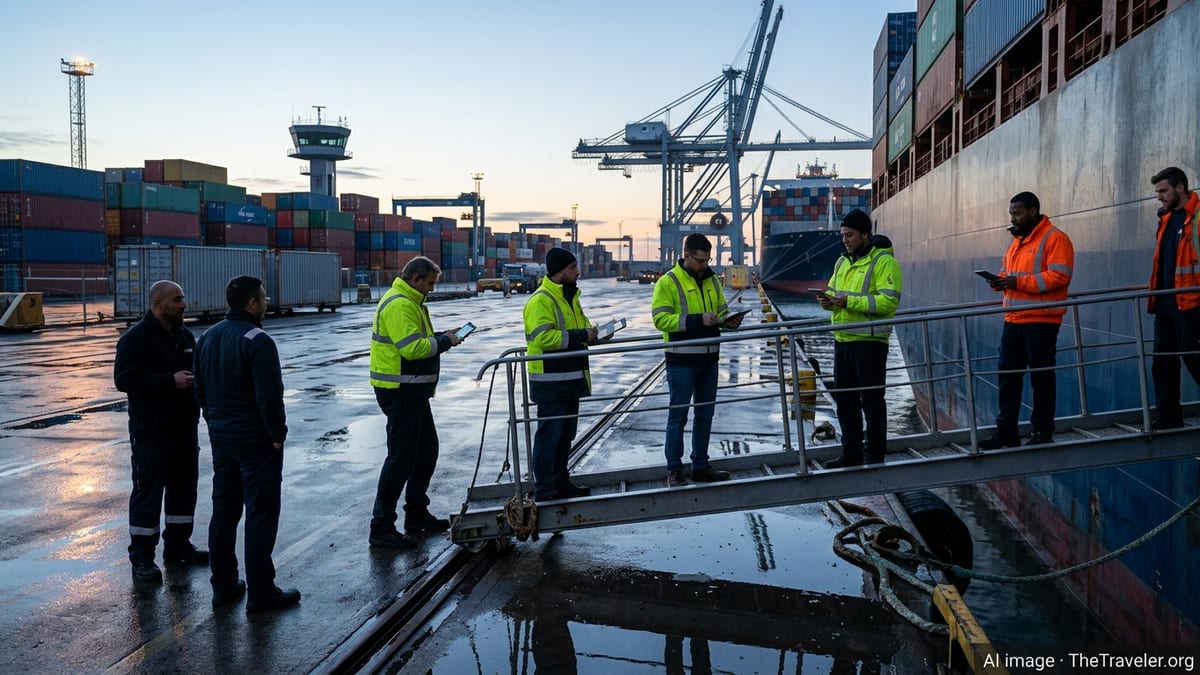
A Breakthrough Moment in Maritime Digital Identity
The move toward interoperable digital identity for seafarers builds on several recent initiatives that seek to replace fragmented paper documents and proprietary databases with secure, verifiable digital credentials. Publicly available information shows that emerging platforms such as Maritime Passport and new fully digital seafarer record books are positioning themselves as global reference points for how seafarer data can be stored, shared and authenticated in real time across borders.
Reports indicate that these systems are designed as digital wallets, holding identity details, qualifications and sea-service records in a single secure environment that can be accessed by crew, shipowners and regulators. The emphasis on interoperability means that credentials issued under different national or corporate schemes can be read and verified through common standards, rather than remaining locked in isolated systems that require manual checks.
Industry coverage suggests that this shift is being enabled by advances in self-sovereign identity technologies, biometric verification and stronger encryption tools that allow personal data to be shared selectively. Instead of physically presenting multiple booklets and certificates in every port, seafarers will be able to use one digital identity that can be recognized and validated by a range of approved stakeholders across the maritime ecosystem.
Faster Crew Changes and Leaner Port Calls
One of the most immediate impacts for travel and trade is expected to be in the area of crew changes and port-call efficiency. Since 2024, the International Maritime Organization’s Maritime Single Window requirement has pushed governments and ports toward unified digital platforms for ship reporting. The addition of interoperable crew identities offers a way to connect the people dimension directly into these workflows and reduce delays caused by manual document checks and inconsistent formats.
According to published coverage of recent digital record book initiatives, shipowners and crew managers anticipate notable time savings when verifying qualifications, endorsements and medicals for crew joining or leaving vessels. Automating these checks through trusted digital identities could help shorten turnaround times in busy hubs where hundreds of seafarers may transit through airports, hotels and terminals every day, often on tight connection schedules.
For ports, the availability of standardized, machine-readable identity data promises fewer bottlenecks at security checkpoints and immigration counters. Analysts of maritime digitalization note that crews frequently face repeated data entry for each authority, from port security to immigration to flag and port state control. Interoperable digital identities could allow pre-clearance of key details, with only targeted, risk-based inspections at the border, which in turn supports smoother flows for both crew and cargo.
Security, Compliance and Seafarer Welfare
The launch of interoperable digital identity schemes is also being framed as a security and compliance measure in an era of heightened scrutiny around supply chains and critical infrastructure. International labor and shipping organizations have long highlighted the need for reliable, tamper-resistant identity documents for crews, particularly in the context of the Seafarers’ Identity Documents Convention and evolving standards on biometric verification. Interoperable digital IDs are being developed to sit within this framework, maintaining clear audit trails while minimizing the risk of forgery.
Recent memoranda of understanding on digital certification and February 2026 updates from the International Chamber of Shipping outline how cloud-based platforms for seafarer certificates are intended to align with new training and watchkeeping rules that recognize electronic credentials. These efforts support port state control inspections and help companies demonstrate compliance with evolving international requirements without relying on physical files that can be lost or damaged.
Beyond security, advocates for digital identity in shipping also link these tools to seafarer welfare. During the pandemic and subsequent crew-change crises, fragmented documentation contributed to travel barriers and extended time at sea for many mariners. Mobility-focused maritime agendas now highlight digital IDs as a way to facilitate shore leave, repatriation and transit, ensuring that crews can move more freely when global disruptions or public health measures affect border controls.
Linking Maritime Identity to Wider Digital Trade Standards
The emergence of interoperable seafarer identities is closely connected to wider efforts to standardize digital identity and data exchange across international trade. Joint calls for digital trade standards by multilateral bodies refer to interoperable digital identity frameworks, such as the Legal Entity Identifier, as essential building blocks for a more automated and transparent supply chain. Maritime labor and crew data represent one of the more complex components of that picture, given the cross-border and multi-jurisdictional nature of shipping.
Research into trusted digital identity and recent technical work on interoperable architectures for verifiable credentials show that the same principles being tested for financial services and e-government are now being adapted to the maritime workforce. By making seafarer credentials machine-verifiable and portable, the shipping industry can plug into broader data spaces where customs, finance, insurance and logistics actors share information under common technical and governance rules.
Observers note that aligning seafarer IDs with these global standards could unlock benefits beyond port calls and crew changes. For example, more reliable, real-time visibility of crew competencies and manning levels supports safety audits, decarbonization planning and new training initiatives focused on alternative fuels and digital navigation. It also gives regulators clearer insight into who is working on which vessel, an increasingly important issue as remote operations and autonomous systems enter commercial use.
What Comes Next for Mariners and Maritime Hubs
Despite the momentum, experts caution that the transition to interoperable digital identities will not be instantaneous. Many flag administrations and port states still rely heavily on paper-based systems, and smaller operators may be slower to adopt new tools. Pilot projects are likely to run in parallel with legacy processes for some time, especially in regions where internet connectivity remains intermittent or regulatory frameworks for digital identity are still emerging.
Publicly available information on upcoming industry conferences and seminars suggests that 2026 will be a pivotal year for testing and refining these solutions. Events dedicated to digital navigation and crew management are giving interoperability, trust frameworks and identity wallets prominent space on their agendas, signaling that maritime stakeholders see digital identity as a core element of future-ready operations rather than a niche compliance topic.
For seafarers themselves, the new systems may gradually change the way careers are documented and recognized. Instead of carrying physical documents from ship to ship and company to company, mariners could manage a single digital profile that follows them worldwide, aggregating sea time, training and endorsements from multiple employers. If implemented with robust privacy safeguards and clear governance, the first interoperable digital identities for seafarers could mark the start of a more connected, efficient and worker-centric era for the global maritime workforce.