

More news on this day
Intrepid Travel is preparing to resume its small-group adventures in Egypt on April 1, marking a significant restart for Nile cruising and temple-hopping itineraries after a month-long pause triggered by wider regional instability.
Get the latest news straight to your inbox!
A Careful Restart After March Cancellations
The return of Intrepid’s Egypt program follows a temporary suspension of departures to Egypt, Jordan, Oman and Saudi Arabia from March 4 through March 31, 2026, introduced in response to escalating conflict in the wider Middle East and tightening government travel advisories. Publicly available information from the company’s travel alerts indicates that trips scheduled from April onward are currently expected to operate, with customers encouraged to review options with their booking agents if they prefer to delay.
The April 1 restart positions Egypt among the first major Middle Eastern destinations in Intrepid’s portfolio to move back toward normal operations. While some competing tour operators and river cruise brands have extended cancellations on Nile itineraries through late March, others are beginning to chart a cautious path forward as regional tensions show early signs of easing and airspace disruptions become more contained.
The decision to prepare for an April comeback reflects a broader recalibration across the travel industry. Operators are weighing ongoing security concerns against demand for long-planned trips, especially bucket-list journeys that center on the Nile, Luxor and the pyramids. Industry reports suggest that many travelers are still eager to go ahead, provided clear safety protocols and flexible booking terms are in place.
Why Egypt Remains a Cornerstone Destination
Egypt has long been one of Intrepid Travel’s signature destinations, featuring heavily in its small-group portfolio and ranking among its top sellers in recent years. Previous company reporting has highlighted strong interest in Egypt from markets such as Australia, Europe and North America, with travelers drawn to a mix of ancient sites, overnight trains, felucca sailing and local-led experiences.
The anticipated restart of tours underscores the enduring pull of Egypt’s archaeological treasures and river landscapes. Classic itineraries typically include Cairo’s Egyptian Museum and Giza Plateau, the temples of Luxor and Karnak, the Valley of the Kings, and the twin Nile cities of Aswan and Luxor, often linked by a river cruise or traditional sailing segments. For many travelers, these routes represent a once in a lifetime journey that has been postponed multiple times, first by the pandemic and more recently by geopolitical tensions.
Tourism analysts note that Egypt’s broader visitor economy depends heavily on international arrivals, with Nile cruising and cultural touring playing a central role alongside Red Sea resort travel. The gradual return of escorted groups is seen as an early indicator of confidence, particularly when driven by operators that market themselves on responsible travel standards and risk assessment frameworks.
Safety Frameworks and Evolving Travel Advisories
Intrepid’s planned resumption comes against the backdrop of evolving government guidance for the region. Travel advisories for Egypt from major outbound markets have generally urged increased caution due to regional tensions and terrorism risks, while stopping short of blanket prohibitions on travel to core tourist corridors along the Nile and in Cairo.
In recent weeks, reports indicate that some of the most acute flight disruptions and security concerns tied to the conflict have begun to ease, although operators remain sensitive to the potential for renewed volatility. Intrepid’s public statements emphasize that its decisions are aligned with official advisories and internal risk assessments, with a stated priority on customer and staff wellbeing.
Industry coverage shows that many tour companies now layer multiple safeguards onto Middle East itineraries, including detailed incident monitoring, revised routing away from higher-risk areas, and contingency plans for rerouting or early departures if conditions change. Travelers booked on post April 1 Egypt departures are being advised across the sector to stay in close contact with their agents and insurers, and to review policy wording around known events and regional conflict.
Nile Cruises and Ancient Wonders Poised for a Comeback
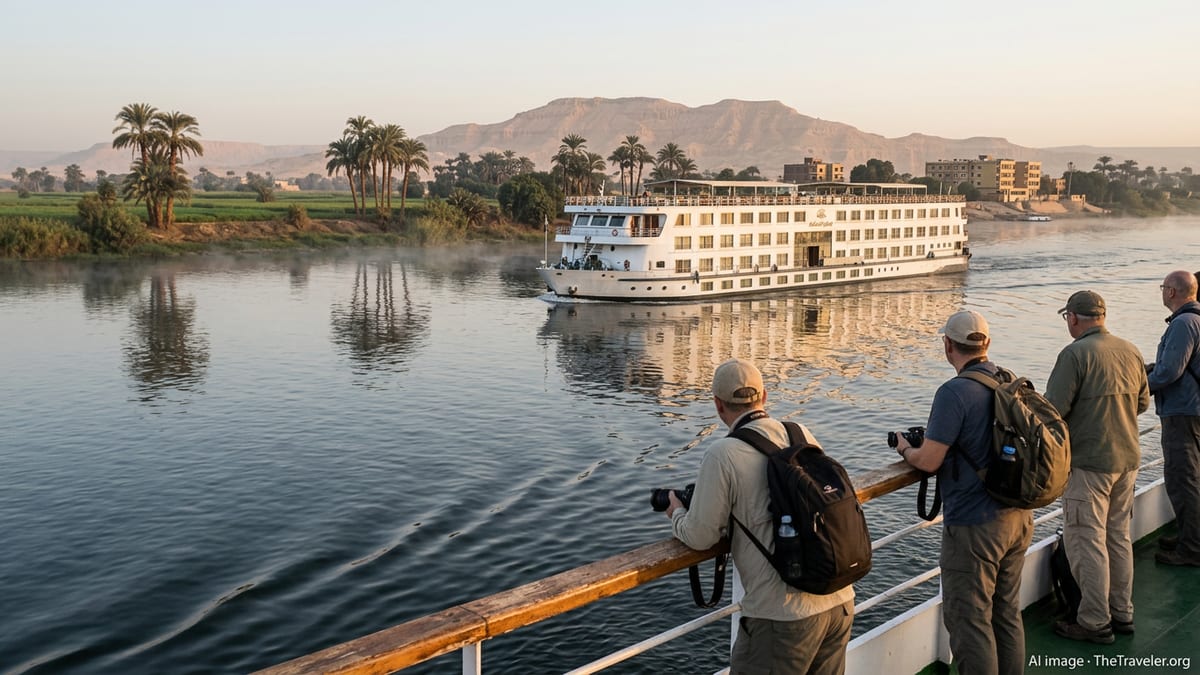
The April restart is particularly significant for Nile cruising, one of the most recognizable elements of Egypt’s tourism offering. Recent months have seen a wave of cancellations by international river cruise brands, which disrupted sailings between Luxor and Aswan at the height of the regional crisis. As tensions subside, tour operators are gradually rebuilding river schedules, with small-group land itineraries and locally operated boats expected to lead the recovery.
Travel trade reporting indicates strong latent demand for Nile journeys, especially among travelers who booked more than a year in advance. Many have accepted rebooking credits and date changes during the March suspension period and are now focusing on new departure windows from April onward. For operators like Intrepid, these rebooked departures could help stabilize load factors on early season trips and support local partners ranging from boat crews to family-run hotels and restaurants.
The revival of temple-focused touring is equally important. Sites such as Abu Simbel, Philae, Kom Ombo and Edfu depend on a steady flow of international visitors to sustain conservation-linked tourism models and local employment. The return of escorted groups following a clearer, more optimistic security outlook may help reassure individual travelers who are considering independent itineraries but remain anxious about fast-moving news headlines.
What Travelers Should Know Before Booking
Prospective visitors eyeing Intrepid’s post April 1 Egypt departures are being encouraged by industry commentators to approach planning with both optimism and caution. Flexible booking terms, the ability to switch dates or destinations, and comprehensive travel insurance that explicitly addresses regional conflict and airspace disruption are emerging as key considerations.
Travel experts also recommend closely tracking both government advisories and operator travel alerts in the lead up to departure. While recent reports point to a reduction in immediate security concerns and a return to more regular flight operations, the overall situation in the wider Middle East remains fluid. Travelers are advised to remain prepared for itinerary tweaks, timing changes and enhanced security procedures at airports and major visitor sites.
For those willing to navigate this more complex landscape, the reopening of Intrepid’s Egypt tours from early April holds out the prospect of seeing some of the world’s most celebrated ancient wonders at a time when visitor numbers may still be below long term averages. That combination of improved safety outlook, pent up demand and quieter than usual sites could make the coming season on the Nile one of the most memorable in recent years.