

More news on this day
A magnitude 4.3 earthquake near Ioannina has rattled the Epirus region of northwestern Greece, prompting rapid assessments of buildings and infrastructure as authorities and scientists continue to monitor aftershocks and potential safety risks for residents and visitors.
Get the latest news straight to your inbox!
Moderate Tremor Jolts Northwestern Greece
According to regional seismic monitoring data, the 4.3 magnitude earthquake struck in the wider Ioannina area, within the seismically active Greece–Albania border zone in Epirus. Automated readings place the epicentral area in inland northwestern Greece, within range of communities that have experienced similar mid‑magnitude tremors in recent years.
Preliminary shaking reports indicate that the tremor was felt across Ioannina and surrounding towns, with light to moderate intensity in populated areas. Residents described short, sharp movement rather than prolonged swaying, a pattern consistent with shallow crustal events of this magnitude in the region.
Publicly available information from European and regional seismological services classifies the earthquake as moderate in size, with shaking strong enough to startle residents, rattle objects and potentially cause minor, localized damage to older or already vulnerable structures.
While this level of earthquake is well below the destructive major events in Greek seismic history, the proximity to urban settlements and critical transport links makes even moderate tremors a matter of concern for local planners and tourism stakeholders.
Damage Checks Focus on Older Buildings and Local Landmarks
In the hours following the tremor, technical teams and local services began surveying key buildings and infrastructure in and around Ioannina. Published coverage from Greek media and municipal channels for similar recent events in Epirus shows a consistent protocol: priority is given to schools, hospitals, historic masonry structures and multi‑storey residential blocks that may be more vulnerable to cracking.
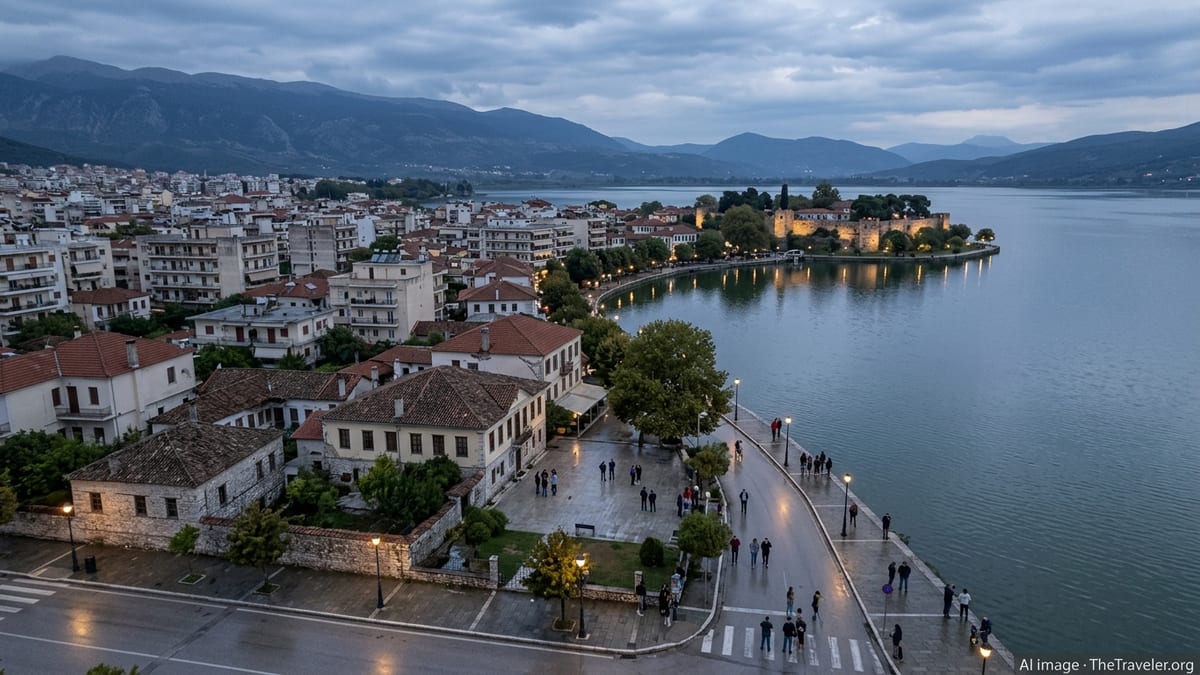
In Ioannina, where the historic lakeside center includes traditional stone houses, Ottoman‑era monuments and Byzantine walls, even light shaking can dislodge masonry, roof tiles and plaster, particularly in structures that predate modern seismic codes. Initial visual inspections typically focus on exterior walls, stairwells and support columns to detect any immediate red flags.
Attention also extends to surrounding municipalities and rural communities where seismic activity has previously affected natural landmarks. In Epirus, for example, past earthquakes have been associated with instability around rock formations and river gorges, such as the now‑collapsed Theogefyro natural stone arch in neighboring Preveza regional unit. Current checks prioritize slopes, retaining walls and bridges along road corridors that serve both residents and visitors.
Early indications from local and national media suggest that damage linked to this latest 4.3 event is minor and scattered, with reports centering on hairline cracks, fallen objects and short‑lived power or telecommunications disruptions rather than widespread structural failure.
Aftershocks and Ongoing Seismic Monitoring
Seismologists note that a magnitude 4.3 earthquake in this part of Greece is typically part of a broader sequence of crustal adjustments. Instrument networks operated by national and European agencies are tracking smaller aftershocks in the wider Greece–Albania border region, where recent years have seen recurring events around the 4.0 to 5.0 range.
Publicly available shake maps and intensity reports for earlier Epirus earthquakes show that even modest aftershocks can be widely felt due to local geology and the distribution of towns across valleys and plateaus. Residents in Ioannina and nearby settlements have been advised through local channels to expect occasional minor tremors as the fault system releases remaining stress.
For travel planners and tourism businesses, the ongoing monitoring provides an important basis for risk communication. Regular updates from seismological institutes and civil protection bulletins help characterize whether seismicity is tapering off or persisting at a level that might warrant continued caution around older buildings and steep terrain.
At present, available technical assessments indicate that the sequence remains within the typical pattern for moderate regional events, with no tsunami concern and no sign of a larger imminent rupture, while acknowledging that Greece overall remains one of Europe’s most active seismic zones.
Impact on Daily Life and Visitor Experience in Ioannina
The tremor briefly disrupted evening and nighttime routines as residents stepped outdoors, checked on family members and shared experiences on social media. Similar past events in Ioannina show a familiar pattern: short‑term anxiety, traffic congestion around central squares, and temporary crowding in open areas such as lakeside promenades and parks.
For visitors already in Ioannina, hotels and guesthouses commonly follow pre‑established earthquake guidelines, advising guests to keep corridors clear, avoid elevators immediately after shaking and report any visible damage at reception. Most modern accommodation properties in Greece have been constructed or retrofitted under stricter seismic standards introduced over the past several decades.
City services and local businesses typically resume operations quickly after a moderate event once routine checks are carried out. Cafes and restaurants around Lake Pamvotida, the castle quarter and the university district are usually among the first to reopen fully, providing a sense of normality that can help ease tensions for both locals and travelers.
Nonetheless, visitors are encouraged by travel advisories and guidebook recommendations to remain aware of their surroundings in the days following a quake, staying clear of visibly damaged facades, loose masonry and narrow alleyways where falling debris could pose a risk if aftershocks occur.
Safety Guidance for Residents and Travelers in a Seismic Region
Recent public information campaigns in Greece emphasize simple preparedness steps for those living in or visiting seismically active regions such as Epirus. Guidance shared by civil protection authorities and educational initiatives highlights the importance of knowing safe indoor spots like sturdy tables, avoiding windows and heavy objects, and having a basic emergency kit with water, medication and key documents.
For travelers, experts commonly recommend a brief safety check on arrival at accommodation: identifying exit routes, confirming where stairwells are located, and securing luggage or loose items that could fall. Many hotels in Greece display earthquake safety instructions in rooms or common areas, reflecting the country’s long‑standing experience with seismic activity.
Transport operators and tourism providers in Epirus increasingly integrate seismic contingency planning into their operations. This includes pre‑identified gathering points for tour groups, communication trees to reach guests after an event, and procedures for rerouting excursions away from recently affected areas until inspections are complete.
While the 4.3 earthquake near Ioannina appears to have caused limited physical damage, it serves as a reminder that the region’s scenic mountain landscapes and historic towns coexist with active fault lines. For both residents and visitors, familiarity with basic earthquake safety practices remains an essential part of experiencing this corner of Greece responsibly.