

Iowa often flies under the radar as a travel destination, yet this Midwestern state offers a surprisingly rich mix of creative cities, nostalgic small towns, rolling prairies, historic sites, and big summer events. From Des Moines’ arts scene to the Mississippi River bluffs and the iconic Field of Dreams, Iowa rewards travelers who slow down, follow scenic byways, and explore beyond the interstate.
Understanding Iowa and the Best Time to Visit
Iowa sits in the heart of the American Midwest, bordered by the Mississippi and Missouri rivers and covered with a patchwork of farms, prairies, and small towns. Travelers encounter a landscape of open skies, tidy main streets, and a strong sense of community that shows up in local diners, county fairs, and Friday night ball games. Although agriculture shapes much of the state’s identity, Iowa’s cities and riverfront communities offer museums, festivals, and food scenes that add unexpected variety to a road trip.
Weather has a big impact on the kind of trip you will have. Winters can be very cold, with snow and ice common from December through February, while summers are typically warm to hot and often humid. Many travelers find late spring through early fall to be the sweet spot for visiting, when temperatures are more comfortable for walking city neighborhoods and hiking state parks. Spring wildflowers and fall foliage are especially attractive in Iowa’s wooded river valleys and hilly western regions.
Summer is peak festival season, highlighted by the Iowa State Fair in Des Moines each August, along with county fairs, outdoor concerts, and small town celebrations around the state. This is also when crowds and prices rise around major events, so advance reservations are important if you are visiting in July or August. For quieter travel, late April through early June and September through mid October often balance pleasant weather with fewer visitors at popular attractions and parks.
When planning your itinerary, keep driving distances in perspective. Iowa is a broad state, but major sights are often a few hours apart rather than an entire day’s drive. It is very possible to combine Des Moines, a Mississippi River town like Dubuque, and a rural region such as the Loess Hills or Amana Colonies in a single extended trip. Consider structuring your visit around a festival or fair, then adding scenic byways and small towns before or after the event.
Des Moines: Arts, Food, and Big Events
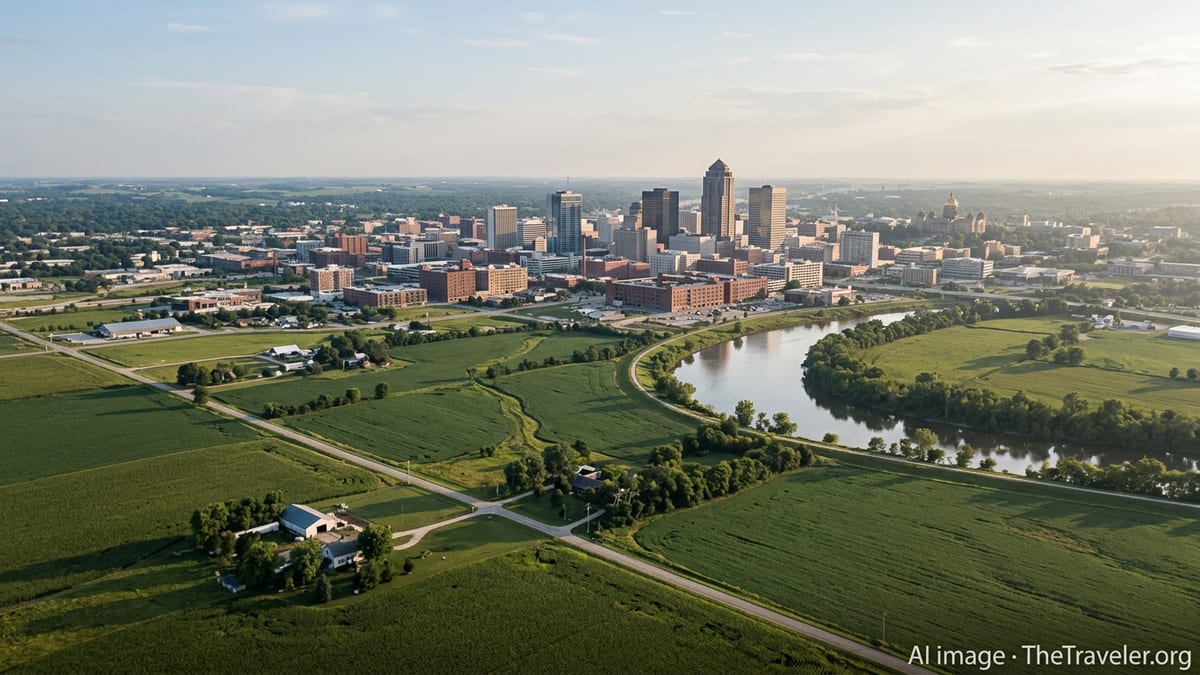
Des Moines, the state capital, is the natural starting point for many Iowa trips, thanks to its central location and growing reputation as a livable, arts focused city. Downtown and the East Village are walkable districts packed with cafes, breweries, boutiques, and restored historic buildings. The gold dome of the Iowa State Capitol provides a striking landmark above the Des Moines River, and guided tours of the building show off ornate interiors and views from the grounds.
The city’s cultural life is anchored by institutions such as the Des Moines Art Center and Pappajohn Sculpture Park, a large outdoor collection of contemporary works set in a downtown green space. On warm evenings locals sprawl on the grass, and the park becomes a natural gathering point before dinner or drinks nearby. Seasonal events like the Des Moines Arts Festival, usually held over a long weekend in late June, bring regional and national artists, live music, and food vendors into the heart of the city.
Des Moines also hosts the Iowa State Fair, one of the largest state fairs in the country, held over 11 days each August. The fair regularly draws well over a million visitors, with big name grandstand concerts, livestock shows, agricultural displays, and an array of whimsical foods served on a stick. Recent years have seen new investments in upgraded facilities and playgrounds at the fairgrounds, reflecting how central the event is to Iowa’s summer calendar. If you plan to attend, book accommodation early and be prepared for heavy traffic and crowds, particularly on weekends.
Beyond festivals, Des Moines has a growing network of bike trails along former rail corridors and river levees, connecting neighborhoods, parks, and nearby suburbs. Renting a bike for an afternoon ride along the Des Moines River or to Gray’s Lake Park is an easy way to see different sides of the city. Even a short stay can comfortably include a museum visit, a walk through the sculpture park, a neighborhood brewery or restaurant, and an evening concert or baseball game, giving you a rounded sense of modern Iowa life.
Cedar Rapids, Iowa City, and Eastern Iowa Culture
East of Des Moines along Interstate 80, Cedar Rapids and Iowa City form a loose corridor of culture, history, and riverfront scenery. Cedar Rapids grew as an industrial and immigrant hub, and its character still reflects Czech, Slovak, and other Central European influences. The Czech Village and New Bohemia districts near the Cedar River combine historic commercial buildings, independent shops, restaurants, and cultural institutions into a walkable urban neighborhood that local tourism promoters often simply call The District.
The National Czech and Slovak Museum and Library in Cedar Rapids showcases immigrant stories, traditional crafts, and modern exhibits connecting Central Europe to the American Midwest. Nearby you can stroll past colorful storefronts, stop at a bakery or pub with Eastern European inspired menus, and time your visit with street festivals that celebrate music, food, and heritage. Although some storefronts change over time, community organizations actively work on revitalization and new uses for historic buildings, so the mix of businesses may evolve between visits.
Just to the south, Iowa City is best known as the home of the University of Iowa and a UNESCO designated City of Literature. The pedestrian friendly downtown features bookstores, cafes, live music venues, and public art around the Old Capitol building. Literary events, readings, and writing workshops occur throughout the year, and the city’s bar and restaurant scene is particularly lively during the academic year. For travelers, Iowa City works well as a base for exploring nearby state parks, wineries, and the small towns scattered across Johnson and Washington counties.
Together, Cedar Rapids and Iowa City offer a more urban flavor than many visitors expect from Iowa, with craft breweries, farm to table dining, college sports, and diverse cultural communities. Day trips can easily combine a walk through Cedar Rapids’ riverfront neighborhoods with an evening concert in Iowa City or vice versa. When planning, check local event calendars, as festivals, parades, and university schedules can influence hotel availability and traffic flows.
Along the Mississippi: Dubuque, River Towns, and Scenic Bluffs
Iowa’s eastern border with Wisconsin and Illinois follows the Mississippi River, where river towns like Dubuque, Davenport, and Burlington showcase a different side of the state. Dubuque, one of the oldest cities in Iowa, sits in a hilly landscape that feels far removed from the flat cornfields many people associate with the Midwest. Historic brick warehouses, church steeples, and riverfront parks line the Mississippi, while limestone bluffs and wooded ravines rise behind the city.
Dubuque’s downtown and port area feature museums, an aquarium, and riverboat related attractions that connect visitors to the Mississippi’s ecological and cultural history. Just outside the city, the Dubuque Arboretum and Botanical Gardens offer carefully maintained themed gardens, including Japanese and English inspired landscapes, along with wooded paths and seasonal flower displays. These gardens are popular for quiet walks, photography, and family outings in spring, summer, and early fall.
North of Dubuque, the river valley becomes increasingly dramatic, with high bluffs, overlooks, and public lands. Various state preserves and parks protect Native American burial mounds, forested hillsides, and remnant prairies, inviting travelers to hike short but sometimes steep trails to viewpoints over the Mississippi. Towns such as Guttenberg, McGregor, and Lansing appeal to travelers who enjoy scenic drives, local cafes, and bed and breakfast stays with easy access to the outdoors.
Driving the Great River Road in Iowa allows you to connect several of these communities over a day or two, combining river views, historic districts, and parks. The route is especially attractive in autumn when hardwood forests turn shades of red, orange, and gold. Conditions along the river can change with spring flooding or construction, so it is wise to check travel advisories and local tourism updates before setting out on a detailed river road itinerary.
Small Towns, Scenic Byways, and the Loess Hills
Much of Iowa’s charm reveals itself in its small towns and rural byways. Places like Pella, Decorah, and the Amana Colonies highlight specific cultural histories and landscapes, from Dutch heritage and windmills to Norwegian influenced festivals and communal German American history. These communities tend to be compact and walkable, with main streets lined by independent shops, bakeries, and cafes that retain a slower pace than larger cities.
In western Iowa, the Loess Hills region stands out as a geological and scenic highlight. These elongated, wind formed hills of fine silt rise sharply from the Missouri River floodplain, creating narrow ridges, steep ravines, and panoramic viewpoints. State forests, scenic overlooks, and small parks provide trail access for hikers, bird watchers, and photographers who want to experience this unusual landscape. Autumn is particularly beautiful, as foliage colors accentuate the rolling contours of the hills.
Several designated scenic byways cross Iowa, connecting small towns, state parks, and historic sites. Driving a byway can turn what would otherwise be a quick interstate journey into a leisurely exploration, with opportunities to stop at farm stands, historic churches, and local museums. You will often find unassuming roadside attractions, county courthouses with ornate architecture, and quiet town squares that offer insight into daily life away from the main urban centers.
Because rural services can be spaced out, it is smart to keep your gas tank topped up and carry water and snacks when exploring less visited byways. Mobile coverage can be patchy in some valleys or remote corners of the Loess Hills and other rural regions. Planning your driving distances conservatively and allowing extra time for unexpected stops will make the experience more enjoyable and less rushed.
Outdoor Adventures, State Parks, and Classic Iowa Experiences
Iowa’s outdoor experiences emphasize rolling terrain, rivers, lakes, and pockets of preserved prairie and woodland rather than dramatic mountains. State parks and recreation areas offer hiking, camping, fishing, boating, and wildlife viewing in landscapes that are gentle but quietly scenic. Places like Backbone State Park, Ledges State Park, and Palisades Kepler State Park are popular with both local residents and visitors for day trips and weekend camping.
Backbone State Park, often cited as Iowa’s first state park, is known for rugged limestone ridges, lake views, and a mix of wooded and open trails. Ledges State Park features sandstone cliffs and a creek that winds through a narrow canyon, especially appealing in warmer months when shallow water invites wading and photography. Many parks include picnic areas, shelters, and modern campgrounds, though reservations are recommended for peak summer weekends and holidays.
Beyond parks, some experiences have become classic Iowa travel highlights because they tap into nostalgia and popular culture. The Field of Dreams Movie Site near Dyersville, where the baseball film was shot, welcomes visitors who want to walk the corn lined field, play a casual game of catch, or attend special events and games that are held periodically. Covered bridges in Madison County, made famous by literature and film, draw travelers to the countryside near Winterset for scenic drives, bridge walks, and small museums.
Many Iowans spend summer weekends on lakes, rivers, and bike trails, and visitors are welcome to do the same. Popular paved routes like the High Trestle Trail near Madrid feature dramatic bridge overlooks that glow in the evening, while regional water parks and family friendly attractions operate seasonally across the state. Always check seasonal opening dates, as some attractions run only from late spring through early fall and may have reduced operating hours in shoulder seasons.
Food, Fairs, and Local Flavor
Iowa’s food scene reflects both its agricultural roots and a growing interest in creative, locally sourced cuisine. In cities like Des Moines, Cedar Rapids, and Iowa City, farm to table restaurants, craft breweries, and specialty coffee shops sit alongside long running diners and taverns that serve comfort food favorites. Pork tenderloin sandwiches, sweet corn in season, and pies made with local apples, cherries, or rhubarb often appear on menus and at roadside stands.
State and county fairs play a big role in how visitors experience local food. The Iowa State Fair in Des Moines has become nationally known for its inventive and sometimes eccentric foods on a stick, along with classic staples like corn dogs, funnel cakes, and freshly baked cookies. Beyond the spectacle, the fairgrounds showcase prize winning livestock, produce, and home canned goods from farms and hobbyists across the state, offering a tangible connection between what you see in the fields and what appears on your plate.
Smaller town festivals and farmers markets provide a more intimate taste of regional specialties. During summer and early autumn, you will find market stalls selling sweet corn, tomatoes, melons, artisanal cheeses, and baked goods, often set up in central squares or near community centers. Ethnic festivals in communities with strong Dutch, Czech, Norwegian, or other cultural roots highlight traditional pastries, sausages, and breads, sometimes prepared according to recipes that have been handed down for generations.
Travelers with dietary restrictions will find increasing options in urban areas, though choices may be more limited in rural diners and small town cafes. When road tripping, it helps to research a few key stops in advance, especially if you are vegetarian, vegan, or gluten free. Even in smaller places, it is worth asking staff about ingredient flexibility, as many family owned restaurants are accustomed to accommodating visitors when they can.
Practical Planning Tips for an Iowa Trip
A well planned Iowa trip starts with deciding how you will get around. Most visitors rely on a car, as public transportation between cities is limited and many scenic areas are not served by regular buses or trains. Major interstate highways cross the state east to west and north to south, with well maintained secondary highways providing access to smaller towns and parks. Rental cars are typically available in Des Moines, Cedar Rapids, Iowa City, and other larger cities, including at their regional airports.
Driving conditions vary by season. In winter, snow and ice can affect travel, particularly on rural roads that may be plowed less frequently than interstates. Spring can bring heavy rain and occasional flooding in low lying areas, while summer often means road construction and strong thunderstorms. Checking weather forecasts, road conditions, and potential detours before long drives is a wise habit, especially if your itinerary includes remote areas or river valleys.
Accommodation choices range from familiar national hotel brands in cities and highway towns to independent motels, historic inns, and bed and breakfast properties in smaller communities. During major events such as the Iowa State Fair, college football weekends, or popular festivals in places like Pella and Decorah, rooms can sell out quickly and prices may rise. Booking well ahead of time is particularly important if your travel dates fall in August or coincide with large university events.
Travel costs in Iowa are generally moderate compared with major coastal destinations, but they still vary depending on season, location, and type of lodging and dining you choose. Fuel, parking, and attraction admission fees are usually manageable for road trippers, though special events and concerts can add up. As with any trip, it helps to build a small buffer into your budget for unplanned stops, extra festival treats, or a night in a charming inn you discover along the way.
The Takeaway
Iowa is a state that reveals itself gradually, rewarding travelers who are willing to trade tourist clichés for real places and real people. From Des Moines’ sculpture parks and giant state fair to the wooded Mississippi bluffs near Dubuque, from Cedar Rapids’ Czech heritage to the quiet drama of the Loess Hills, the state offers a diversity of experiences packed into a manageable geographic area.
By aligning your trip with the right season, building in time for scenic byways and small towns, and keeping an eye on local event calendars, you can craft an itinerary that feels both relaxed and rewarding. Whether you come for a long weekend focused on one region or a longer road trip that links cities, river towns, and countryside, Iowa delivers a grounded, unpretentious style of travel where conversations at the diner counter and evenings under big skies become as memorable as the headline sights.
FAQ
Q1. When is the best time of year to visit Iowa?
The most comfortable months for travel are typically late spring through early fall, when temperatures are milder and many festivals and fairs take place.
Q2. How many days do I need for an Iowa trip?
A long weekend is enough to explore one city or region, while a week allows time to combine Des Moines, a Mississippi River town, and a rural area like the Loess Hills or Amana Colonies.
Q3. Is a car necessary for getting around Iowa?
In most cases yes, especially if you want to visit state parks, small towns, and scenic byways that lack regular public transportation.
Q4. What is Iowa most famous for among travelers?
Travelers often associate Iowa with the Iowa State Fair, the Field of Dreams Movie Site, covered bridges in Madison County, and its rolling agricultural landscapes.
Q5. Are Iowa’s winters too harsh for sightseeing?
Winters can be very cold with snow and ice, which can limit outdoor activities, but city museums, restaurants, and indoor attractions remain open with appropriate winter preparation.
Q6. Can I visit the Field of Dreams Movie Site year round?
The site is generally accessible in the warmer months, though specific events, tours, and game schedules vary by season, so it is wise to check details before you go.
Q7. Where should I stay to experience Iowa’s small towns?
Look for bed and breakfasts, small inns, and locally owned motels in communities such as Pella, Decorah, the Amana Colonies, and river towns along the Mississippi.
Q8. Is Iowa a good destination for hiking and outdoor activities?
Yes, especially if you enjoy gentle to moderately challenging terrain in state parks, forested river valleys, and the distinctive hills and ridges of the Loess Hills region.
Q9. How far in advance should I book for the Iowa State Fair?
For August fair dates, it is prudent to reserve accommodation several months ahead, particularly for weekends and if you want lodging close to the fairgrounds.
Q10. Are there many vegetarian or vegan options in Iowa?
Urban areas such as Des Moines, Cedar Rapids, and Iowa City offer increasing plant based choices, while options in smaller towns may be more limited but are improving over time.