

If you are dreaming about a classic Midwest road trip and narrowing your options to Iowa or Nebraska, you are already on the right track. Both states offer better food, friendlier cities, and more dramatic landscapes than many travelers expect. The challenge is less about finding things to do and more about deciding which side of the Missouri River fits your style. This guide compares Iowa and Nebraska across three big factors that matter on the road: food, cities, and scenic drives.
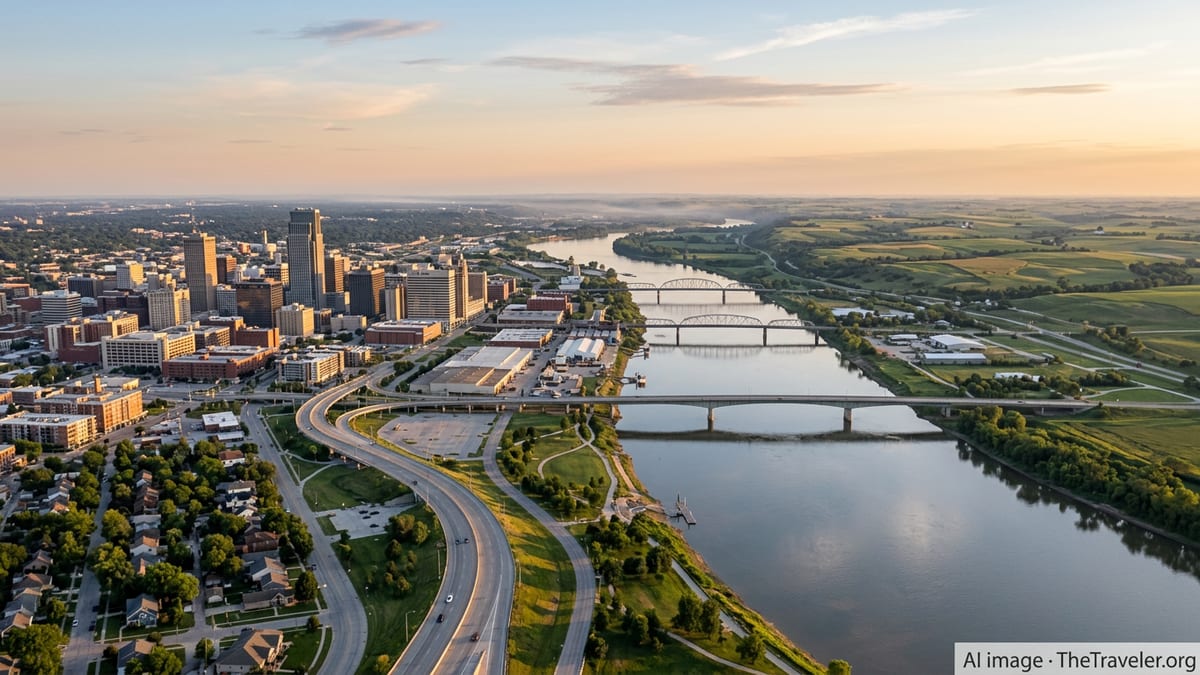
How Iowa and Nebraska Feel on the Road
On a map, Iowa and Nebraska look like neighbors with a lot in common: big skies, farm fields, and small towns stitched together by interstates. On the ground, they feel different. Iowa tends to read as softer and more pastoral, with rolling hills, rivers, and tidy farmsteads never far from view. Nebraska can feel more spacious and wild once you leave Interstate 80, especially when you push into the Sandhills or follow long, two-lane highways that run arrow-straight to the horizon.
For many travelers, Iowa is the easier first Midwest trip. Distances between cities like Des Moines, Iowa City, and Cedar Rapids are short, and you can hop from breweries to museums to river bluffs along the Mississippi in a long weekend. A three-night loop starting and ending in Des Moines might only involve 2 to 4 hours of driving per day. That is ideal if you enjoy dense clusters of attractions and want to spend more time exploring neighborhoods on foot.
Nebraska rewards those who love the feel of the open road. Once you leave Omaha or Lincoln, you can drive an hour without hitting a major town, especially along the Sandhills Journey Scenic Byway on Highway 2, which runs roughly 270 miles between Grand Island and Alliance. Many travelers build a Nebraska trip around that one route, adding stops for starry skies, wildlife viewing, and small-town cafes. It is less about ticking off big-name attractions and more about sinking into the landscape.
Choosing between the two often comes down to your comfort with distance and solitude. If you want frequent coffee stops, multiple restaurant options each night, and short drives between cities, Iowa generally wins. If you picture yourself pulling over to photograph an empty road and listening to trains echo across the plains at dusk, Nebraska is the more evocative choice.
Food and Local Flavors: Tenderloin vs Runza
Both Iowa and Nebraska care deeply about comfort food, and each has a signature sandwich that locals will insist you try. In Iowa, that is the breaded pork tenderloin, a thin, pounded piece of pork, breaded and fried until crisp, typically served on a soft bun with pickles, onions, and mustard. You will find it everywhere from Des Moines drive-ins to small-town taverns. Prices usually run around 10 to 15 dollars with a side of fries or tots, and portions are often large enough to share.
Nebraska’s iconic contribution is the runza, a soft bread pocket stuffed with beef, cabbage, and seasonings. The name is shared with Runza, a regional fast-food chain founded in Lincoln in 1949 that now dots the state, particularly around Omaha and Lincoln. A combo meal with a runza, fries, and a drink tends to land in the 9 to 12 dollar range, making it a budget-friendly lunch that still feels firmly local. Many Nebraskans also point to chili served with a cinnamon roll, kolaches influenced by Czech communities, and hearty steaks from local steakhouses as must-try dishes.
Iowa’s food scene leans into its mix of college towns and a growing farm-to-table culture. In Des Moines, for example, you can move from an old-school burger drive-thru to a chef-driven restaurant using Iowa sweet corn and locally raised pork in the same evening. Iowa City and Ames add student-driven coffee shops, global cuisines, and late-night pizza to the mix. Travelers on a moderate budget might expect to pay 16 to 25 dollars for a main dish at a mid-range sit-down restaurant, with cheaper counter-service meals in the 10 to 15 dollar range.
Nebraska’s food culture is anchored by beef and immigrant traditions. Omaha has a long-standing reputation for steakhouses and is also home to classic local institutions that serve dishes like the Reuben sandwich, often claimed as a Nebraska invention, and neighborhood Italian spots and pizzerias. Outside of the cities, you are more likely to find family diners, taverns, and cafes serving chicken-fried steak, burgers, and pies baked on-site. Expect small-town menus to be simple but filling, with entrees often under 20 dollars and daily specials chalked on a board near the door.
Cities and Culture: Des Moines vs Omaha (and Beyond)
When you compare Iowa and Nebraska for urban experiences, the conversation usually starts with Des Moines and Omaha. Both are midsize cities with vibrant food scenes, craft breweries, and increasingly polished downtown districts. The differences show up in feel. Des Moines has a compact, walkable core that blends a tidy state capitol, riverfront trails, and a growing number of lofts and galleries. It feels like a capital city that has invested heavily in quality of life, from bike paths to public art.
Omaha feels a bit larger and more industrial in parts, a river city built on railroads and stockyards that has evolved into a regional hub for finance, tech, and healthcare. Its Old Market district combines brick warehouses with cobblestone streets, indie boutiques, and restaurants that stay busy well into the evening. Many travelers pair Omaha with a visit to its well-known zoo and then branch into nearby neighborhoods for coffee shops, music venues, and relaxed wine bars.
Beyond their largest cities, each state offers a network of smaller urban centers that shape the travel experience. In Iowa, college towns like Iowa City and Ames stand out for bookstores, live music, and a steady calendar of sports and cultural events. Cedar Rapids adds art museums and a strong Czech and Slovak heritage. These cities are close enough for an easy multi-stop itinerary, and most have mid-range hotels starting around 120 to 180 dollars per night, with cheaper motels and budget chains on the outskirts.
Nebraska’s secondary cities include Lincoln, the state capital and home to a major university, and places like Grand Island, Kearney, and North Platte that function as gateways to the rest of the state. Lincoln blends college-town energy with government offices, while Kearney and Grand Island often serve as overnight bases for travelers headed toward the Sandhills or watching spring bird migrations. Lodging prices in these cities are often comparable to those in Iowa’s mid-size towns, though during major sporting events or festivals, rates can rise quickly and advance booking becomes wise.
Scenic Drives: Rolling Hills vs Vast Sandhills
If scenic drives are your priority, both Iowa and Nebraska can deliver, but they do so in different tones. Iowa excels at gentle, varied scenery packed into relatively short distances. The Iowa Great River Road, which follows the Mississippi River along the state’s eastern border, threads together river towns, bluffs, and overlooks. In autumn, travelers report especially vivid foliage along these segments, with plenty of opportunities to stop for apple orchards, wineries, and small-town main streets within a day’s drive.
Another highlight in Iowa is the Loess Hills region along the western edge of the state, where unique wind-formed hills rise steeply from the Missouri River valley. Portions of routes like the Loess Hills Scenic Byway feel surprisingly dramatic, with narrow ridges, wooded slopes, and overlooks that reveal layers of farmland and forest. These roads are popular in late summer and fall and are accessible from larger cities like Omaha and Sioux City, making them an easy add-on to a broader Midwestern trip.
Nebraska’s standout drive is the Sandhills Journey Scenic Byway along Highway 2, a route that often appears on lists of the most beautiful drives in the United States. It crosses a sea of grass-covered dunes and ranchland, punctuated by small towns, railroad tracks, and big skies. Travelers commonly describe it as peaceful and meditative rather than dramatic, with gentle curves and long grades that reveal new layers of landscape as you go. Services can be spread out, so it is wise to start with a full tank and keep snacks and water in the car.
The state also offers other notable drives, such as the Bridges to Buttes Byway along U.S. Route 20 in northern Nebraska, where the scenery shifts from Sandhills to rugged buttes and bluffs near the Wyoming border. Combined with the Sandhills Journey, this creates a loop that can easily fill three or four days of leisurely driving, with stops for short hikes, small museums, and local diners. Compared with Iowa’s byways, Nebraska’s signature routes tend to feel more remote, with fewer cars and more frequent stretches where you have the road nearly to yourself.
Trip Costs, Seasons, and Practicalities
In terms of basic costs, Iowa and Nebraska are relatively similar. Gas prices tend to track close to national averages, and mid-range hotels in major cities typically fall into a similar 120 to 200 dollar per night band. In smaller towns along scenic byways, you can often find independent motels or simple lodges for 80 to 130 dollars per night, though quality varies and recent reviews are helpful. Campgrounds are plentiful in both states, especially around state parks, lakes, and rivers, with tent sites often in the 15 to 30 dollar range per night.
Seasonal timing can influence which state feels more appealing. Iowa’s wooded hills and river valleys put on a particularly strong show in mid to late October, when fall color hits its stride along the Mississippi River and in the northeast “Driftless” area. Summers are warm and humid but lively, with county fairs, farmers markets, and outdoor concerts in cities like Des Moines and Cedar Rapids. Winters can be harsh and icy, especially in rural areas, so many travelers either plan quick city breaks or wait for spring.
Nebraska’s signature Sandhills landscapes are at their greenest in late spring and early summer, and many visitors plan trips around natural events such as bird migrations. Summer can be hot but manageable if you build your days around early morning and evening drives, with rest stops or short hikes around midday. As with Iowa, winter driving can be challenging due to snow and wind, and some smaller attractions may operate on limited hours. If you are new to winter road trips, late May through early October is generally the most comfortable window.
Driving conditions and distances are another practical factor. Iowa’s denser network of towns means you are rarely more than 30 to 60 minutes from fuel, food, or lodging, especially east of Interstate 35. Nebraska can involve longer stretches between services once you leave the I-80 corridor and head north or west. That said, both states maintain their main highways reasonably well, and most scenic byways are paved and accessible to standard passenger cars. Weather remains the main variable, so checking forecasts before committing to long rural stretches is wise.
Who Should Choose Iowa?
Iowa tends to suit travelers who enjoy a blend of small-city culture, easy scenic drives, and frequent stops. If your idea of a perfect day includes a late breakfast in a downtown cafe, a few hours at an art museum or historic site, and then a short drive to a river overlook or trailhead, Iowa fits that rhythm. Des Moines, Iowa City, and Cedar Rapids can anchor a long weekend, with side trips to the Mississippi bluffs or Loess Hills added as low-stress drives.
Families and first-time Midwest visitors often appreciate how compact Iowa trips can be. For example, you might land in Des Moines, spend one night exploring its downtown restaurants and riverwalk, then drive a few hours to explore the eastern part of the state along the Mississippi and loop back through Iowa City. Distances are short enough that no single day needs more than three or four hours behind the wheel, and you are rarely far from playgrounds, parks, or indoor attractions if the weather turns.
Food-focused travelers who enjoy hopping between breweries, coffee shops, and local diners will also find Iowa appealing. College towns ensure there is usually a strong lineup of affordable, casual restaurants and bars, including vegetarian and globally inspired options that go beyond traditional Midwestern fare. If you value variety and walkable neighborhoods where you can leave your car parked for hours, Iowa holds a clear edge.
Finally, if fall color is a major driver in your travel decisions, Iowa’s river valleys and wooded hills make it a practical choice. Planning a leaf-peeping trip that combines the Great River Road, small river towns, and a night or two in a city like Dubuque or Davenport offers rewarding scenery without complex logistics.
Who Should Choose Nebraska?
Nebraska is a strong pick for travelers drawn to wide-open spaces, long scenic drives, and quiet nights. If you want to feel the scale of the Great Plains rather than just pass through on the interstate, the Sandhills Journey Scenic Byway and other routes in central and western Nebraska provide that experience in an accessible, road-trip-friendly format. Highway 2 in particular is often mentioned by repeat road trippers as one of the country’s most underrated drives.
Photographers and stargazers often favor Nebraska because of its dark skies and uncluttered horizons. Around small Sandhills communities, it is still common to find areas where the Milky Way is clearly visible on a cloudless night. This makes Nebraska a good choice if your ideal evening involves pulling off on a gravel road to watch the sunset and staying until the stars come out. A simple motel room and a diner breakfast the next morning complete the picture.
Food travelers with an interest in traditional Midwestern dishes and immigrant influences will also find plenty in Nebraska. Omaha’s steakhouses, local fast-food chains serving runzas, and small-town bakeries selling kolaches and pies give you a sense of place with every stop. While the range of global cuisines may be narrower than in some similarly sized cities, what Nebraska does well, it tends to do with pride and portion sizes that satisfy after a day on the road.
Nebraska also appeals to repeat visitors to the Midwest who are ready for something quieter and more contemplative. If you have already spent time in busier regional cities and want to lean into the road-trip experience itself, choosing Nebraska and structuring your trip around byways rather than interstates can reset your expectations of what a “flat” state can deliver.
The Takeaway
When you weigh Iowa against Nebraska for a Midwest trip, there is no universal winner, only a better match for your travel style. Iowa offers a gentler, more compact experience, with mid-sized cities and college towns providing a steady stream of dining, culture, and nightlife, all threaded together by scenic but accessible drives along rivers and through rolling hills. It is the better choice if you prefer shorter driving days, varied restaurant scenes, and walkable neighborhoods.
Nebraska, on the other hand, shines when you lean into distance and the drama of open space. Its Sandhills, high plains, and long byways create a kind of road trip where the journey is the main attraction, punctuated by runzas, steaks, and small-town cafes rather than a dense lineup of museums and urban districts. If starry skies, quiet roads, and big-sky views top your wish list, Nebraska will likely feel more special.
In practical terms, many travelers could happily spend a week in either state and leave with full memory cards and a new appreciation for the heart of the country. If you have the time, an ideal solution is not to choose at all but to connect the two with a loop that starts in Omaha or Des Moines and crosses the Missouri River at least once, letting you taste both tenderloins and runzas along the way. If you must pick one, think about how you like to spend a typical day on the road and let that preference point you to the right side of the map.
FAQ
Q1. Which state is better for a first-time Midwest road trip, Iowa or Nebraska?
Iowa is generally better for first-time visitors because of its shorter distances between cities, plentiful small towns, and easy access to both culture and scenery. Nebraska is excellent if you already know you enjoy long, quiet drives and wide-open landscapes.
Q2. Where will I find more varied food options, Iowa or Nebraska?
Iowa usually offers more variety, especially in cities like Des Moines, Iowa City, and Cedar Rapids, where college communities and a growing dining scene support everything from classic diners to global cuisines. Nebraska focuses more on steaks, runzas, and comfort food, though Omaha and Lincoln still provide a good range of choices.
Q3. Which state has the more dramatic scenic drive?
Nebraska’s Sandhills Journey Scenic Byway is often considered one of the most distinctive drives in the region, with rolling grass-covered dunes and big skies. Iowa’s Great River Road and Loess Hills Scenic Byway are beautiful but feel more intimate and wooded rather than vast.
Q4. Is Iowa or Nebraska cheaper for a road trip?
Overall costs are similar, with gas, lodging, and meals usually falling in the same ranges. You might spend slightly more on fuel in Nebraska if you cover longer distances between stops, while in Iowa you may spend more on city activities and dining.
Q5. Which state is better if I am traveling with kids?
Iowa works well for families because of its short drives, frequent towns, and mix of parks, children’s museums, and city attractions. Nebraska can also be family-friendly, especially around Omaha and Lincoln, but long stretches between towns in the Sandhills may require more planning with younger children.
Q6. If I only have a long weekend, which should I choose?
With just three or four days, Iowa often makes more sense, allowing you to base in a city like Des Moines or Iowa City and add one or two scenic drives without excessive time on the road. Nebraska’s best rural routes shine more when you have at least four or five days.
Q7. Which state has better fall colors?
Iowa tends to have the edge for fall foliage, especially along the Mississippi River and in the northeastern hills, where hardwood forests and river bluffs create strong color shows. Nebraska has pockets of color but focuses more on grassland scenery than dense forests.
Q8. Where will I find better small-town experiences?
Both states excel at small-town charm, but in different ways. Iowa’s small towns are close together and often tied to farming communities and county seats, while Nebraska’s towns along routes like Highway 2 can feel more remote and frontier-like. Your preference for density versus solitude will likely decide which you enjoy more.
Q9. Which state is better for photography?
Nebraska generally offers more dramatic big-sky and night-sky photography opportunities, especially in the Sandhills. Iowa provides great river, farm, and small-town streetscapes, particularly in the Loess Hills and along the Mississippi, so it depends whether you prefer intimate landscapes or wide-open horizons.
Q10. Can I realistically visit both Iowa and Nebraska in one trip?
Yes, it is very doable to design a loop that includes both states, especially if you fly into Omaha or Des Moines and cross the Missouri River as part of your route. With a week, you can sample at least one major city in each state and add a signature scenic drive on either side.