

More news on this day
The Middle East cruise sector, one of the fastest-growing niches in global tourism, is suddenly facing a turbulent season as the war with Iran drives oil prices higher, disrupts key shipping lanes and threatens to push up the cost of sea vacations worldwide.
Get the latest news straight to your inbox!
Oil Spike and Shipping Chokepoints Rattle Cruise Economics
Oil prices have climbed back toward the 100 dollar per barrel mark in recent days as the Iran conflict disrupts crude exports and heightens fears over supplies from the Persian Gulf. Published coverage indicates that traffic through the Strait of Hormuz, the narrow channel that carries roughly a fifth of the world’s seaborne oil, has been heavily curtailed by Iranian threats to commercial shipping. Analysts say the resulting squeeze on energy markets is already filtering through to marine fuels, a core cost for cruise operators.
Industry data and company filings show that fuel is one of the largest operating expenses for cruise lines, typically accounting for a significant share of voyage costs even in stable periods. A recent analysis of Royal Caribbean’s fuel consumption highlighted the scale of exposure, with the company projecting well over a billion dollars in fuel spending for 2026. Rising benchmark crude prices, coupled with higher premiums for marine gasoil and low sulfur fuel oil, risk eroding profit margins unless operators pass at least part of the increase on to passengers.
Financial research notes that while some large cruise groups hedge a portion of their fuel needs, hedging programs are designed to smooth volatility, not fully shield companies from a sustained upward shift in prices. With the Iran war injecting fresh uncertainty into already strained energy markets, analysts warn that the industry may be entering a period of structurally higher fuel costs just as demand for global cruising has rebounded to record levels.
Cancellations and Reroutings Undermine a Growing Gulf Cruise Hub
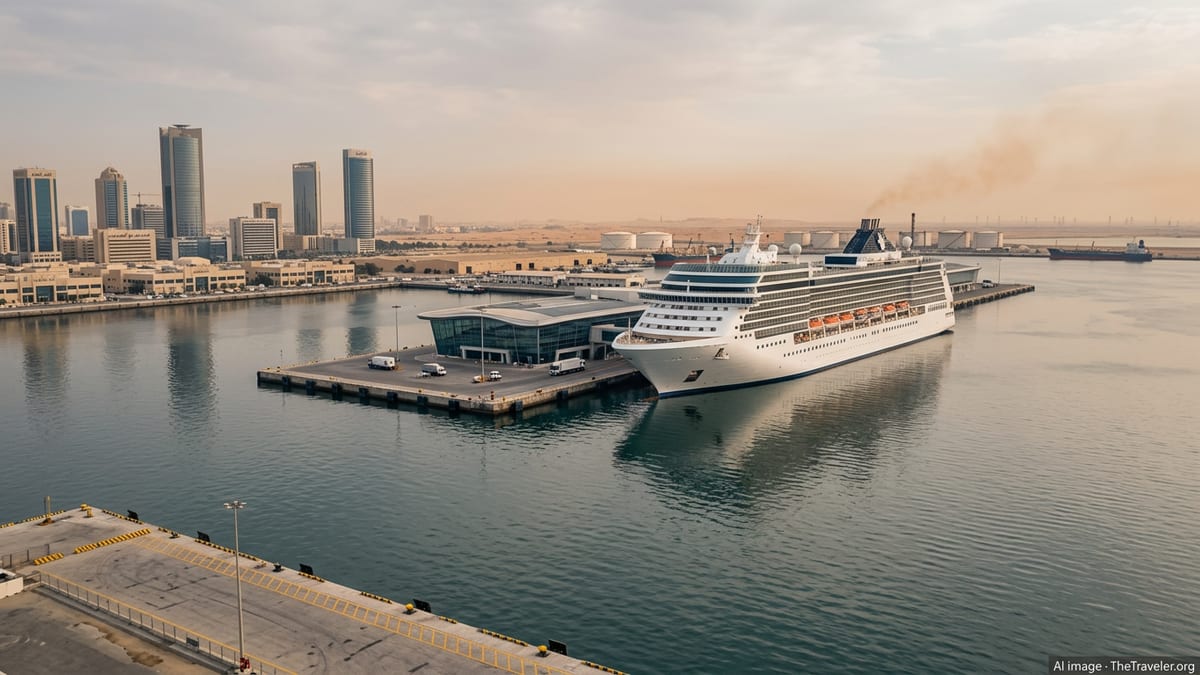
The Arabian Gulf has been positioned as a key winter playground for the cruise industry, with Dubai, Abu Dhabi and Doha marketing themselves as turnaround ports for weeklong itineraries that combine desert cities, beach stops and private island calls. Trade publications tracking deployment schedules for the 2025 to 2026 season reported a broad lineup of ships from MSC Cruises, TUI Cruises, Costa, AIDA and newer Saudi-backed brands, underlining the region’s growing importance.
That optimism is now being challenged by the security fallout from the Iran conflict and the related Strait of Hormuz crisis. Cruise Industry News recently reported that multiple operators have cancelled the remainder of their 2025 to 2026 winter deployments in the Arabian Gulf, citing regional risks and operational uncertainty. Earlier decisions by major brands to withdraw ships from Red Sea transit routes and reposition them to alternative markets had already signaled a more cautious approach to the wider Middle East.
Each cancellation or redeployment has a ripple effect on local economies that have invested heavily in cruise terminals, shore excursion infrastructure and hotel capacity. Port cities in the Gulf had counted on a growing stream of international cruise visitors to support jobs in hospitality, transport and retail. With itineraries trimmed or suspended, that traffic is at risk just as regional tourism boards were seeking to move beyond traditional reliance on air and shopping tourism.
Higher Fuel Bills Could Reach Passengers Through Fares and Fees
For now, most of the publicly discussed financial impact from higher oil prices is focused on the balance sheets of major cruise groups and their share prices. Recent market commentary notes that cruise stocks have come under pressure as investors factor in more expensive fuel and the possibility of further operational disruptions tied to the conflict. However, if elevated fuel prices persist, industry analysts say the next step is likely to be a gradual adjustment in what passengers pay.
In previous energy price spikes, cruise lines have relied on a mix of base fare increases, selective fuel surcharges and tighter onboard cost controls to preserve margins. Some companies have publicly indicated reluctance to reintroduce fuel surcharges, a tool that proved unpopular with travelers in earlier cycles, but published research and brokerage notes suggest that there is limited room to absorb significantly higher fuel bills without some contribution from guests.
Any pricing shifts are expected to show up first in itineraries that are most directly exposed to the current disruptions, including Middle East and repositioning cruises that require long sea distances and potential detours around conflict zones. Longer routes that might otherwise use the Suez Canal or Red Sea have already been diverted in some cases around the Cape of Good Hope, adding thousands of miles to voyages. Those extra days at sea translate directly into higher fuel consumption, amplifying the financial strain.
Regional Cruise Ambitions Face a New Test
Before the latest escalation, governments and port authorities across the Gulf had been working to establish the Middle East as a permanent fixture on the global cruise map. New terminals in Dubai and Abu Dhabi, destination development on islands such as Sir Bani Yas, and marketing campaigns aimed at European and Asian cruisers supported projections of steady growth into the late 2020s. Trade media covering the sector documented plans for additional homeporting ships and longer Middle East seasons through at least 2027.
The Iran war has injected a level of geopolitical risk that planners did not anticipate when those projects were announced. Disruption in nearby shipping lanes, missile and drone incidents targeting energy infrastructure, and intermittent closures of key air hubs in the region have combined to raise the perceived risk of travel in the broader neighborhood. While cruise calls are generally concentrated in relatively stable Gulf monarchies, the optics of conflict in adjacent waters can weigh heavily on traveler sentiment and insurance assessments.
Regional cruise initiatives backed by Gulf sovereign wealth and new national cruise brands are now forced to recalibrate timelines and expectations. If security conditions stabilize and energy markets cool, analysts still see long term potential for the Middle East as a winter cruising destination, thanks to modern port facilities and warm weather. In the near term, however, deployment decisions by global brands will hinge on a balance of risk, fuel economics and consumer appetite to sail in waters so close to an active conflict.
Global Sea Vacation Costs at Risk in a Prolonged Conflict
Although the immediate focus is on itineraries touching the Middle East, the impact of the Iran conflict and elevated oil prices on sea vacations is likely to be global. Higher bunker fuel prices apply across fleets, whether ships are sailing in the Caribbean, the Mediterranean or the Pacific. Reports from energy analysts point to a broader tightening in marine fuel markets, with shipping of all kinds facing higher operating costs as tankers, container ships and bulk carriers adjust routes and navigate around conflict zones.
Travel industry observers note that the cruise sector, like airlines, eventually passes much of its fuel burden to customers if input costs remain high for an extended period. That may mean higher base fares for popular itineraries, fewer deep discount promotions during shoulder seasons, or more careful management of capacity in regions that are expensive to serve. In markets where demand remains strong, operators could prioritize yield over volume, which would further narrow the window for bargain sea vacations.
For travelers, the message emerging from current developments is that the era of ultra cheap, fuel intensive cruising may be entering a more uncertain phase. As the Iran conflict continues to unsettle oil markets and complicate shipping routes, the Middle East cruise industry finds itself on the front line of a wider cost shock that could eventually reshape pricing and deployment across the global cruise network.