

More news on this day
Disruptions from the war involving Iran are rippling through global energy and transport networks, pushing fuel prices sharply higher and triggering mounting flight cancellations, shipping detours and tourism setbacks worldwide.
Get the latest news straight to your inbox!
Strait of Hormuz at the Center of a Global Energy Shock
The closure and subsequent tight control of the Strait of Hormuz by Iran has become the defining pressure point of the current crisis. Publicly available assessments indicate that shipments of oil and liquefied natural gas through the narrow waterway typically account for about one fifth of global consumption, meaning that even partial interruptions have outsized consequences for world markets.
Since early March, tanker traffic through the strait has collapsed, with maritime intelligence data suggesting that only a fraction of normal vessel volumes is moving. Reports describe large clusters of loitering ships waiting on either side of the chokepoint, as operators weigh security risks, surging insurance premiums and new tolls reportedly imposed by Iranian forces on commercial transits.
This squeeze on exports from major producers in the Gulf has coincided with targeted strikes on refineries, export terminals and gas fields in Iran, Saudi Arabia and the wider region. Analysts tracking the situation say combined outages have removed millions of barrels per day from the market, helping to propel benchmark Brent crude well above 100 dollars a barrel and, at points this month, toward the mid-120s.
Natural gas flows have also been hit, particularly cargoes originating around the shared South Pars and North Dome field and Qatari liquefied natural gas infrastructure. Energy economists note that the shock is feeding directly into higher power generation costs in Europe and Asia, while also intensifying competition for alternative pipeline and seaborne supplies.
Soaring Fuel Costs Hit Airlines, Shipping and Everyday Consumers
The immediate result of the supply crunch is visible at fuel pumps, in freight contracts and on airline balance sheets. According to industry monitors, average gasoline prices in the United States have pushed past 4 dollars a gallon, with diesel climbing even faster. European benchmark diesel is reported to have jumped by more than one third in recent weeks as refineries scramble to replace disrupted Middle Eastern feedstocks and cope with longer shipping routes.
In commercial shipping, charter rates for supertankers loading in the Gulf have reached record highs, as operators factor in higher insurance premiums, war-risk surcharges and detours that add thousands of nautical miles to typical voyages. Major container and tanker lines have reduced or suspended calls in the Gulf and Red Sea corridors, some redirecting traffic around the Cape of Good Hope, which lengthens Asia–Europe sailings by 10 days or more and ties up scarce vessel capacity.
For airlines, jet fuel spikes are colliding with extensive airspace closures over parts of Iran, Iraq, Israel and neighboring states. Aviation analysts report that carriers based in the Gulf have seen large portions of their networks suspended or radically rerouted, while long-haul airlines from Europe, Asia and North America are adding extra hours and refueling stops to avoid conflict zones. These changes are inflating operating costs at the same time that demand softens on certain routes.
Households and businesses far from the Middle East are now feeling the knock-on effects. Logistics briefings point to higher freight charges on everything from food to manufactured goods as trucking and shipping companies pass on diesel and bunker fuel increases. Economists warn that the combination of energy-driven inflation and supply chain bottlenecks could weigh on growth, particularly in import-dependent regions and small island economies.
Global Travel Network Strains Under Cancellations and Rerouting
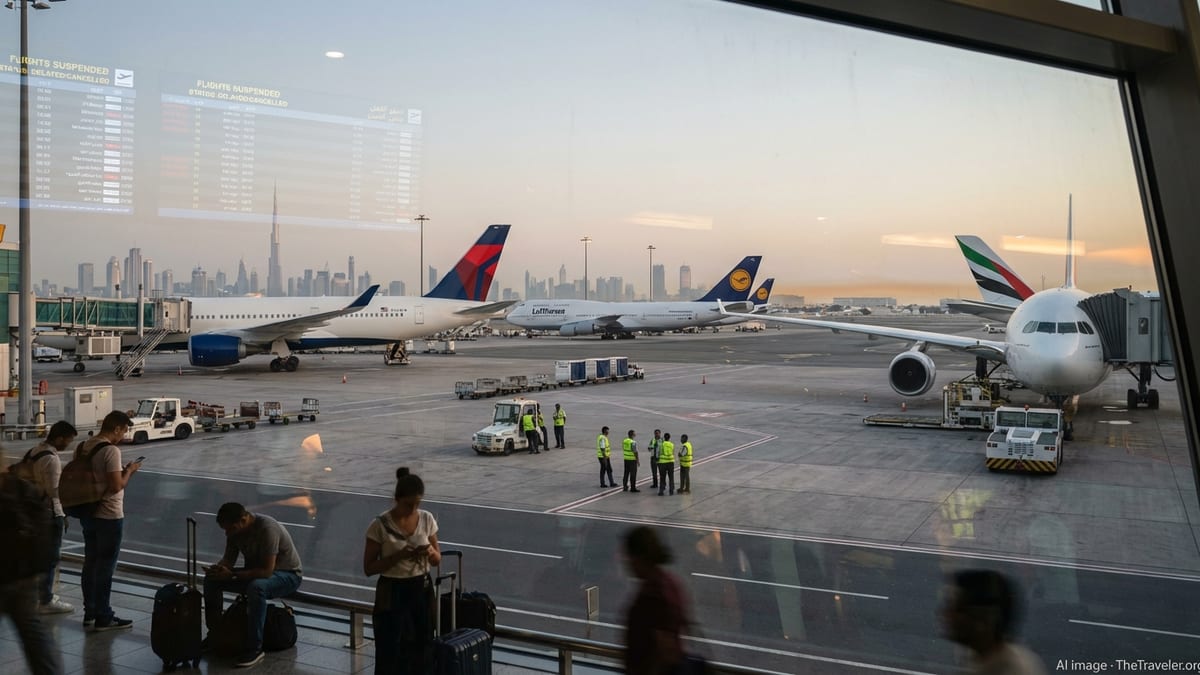
As energy costs spike, the travel system that connects continents is being reshaped almost overnight. International flight schedules show hundreds of cancellations and suspensions involving routes that typically rely on Gulf hubs such as Dubai, Doha, Abu Dhabi and Muscat. With key Middle Eastern airspaces restricted and airport operations curtailed, these hubs have lost much of their role as global transit bridges between Europe, Africa and Asia.
Airlines are responding with a patchwork of solutions. Some are funnelling passengers through alternative hubs in Turkey, Central Asia and Southern Europe. Others are trimming frequencies, consolidating flights or temporarily withdrawing wide-body aircraft from affected markets. Industry statements highlight efforts to prioritize repatriation and essential travel while warning that timetable volatility is likely to persist as the conflict evolves.
On the ground, ports throughout the Red Sea, eastern Mediterranean and Indian Ocean are absorbing diverted ships that would normally pass through Hormuz or nearby trade corridors. Shipping advisories describe growing congestion and new surcharges as carriers introduce transit disruption fees and war-risk premiums. For cruise operators, itineraries touching Gulf ports or transiting the region are being pulled or redesigned, cutting off a lucrative winter and spring season.
Travel agents and booking platforms report a surge in itinerary changes, with long-haul passengers seeking routings that avoid the wider conflict zone altogether. This has shifted demand toward transatlantic and transpacific corridors and boosted interest in stopovers through East Asian and European hubs that remain unaffected, at least for now, by direct security restrictions.
Tourism Destinations Feel the Shock From the Gulf to Southeast Asia
The tourism fallout is extending well beyond countries directly involved in the fighting. In the eastern Mediterranean, economic assessments highlight increased risk for destinations such as Cyprus and Greece, where higher fuel and transport costs are inflating operating expenses for hotels, airlines and tour operators. Regional forecasts have already been revised lower for visitor growth this year, based on assumptions that the conflict will persist for weeks.
In Southeast Asia, early data from tourism agencies point to thousands of cancellations tied to the first weeks of the Iran conflict, particularly on itineraries that previously relied on Gulf carriers and hubs. Travel industry reports from Malaysia, for example, describe lost bookings for Middle Eastern group tours and long-haul visitors whose journeys typically connect through Dubai or Doha, now constrained by withdrawn capacity and longer, more expensive routings.
Destination marketers are pivoting quickly. Some Asian countries are leaning more heavily on direct links from China and other nearby markets to offset the loss of Middle Eastern transit flows. In Europe, tourism boards are emphasizing shorter-haul, intra-regional travel that is less exposed to disrupted air corridors and volatile long-haul fares.
Analysts caution, however, that if elevated jet fuel prices become a longer-term feature, airlines could be forced into more structural capacity cuts on marginal routes, including services to remote islands and emerging destinations. That scenario would challenge recovery plans for places still rebuilding visitor numbers after the pandemic and leave local economies more vulnerable to future shocks.
What Travelers and Everyday Commuters Are Facing Now
For individual travelers, the conflict’s impact is most visible in higher prices and mounting uncertainty. Airfare trackers show sharp increases on certain long-haul routes as airlines attempt to recoup fuel and rerouting costs, even as they offer discounts on others to stabilize demand. Flexible tickets and travel insurance products are drawing renewed interest, as consumers seek protection against sudden cancellations or overnight changes to routing.
Commuters and domestic travelers are confronting a different set of challenges. Rising gasoline and diesel prices are pushing up the cost of daily driving, while bus companies and rail operators that rely on diesel traction are signalling possible fare adjustments. In some developing regions, humanitarian and development organizations warn that higher transport and fertilizer costs linked to the energy shock could filter into food prices, deepening cost-of-living pressures.
Travel risk consultancies are advising companies to reassess routing for corporate trips, cargo and staff rotations, especially where itineraries previously used Gulf or Red Sea corridors. Recommended measures include allowing extra connection time, monitoring airline advisories closely, and preparing contingency plans that rely on alternative hubs or multimodal combinations such as rail and short-haul links to bypass congested nodes.
Looking ahead, scenario planners emphasize that the duration and intensity of the Iran conflict will determine whether current disruptions remain a severe but temporary shock or harden into a new operating reality for global energy and travel. For now, the combination of constrained oil flows, record shipping and insurance costs, and fragmented airspace is reshaping how people and goods move around the world, with tourism and everyday mobility on the front line of change.