

More news on this day
The widening conflict involving Iran in early 2026 is rippling across global aviation, with Thailand and Indonesia’s Bali emerging as unexpected casualties as disrupted air routes, rising fuel costs and nervous travelers weigh on Southeast Asia’s vital tourism sector.
Get the latest news straight to your inbox!
War in Iran Sends Shockwaves Through Global Flight Networks
The latest escalation of military action involving the United States, Israel and Iran since late February 2026 has sharply disrupted air travel across much of the Middle East. Reports from international news agencies describe large sections of regional airspace being closed or heavily restricted as governments respond to missile and drone attacks and reassess security risks for civilian aviation.
Publicly available information on the 2026 Iran war and the associated Strait of Hormuz crisis indicates that Persian Gulf air corridors, which handle a significant share of long-haul traffic between Europe, the Middle East and Asia, have been especially affected. The halt to normal commercial shipping and heightened military activity in the Gulf have pushed airlines to reroute or suspend flights, adding time and cost to journeys that previously relied on Gulf hubs as efficient transit points.
Analysts tracking the conflict note that these closures have created a knock-on effect far beyond the immediate war zone. Hub airports in Qatar, the United Arab Emirates and other Gulf states are key connectors for travelers heading to Southeast Asian destinations such as Bangkok, Phuket and Bali. When those hubs are partially shut or constrained, European, Middle Eastern and African passengers face fewer options, higher fares and longer travel times to reach Thailand and Indonesia.
Economic research updates published in early March 2026 suggest that oil prices have surged well above 100 dollars per barrel as a result of the fighting and the closure of the Strait of Hormuz. Rising jet fuel costs, which typically move in tandem with crude prices, are already being flagged by aviation and tourism analysts as a major risk for long-haul leisure travel over the coming months.
Thailand’s Tourism Rebound Stalls as Routes and Costs Shift
Thailand entered 2026 expecting a strong year for tourism, with official and private-sector forecasts targeting well over 30 million foreign visitors and revenue potentially reaching into the upper range of earlier projections. That outlook is now under pressure. Industry monitoring cited in Thai business media indicates that the country welcomed just over 7.1 million foreign arrivals between January 1 and March 7, 2026, a figure that is already a few percentage points lower than the same period a year earlier.
Thai economic and tourism coverage in early March points to the Middle East conflict as a key emerging drag on growth. The Joint Standing Committee on Commerce, Industry and Banking has warned that a prolonged crisis could shave several tenths of a percentage point off Thailand’s 2026 gross domestic product, largely through higher energy costs and a softer tourism pipeline. One scenario discussed in local financial analysis suggests that if travel from the Middle East and surrounding regions drops by around 80 percent, national growth could slip to near 1.3 percent.
Travel-focused reports describe a dual impact on Thailand: a sharp near-term hit to long-haul arrivals connected via Gulf hubs, and broader inflationary pressure that raises operating costs for airlines, hotels and tour operators. Rerouted flights from Europe and North America, which must avoid some Middle Eastern airspace, are expected to burn significantly more fuel, increasing fares at a time when many travelers are already sensitive to price.
Tourism commentaries also highlight a partial offset. Some high-spending visitors from Israel and the broader Middle East are reportedly choosing to stay longer in Thai destinations such as Phuket, Koh Samui and Bangkok to escape the conflict at home. However, current projections suggest that this niche “safe haven” demand is unlikely to fully compensate for the loss of transit passengers and the broader slowdown in discretionary long-haul travel.
Flight Cancellations and Falling Occupancy Put Bali Under Strain
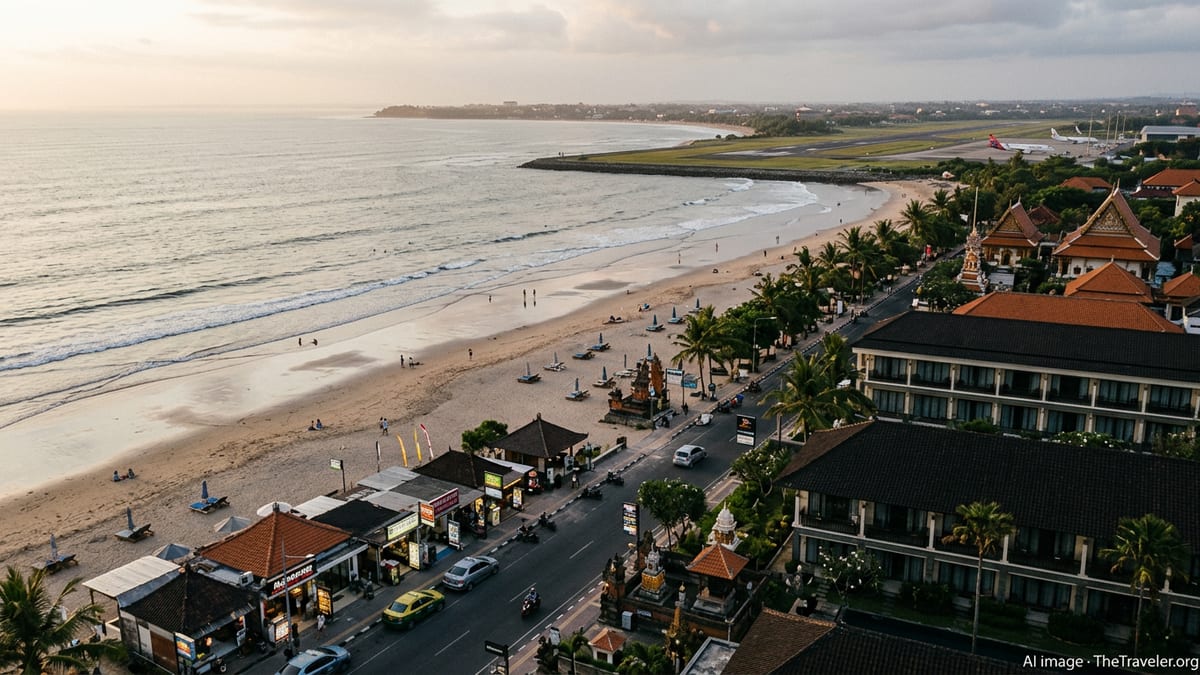
In Indonesia, Bali’s tourism-dependent economy is feeling the strain from abrupt changes in flight patterns. Data released by I Gusti Ngurah Rai International Airport in Denpasar in late February and early March show at least 15 international flights canceled over a short period because of airspace closures and security restrictions along Middle Eastern routes. The cancellations have involved major Gulf carriers that normally link Bali with Abu Dhabi, Dubai and Doha.
Airport and local government statements summarized by Indonesian news outlets indicate that both outbound and inbound services have been affected. Travelers bound for or coming from Europe and the Middle East via Gulf hubs have faced last-minute changes, longer detours and, in some cases, outright suspensions of service. For Bali, which relies heavily on seamless connectivity to long-haul markets, these interruptions arrive just as the island had been consolidating its post-pandemic recovery.
Separate coverage from regional and community-based platforms points to a visible dip in hotel occupancy on the island, with some estimates placing average occupancy rates in the low 40 percent range in mid-March 2026. Tourism businesses report that weaker arrivals from the Middle East and Europe, combined with cautious spending by visitors worried about global uncertainty, are starting to weigh on revenues for hotels, restaurants and tour operators.
Local authorities and industry groups are looking to domestic travel to cushion the blow, encouraging Indonesians from other provinces to holiday in Bali to help sustain demand. Nonetheless, the island’s heavy dependence on international air links means that extended disruption to Gulf transit routes, or a prolonged spike in airfares, could leave a noticeable gap in visitor numbers through the rest of 2026.
Rerouting, Rising Fares and Shifting Market Mix Across Southeast Asia
The aviation adjustments triggered by the Iran conflict are reshaping how travelers reach Southeast Asia. Travel and aviation advisories issued in early March describe widespread rerouting of flights between Europe and Asia to avoid conflict-affected airspace. These detours can add hours to flight times and significantly increase fuel consumption, particularly for long-haul services that were already operating on tight margins.
Industry commentary comparing the current situation to earlier disruptions, such as the closure of Russian airspace during the Russia–Ukraine war, notes that similar patterns are now emerging. Airlines are facing higher operational costs and must decide whether to pass these on to passengers through higher fares, cut capacity on marginal routes, or temporarily exit some markets. For leisure-focused destinations such as Thailand and Bali, any sustained rise in ticket prices tends to hit budget-conscious tourists first, potentially skewing the market toward higher-spending segments.
At the same time, tourism analysts in the region are observing changes in the mix of source markets. With connectivity from parts of the Middle East and Europe under pressure, Southeast Asian destinations are leaning more heavily on regional visitors from countries such as China, India, Malaysia and Singapore. Some forecasts for Thailand, for example, already assume that arrivals growth in 2026 will be driven primarily by these closer markets, with long-haul visitors recovering more slowly because of the war-related headwinds.
Consultancy and bank research notes that if the conflict remains contained and gradually de-escalates, the impact on Southeast Asian tourism could remain manageable, with total visitor numbers still rising modestly from 2025 levels. However, scenario analyses published in early March consistently warn that a prolonged or widening war, keeping oil and jet fuel prices elevated for much of the year, would likely translate into weaker-than-expected arrivals and spending in key destinations across the region.
Governments and Industry Weigh Next Steps for 2026
In response to the growing risks, Southeast Asian governments are activating crisis monitoring mechanisms focused on tourism and transport. Publicly available information from Thailand describes the creation of specialized monitoring centers and economic coordination teams charged with tracking the Middle East situation, assessing its impact on flight schedules and energy prices, and preparing support measures for affected sectors.
Industry bodies across the region are urging airlines, airports and tourism boards to coordinate closely on route planning and promotional strategies. With some Gulf connections disrupted, one priority is to secure alternative links through other hubs in East and South Asia to keep key markets open. Another focus is on attracting travelers who might otherwise have routed through affected areas but are still willing to visit Southeast Asia if journeys remain reasonably priced and predictable.
Tourism experts quoted in regional media argue that the conflict underscores the structural vulnerability of destinations that rely heavily on long-haul air travel and a limited set of transit hubs. Some suggest that Thailand, Indonesia and their neighbors may need to accelerate diversification efforts, investing more in regional overland connectivity, cruise tourism and domestic travel to reduce exposure to external shocks.
For now, the outlook for 2026 remains fluid. As fighting continues in and around Iran, Thailand and Bali find themselves at the crossroads of geopolitics and global mobility, navigating a fragile tourism recovery that depends as much on distant decisions in the Middle East as on local beaches, temples and hospitality.