

More news on this day
Escalating hostilities involving Iran since late February 2026 have shuttered or restricted key Middle East airspaces, forcing airlines to cancel, reroute or delay thousands of flights and raising urgent questions over what, if anything, travel insurance will cover.
Get the latest news straight to your inbox!
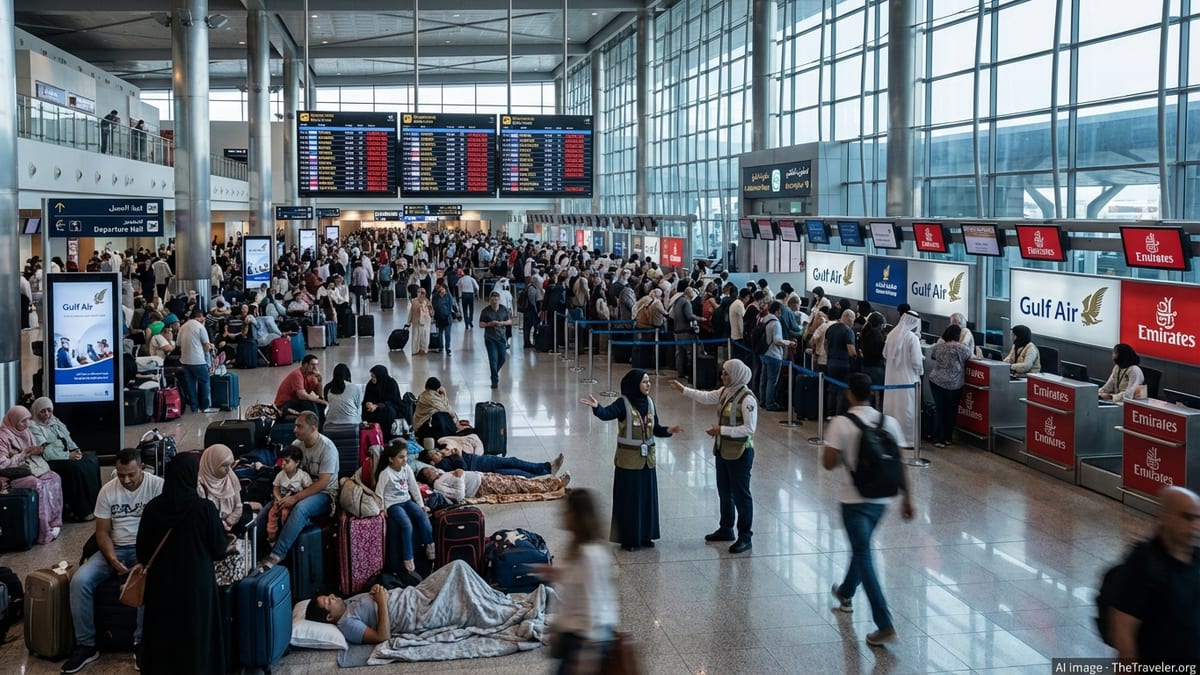
Flight networks upended by Middle East airspace closures
Since strikes involving the United States, Israel and Iran on 28 February 2026, airspace over Iran, Iraq, Israel, Jordan, Bahrain, Kuwait, Qatar and several Gulf states has been closed or heavily restricted, according to recent aviation advisories and news coverage. Airlines have responded by suspending some routes entirely and diverting others along longer corridors, causing widespread delays and missed connections on Europe to Asia journeys.
Reports from regional and international outlets indicate that major hubs in Qatar and the United Arab Emirates have experienced rolling shutdowns, with some airports limiting operations to evacuation or cargo services for days at a time. Airlines based in Asia and Europe have recalled aircraft mid-flight, introduced technical fuel stops and, in some cases, halted services to the Middle East through at least mid April.
Travel data providers tracking disruption say cancellation rates in affected states have at times exceeded 80 percent, particularly during the first week of the crisis, while rerouted long haul flights have added two to five hours to scheduled journey times. Passengers transiting through Gulf hubs have been among the most exposed, as detours and airspace bans ripple through global networks.
As flight schedules remain fluid and official advisories continue to warn against travel to several countries in the region, travellers with upcoming trips are scrutinising their insurance certificates to understand what the evolving conflict means for coverage.
War exclusions: the catch in many standard policies
Publicly available policy wording from major travel insurers shows that most standard plans include broad exclusions for war or warlike events. These clauses often apply regardless of whether war is formally declared and typically exclude claims arising directly or indirectly from armed conflict, invasion, insurrection or the use of military force.
That language has significant implications for the Iran-related disruption. If a flight is cancelled because airspace is officially closed due to active hostilities, many insurers classify the cause as a war risk. In such cases, trip cancellation, trip interruption and additional expense benefits may not respond, even if the traveller faces substantial out-of-pocket costs.
Consumer finance coverage in early 2026 has highlighted that travellers caught by sudden escalations in conflict frequently discover these limitations only when they attempt to claim. Some policies provide examples in their documentation, stating that medical expenses, trip extensions or baggage losses linked to conflict escalation are generally excluded unless specific optional coverage has been purchased.
Specialist insurance briefings also note that travel under government “do not travel” advisories can void certain benefits. If a traveller chooses to proceed to a country after such a warning is issued, insurers may decline claims tied to events that occur during that period, citing both advisory-based exclusions and the underlying war clauses.
When cancellations may still be covered
Despite sweeping war exclusions, not every disruption connected to the Iran conflict will automatically fall outside insurance protection. Industry guidance indicates that if an airline cancels a flight for operational or commercial reasons, rather than a direct order tied to hostilities, some standard trip cancellation or delay benefits could still apply, depending on the exact wording.
For example, if a carrier suspends services because crews and aircraft are out of position, or because rerouting makes a route temporarily uneconomical, insurers may view the cause as an airline issue rather than a war risk. In such scenarios, policies that list “carrier-caused delays,” “complete cessation of services” or “strike or industrial action” as covered reasons might provide reimbursement for unused prepaid arrangements or additional accommodation costs.
Another distinction appears in how events are categorised. Financial commentary on recent policies points out that some contracts treat isolated violent incidents as terrorism, civil unrest or riot rather than war, particularly when there is no formal state-to-state conflict. Terrorism benefits, where offered, can trigger trip cancellation or interruption coverage if an incident occurs within a specified time window and distance of a booked destination.
However, with the current hostilities widely described as involving direct military engagement between states, insurers may be more inclined to apply war exclusions. Travellers are being urged by consumer advocates to read not only the general exclusions but also the definitions section of their policy to understand how the insurer is likely to classify Iran-related events.
The role of “cancel for any reason” and specialist add ons
Coverage discussions around the Iran conflict have brought renewed attention to optional upgrades such as cancel for any reason, often referred to as CFAR, as well as high risk or war risk extensions aimed at corporate or specialist travellers. These products sit outside standard leisure policies and can significantly broaden protection, though they come with higher premiums and stricter purchase conditions.
Travel insurance providers explain in their public materials that CFAR allows policyholders to cancel a trip for reasons not listed in the base policy, which can include fear of conflict, unease about overflight routes or concern about further airspace closures. Typically, CFAR must be purchased soon after the first trip payment and may reimburse a percentage of nonrefundable costs, often between 50 and 75 percent, rather than the full amount.
Some insurers and brokers also market specialist war or security add ons that can extend limited coverage into conflict affected areas, particularly for business travellers, journalists or humanitarian workers. These products may address emergency evacuation, security extraction or certain medical expenses, although they usually carry detailed conditions and may exclude losses tied to government sanctions or travel bans.
Insurance industry commentary stresses that none of these enhancements are retroactive. Travellers who purchased a standard plan before tensions escalated and did not add CFAR or war risk coverage generally cannot upgrade after a conflict has clearly emerged and expect to be covered for that known event.
What travellers should examine before flying
As airlines continually adjust timetables in response to shifting airspace restrictions, travel and consumer organisations are advising passengers to review three documents before departure: their airline’s disruption policy, their travel insurance schedule and their government’s latest travel advisories.
From an insurance perspective, the most critical sections are the list of covered reasons for trip cancellation or interruption, the general exclusions and any clauses referring to war, terrorism, sanctions or government intervention. Travellers are also being encouraged to check whether their policy treats missed connections caused by earlier flight disruptions as a separate covered event, or expects the airline to shoulder responsibility.
Government advisories, particularly those from North American and European foreign ministries, can influence coverage outcomes because some insurers reference these notices directly in their contracts. If a country linked to the Iran conflict is under an “avoid all travel” or similar warning on the date of departure, that status may restrict benefits or allow an insurer to decline claims tied to events in that destination.
Given the ongoing volatility, travel risk experts suggest that passengers transiting the Middle East in the coming weeks consider flexible booking options, maintain sufficient funds for unplanned overnight stays and, where possible, purchase policies with broader cancellation triggers well before departure. While no insurance product can fully protect against a fast-moving regional conflict, understanding the limits of coverage has become an essential part of planning any trip that crosses or approaches Iranian and neighboring airspace.